Is Delta 9 Legal in Kentucky? The Complete 2026 Guide
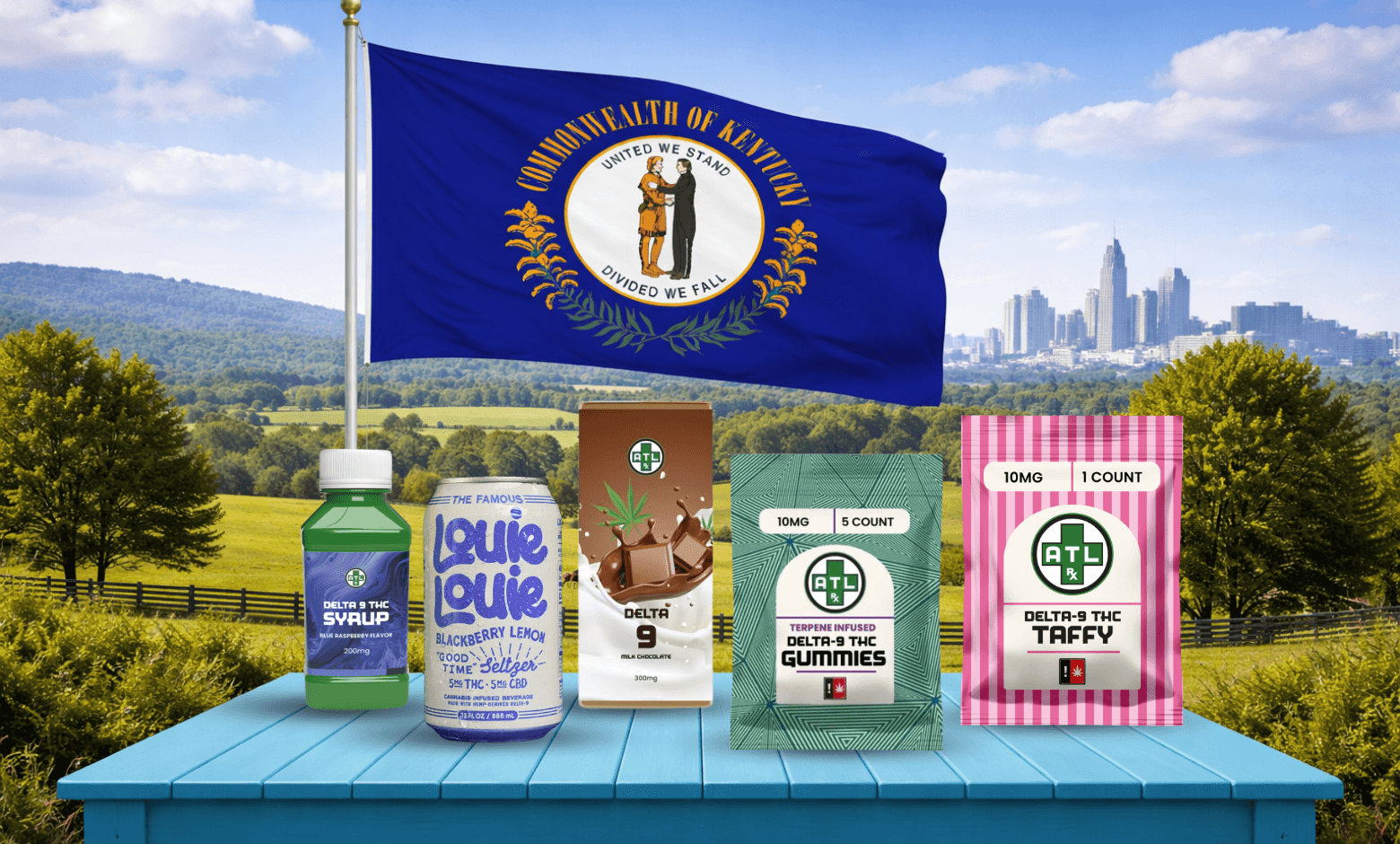
Delta 9 Legal Status in Kentucky:
Yes, Delta-9 THC is legal in Kentucky in 2026 when it is hemp-derived and contains no more than 0.3% Delta-9 THC, as required by KRS 260.850-260.869 and the 2018 Farm Bill. A minimum age of 21 is required to purchase. Products must meet all standards set by HB 544 (2023), including third-party lab testing, compliant labeling, and child-resistant packaging.
Important: Federal law changes under P.L. 119-37 take effect November 12, 2026, and will significantly restrict most current Delta-9 products. What is legal today may change by late 2026.
Keep Browsing
Explore Our Delta 9 THC Categories
Shop real Delta 9 THC products and collections.
Key Takeaways
- 01KRS 260.850-260.869 and the 2018 Farm Bill govern the legality of hemp-derived Delta-9 THC containing no more than 0.3% Delta-9 THC by dry weight.
- 02You must be 21 or older to purchase, possess, or receive any adult-use hemp-derived Delta-9 product in Kentucky. Age verification is required at the point of sale.
- 03HB 544 (2023) sets the rules for all adult-use hemp products in Kentucky, including mandatory third-party lab testing, compliant labeling, child-resistant packaging, and product registration with the state.
- 04The Kentucky Department of Agriculture (KDA) oversees hemp cultivation and product standards in the state.
- 05Recreational marijuana remains illegal in Kentucky. Medical cannabis became legal on January 1, 2025, under SB 47, but only for registered patients with qualifying conditions.
- 06Under current Kentucky law, there are no specific possession limits for hemp-derived Delta-9 products.
- 07Delta-9 products will likely trigger a positive drug test result, even when the product is fully compliant with Kentucky law. Take into account your personal and professional circumstances before purchasing.
- 08Federal law changes (P.L. 119-37), effective November 12, 2026, will significantly restrict most hemp-derived cannabinoid products currently on the market. Legislative efforts to delay or modify these changes are actively underway.
If you have been searching for a straight answer to “Is Delta 9 Legal in Kentucky,” you have come to the right place. For adults 21 and older, hemp-derived Delta-9 THC is legal in Kentucky in 2026, provided it contains no more than 0.3% Delta-9 THC by dry weight and complies with KRS 260.850-260.869 and HB 544 (2023).
Federal law changed significantly in November 2025, and a new set of restrictions on hemp-derived cannabinoid products is set to take effect on November 12, 2026. Understanding what is legal right now, what products are available, and what is on the horizon helps you make informed decisions as a Kentucky consumer.
This guide covers every angle: what Delta-9 THC is, Kentucky’s specific hemp laws, the age requirement, what products you can legally buy, how it compares to neighboring states, drug test considerations, and what the upcoming federal changes mean for you.
At a Glance: Delta-9 THC Legal Status in Kentucky (2026)
| Topic | Details |
| Is Hemp-Derived Delta-9 Legal in KY? | Yes, as of 2026 |
| Legal THC Threshold | No more than 0.3% Delta-9 by dry weight |
| Governing State Statutes | KRS 260.850-260.869 |
| Federal Authority | 2018 Farm Bill (7 U.S.C. Section 1639o) |
| Key State Legislation | HB 544 (2023) |
| Minimum Purchase Age | 21 and older |
| Regulatory Body | Kentucky Dept. of Agriculture (KDA) |
| Recreational Marijuana | Illegal |
| Medical Cannabis | Legal since January 1, 2025 (SB 47) |
| Federal Deadline to Watch | November 12, 2026 (P.L. 119-37) |
What Is Delta-9 THC?
Delta-9 tetrahydrocannabinol, or Delta-9 THC, is the primary psychoactive component of cannabis. Cannabis users most commonly associate it with psychoactive effects.
Cannabis and hemp are both varieties of Cannabis sativa L. The legal distinction between them comes down to a single threshold: 0.3% Delta-9 THC by dry weight. Hemp is defined as cannabis containing at or below that concentration. Marijuana is cannabis that exceeds it.
Because hemp plants naturally produce very low concentrations of Delta-9, manufacturers can extract and formulate products that stay at or below the legal limit. That is the foundation of why hemp-derived Delta-9 products are sold legally across much of the country, including in Kentucky.
Delta-9 THC is a psychoactive compound. Its effects vary from person to person depending on factors like individual tolerance, consumption method, and dosage.
Hemp-Derived Delta-9 vs. Marijuana-Derived Delta-9: What Is the Legal Difference?
Not all Delta-9 THC is treated the same under the law. The source matters:
- Hemp-derived Delta-9 THC (at or below 0.3% by dry weight): Legal under the 2018 Farm Bill, and legal in Kentucky for those 21 and older.
- Marijuana-derived Delta-9 THC: A Schedule I controlled substance under federal law. Illegal for recreational use in Kentucky.
Delta-9 vs. Delta-8 THC: Key Differences
You will likely see both Delta-8 and Delta-9 products in Kentucky stores. Here is how they differ:
- Delta-9 THC: The primary naturally occurring psychoactive cannabinoid in the cannabis plant. Stronger effects compared to Delta-8.
- Delta-8 THC: A structurally distinct isomer of THC. Natural amounts of this substance are very small, and it is typically produced from hemp-derived CBD through a chemical conversion process. Both are currently regulated as adult-use hemp products in Kentucky.
Note: Because Delta-8 is a synthesized/converted cannabinoid, it faces full elimination from the federal hemp definition under the November 2026 federal law changes, regardless of THC concentration. Delta-9 from hemp (at or below 0.3%) is better positioned under the new rules, though most current products would still need reformulation to meet the new 0.4mg per-container cap.
Is Delta-9 Legal in Kentucky? The Full Legal Breakdown
The Federal Foundation: The 2018 Farm Bill
The Agriculture Improvement Act of 2018 (2018 Farm Bill, 7 U.S.C. Section 1639o) is the starting point for all hemp-derived Delta-9 legality. The federal Controlled Substances Act removed hemp from its definition of marijuana and defined it as:
The plant is Cannabis sativa L. Plants, including seeds, extracts, cannabinoids, isomers, acids, salts, and salts of isomers, regardless of whether they are grown or not, that contain a concentration of delta-9 tetrahydrocannabinol not exceeding three-tenths of one percent (0.3%) on a dry weight basis (7 U.S.C. Section 1639o).
That federal definition is the backbone of every hemp-derived Delta-9 product on the market today.
Kentucky State Law: KRS 260.850-260.869
Kentucky aligned its hemp framework with the 2018 Farm Bill through HB 197 (2019), codified under Kentucky Revised Statutes Chapter 260, Sections 260.850 through 260.869. Kentucky uses the same 0.3% Delta-9 THC by dry weight standard as federal law to define hemp.
Hemp cultivation and product manufacturing are regulated by the Kentucky Department of Agriculture (KDA) in the state. Kentucky has long been a major hemp-producing state, and its regulatory framework reflects that agricultural heritage. The KDA maintains a publicly accessible hemp program page where businesses and consumers can find current compliance guidance.
HB 544 (2023): Kentucky’s Adult-Use Hemp Regulation Law
The most important piece of Kentucky-specific legislation for Delta-9 consumers is House Bill 544, signed into law on March 23, 2023. HB 544 was passed in direct response to the proliferation of intoxicating hemp products (Delta-8, Delta-9, and Delta-10 THC) and concerns about youth access to those products.
As a result of HB 544, the Cabinet for Health and Family Services (CHFS) is required to create comprehensive regulations for all hemp-derived cannabinoid products with intoxicating effects. Those regulations were implemented through 902 KAR 45:190 and 902 KAR 45:021 and took effect on August 1, 2023.
Here is what HB 544 requires for all adult-use hemp products sold in Kentucky:
- Age restriction: Products may only be sold to, purchased by, or possessed by adults aged 21 and older. A retailer must verify an individual’s age at the time of sale.
- Third-party lab testing: Hemp products intended for adult use must be tested by an accredited independent lab, with results documented on a Certificate of Analysis (COA).
- Product registration: Manufacturers and processors must register their products with the CHFS before they can be sold in Kentucky.
- Compliant labeling: Products must list total cannabinoid content per serving and per package, all ingredients, batch number, manufacture date, and a QR code or link to the COA.
- Child-resistant packaging: Adult-use cannabis products must be packaged in child-resistant packaging.
- Behind-the-counter placement: Retailers must keep adult-use hemp products behind the counter or in a locked case, not openly on shelves.
- No candy mimicry: Products cannot be packaged or labeled to resemble commercially available candy, snacks, or baked goods. The words “candy” or “candies” are prohibited on packaging.
- Manufacturer permits: In-state manufacturers must obtain permits from CHFS. Hemp processing permits cost $3,000, manufacturing permits cost $1,000, and wholesale warehouse permits cost $1,000.
Kentucky Law: Selling, gifting, or transferring adult-use hemp products to anyone under 21 is illegal under HB 544. This applies to both retail sales and personal transfers. Age verification is mandatory.
What Delta-9 THC Products Are Legal in Kentucky Right Now?
As of April 2026, adults aged 21 and older in Kentucky can legally purchase and possess a range of hemp-derived Delta-9 THC products, provided they comply with the 0.3% THC by dry weight limit and meet all HB 544 requirements. Common legal product types include:
- Delta-9 THC gummies and edibles
- Delta-9 THC tinctures and oils
- Delta-9 THC capsules and softgels
- Delta-9 THC beverages
- Delta-9 THC vape cartridges (hemp-derived)
- Delta-9 THC chocolates and infused snacks
What About Hemp Flower in Kentucky?
Hemp flower is treated differently. 302 KAR 50:070 prohibits the retail sale of raw hemp buds and floral material directly to consumers in Kentucky. Only licensed growers, processors, and handlers can possess and transfer raw hemp flower between themselves. This means processed Delta-9 products (gummies, oils, beverages, capsules) are fully available at retail, but raw hemp or THCA flower cannot be purchased by consumers at a Kentucky store.
Can I Buy Delta-9 Online and Have It Shipped to Kentucky?
Yes. Delta-9 products derived from hemp that meet federal Farm Bill standards can be ordered online and delivered to Kentucky. ATLRx offers a range of fully compliant, third-party-tested hemp-derived Delta-9 products available for delivery to Kentucky addresses. When ordering online, always verify that the seller provides current COAs confirming Delta-9 THC is at or below 0.3% by dry weight.
Shop Delta 9
View all →



Where Can I Buy Delta-9 Products In-Store in Kentucky?
Licensed hemp retailers throughout Kentucky carry compliant Delta-9 products. Retail locations include:
- Hemp dispensaries and specialty stores that sell hemp
- Smoke shops and vape retailers that carry compliant hemp products
- Some wellness and supplement shops
- Certain pharmacies that carry hemp-derived cannabinoid products
Always confirm the retailer requires age verification (21+), provides access to COAs, and keeps products behind the counter as required by state law. Reputable sellers will readily provide this documentation.
What to Look for When Buying Delta-9 in Kentucky
Not all Delta-9 products are created equal. Whether you are shopping in-store or online, here is how to evaluate quality and compliance:
1. Third-Party Certificate of Analysis (COA)
Every reputable hemp-derived Delta-9 product should come with a current COA from an independent, accredited laboratory. The COA should confirm:
- Delta-9 THC concentration is at or below 0.3% by dry weight
- Total cannabinoid profile
- Heavy metals, pesticides, residual solvents, and microbial contaminants are absent
- You must match the batch number of the product you are purchasing
- Within the last 12 months of testing
At ATLRx, all products come with fully accessible, up-to-date COAs. Lab results can be verified directly on the product page before purchasing.
2. Compliant Product Labeling
Under Kentucky’s 902 KAR 45:021 regulations, compliant Delta-9 products must display:
- Per serving and per package, the Delta-9 THC content
- A complete ingredient list
- Manufacture and batch date
- QR codes or URLs linking directly to the COA
- Age restriction warning (21 and older)
- Warning statements for adult-use products are required
Any of these elements missing from a product is a red flag.
3. Reputable Brand With Transparent Practices
Research the brand before purchasing. Look for companies that clearly publish their sourcing, extraction methods, and compliance practices. Review customer reviews and look for industry certifications and memberships (such as the Hemp Industries Association or the National Hemp Association).
4. Hemp Source and Extraction Method
Quality Delta-9 products come from hemp grown in compliance with USDA or state-licensed programs. Ask about extraction methods: CO2 extraction and ethanol extraction are the most common clean methods. A brand that is open about its supply chain is more likely to deliver consistent, compliant products.
Will Delta-9 THC Show Up on a Drug Test?
This is one of the most common questions Kentucky consumers ask, and it is an important one. Yes: hemp-derived Delta-9 THC will likely result in a positive result on a drug test for THC.
Most workplace and law enforcement drug tests use immunoassay screening that detects THC metabolites, specifically THC-COOH. It is impossible to distinguish hemp-derived THC from marijuana-derived THC. As far as a standard urine, blood, or saliva test is concerned, THC is THC regardless of its legal source.
Here are the practical factors Kentucky consumers should understand:
- The presence of THC metabolites in urine can be detected for several days to several weeks, depending on the frequency of use and the individual’s metabolism.
- Hair follicles can detect THC metabolites for up to 90 days.
- The detection window for blood and saliva tests is shorter, but they are less commonly used for employment screening.
- Most employers maintain zero-tolerance THC policies and do not accept explanations about legal hemp-derived use.
- Health care, law, and transportation licensing boards may have strict no-THC policies.
- Consuming a legal hemp-derived Delta-9 product does not guarantee a negative drug test result.
ATLRx recommends that any adult considering hemp-derived Delta-9 products review their own personal, professional, and legal circumstances before purchasing. If you are subject to employer drug testing or professional licensing requirements, factor that into your decision. This is practical information, not a reason to avoid these products; it is simply something every informed consumer should know.
How Does Kentucky Compare to Neighboring States?
When living near a state border or traveling frequently, it is important to understand that hemp-derived Delta-9 laws vary significantly by state. What is legal in Kentucky may not be legal in another state, and you should always research local laws before crossing state lines with any hemp product.
Here is a comparison of Kentucky and its neighboring states as of April 2026:
| State | Hemp-Derived Delta-9 | Recreational Marijuana | Age Limit |
| Kentucky | Legal (hemp-derived, 0.3% limit) | Illegal | 21+ |
| Tennessee | Legal (hemp-derived, 0.3% limit) | Illegal | 21+ |
| Ohio | Banned intoxicating hemp (SB 56, Dec 2025) | Legal (recreational) | 21+ |
| Indiana | Legal (hemp-derived, 0.3% limit) | Illegal | 21+ |
| Virginia | Legal (hemp-derived, 0.3% limit) | Legal (recreational) | 21+ |
| West Virginia | Legal (hemp-derived, 0.3% limit) | Illegal (medical only) | 21+ |
Ohio is the most notable change in the region: in December 2025, Ohio enacted Senate Bill 56, which imposed a categorical ban on intoxicating hemp products statewide. This means Delta-9 THC gummies, beverages, and other intoxicating hemp products that are fully legal in Kentucky cannot be legally possessed or purchased across the Ohio border.
Kentucky’s regulatory stance, which focuses on regulation rather than prohibition, makes it one of the more hemp-friendly states in the region.
Important: Interstate transport of cannabis products, including legal hemp-derived Delta-9, can create legal complications when crossing into states with different laws. Be sure to check the laws in your destination state before traveling with any hemp product.
Recreational Marijuana vs. Hemp-Derived Delta-9 in Kentucky
This distinction trips up a lot of people. Here is the clear breakdown:
Hemp-Derived Delta-9 THC (Legal for Adults 21+)
Products containing Delta-9 THC at or below 0.3% by dry weight are legal in Kentucky for adults 21 and older. These products are available at licensed retailers and online, and are regulated under KRS 260.850-260.869 and HB 544.
Marijuana-Derived Delta-9 THC (Illegal for Recreational Use)
Marijuana for recreational use remains illegal in Kentucky until 2026. Marijuana possession is a misdemeanor punishable by up to $250 in fines and 45 days in jail for a first offense. Sale or distribution carries significantly heavier criminal penalties. Kentucky does not currently have a recreational marijuana legalization initiative on the ballot.
Medical Cannabis (Legal Since January 1, 2025)
In March 2023, Senate Bill 47 was signed into law, establishing Kentucky’s medical cannabis program on January 1, 2025. Patients with qualifying conditions may purchase cannabis products from licensed state dispensaries. However, smoking cannabis is not permitted even for medical patients under the current law, and the program does not apply to recreational use.
For adults in Kentucky who want access to THC without a medical license, hemp-derived Delta-9 products remain the primary and most accessible legal option.
The 2026 Federal Changes: What Every Kentucky Consumer Needs to Know
Most Delta-9 guides skip this section or treat it superficially. Given that you are reading this in 2026, this information is urgent and directly affects what Delta-9 products will look like by the end of this year.
What Happened in November 2025?
This law was signed into law on November 12, 2025, as part of Public Law 119-37, the Continuing Appropriations, Agriculture, Legislative Branch, Military Construction and Veterans Affairs, and Extensions Act, 2026. Approximately one year after this legislation is passed, on November 12, 2026, sweeping changes will be made to the federal definition of hemp under section 781.
As a result of these changes, the hemp-derived cannabinoid market will be materially affected across the country, including Kentucky.
Three Major Changes Taking Effect November 12, 2026
- New per-container THC cap: The previous legal standard measured Delta-9 THC as a percentage of dry weight (0.3%). The new law makes two distinct changes to the plant-level standard: it replaces the Delta-9-only dry weight measure with a total THC concentration standard (inclusive of THCA and Delta-8 THC) still set at 0.3% on a dry weight basis, and separately imposes a hard cap of 0.4 milligrams of total THC per container for finished consumer products. To put that in perspective: a single standard 10mg Delta-9 gummy exceeds this new limit by 25 times. Most Delta-9 edibles and beverages currently on the market would not meet the new threshold without significant reformulation.
- Synthetic and converted cannabinoids banned: Outside the cannabis plant, synthetic or converted cannabinoids are excluded from the definition of hemp. This eliminates Delta-8 THC, Delta-10 THC, HHC, THC-P, and similar lab-converted cannabinoids from the legal hemp framework entirely, regardless of THC concentration.
- Total THC replaces Delta-9-only standard: The new definition accounts for total THC content, including THCA after decarboxylation. As a result, high-THCA products will no longer qualify as legal hemp under the old rules.
Shop Delta 9
View all →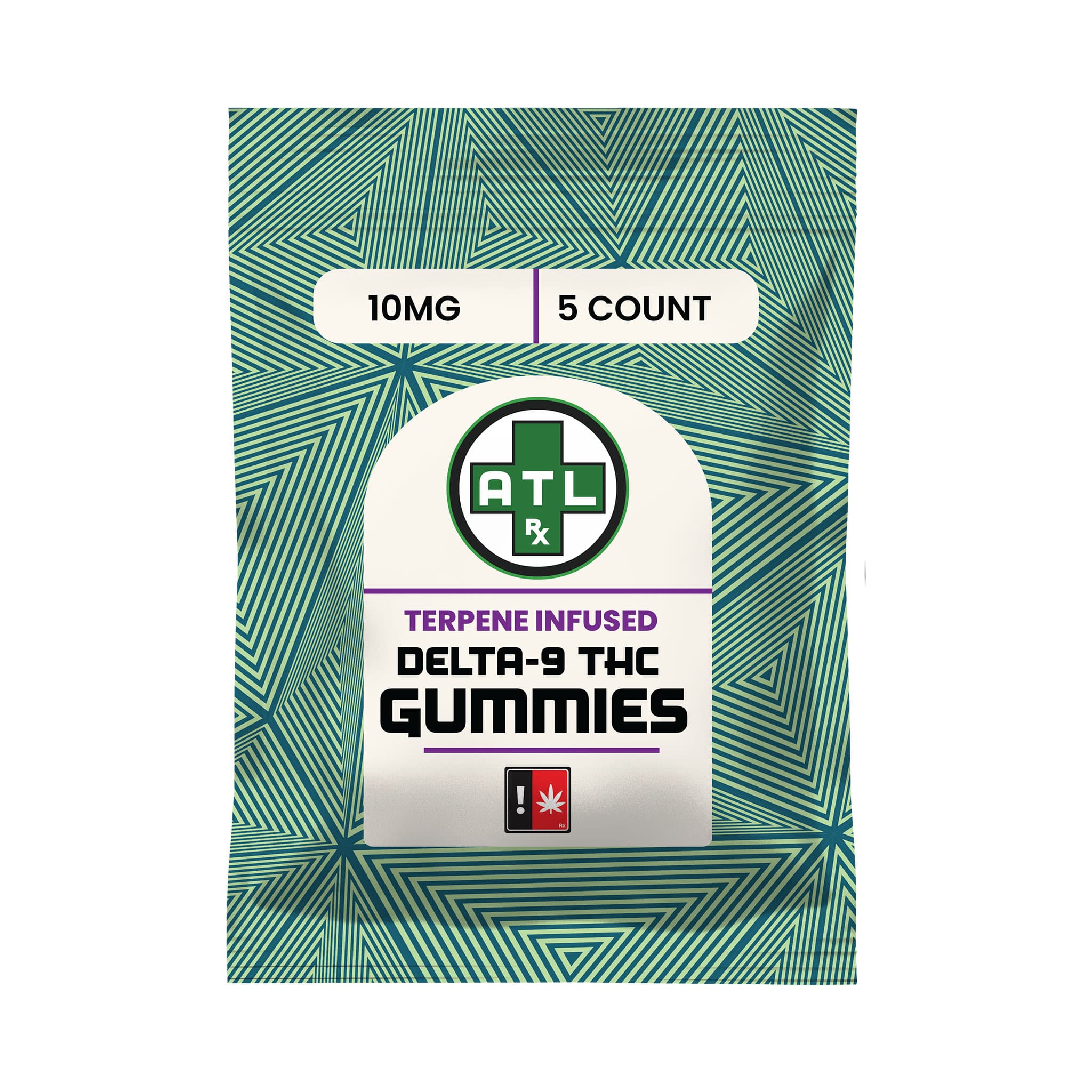
Delta 9 Terpene Infused Gummies 10 MG
Best Value: 20 Count · Save 17%
What This Means for Kentucky Consumers Right Now
Delta-9 products derived from hemp in Kentucky remain fully legal until November 12, 2026. The new rules are not yet in effect. Here’s what you need to know:
- Products complying with Kentucky’s current 0.3% by dry weight standard are legal to purchase and use today.
- Most currently available Delta-9 gummies, beverages, and tinctures would exceed the new 0.4mg per-container federal cap and would need reformulation to remain legal after November 2026.
- Delta-8 and other converted cannabinoids face a more severe outcome under the new rules: they would be excluded from the hemp definition entirely.
- A bill is being developed by Congress to delay or modify these changes. The Hemp Planting Predictability Act was introduced in the House by Rep. Jim Baird (R-IN) with Kentucky’s Rep. James Comer among its co-sponsors, and mirrored in the Senate by Senators Rand Paul (R-KY), Jeff Merkley (D-OR), and Amy Klobuchar (D-MN). The bills would push the effective date back to November 2028. Note: Sen. Mitch McConnell was an architect of the original restrictions in P.L. 119-37, not a supporter of the delay effort.
- President Trump signed an executive order on December 18, 2025, titled ‘Increasing Medical Marijuana and Cannabidiol Research,’ directing the Attorney General to take all necessary steps to expedite rescheduling cannabis from Schedule I to Schedule III under the Controlled Substances Act, and committing to work with Congress on the legal status of hemp-derived cannabinoid products affected by P.L. 119-37, signaling the administration’s preference for a regulated market over outright prohibition.
- P.L. 119-37 required the FDA to publish lists of naturally occurring cannabinoids and THC-class cannabinoids within 90 days of enactment, a deadline falling in approximately February 2026. These lists are scientific taxonomy documents and do not alter the November 12, 2026, effective date of the consumer product restrictions
Bottom line: Hemp-derived Delta-9 products compliant with current Kentucky regulations remain fully legal through at least November 12, 2026. ATLRx is actively monitoring all legislative developments and will update product offerings and this guide as the landscape evolves.
Kentucky’s Hemp Industry: Why This State Matters
Understanding Kentucky’s relationship with hemp explains why the state has been relatively progressive on hemp-derived cannabinoid regulation.
Kentucky has one of the deepest hemp-farming traditions in the United States. The state was a commercial hemp producer long before it became a specialty crop, and it led the nation in hemp cultivation throughout much of the 19th and early 20th centuries. When the 2014 Farm Bill authorized state hemp pilot programs, Kentucky was among the earliest participants, launching a robust pilot program through the Kentucky Department of Agriculture.
The 2018 Farm Bill’s full legalization of hemp aligned directly with Kentucky’s agricultural identity and economic interests. In 2021, Kentucky submitted a revised hemp plan to the USDA, incorporating updated regulations for hemp-derived cannabinoids. The state has continued to refine its regulatory approach, most significantly with HB 544 in 2023, which chose a path of regulation rather than prohibition.
Today, the KDA oversees one of the most structured hemp regulatory programs in the country. Kentucky is consistently cited as one of the most hemp-friendly states from a regulatory standpoint, balancing consumer access with meaningful product safety standards.
Final Thoughts
So, is Delta 9 Legal in Kentucky? Yes, and the answer is backed by a clear legal framework. Hemp-derived Delta-9 THC is fully legal in Kentucky for adults aged 21 and older, provided products stay at or below the 0.3% Delta-9 THC by dry weight threshold and meet the labeling, testing, packaging, and age-restriction requirements established by HB 544 (2023) under KRS 260.850-260.869.
Kentucky’s regulatory approach reflects its identity as a leading hemp state: the focus is on consumer protection and product safety through clear rules, not prohibition. Adults in Kentucky have access to a wide range of compliant Delta-9 products both in licensed stores and online.
The landscape is changing, however. The federal law changes under P.L. 119-37, effective November 12, 2026, will reshape what hemp-derived cannabinoid products look like on a national level. Whether Congress acts to delay, modify, or repeal those changes before they take effect is the defining question for the hemp industry in 2026.
ATLRx is committed to keeping you informed and providing only fully tested, compliant products regardless of how the regulatory picture evolves.
Frequently Asked Questions
Is Delta-9 Legal in Kentucky in 2026?
+
Yes. Delta-9 THC products derived from hemp that contain no more than 0.3% Delta-9 THC by dry weight are legal in Kentucky under KRS 260.850-260.869 and HB 544 (2023). This status is current as of April 2026.
What Is the Age Limit for Delta-9 Products in Kentucky?
+
You must be 21 or older to purchase, possess, or receive adult-use hemp-derived Delta-9 THC products in Kentucky. It is a legal requirement established by HB 544 (2023) and enforced statewide. Retailers are required to verify age at the point of sale, and transferring these products to anyone under 21 is also illegal.
Can I Buy Delta-9 Online and Have It Shipped to Kentucky?
+
Yes. Delta-9 products derived from hemp can be ordered online and shipped to Kentucky. ATLRx ships fully compliant, third-party-tested Delta-9 products to Kentucky residents. Always confirm that any online retailer you use provides current COAs verifying compliance.
Is Recreational Marijuana Legal in Kentucky?
+
No. Marijuana for recreational use is illegal in Kentucky as of 2026. Medical cannabis became legal on January 1, 2025, under Senate Bill 47, but only for registered patients with qualifying conditions. For adults without a medical cannabis card, hemp-derived Delta-9 products are the primary legal THC option in the state.
Will Delta-9 Products Still Be Legal After November 2026?
+
This depends on how Congress responds to the federal law changes in P.L. 119-37. The new rules, effective November 12, 2026, would significantly restrict most current Delta-9 consumer products as formulated today. However, bipartisan legislative efforts are underway to delay or modify these rules.
Will Hemp-Derived Delta-9 THC Show Up on a Drug Test?
+
Yes. The standard drug test can detect THC metabolites but not hemp-derived or marijuana-derived THC. If you are subject to workplace drug testing, professional licensing requirements, or any other testing scenario where a positive THC result would have consequences, account for that before purchasing or using any Delta-9 product.
What Is the Difference Between Delta-8 and Delta-9 THC in Kentucky?
+
Both are currently regulated as adult-use hemp products under Kentucky’s HB 544 framework. Delta-9 THC is the primary psychoactive component of cannabis. Delta-8 is a structurally distinct isomer typically produced through chemical conversion from hemp-derived CBD. Importantly, Delta-8 faces a more uncertain future under the November 2026 federal changes, as the new law specifically excludes synthesized cannabinoids from the hemp definition.
How Does Kentucky’s Delta-9 Law Compare to Ohio’s?
+
Ohio is the most significant regional contrast. Senate Bill 56, enacted Ohio Governor Mike DeWine signed Senate Bill 56 on December 19, 2025, with the law taking effect 90 days later in March 2026. Rather than an outright ban, SB 56 requires that all intoxicating hemp products — including Delta-9 gummies and beverages — be sold exclusively through licensed marijuana dispensaries, effectively removing them from general retail, including Delta-9 gummies and beverages. Kentucky’s approach is regulation-based rather than prohibition-based, making it significantly more permissive than Ohio for hemp-derived Delta-9 consumers.
Where Can I Buy Delta-9 THC Products in Kentucky?
+
Compliant hemp-derived Delta-9 products are available at licensed retailers throughout Kentucky and from online retailers like ATLRx. Always purchase from retailers who provide current lab results and enforce the 21+ age requirement. ATLRx offers hemp-derived Delta-9 products with same-day shipping to Kentucky addresses.
Are There Possession Limits for Delta-9 in Kentucky?
+
No specific possession limits are established under current Kentucky law for compliant hemp-derived Delta-9 products. However, products must remain compliant (at or below 0.3% Delta-9 THC by dry weight), and possession by anyone under 21 is illegal regardless of amount.
Related Articles:
Why Trust This Guide
- ATLRx has sold third-party lab-tested hemp products out of Georgia since 2019.
- Every real batch we sell is tested by an accredited outside lab, with the Certificate of Analysis published before you buy.
- We operate 3 real physical stores in Georgia — this isn't a drop-shipped storefront.
- Legal information is rechecked and updated as rules change, not published once and forgotten.
This guide is for general information only and is not legal advice. While we update it as rules change, state laws can shift quickly. Please confirm current laws with your state’s official sources.
Don't Trust the Label. Check the Lab.
ATLRx publishes third-party Certificates of Analysis for real batches so you can verify cannabinoid content before you buy — not just take the package's word for it.
View Lab Results →Have Questions?
Visit an ATLRx store in Georgia and talk to our team.
Real Customers, Real Reviews
What Customers Are Saying

Jen Hight
Cannabis Industry Expert & Compliance Specialist Jen Hight is a cannabis industry professional with extensive experience in hemp compliance, product development, and consumer education. With a background in regulatory affairs and a passion for helping consumers navigate the complex world of cannabinoids, Jen provides accurate, up-to-date information on hemp legality and best practices. Her work focuses on making cannabis knowledge accessible while ensuring readers understand both the opportunities and responsibilities that come with legal hemp products.
View all articles →Keep Learning

Where To Buy Delta 9 Gummies Near Me?
You can buy Delta 9 gummies near you at five types of retailers: a licensed cannabis dispensary, a hemp or CBD store, a vape or smoke shop, a convenience store, or online, directly from a hemp brand. In many states, these sit on ordinary retail shelves and can be mailed to a home address. The […]
Oct 21, 2026 · 10 min read

Where to Buy Delta 9 in Texas?
Delta 9 Availability in Texas: Yes. Hemp-derived Delta 9 is legal to buy in Texas in August 2026. To qualify, a product has to come from hemp and test at 0.3% or less total THC on a dry weight basis. Texas has computed that figure as (0.877 x THCA) + Delta 9 since March 31, […]
Aug 7, 2026 · 26 min read

Where to Buy Delta 9 in Oklahoma?
Delta 9 Availability in Oklahoma: Yes. Delta 9 THC derived from hemp is legal in Oklahoma starting in 2026 for adults 21 and older. It must be made from hemp, not marijuana, and contain less than 0.3% Delta-9 THC by dry weight. Medical marijuana does not require a card. You can buy it online or […]
Aug 5, 2026 · 23 min read

Where to Buy Delta 9 in Iowa?
Delta 9 Availability in Iowa: Yes, hemp-derived Delta 9 is legal in Iowa in 2026, but only if it follows the state’s rules. Consumable hemp products cannot contain more than 4 mg of total THC per serving and 10 mg of total THC per container. The product also has to come from legal hemp, be […]
Aug 4, 2026 · 25 min read
Stay Informed
New product releases, hemp law updates, and useful cannabinoid guides.