

$39.99

ARE YOU 21 YEARS OF AGE OR OLDER?
REMEMBER ME
Seriously, by using this site you are confirming that you are of legal age (21+) to view and purchase these products. If you are you are not over 21. you are not authorized by us to use or view any of the pages of this site. Please review our terms and conditions at checkout for further stipulations.
 >
Blogs
>
THCA >
Is THCA Legal in Wisconsin? 2026 Complete Legal Guide
>
Blogs
>
THCA >
Is THCA Legal in Wisconsin? 2026 Complete Legal Guide
THE STATEMENTS ON THIS BLOG ARE NOT INTENDED TO DIAGNOSE, TREAT, CURE, OR PREVENT ANY DISEASE. THE FOOD AND DRUG ADMINISTRATION HAS NOT EVALUATED ANY STATEMENTS CONTAINED WITHIN THE BLOG. ATLRX DOES NOT IN ANY WAY GUARANTEE OR WARRANT THE ACCURACY, COMPLETENESS, OR USEFULNESS OF ANY MESSAGE. THE INFORMATION CONTAINED WITHIN THIS BLOG IS FOR GENERAL INFORMATIONAL PURPOSES ONLY.
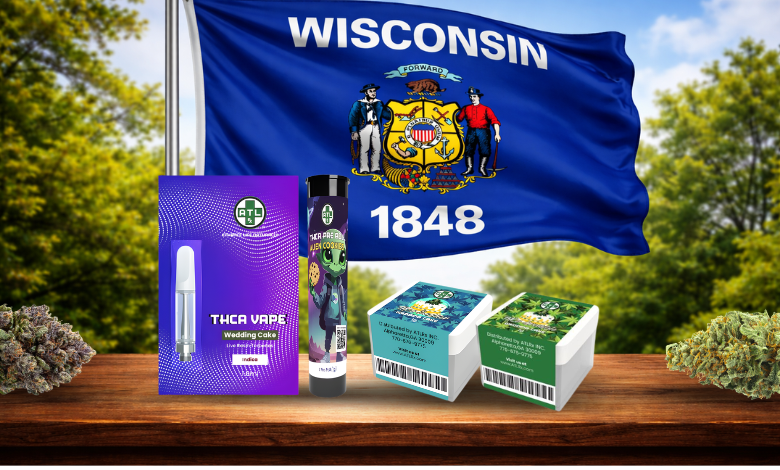
THCA Legal Status in Wisconsin:
Yes, Hemp-derived THCA is legal in Wisconsin in 2026, with conditions. Wisconsin Statutes § 94.55 (Hemp), THCA products are legal at the point of sale if they contain less than 0.3% Delta-9 THC by dry weight. Wisconsin has not explicitly banned THCA by name.
In Wisconsin, hemp-derived THCA products containing less than 0.3% Delta-9 THC by dry weight are legal under Wisconsin Statutes § 94.55 (Hemp), the state’s hemp program statute, which is aligned with the federal 2018 Farm Bill. The state of Wisconsin has not explicitly banned THCA, and it does not appear on the list of controlled substances under current state law.
There is, however, more nuance to THCA’s legal status than a simple yes or no. The chemical process of converting THCA into Delta-9 THC takes place when it is heated, be it through smoking, vaping, or cooking. This process is called decarboxylation. At that point, enforcement authorities and testing agencies may view the product differently, especially since “total THC” calculations can push a product over the legal limit.
Wisconsin is also one of the more conservative states on cannabis broadly: recreational and medical marijuana remain prohibited, and state law continues to treat THC and its derivatives as controlled substances. This creates a complex environment where a product can be technically compliant on paper but still carry legal risk depending on how it is used and how law enforcement interprets it.
This guide breaks down everything Wisconsin residents and visitors need to know about THCA legality in 2026: the relevant state statutes, how testing works, what product types are available, the latest legislative developments, and how to buy with confidence.
Table of contents:
Tetrahydrocannabinolic Acid, or THCA, is a naturally occurring, non-psychoactive precursor to Delta-9 THC found in raw hemp and cannabis plants. In its unheated state, THCA does not produce intoxicating effects — it is only when heat is applied that the compound undergoes decarboxylation and converts into the psychoactive Delta-9 THC most people are familiar with.
This distinction is central to understanding THCA’s legal status. Because THCA in its raw form is not psychoactive, it occupies a different — and somewhat ambiguous — position under hemp and controlled substance laws compared to Delta-9 THC.
| Factor | THCA (Raw) | Delta-9 THC |
|---|---|---|
| Psychoactive? | No (in raw/unheated form) | Yes |
| Found in raw hemp? | Yes | In small amounts |
| Becomes THC when heated? | Yes (decarboxylation) | Already THC |
| Legal under the 2018 Farm Bill? | Yes, if Delta-9 < 0.3% | Only if < 0.3% by dry weight |
| Is Wisconsin a controlled substance? | Not explicitly listed | Yes, if > 0.3% |
| Shows on drug tests? | Yes (metabolizes to THC-COOH) | Yes |
The 2018 Agriculture Improvement Act, commonly called the Farm Bill, transformed the national hemp landscape by removing hemp from the federal Controlled Substances Act. Hemp is defined as Cannabis sativa L. derivatives containing less than 0.3% Delta-9 THC by dry weight.
THCA is not explicitly named in the 2018 Farm Bill, and because it is not Delta-9 THC in its raw form, hemp-derived THCA initially occupied a permissive space under federal law — provided Delta-9 THC levels in the product stayed under 0.3%.
However, the USDA introduced a critical testing requirement via 7 CFR § 990.1 that applies a specific formula to determine total THC compliance:
Total THC = Delta-9 THC + (THCA × 0.877)
The 0.877 factor accounts for the molecular weight loss that occurs when THCA converts to Delta-9 THC during decarboxylation. This formula means that even if a product’s raw Delta-9 THC level is below 0.3%, a high THCA concentration can push the total THC calculation over the legal threshold.
In practical terms, THCA flower with 20% THCA content would calculate a total THC of approximately 17.5% — far exceeding the 0.3% limit. This is the central compliance tension for THCA flower products specifically.
Under P.L. 119-37, effective November 12, 2026, finished hemp-derived cannabinoid products (including tinctures, edibles, beverages, and capsules) are limited to no more than 0.4 milligrams of total THC per container. This cap is far below the amount in most currently sold products and will eliminate most ingestible hemp THC products from the legal market, regardless of their dry-weight percentage compliance.
Wisconsin codified its hemp program primarily through Wisconsin Statutes § 94.55 (Hemp), which aligns state hemp definitions with the 2018 Farm Bill. The relevant provisions also appear in Senate Bill 119, sections 94.67(15r) and 961.14(4)(t)1.
Key points of Wisconsin’s statutory framework:
The bottom line: THCA from compliant hemp is not a controlled substance in Wisconsin when purchased and possessed in product form. However, the moment a consumer heats and uses that product, it potentially falls into a legal gray area because the resulting THC levels may exceed state thresholds.
Wisconsin’s cannabis law landscape is actively shifting. Here are the key developments every THCA consumer and business in the state should know:
Efforts to advance marijuana reform in Wisconsin were removed from the 2025 state budget, confirming that no near-term path to broader cannabis legalization exists at the state level. Wisconsin remains one of the stricter states on cannabis broadly.
Multiple Wisconsin cities enacted 21+ purchase-age restrictions for hemp-derived THC products in 2025. Milwaukee passed such an ordinance, as did Madison in November 2025 — with Madison additionally prohibiting retailers from locating within a quarter-mile of youth-serving organizations. Because Wisconsin state law does not set a statewide age floor for hemp products, local ordinances vary by municipality. Consumers and retailers across Wisconsin should verify local rules in addition to state requirements.
A sweeping amendment to federal hemp definitions was passed by Congress on November 12, 2026. Under the new rules, the total THC formula (Delta-9 THC + THCA × 0.877) will become the federal standard for all hemp compliance determinations — not just for pre-harvest testing.
For THCA flower specifically, this means that high-THCA products that are currently sold as legal hemp will no longer qualify under the new federal definition if their total THC exceeds 0.3%. Wisconsin consumers and retailers should plan for significant changes to the THCA flower market by Q4 2026.
As of the date of this article, Wisconsin has not passed any laws specifically naming or restricting THCA by name. This leaves its legality tied to the broader hemp and THC frameworks described above. Consumers should monitor for any changes, as the state’s conservative cannabis stance could prompt targeted legislation.
This is the single most important nuance for THCA purchasers in Wisconsin to understand.
Here is how compliance testing works and where the gray area lies:
When a THCA product is tested before being heated, the laboratory typically measures only the Delta-9 THC present in the raw product. If that level is below 0.3%, the product can be legally sold as hemp-derived in Wisconsin at the point of sale.
When THCA flower or concentrate is smoked, vaped, or cooked, the THCA converts to Delta-9 THC. Under the total THC formula, a product with high THCA may produce Delta-9 THC levels that significantly exceed 0.3% — technically making the consumed form non-compliant, even if the product was purchased legally.
Wisconsin law does not explicitly protect consumers in this post-decarboxylation scenario. Law enforcement may treat high-THCA products similarly to marijuana — especially without documentation proving hemp origin.
Hemp-derived THCA products are legal in Wisconsin, provided they meet the 0.3% Delta-9 THC threshold.
| Product Type | Description | Compliance Notes |
|---|---|---|
| THCA Flower | Raw hemp buds with high THCA, low Delta-9 THC | Compliant pre-heat; gray area when smoked/vaped due to decarboxylation |
| THCA Pre-Rolls | Pre-rolled THCA hemp flower joints | Same compliance considerations as flower — carry your COA |
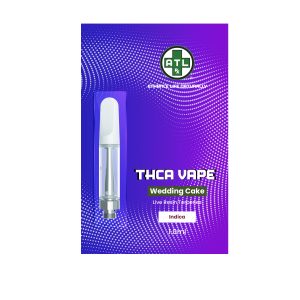
| THCA Vape Carts | Concentrated THCA in vape cartridge form | Heat applied during use converts THCA to THC — buy from tested brands only |
| THCA Concentrates (Diamonds, Badder, Crumble) | Highly concentrated THCA extracts | Very high THCA content — total THC formula is especially relevant here |
| THCA Tinctures | Liquid THCA in carrier oil, taken sublingually | Lower risk profile — no heat applied; easier to verify Delta-9 compliance |
| THCA Isolate Powder | Pure crystallized THCA | Check COA carefully — purity verification critical |
ATLRx carries a full range of these product types — all sourced from compliant hemp and third-party tested. You can view batch-specific Certificates of Analysis directly on the ATLRx lab results page before purchasing.
ATLRx is a Georgia-based hemp retailer with years of experience sourcing compliant, high-quality hemp products and shipping to customers nationwide, including Wisconsin. Here is what sets ATLRx apart for Wisconsin shoppers:
In Wisconsin, hemp-derived THCA is legal under Wis. Stat. Under 94.55 and the 2018 Farm Bill, products must not contain more than 0.3% Delta-9 THC by dry weight. Wisconsin has no specific ban on THCA, and it is not listed as a controlled substance in its unheated, hemp-derived form.
That said, Wisconsin’s conservative cannabis framework and the chemical reality of decarboxylation create genuine compliance complexity — especially for THCA flower when smoked or vaped. The approaching November 2026 federal hemp rule changes will tighten the total THC standard further, making compliant sourcing and clear COA documentation more important than ever.
For Wisconsin consumers, the path to buying and using THCA responsibly is clear: choose reputable, transparent retailers, verify COAs, carry your documentation, and stay informed as laws continue to evolve.
ATLRx offers a full range of third-party tested, Farm Bill-compliant THCA products available for delivery to Wisconsin. Browse our THCA collection or review our lab results before you order.
Yes. Hemp-derived THCA products containing less than 0.3% Delta-9 THC by dry weight are legal under Wisconsin Statutes § 94.55 (Hemp), consistent with the 2018 Farm Bill. However, the legal picture becomes more complex once THCA is heated and converts to Delta-9 THC. Always carry your COA as proof of compliance.
THCA in its raw, hemp-derived form is not explicitly listed as a controlled substance under Wisconsin law as long as the product complies with the 0.3% Delta-9 THC threshold. However, Wisconsin’s broader controlled substance laws cover THC and its analogs, which can create ambiguity around THCA’s post-decarboxylation status.
Yes. THCA flower that is hemp-derived and contains less than 0.3% Delta-9 THC at the point of sale can be legally purchased in Wisconsin. Compliant products are available from licensed online retailers like ATLRx, as well as select local hemp shops. Always verify with a COA.
This is the gray area. The product itself may be compliant at purchase, but smoking or vaping THCA converts it to Delta-9 THC. The resulting THC levels from high-THCA flower can far exceed 0.3%, which Wisconsin law would treat as a controlled substance. It may be difficult for law enforcement to distinguish between hemp-derived THCA smoke and marijuana smoke without lab testing. Carrying your COA is strongly recommended.
Yes. As a result of the 2018 Farm Bill, hemp-derived THCA products can be shipped to Wisconsin from online retailers. ATLRx ships compliant THCA products to Wisconsin with documentation included.
Yes. THCA and Delta-9 THC are both metabolized into THC-COOH, the metabolite standard drug tests screen for. THCA products can result in positive drug test results, even in their unheated form. In the event that you are subject to workplace or legal drug testing, exercise caution.
Wisconsin state law does not set a specific age requirement for hemp purchases. Many retailers restrict the sale of THCA products to customers 18 or 21 years of age or older. In Milwaukee, a local 2025 ordinance requires purchasers to be 21 or older for hemp-derived THC products.
Wisconsin does not impose specific possession limits for compliant hemp-derived THCA products. However, since the line between legal hemp and illegal marijuana can be difficult for law enforcement to assess in the field, keeping quantities reasonable and carrying documentation is advisable.
Traveling within Wisconsin with compliant hemp-derived THCA products is generally permissible. Keep your COA accessible. Note that crossing into states where THCA is explicitly restricted (such as Idaho or Oregon) with these products creates separate legal risks.
The total THC formula — Total THC = Delta-9 THC + (THCA × 0.877) — calculates how much Delta-9 THC a product could produce if all its THCA were converted through heat. A product with high THCA (like 20% THCA flower) would calculate a total THC of about 17.5%, which is far above the 0.3% legal threshold. This formula is used in USDA compliance testing and will become the federal standard under the November 2026 hemp rule changes.
Check the product’s Certificate of Analysis (COA) with a third-party laboratory.
The COA should show:
As of early 2026, Wisconsin has not legalized recreational or medical marijuana, and cannabis reform was removed from the state’s 2025 budget. While public support for legalization has grown and neighboring states like Illinois and Michigan have moved forward, there is no clear near-term path to legalization in Wisconsin.

July 23, 2026
July 22, 2026
July 21, 2026
July 20, 2026
July 17, 2026
$39.99
$49.99
$49.99
$49.99
$39.99
$39.99
$49.99