Are Mushroom Gummies Legal in California? 2026 Legal Guide
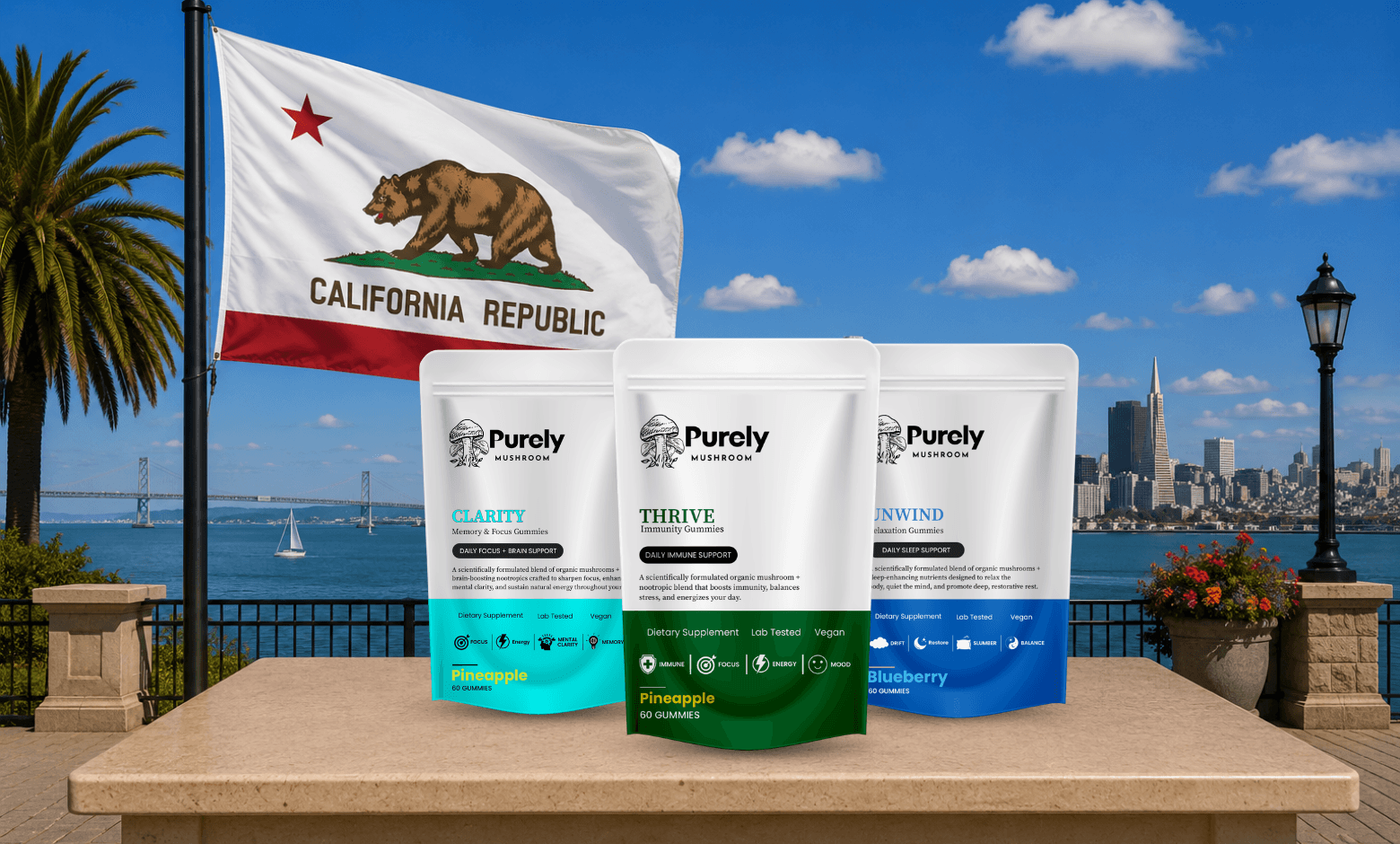
Mushroom Gummies Legal Status in California:
In short, yes, functional mushroom gummies made with non-psychoactive ingredients like Lion’s Mane, Reishi, Turkey Tail, and Cordyceps are legal to buy, sell, and possess across California. The legality only becomes complicated when a “mushroom gummy” contains psilocybin (the compound in “magic mushrooms”), which remains a controlled substance statewide. The category you are shopping in matters far more than the word “mushroom” on the label.
If you have searched “are mushroom gummies legal in California,” you have probably noticed that the answer seems to change depending on which page you land on, and that is because the word “mushroom” covers products that the law treats in completely different ways. Functional mushroom gummies, psilocybin gummies, and Amanita Muscaria gummies all get shelved under the same search term, yet each sits in its own legal lane. Add in California’s recent push to tighten the rules around hemp, and it is easy to see why shoppers end up confused.
This guide cuts through that noise. It explains where California law stands in 2026 for each type of mushroom gummy, why the state’s newest hemp legislation generally does not apply to functional mushroom products, and how to check whether a gummy on the shelf is legal before you buy it.

Key Takeaways
- 01Functional mushroom gummies are legal in California. Products made with non-psychoactive mushrooms like Lion’s Mane, Reishi, Turkey Tail, and Cordyceps can be bought, sold, and possessed statewide.
- 02Psilocybin gummies are not legal statewide. Psilocybin is a Schedule I controlled substance, and local decriminalization in a few cities does not make it legal to sell or buy.
- 03Amanita Muscaria gummies are a separate category. Muscimol is not a scheduled substance, so these sit in a developing area of the law rather than under an outright federal ban — but they are a different ingredient entirely and are not covered by this guide.
- 04California’s new hemp laws (AB-8 and SB 378) target THC, not mushrooms. Functional mushroom gummies contain no THC, CBD, or hemp, so this legislation generally does not apply to them.
- 05The category on the label is what matters. Check the active ingredient, confirm there is no psilocybin, and look for third-party lab testing before you buy.
The Short Version, by Mushroom Type
People use the phrase “mushroom gummies” to describe three very different products, and the law treats each one differently. Lumping them together is exactly why the question feels so confusing.
| Type of Mushroom Gummy | Primary Ingredient | California Legal Status (2026) |
| Functional/adaptogenic | Lion’s Mane, Reishi, Turkey Tail, Cordyceps | Legal to buy, sell, and possess |
| Psilocybin (“magic mushroom”) | Psilocybin/psilocin | Not legal statewide (Schedule I) |
| Amanita Muscaria | Muscimol | Not a scheduled substance; sold in a developing legal area |
Functional (Adaptogenic) Mushroom Gummies: Legal
This is the category most shoppers are actually looking for, and the good news is simple. Functional mushroom gummies are legal in California.
Functional mushrooms, sometimes called adaptogenic or medicinal mushrooms, include well-known varieties such as Lion’s Mane, Reishi, Turkey Tail, Cordyceps, Chaga, and Maitake. None of these contains psilocybin, and none are psychoactive. They are generally sold as dietary supplements and are subject to FDA labeling and manufacturing standards rather than controlled-substance law.
Because they contain no scheduled compounds and no intoxicating cannabinoids, functional mushroom gummies sit entirely outside both California’s controlled-substance statutes and the state’s hemp regulations. You can find them in gummy, capsule, powder, tincture, and tea formats throughout the state.
A few qualities to look for in this category:
- Clear ingredient labeling that names the specific mushrooms and the extract type (fruiting body, mycelium, or both)
- Third-party lab testing with a certificate of analysis available on request
- Manufacturing in cGMP-certified facilities
- No psilocybin and no intoxicating cannabinoids anywhere in the formula
If a gummy meets these criteria, its legal standing in California is straightforward.
Psilocybin “Magic Mushroom” Gummies: Not Legal Statewide
When most people first ask whether mushroom gummies are legal, they are picturing psilocybin, the compound found in “magic mushrooms.”
Psilocybin and psilocin are classified as Schedule I controlled substances under both federal law and California state law. That means manufacturing, possessing, selling, or distributing psilocybin gummies is prohibited statewide, and commercial sale can carry serious criminal penalties.
You may have read about “decriminalization” in cities such as Oakland, Santa Cruz, San Francisco, and Berkeley. It is important to understand what that actually means. These local measures direct police to treat personal possession of natural psychedelics as a low enforcement priority. They do not legalize psilocybin, and they do not permit anyone to sell it. Decriminalization at the city level and legalization at the state level are two very different things, and California has not legalized psilocybin.
Bottom line: Any gummy marketed as containing psilocybin is not a legal retail product in California.
Amanita Muscaria Gummies: A Separate Category
A third type of “mushroom gummy” uses Amanita Muscaria, the iconic red-and-white mushroom from folklore. Its active compound, muscimol, is chemically unrelated to psilocybin.
Here is the key legal distinction: Amanita Muscaria and muscimol are not scheduled controlled substances under California or federal law. Louisiana is currently the only state with an outright ban, though a handful of states have begun exploring their own regulations, so this is an evolving area. It is worth noting that in December 2024, the FDA determined that Amanita muscaria and its constituents do not meet the safety standard for use in food, which adds further uncertainty to the category.
The takeaway for shoppers is simple: Amanita is an entirely different ingredient with an entirely different legal and regulatory footing from functional mushrooms. It is not the category this guide focuses on, and the functional mushroom products described below do not contain it.
How California’s 2025–2026 Hemp Laws Fit In (AB-8 and SB 378)
A lot of the recent confusion comes from California’s crackdown on intoxicating hemp, and it is worth explaining why that crackdown usually does not touch functional mushroom gummies.
In 2025, Governor Newsom signed Assembly Bill 8 (AB-8), which folds intoxicating hemp products into California’s regulated cannabis framework. AB-8 phases over several years. Its first phase took effect on January 1, 2026, banning smokable hemp, requiring industrial hemp raw extract used in food, beverages, and dietary supplements to have a purity level greater than 99% with no THC or synthetic cannabinoids, and barring tobacco retailers from carrying intoxicating hemp products. The law’s central change, moving all intoxicating cannabinoid products, regardless of whether they come from hemp or cannabis, into licensed dispensaries under the same testing and labeling standards, does not take full effect until January 1, 2028. A companion law, Senate Bill 378 (SB 378), takes effect July 1, 2026, and targets online marketplaces that host unlicensed cannabis or hemp sales.
Here is the part that matters for this article: AB-8 and SB 378 regulate intoxicating cannabinoids such as THC. Functional mushroom gummies made from Lion’s Mane, Reishi, Turkey Tail, or Cordyceps contain no THC, no CBD, and no hemp at all. Because they are not intoxicating cannabinoid products, this wave of hemp legislation generally does not apply to them. That is a major reason functional mushroom gummies have stayed clearly legal while many hemp-derived products have faced new restrictions.
In other words, the laws tightening around “gummies” in California are aimed at THC, not at functional mushrooms.
How to Tell If a Mushroom Gummy Is Legal Before You Buy
You do not need a law degree to shop with confidence. Run any product through this quick checklist:
- Read the active ingredient. If it lists functional mushrooms (Lion’s Mane, Reishi, Turkey Tail, Cordyceps) and no psilocybin, you are in the legal category.
- Look for the word “psilocybin.” If it appears, the product is not a legal California retail item, regardless of how it is marketed.
- Check for a certificate of analysis (COA). Reputable brands publish third-party lab results for purity and potency.
- Confirm the manufacturing standard. cGMP-certified production and clear sourcing are strong signals.
- Match the claims to the category. Functional mushroom products are sold as supplements; be skeptical of any retail gummy promising a psychedelic experience.
A legitimate functional mushroom gummy will pass all five checks easily.
Functional Mushroom Products Available at ATLRx
If you are shopping for legal, functional mushroom gummies in California, ATLRx carries a focused lineup of Mushroom Products built around commonly used functional mushrooms and complementary botanicals. All three are made with non-psychoactive ingredients, contain no psilocybin, and are third-party tested.
Thrive Gummies by Purely Mushroom
Thrive Gummies by Purely Mushroom bring together all four core functional mushrooms, Reishi, Lion’s Mane, Turkey Tail, and Cordyceps, plus Zinc Glycinate, in a single pineapple-flavored gummy. They are Vegan, Non-GMO, and made without artificial dyes.
Unwind Gummies by Purely Mushroom
Unwind Gummies by Purely Mushroom are a blueberry-flavored gummy that pairs Reishi and Turkey Tail mushrooms with Ashwagandha, L-Theanine, and Magnesium Glycinate. Like the rest of the line, they are Vegan, Non-GMO, Allergen-Free, Gelatin-Free, and made without artificial dyes.
Clarity Gummies by Purely Mushroom
Clarity Gummies by Purely Mushroom are a pineapple-flavored gummy featuring Lion’s Mane and Cordyceps alongside Alpha GPC, Phosphatidylserine, and Rhodiola. Clarity Gummies are Vegan, Non-GMO, Gelatin-Free, and Corn Syrup-Free.
All three Purely Mushroom gummies are non-psychoactive functional mushroom supplements, which places them squarely in the legal category described above. You can explore the full ATLRx Mushroom Products collection to compare formulas, ingredients, and lab results.
Frequently Asked Questions
Are Functional Mushroom Gummies Legal in California?
+
Yes. Functional mushroom gummies made with non-psychoactive mushrooms such as Lion’s Mane, Reishi, Turkey Tail, and Cordyceps are legal to buy, sell, and possess in California. They contain no psilocybin and no intoxicating cannabinoids.
Are Psilocybin Mushroom Gummies Legal in California?
+
No. Psilocybin is a Schedule I controlled substance under both California and federal law, so psilocybin gummies are not legal to sell or buy as retail products anywhere in the state. Local decriminalization measures in a few cities reduce enforcement priority for personal possession but do not legalize psilocybin.
Does California’s AB-8 Hemp Law Ban Mushroom Gummies?
+
AB-8 regulates intoxicating cannabinoid products such as THC. Functional mushroom gummies contain no THC, CBD, or hemp, so this legislation generally does not apply to them.
What Is the Difference Between Functional Mushrooms and Magic Mushrooms?
+
Functional mushrooms (Lion’s Mane, Reishi, Turkey Tail, Cordyceps) are non-psychoactive and are sold as dietary supplements. “Magic mushrooms” contain psilocybin, a controlled substance. They are entirely different categories under the law.
What Should I Look for When Buying a Legal Mushroom Gummy?
+
Check that the active ingredients are functional mushrooms, confirm there is no psilocybin, look for a third-party certificate of analysis, and verify cGMP-certified manufacturing.
Discaimer: This article is for general informational purposes only and is not legal advice. Laws change; verify current regulations or consult a qualified professional for guidance on your specific situation. These statements have not been evaluated by the Food and Drug Administration. These products are not intended to diagnose, treat, cure, or prevent any disease.
Why Trust This Guide
- ATLRx has sold third-party lab-tested hemp products out of Georgia since 2019.
- Every real batch we sell is tested by an accredited outside lab, with the Certificate of Analysis published before you buy.
- We operate 3 real physical stores in Georgia — this isn't a drop-shipped storefront.
- Legal information is rechecked and updated as rules change, not published once and forgotten.
This guide is for general information only and is not legal advice. While we update it as rules change, state laws can shift quickly. Please confirm current laws with your state’s official sources.
Don't Trust the Label. Check the Lab.
ATLRx publishes third-party Certificates of Analysis for real batches so you can verify cannabinoid content before you buy — not just take the package's word for it.
View Lab Results →Have Questions?
Visit an ATLRx store in Georgia and talk to our team.
Real Customers, Real Reviews
What Customers Are Saying
“really fire”
“Buy all you can!! News laws take effect Dec. 11”
“After long day, or night, this helps to relax and relieve!”

Jen Hight
Cannabis Industry Expert & Compliance Specialist Jen Hight is a cannabis industry professional with extensive experience in hemp compliance, product development, and consumer education. With a background in regulatory affairs and a passion for helping consumers navigate the complex world of cannabinoids, Jen provides accurate, up-to-date information on hemp legality and best practices. Her work focuses on making cannabis knowledge accessible while ensuring readers understand both the opportunities and responsibilities that come with legal hemp products.
View all articles →Keep Learning
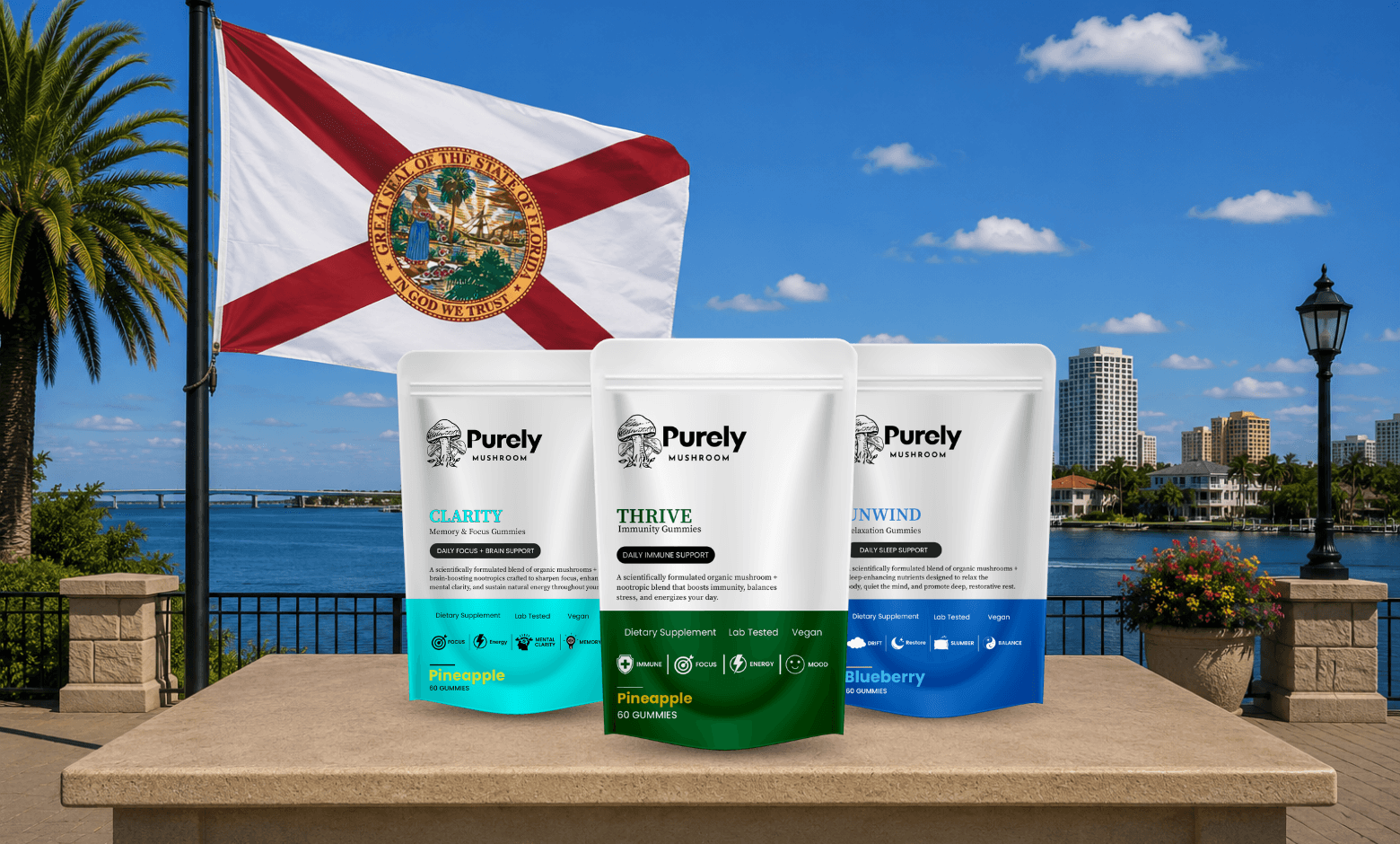
Are Mushroom Gummies Legal in Florida? 2026 Legal Guide
Mushroom Gummies Legal Status in Florida: It is legal in Florida to make mushroom gummies using non-psychoactive functional mushrooms such as Lion’s Mane, Reishi, Turkey Tail, and Cordyceps. Gummies that contain psilocybin (the compound in “magic mushrooms”) remain illegal under both federal and Florida law. A separate category, Amanita muscaria, sits in its own legal […]
Jul 20, 2026 · 10 min read
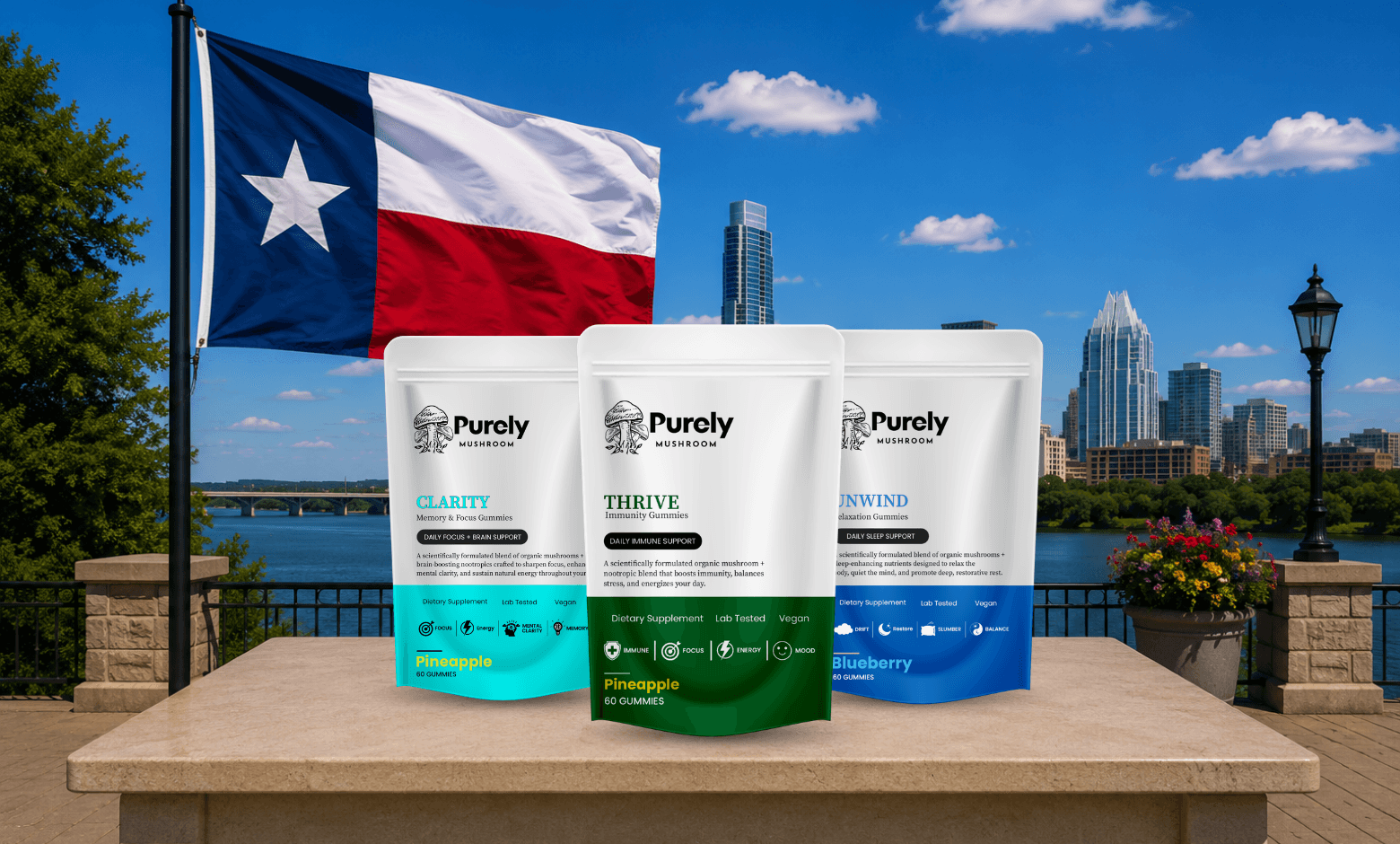
Are Mushroom Gummies Legal in Texas? 2026 Legal Guide
Mushroom Gummies Legal Status in Texas: There are three categories people lump together under the single phrase “mushroom gummies,” and they do not share the same legal status in Texas: So when someone asks whether mushroom gummies are legal in Texas, the most accurate 2026 response is: functional mushroom gummies are widely available and sold […]
Jul 16, 2026 · 11 min read
Stay Informed
New product releases, hemp law updates, and useful cannabinoid guides.