Is THCA Legal in Michigan? 2026 Law Updates & Guide
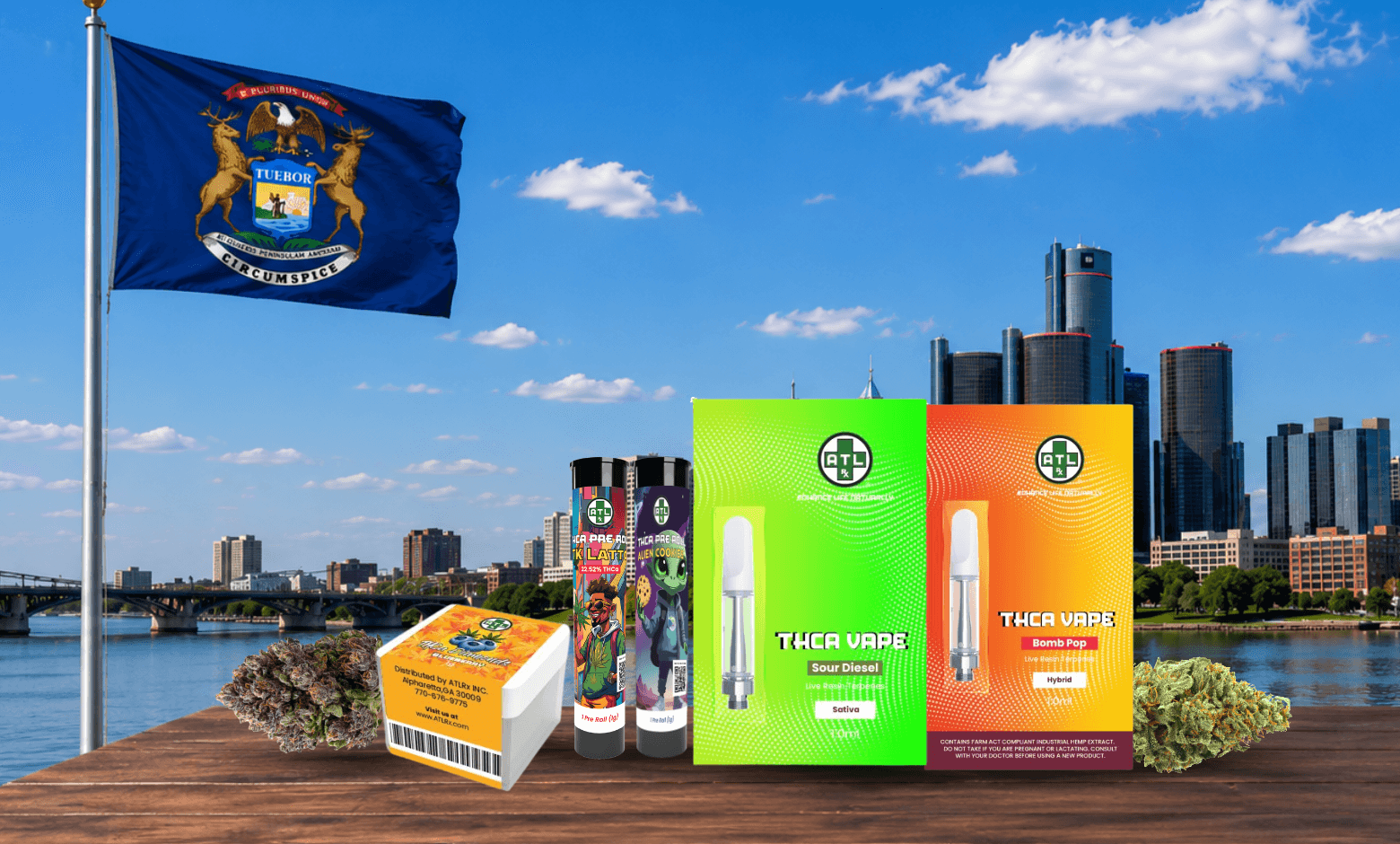
THCA Legal Status in Michigan:
The short answer to “Is THCA Legal in Michigan?” Is that Michigan treats THCA very differently from most other states? Under Michigan House Bill 4517 (Public Act 56 of 2021), the state’s official definition of “THC” includes tetrahydrocannabinolic acid (THCA), which means hemp-derived THCA is classified as marihuana under state law. As a result, THCA products are restricted to Michigan’s licensed adult-use cannabis market, even though they remain compliant with the 2018 Farm Bill’s Delta-9-only standard.
If you have been searching for a clear, current answer to the question, “Is THCA Legal in Michigan,” this guide walks through exactly what Michigan law says about THCA in 2026, how it compares to federal law, what that means for consumers, and what to look for if you are considering a compliant hemp purchase.
Keep Browsing
Explore Our Delta 9 THC Categories
Shop real Delta 9 THC products and collections.
Key Takeaways
- 01Michigan’s House Bill 4517 (Public Act 56 of 2021) revised the state’s definition of THC to include THCA. This places hemp-derived THCA under the same regulatory framework as marihuana at the state level.
- 02All THC-containing cannabinoid products in Michigan are regulated by the Michigan Cannabis Regulatory Agency (CRA), including those derived from hemp.
- 03THCA derived from hemp containing less than 0.3% Delta-9 THC remains compliant under the 2018 Farm Bill’s current Delta-9-only standard. Michigan’s interpretation differs significantly from this federal framework.
- 04The “Total THC” formula (Delta-9 THC + THCA × 0.877) is the standard USDA conversion used in pre-harvest hemp compliance under 7 CFR § 990.1. The upcoming federal hemp rule changes under Public Law 119-37 likewise rely on a total THC standard that includes THCA, with specific testing methodology to be set in implementing regulations.
- 05Cannabis-derived THCA products are available to adults 21 and older through CRA-licensed adult-use retailers and to registered patients through the medical program.
- 06Under Public Law 119-37, signed on November 12, 2025, the federal definition of hemp is revised to a total THC standard, a total THC concentration (including THCA) of not more than 0.3% on a dry-weight basis. Separately, the law excludes from the hemp definition any finished hemp-derived cannabinoid product containing more than 0.4 milligrams of total THC per container. These changes take effect on November 12, 2026.
- 07Always verify any product with a batch-specific Certificate of Analysis (COA) from a third-party laboratory before purchasing.
What Is THCA?
THCA, or tetrahydrocannabinolic acid, is a naturally occurring cannabinoid found in hemp and cannabis. THCA is chemically distinct from Delta-9 THC when it is raw and unheated. The compound undergoes decarboxylation only when heated (through smoking, vaping, or cooking), converting into Delta-9 THC, the cannabinoid most people are familiar with.
This chemical relationship is the core of THCA’s legal complexity. Because raw THCA is a different molecule from Delta-9 THC, it has historically occupied a different position under federal hemp law. However, several states (including Michigan) have closed that distinction by including THCA within their statutory definition of THC.
THCA vs. Delta-9 THC: Key Differences
| Factor | THCA (Raw) | Delta-9 THC |
| Active form in the raw plant? | No (precursor only) | Yes |
| Found in raw hemp? | Yes (often the dominant cannabinoid) | Yes, but in smaller amounts |
| Converts when heated? | Yes (decarboxylation produces Delta-9 THC) | Already in active form |
| 2018 Farm Bill status | Compliant if Delta-9 < 0.3% by dry weight | Compliant only if < 0.3% by dry weight |
| Michigan statutory status | Defined as THC under HB 4517 | Defined as THC; controlled outside CRA licensure |
| Detectable on drug tests? | Yes (metabolizes to THC-COOH) | Yes |
Federal Law: The 2018 Farm Bill Foundation
Hemp was removed from the federal Controlled Substances Act by the 2018 Agriculture Improvement Act, commonly called the Farm Bill. Hemp is defined by the 2018 Farm Bill as Cannabis sativa L. or any part or derivative containing less than 0.3% Delta-9 THC by dry weight.
Critically, the 2018 Farm Bill does not list THCA by name. The federal pre-harvest compliance test established by the USDA in 7 CFR § 990.1 applies a Total THC formula for cultivation purposes:
Total THC = Delta-9 THC + (THCA × 0.877)
The 0.877 conversion factor accounts for molecular weight loss when THCA decarboxylates into Delta-9 THC. While this formula has been applied to pre-harvest hemp testing, finished hemp products at retail have historically been measured for Delta-9 THC content alone in many states, which is what gave rise to the high-THCA hemp flower market nationally.
The federal framework is in transition. In 2025, President Trump signed the Continuing Appropriations, Agriculture, Legislative Branch, Military Construction and Veterans Affairs, and Extensions Act, 2026 (Public Law 119-37). Section 781 of Division B amends the statutory definition of hemp in 7 U.S.C. § 1639o, replacing the prior Delta-9-only standard with a total THC standard that expressly includes THCA. The amended definition takes effect 365 days after enactment, on November 12, 2026. The law also excludes from the hemp definition any finished hemp-derived cannabinoid product containing more than 0.4 milligrams of total THC per container, a threshold that industry analysts estimate will remove the majority of current intoxicating hemp products from federal commerce. Implementation regulations from USDA and FDA are still being developed, and pending legislation in Congress could delay the effective date or replace the Section 781 prohibition with a federal regulatory framework, though none has advanced as of this writing.
For Michigan, however, federal changes have a smaller practical effect than in many other states, because Michigan has already closed its own hemp-THC loophole at the state level.
Michigan State Law: The Specific Statutes
Michigan operates one of the largest adult-use cannabis markets in the United States. Adult-use cannabis was legalized through the Michigan Regulation and Taxation of Marihuana Act (MRTMA), Initiated Law 1 of 2018, approved by voters on November 6, 2018 (Proposal 1), with adult-use retail sales beginning December 1, 2019. Together with the Medical Marijuana Facilities Licensing Act and the Industrial Hemp Growers Act, the MRTMA forms Michigan’s cannabis and hemp framework.
The single most important statute for understanding THCA in Michigan is House Bill 4517 of 2021 (Public Act 56 of 2021), signed into law on July 13, 2021, and effective October 11, 2021.
Key provisions of HB 4517 and its companion bills:
- HB 4517 revised the definition of “industrial hemp” in the MRTMA to require that the combined percentage of Delta-9 THC and tetrahydrocannabinolic acid (THCA) in any part of the plant be 0.3% or less, regardless of moisture content. This change folded THCA directly into Michigan’s hemp threshold calculation.
- HB 4517 also modified the MRTMA’s definition of “marihuana” and authorized the regulating agency to set a limit on the total amount of THC permitted in finished products intended for human or animal consumption.
- Companion legislation in the same package (HB 4741 amending the Industrial Hemp Growers Act and HB 4744 amending the Industrial Hemp Research and Development Act) added a statutory definition of “THC” that expressly includes THCA along with any tetrahydrocannabinol (naturally derived or artificial) and any structural, optical, or geometric isomer of THC, unless excluded by rule.
At the time HB 4517 took effect (October 11, 2021), regulatory authority sat with the Marijuana Regulatory Agency (MRA). The MRA was later renamed the Cannabis Regulatory Agency (CRA) on April 13, 2022, under Executive Reorganization Order 2022-1, which also transferred authority over hemp processing and handling to the new CRA.
In short, HB 4517 brought THCA, Delta-8 THC, hemp-derived Delta-9 THC, and most other THC isomers under Michigan’s marihuana framework. From the state’s perspective, the source plant (hemp or marijuana) is not the determining factor: the cannabinoid itself is what triggers regulation.
The CRA has reinforced this position in subsequent advisory bulletins and enforcement actions, including its bulletins on hemp-derived cannabinoid products and on synthetically derived cannabinoids.
Michigan’s Position on THCA Under HB 4517
To make the practical effect of HB 4517 clear, here is how Michigan treats THCA:
Inside the licensed cannabis system:
- THCA products (including high-potency THCA flower and concentrates) may be sold by CRA-licensed adult-use retailers to adults 21 and older.
- Registered medical patients and caregivers may access THCA products through licensed provisioning centers.
- All such products are tracked in METRC, Michigan’s seed-to-sale tracking system.
Outside the licensed cannabis system:
- Hemp-derived THCA flower, concentrates, vapes, and other THCA products sold outside the CRA-licensed system are not legal for retail sale in Michigan, regardless of whether the source hemp complies with the federal 0.3% Delta-9 THC dry-weight standard.
- Unlicensed retail sale of hemp-derived cannabinoid products containing THC (including THCA) can result in CRA enforcement action.
This is the most important takeaway for any Michigan consumer: Michigan does not recognize the “hemp-derived THCA loophole” that exists in many other states. The state’s statutory definition of THC includes THCA, so hemp-derived THCA is treated as marihuana for state-law purposes.
That said, the federal Farm Bill still governs interstate commerce in hemp and hemp-derived products, and possession standards for compliant hemp products vary. Michigan consumers should be careful to understand the difference between federal compliance and state-level retail authorization before purchasing or possessing any THCA product.
2025–2026 Michigan Legislative and Regulatory Updates
Michigan’s cannabis landscape continues to evolve. Here are the developments most relevant to THCA in 2026:
1. House Bill 4951 (Cannabis Excise Tax Increase)
House Bill 4951, the Comprehensive Road Funding Tax Act, was signed by Governor Whitmer in October 2025. As of January 1, 2026, cannabis transactions are subject to a wholesale excise tax of 24%. The new tax is in addition to Michigan’s existing retail excise tax of 10% and sales tax of 6%. The increased tax burden has been a major point of discussion within the licensed cannabis industry, but it does not change the underlying legal status of THCA: it remains within CRA jurisdiction.
2. Continued CRA Enforcement Against Unlicensed Hemp-Derived THC Products
Throughout 2024 and 2025, the CRA has issued advisory bulletins and partnered with state agencies and the Michigan State Police to address the unlicensed sale of hemp-derived cannabinoid products containing THC. The sale of THCA flower outside of the licensed cannabis system is the primary focus of this enforcement.
3. Federal Hemp Rule Change (Effective November 12, 2026)
Public Law 119-37, Division B, Section 781, signed on November 12, 2025, redefines “hemp” at the federal level to incorporate THCA into the total THC calculation and excludes from the hemp definition any finished hemp-derived cannabinoid product containing more than 0.4 milligrams of total THC per container. The new definition takes effect on November 12, 2026, providing a 365-day implementation window for the industry to adjust. Once in effect, the federal definition of hemp will more closely align with Michigan’s existing position. For Michigan consumers, the practical impact of the federal change is limited because state law already treats THCA as marihuana under HB 4517, but the federal change will significantly affect interstate shipments, online retail, and product availability nationwide.
Shop Delta 9
View all →


4. Ongoing Discussion of Hemp Beverages and Low-Dose Products
The CRA has, through draft administrative rules and bulletins, addressed limits on the total amount of THC permitted in finished products. The agency continues to evaluate where low-dose and low-THC hemp-derived products fit within the broader regulatory framework. Consumers should monitor CRA bulletins for any future changes.
The Total THC Compliance Issue
The total THC compliance question is the single most important technical concept for understanding THCA in any U.S. state, and especially in Michigan.
Total THC = Delta-9 THC + (THCA × 0.877)
This formula calculates the maximum potential Delta-9 THC content of a product after full decarboxylation. A flower with 18% THCA and 0.2% Delta-9 THC, for example, would calculate to a Total THC of approximately 16% (well above the 0.3% dry-weight threshold).
In states such as North Carolina and Pennsylvania, retail products are tested for Delta-9 THC only at the point of sale, which is what has allowed high-THCA hemp flower to be sold there. In Michigan, the equation is different. Because the state’s definition of THC includes THCA by name, the source plant’s pre-decarboxylation Delta-9 reading does not change the regulatory category for high-THCA products. The cannabinoid itself is the basis for regulation.
For consumers traveling between states, this is an important compliance reality. Hemp-derived THCA products purchased legally elsewhere may not align with Michigan’s statutory definitions, and consumers should consult a Michigan-licensed attorney for any specific questions about possession or transport.
THCA Product Categories and How Michigan Treats Them
| Product Type | Federal (Hemp-Derived) | Michigan State Position |
| THCA Flower (raw, high-THCA) | Currently compliant if Delta-9 < 0.3% by dry weight; will not qualify as hemp under the total-THC standard effective Nov. 12, 2026 | Treated as marihuana under HB 4517; restricted to licensed CRA market |
| THCA Pre-Rolls | Currently compliant if Delta-9 < 0.3%; will not qualify as hemp under the total-THC standard effective Nov. 12, 2026 | Treated as marihuana; licensed market only |
| THCA Vape Carts | Currently compliant if Delta-9 < 0.3%; will not qualify as hemp under the total-THC standard effective Nov. 12, 2026 | Treated as marihuana; licensed market only |
| THCA Concentrates (Diamonds, Badder, Crumble) | Currently compliant if Delta-9 < 0.3%; will not qualify as hemp under the total-THC standard effective Nov. 12, 2026 | Treated as marihuana; licensed market only |
| THCA Isolate Powder | Currently compliant if Delta-9 < 0.3%; will not qualify as hemp under the total-THC standard effective Nov. 12, 2026 | Treated as marihuana under HB 4517 |
| Hemp products without measurable THC (CBD, CBG, etc., within CRA limits) | Federally compliant | Generally available outside the licensed cannabis system, consistent with CRA bulletins |
ATLRx offers a full range of hemp-derived products that are sourced from hemp containing less than 0.3% Delta-9 THC by dry weight, consistent with the 2018 Farm Bill, and lab-tested by third-party, ISO/IEC 17025-accredited laboratories. The ATLRx Lab Results page allows you to view batch-specific Certificates of Analysis before purchasing. Michigan consumers should consult Michigan law and, where appropriate, qualified legal counsel before purchasing or possessing any product containing THCA.
How to Identify a Compliant Hemp Product (General Best Practices)
- Make sure the product is hemp-derived: It should be made from hemp that contains less than 0.3% Delta-9 THC by dry weight, as defined by the 2018 Farm Bill.
- Request a current Certificate of Analysis (COA): It should be batch-specific, from an accredited third-party lab, and include the Delta-9 THC calculation.
- Check the Total THC value: Use the formula (Delta-9 THC + THCA × 0.877) to understand how the product would be classified under tightening federal standards.
- Buy from established retailers: Choose brands that publish full COAs, list clear product information, and have a track record of compliance.
- Review your state’s laws: Federal compliance does not override state regulations. In Michigan, the CRA’s authority over THC-containing cannabinoid products is broad.
- Stay informed: Hemp and cannabis law is changing rapidly. Bookmark trusted sources and revisit this article for updates.
Why Choose ATLRx for Hemp-Derived Products
ATLRx is a Georgia-based hemp retailer with years of experience sourcing and shipping hemp products. ATLRx is different in the following ways:
- Full COA transparency: ATLRx products are tested by independent, accredited laboratories. The lab results page lists batch-specific COAs you can verify before buying.
- 2018 Farm Bill sourcing: ATLRx hemp products are sourced from licensed hemp cultivators who produce plants with less than 0.3% Delta-9 THC by dry weight.
- Wide product selection: With THCA Flower and THCA Pre-Rolls, THCA Vape Carts, THCA Concentrates, Diamonds, Badder, Crumble, and Isolate, ATLRx offers one of the most comprehensive hemp catalogs available online.
- State-specific compliance: ATLRx maintains an updated list of states where it does not ship THCA products and continues to review state laws as they evolve. Michigan consumers should review the current ATLRx shipping policy and consult Michigan law before placing an order.
- Established reputation: ATLRx has served thousands of customers and is committed to clean sourcing and transparency.
Summary: Is THCA Legal in Michigan?
The answer to “Is THCA Legal in Michigan” depends entirely on where it is sold and how it is regulated. Under Michigan House Bill 4517 (Public Act 56 of 2021), the state’s definition of THC includes tetrahydrocannabinolic acid, which places hemp-derived THCA within Michigan’s marihuana framework. Adult-use and medical THCA products are legal when sold through licensed CRA retailers to qualifying adults and patients. THCA sold outside the licensed cannabis system is not authorized under Michigan law, even when the source hemp is compliant with the 2018 Farm Bill’s Delta-9-only standard.
Michigan’s approach is one of the strictest in the country, and the upcoming November 2026 federal hemp rule changes will only narrow the national THCA market further. For consumers, the responsible path is clear: understand the current law, verify product sourcing through transparent third-party COAs, and stay informed as Michigan and federal rules continue to evolve.
ATLRx provides hemp-derived products sourced from hemp containing less than 0.3% Delta-9 THC by dry weight, with full lab transparency. Always review Michigan’s current statutes and the ATLRx shipping policy before placing an order, and consult qualified legal counsel for any specific questions about possession or transport in Michigan.
Frequently Asked Questions
Is THCA Legal in Michigan in 2026?
+
Under Michigan House Bill 4517 (Public Act 56 of 2021), THCA falls within the state’s statutory definition of THC and is treated as marihuana. THCA products are legally available through Michigan’s CRA-licensed adult-use retailers and medical provisioning centers. Hemp-derived THCA sold outside the licensed cannabis system is not authorized in Michigan, even if the source hemp is compliant with the 2018 Farm Bill’s Delta-9-only standard.
Is THCA a Controlled Substance in Michigan?
+
THCA is included within Michigan’s statutory definition of THC for cannabis-regulatory purposes. Under the Michigan Regulation and Taxation of Marihuana Act, THC products (including THCA-rich products) are regulated by the Cannabis Regulatory Agency and require licensure. Unlicensed retail activity falls outside the legal market.
Can I Buy THCA Flower in Michigan?
+
Yes, but only through CRA-licensed adult-use retailers (for adults 21 and older) or through licensed medical provisioning centers (for registered patients). Hemp-derived THCA flower sold outside the licensed cannabis system is not authorized for retail sale in Michigan.
Can I Have Hemp-Derived THCA Products Shipped to Michigan?
+
It depends on the retailer’s shipping policy and Michigan law. Federal Farm Bill compliance applies to interstate hemp shipments, but Michigan’s state-level definition of THC includes THCA. Always confirm shipping policies with the retailer and consult Michigan law before placing an order. ATLRx maintains a list of states where it does not ship THCA products and updates the list as regulations change.
What Is the CRA, and How Does It Regulate THCA?
+
The Cannabis Regulatory Agency (CRA) is the Michigan agency responsible for licensing and overseeing the state’s cannabis and industrial hemp programs. The CRA regulates THC-containing products (including THCA) within the state’s licensed cannabis system, oversees METRC tracking, and issues advisory bulletins to clarify how state law applies to specific cannabinoid products.
How Did Michigan’s Position on THCA Change With HB 4517?
+
Before HB 4517, Michigan’s cannabis laws did not include a specific definition of “THC” that captured all THC isomers and precursors. HB 4517 introduced that definition and explicitly included THCA. As a result, hemp-derived THCA was brought within Michigan’s marihuana regulatory framework, regardless of the source plant’s classification under the 2018 Farm Bill.
Will THCA Show Up on a Drug Test?
+
Yes. THCA and Delta-9 THC both metabolize into THC-COOH, the metabolite that standard employment and legal drug screening panels detect. Any individual subject to workplace, athletic, or legal drug testing should be aware of that risk regardless of state law.
What Is the Age Requirement for THCA Products in Michigan?
+
Within the licensed cannabis system, adult-use THCA products are restricted to consumers 21 and older. Registered medical patients may access products through the medical program in accordance with state rules.
What Is the Total THC Formula, and Why Does It Matter?
+
The Total THC formula is Total THC = Delta-9 THC + (THCA × 0.877). It calculates the potential Delta-9 THC content of a product after decarboxylation, with the 0.877 factor accounting for molecular weight loss when THCA converts to Delta-9 THC. USDA uses this formula for pre-harvest hemp cultivation compliance under 7 CFR § 990.1. Public Law 119-37 (effective November 12, 2026) adopts a total THC standard at the federal level that includes THCA, along with a 0.4 milligram total THC per container exclusion threshold for finished products; specific testing methodology will be set by implementing regulations. Michigan already treats THCA as THC under HB 4517, so a total-THC approach is consistent with Michigan’s existing statutory framework.
What Is Changing With Federal Hemp Law in November 2026?
+
On November 12, 2025, President Trump signed Public Law 119-37 (Continuing Appropriations, Agriculture, Legislative Branch, Military Construction and Veterans Affairs, and Extensions Act, 2026), Division B, Section 781. The amended definition redefines “hemp” using a total THC concentration (including THCA) of not more than 0.3% on a dry-weight basis. Separately, any finished hemp-derived cannabinoid product containing more than 0.4 milligrams of total THC per container is excluded from the hemp definition. The amended definition takes effect on November 12, 2026. The new federal definition will significantly narrow the legal hemp-derived cannabinoid market nationally and bring federal hemp law more closely into alignment with stricter state frameworks, including Michigan’s. Legislation pending in Congress could delay the effective date or replace the Section 781 prohibition with a federal regulatory framework, but none has advanced as of this writing. Check Congress.gov for the current status.
How Do I Verify a Product Is Compliant?
+
Make sure the product has a Certificate of Analysis (COA) from a third-party laboratory. COAs should show:
- By dry weight, Delta-9 THC is less than 0.3%
- The Total THC calculation (Delta-9 THC + THCA × 0.877)
- The batch or lot number of your product
- The testing laboratory’s accreditation (ideally ISO/IEC 17025)
State law also matters. A federally compliant COA does not, on its own, authorize retail sale in Michigan.
Where Should I Go for the Most Current Michigan THCA Information?
+
The primary sources are the Michigan Cannabis Regulatory Agency, the Michigan Legislature, and qualified Michigan-licensed legal counsel. ATLRx reviews this article regularly and updates it after major regulatory changes.
Disclaimer
These statements have not been evaluated by the Food and Drug Administration. ATLRx hemp-derived products are not intended to diagnose, treat, cure, or prevent any disease. ATLRx products are derived from hemp containing less than 0.3% Delta-9 THC by dry weight, consistent with the 2018 Farm Bill. Note that under Public Law 119-37, the federal definition of hemp will shift to a total-THC standard effective November 12, 2026; high-THCA products that comply under the current Delta-9-only standard may not qualify as hemp after that date. Must be 21 or older to purchase. This article is for informational purposes only and is not legal advice. Check your state and local laws before ordering, and consult qualified legal counsel for specific questions.
Why Trust This Guide
- ATLRx has sold third-party lab-tested hemp products out of Georgia since 2019.
- Every real batch we sell is tested by an accredited outside lab, with the Certificate of Analysis published before you buy.
- We operate 3 real physical stores in Georgia — this isn't a drop-shipped storefront.
- Legal information is rechecked and updated as rules change, not published once and forgotten.
This guide is for general information only and is not legal advice. While we update it as rules change, state laws can shift quickly. Please confirm current laws with your state’s official sources.
Don't Trust the Label. Check the Lab.
ATLRx publishes third-party Certificates of Analysis for real batches so you can verify cannabinoid content before you buy — not just take the package's word for it.
View Lab Results →Have Questions?
Visit an ATLRx store in Georgia and talk to our team.
Real Customers, Real Reviews
What Customers Are Saying

Jen Hight
Cannabis Industry Expert & Compliance Specialist Jen Hight is a cannabis industry professional with extensive experience in hemp compliance, product development, and consumer education. With a background in regulatory affairs and a passion for helping consumers navigate the complex world of cannabinoids, Jen provides accurate, up-to-date information on hemp legality and best practices. Her work focuses on making cannabis knowledge accessible while ensuring readers understand both the opportunities and responsibilities that come with legal hemp products.
View all articles →Keep Learning

Where To Buy Delta 9 Gummies Near Me?
You can buy Delta 9 gummies near you at five types of retailers: a licensed cannabis dispensary, a hemp or CBD store, a vape or smoke shop, a convenience store, or online, directly from a hemp brand. In many states, these sit on ordinary retail shelves and can be mailed to a home address. The […]
Oct 21, 2026 · 10 min read

Where to Buy Delta 9 in Texas?
Delta 9 Availability in Texas: Yes. Hemp-derived Delta 9 is legal to buy in Texas in August 2026. To qualify, a product has to come from hemp and test at 0.3% or less total THC on a dry weight basis. Texas has computed that figure as (0.877 x THCA) + Delta 9 since March 31, […]
Aug 7, 2026 · 26 min read

Where to Buy Delta 9 in Oklahoma?
Delta 9 Availability in Oklahoma: Yes. Delta 9 THC derived from hemp is legal in Oklahoma starting in 2026 for adults 21 and older. It must be made from hemp, not marijuana, and contain less than 0.3% Delta-9 THC by dry weight. Medical marijuana does not require a card. You can buy it online or […]
Aug 5, 2026 · 23 min read

Where to Buy Delta 9 in Iowa?
Delta 9 Availability in Iowa: Yes, hemp-derived Delta 9 is legal in Iowa in 2026, but only if it follows the state’s rules. Consumable hemp products cannot contain more than 4 mg of total THC per serving and 10 mg of total THC per container. The product also has to come from legal hemp, be […]
Aug 4, 2026 · 25 min read
Stay Informed
New product releases, hemp law updates, and useful cannabinoid guides.