Is Delta 9 Legal in Montana? Expert Guide 2026
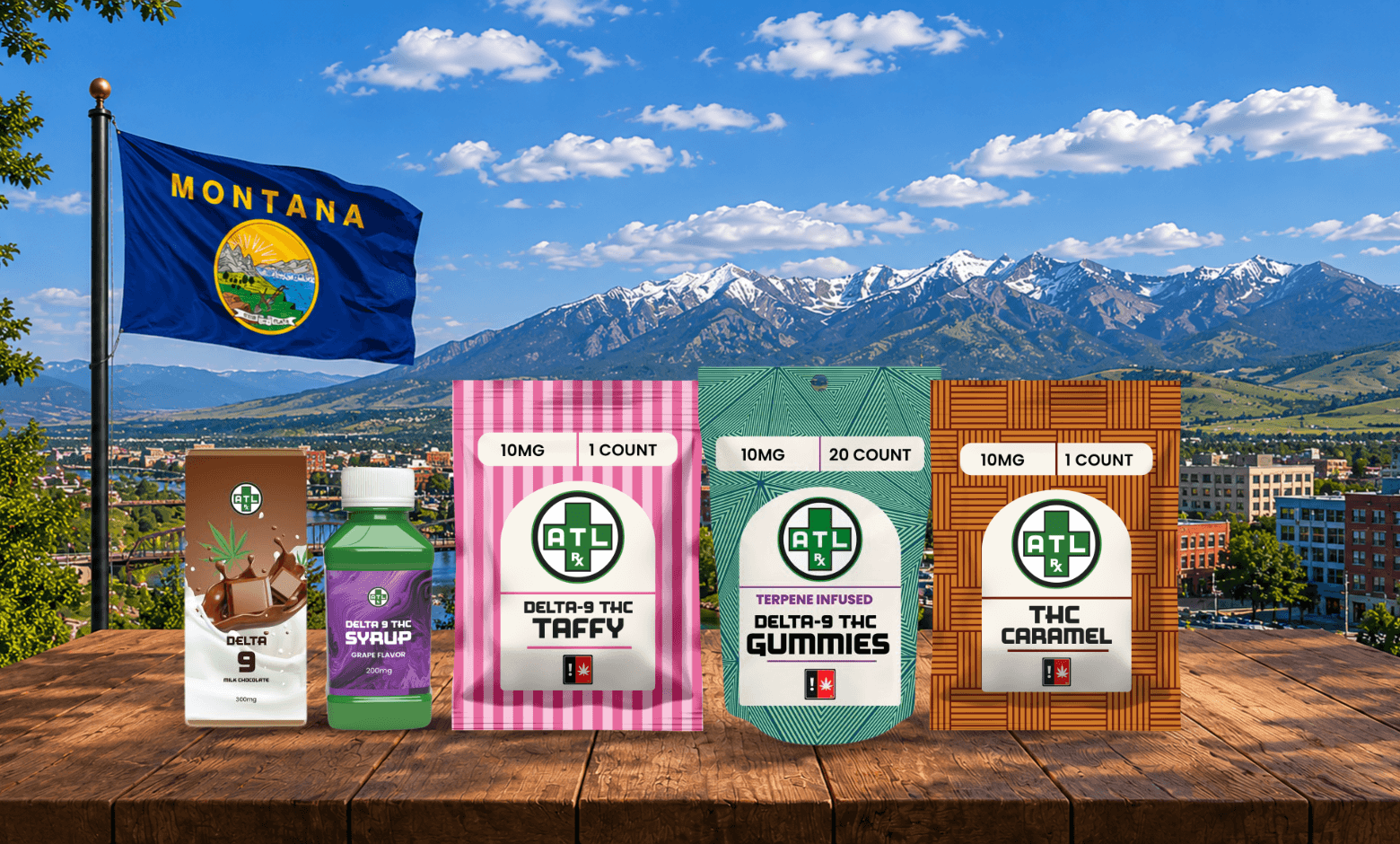
Delta 9 Legal Status in Montana:
Yes, Delta 9 is legal in Montana, but with strict conditions. Hemp-derived Delta 9 is permitted under the federal 2018 Farm Bill when a product contains 0.3% or less Delta 9 THC by dry weight. However, Montana’s House Bill 49 caps finished hemp products at 0.5 mg of THC per serving and 2 mg per package, among the strictest limits in the nation. Marijuana-derived Delta 9, which is higher in THC, is legal for adults 21 and older through state-licensed dispensaries under Initiative 190.
If you have ever wondered, “Is Delta 9 legal in Montana?”, you are far from alone, and the short answer in 2026 is more layered than it used to be. Montana’s hemp and cannabis rules have shifted significantly over the last two years, and a major federal change signed in late 2025 is set to reshape the national hemp market in November 2026. What was perfectly fine to buy in another state may not pass muster in the Treasure State. This guide walks you through everything you should know, including the federal rules, Montana’s own statutes, the 2025 legislative changes at both state and federal levels, and what hemp-derived Delta 9 THC products are actually compliant on Montana shelves today.
At ATLRx, we believe in giving our community the straight scoop. So pour yourself a coffee, settle in, and let us break Montana’s Delta 9 laws down in plain language.
Keep Browsing
Explore Our Delta 9 THC Categories
Shop real Delta 9 THC products and collections.
Key Takeaways
- 01Hemp-derived Delta 9 is legal in Montana when the finished product complies with the 2025 hemp package’s caps of 0.5 mg of THC per serving and 2 mg per package.
- 02Marijuana-derived Delta 9 is legal for adults 21 and older through state-licensed dispensaries under Initiative 190 (2020) and HB 701 (2021), in counties that have opted in.
- 03House Bill 49 (2025) broadened authority over synthetic cannabinoids and, with the rest of the 2025 package, set some of the strictest hemp THC limits in the country, applying to Delta 9, Delta 8, and any other THC variant.
- 04Senate Bill 375 (2025) prohibits the retail sale of consumable hemp products containing detectable Delta 9 THC unless authorized by the FDA.
- 05Federal H.R. 5371 (signed November 12, 2025) rewrites the federal hemp definition to use total THC instead of just Delta 9, caps finished consumer products at 0.4 mg per container, and excludes synthesized cannabinoids effective November 12, 2026.
- 06Montana does not allow Delta 8 THC and other synthetic or semi-synthetic cannabinoids under MCA 50-32-222 and HB 948 (2023).
- 07House Bill 636 reduces the per-serving limit for marijuana edibles from 10 mg to 5 mg, effective July 1, 2026. The 100 mg per-package limit is unchanged.
- 08Always check the COA, total milligram math, and current state guidance before buying or ordering Delta 9 products in Montana.
What Is Delta 9 THC?
Delta-9-tetrahydrocannabinol is the primary psychoactive compound in the cannabis plant. It is produced by both hemp and marijuana, and it is the cannabinoid most often associated with the psychoactive properties of cannabis.
The legal distinction is not really about the molecule itself. What matters is where it comes from and how much is in the finished product. Cannabis sativa, both hemp and marijuana, are treated very differently by federal and state law depending on their Delta 9 THC concentration.
Federal Law: The 2018 Farm Bill and the 2025 Federal Reset
For most of the last seven years, the controlling federal law on hemp has been the 2018 Agriculture Improvement Act, better known as the Farm Bill. This law removed hemp from the federal Controlled Substances Act and defined hemp as cannabis plants and their derivatives containing no more than 0.3% Delta 9 THC on a dry-weight basis.
Hemp-derived Delta 9 products are federally legal when:
- Delta 9 THC concentrations do not exceed 0.3% by dry weight.
- The product is derived from hemp, not marijuana.
- The hemp was cultivated in compliance with a USDA-approved state or tribal plan.
What Changed in November 2025
The President of the United States signed H.R. 5371 (the Continuing Appropriations and Extensions Act of 2026). Section 781 of that law rewrites the federal definition of hemp in three important ways, with a one-year runway before it takes effect on November 12, 2026:
- The 0.3% threshold shifts from “Delta 9 THC only” to total THC, which sweeps in Delta-8, Delta-10, THCA, and other isomers.
- Final hemp-derived products are limited to 0.4 mg of total THC per container at the federal level.
- The definition of hemp excludes cannabinoids produced through chemical synthesis or conversion entirely.
Once Section 781 takes effect, most intoxicating hemp-derived products that exist today will fall outside the federal hemp definition and back under the Controlled Substances Act. Industry groups are pushing for amendments before that date, and the situation may shift, so this is one to watch.
States, of course, remain free to tighten the rules further, and Montana has done exactly that.
Montana’s Hemp Laws: A Quick History
Montana was actually ahead of the curve on hemp. Senate Bill 261, signed in 2001, recognized industrial hemp containing no more than 0.3% THC as an agricultural crop and authorized the Montana Department of Agriculture to license growers. Nearly two decades later, the 2019 legislative session refined the framework: Senate Bill 177 removed the criminal background-check requirement for hemp licensees, and Senate Bill 176 authorized the Department of Agriculture to develop a state hemp certification program (similar in spirit to “certified organic”). Montana’s USDA-approved state hemp plan took effect on January 27, 2023.
In November 2020, Montana voters approved Initiative 190 (I-190), legalizing recreational marijuana for adults 21 and older. The Legislature then passed House Bill 701 in 2021, which built out the actual regulatory framework — licensing, taxation, possession limits, and potency caps — that governs the adult-use market today. Adult-use sales officially launched on January 1, 2022, through dispensaries licensed by the Cannabis Control Division (CCD), which sits within the Montana Department of Revenue.
The 2025 Hemp Package: HB 49 and SB 375
Montana’s 2025 legislative session produced a coordinated package of bills that, taken together, remade the hemp landscape.
House Bill 49 (HB 49)
HB 49 is primarily a synthetic-cannabinoids bill that broadened regulators’ authority over hemp-derived intoxicants and, in tandem with the rest of the 2025 package, established finished-hemp-product limits of:
- 0.5 mg of THC per serving
- 2 mg of THC per package
These limits apply regardless of whether the THC is Delta 9, Delta 8, or any other variant. They are among the strictest hemp THC caps in the country. In practice, this means a 10 mg hemp Delta 9 gummy that is widely sold in Texas, Colorado, or Florida is not compliant on Montana retail shelves.
Senate Bill 375 (SB 375)
SB 375 was also signed in 2025 and works alongside HB 49. It prohibits the retail sale of any consumable hemp product that contains detectable total Delta 9 THC unless that product is specifically authorized by the U.S. Food and Drug Administration as a food or drug. Because the FDA has not authorized hemp-derived Delta 9 in food, this provision effectively narrows the on-shelf hemp Delta 9 market in Montana to a very limited set of compliant items.
The two bills were signed into law by Governor Greg Gianforte during the 2025 session. (Always check the Montana Department of Revenue or Department of Agriculture for the most current implementation guidance, as the 2025 package is still being interpreted by regulators.)
HB 636 (Marijuana Side)
HB 636, signed in 2025 and effective July 1, 2026, applies to Montana’s regulated adult-use marijuana market. It reduces the per-serving THC limit for marijuana-infused edibles from 10 mg to 5 mg. The 100 mg per-package limit and 800 mg per-transaction possession cap on edibles remain unchanged.
Hemp-Derived Delta 9 vs Marijuana-Derived Delta 9 in Montana
Montana now operates two parallel systems. Here is how they compare:
| Category | Hemp-Derived Delta 9 | Marijuana-Derived Delta 9 |
|---|---|---|
| Source Plant | Hemp (≤0.3% Delta 9 by dry weight under current federal law) | Marijuana (>0.3% Delta 9) |
| Legal Authority | 2018 Farm Bill (federal, until Nov. 12, 2026), MCA § 80-18-101, Montana 2025 hemp package (HB 49, SB 375) | Initiative 190 (2020), HB 701 (2021), MCA Title 16, Chapter 12 |
| Per-Serving THC Limit | 0.5 mg (Montana 2025 hemp package) | 10 mg currently; 5 mg effective July 1, 2026 (HB 636) |
| Per-Package THC Limit | 2 mg (Montana 2025 hemp package) | 100 mg per package |
| Where to Buy | Compliant retail stores; some online sellers | State-licensed Montana dispensaries only, in counties that have opted in |
| Age Requirement | 21+ (industry best practice) | 21+ (adult use); medical cardholders may be younger |
What Hemp Products Are Still Legal in Montana?
Montana’s 2025 hemp package did not ban every hemp product, but it dramatically narrowed which ones can be sold legally. Categories that can still operate within the framework include:
- Microdose edibles that contain 0.5 mg of THC or less per serving and 2 mg or less per package.
- CBD-dominant products with high CBD-to-THC ratios.
- Topical creams and salves that fall under the per-package cap.
- Tinctures formulated to comply with Montana’s serving and packaging math.
- Unadulterated hemp flower that has not been processed into extracts or concentrates, since the mg caps do not apply to raw flower the same way.
Synthetic and semi-synthetic cannabinoids, including most Delta 8 products, remain prohibited under Montana Code Annotated § 50-32-222 and related controlled-substance provisions. The state’s definition of synthetic cannabinoids is broad, and 2023’s HB 948 (effective May 22, 2023), along with the 2025 updates, gave regulators clear authority to enforce against them.
Buying Delta 9 in Montana: What to Look For
If you are shopping in Montana, here is your compliance checklist:
- Verify the milligram math. Check both per-serving and per-package totals. A bag of ten 0.5 mg gummies still hits the 5 mg per package mark, which is over Montana’s 2 mg cap.
- Ask for the COA. Hemp products should be accompanied by a Certificate of Analysis from an accredited third-party lab. COAs confirm cannabinoid content and screen for heavy metals, pesticides, and residual solvents.
- Read the label carefully. Compliant Montana labels display total THC per serving, total THC per package, batch number, and a QR code or web link to the COA.
- Avoid synthetic cannabinoids. Products listing Delta 8, HHC, THC-O, or other converted cannabinoids are restricted under state law.
- Buy from reputable brands. ATLRx publishes a Certificate of Analysis for every product and lists ingredients clearly so you can verify compliance before you buy.
Possession Limits and Driving Rules
Adults 21 and older in Montana may possess up to one ounce of usable marijuana, with sub-limits inside that one-ounce cap: not more than 8 grams may be in concentrated form (wax, shatter, oil), and not more than 800 milligrams of THC may be in edibles. These are not alternatives to one ounce of flower — they are ceilings within the one-ounce overall limit, per MCA § 16-12-106.
Shop Delta 9
View all →


A few important caveats:
- Federal land is off-limits. Marijuana possession remains a federal offense in national parks (Glacier, Yellowstone), national forests, BLM lands, and other federal property — a meaningful share of Montana.
- County opt-outs apply. Recreational sales are only allowed in counties that have opted in. Some counties have not, so verify before you travel.
- Interstate transport is prohibited, even into other legal states.
Hemp products that comply with Montana’s 2025 caps do not carry specific possession limits, but you should always keep packaging and the COA accessible.
The use of THC while driving is prohibited. Per Montana Code Annotated § 61-8-1002(1)(d), a driver commits the offense of DUI when their tetrahydrocannabinol level (excluding inactive metabolites) is 5 ng/mL or more in blood or another bodily substance. This applies whether the THC came from hemp or marijuana.
Final Thoughts
So, is Delta 9 legal in Montana? The honest answer is: yes, with conditions that are stricter than most other states — and the rules are still in motion. Hemp-derived Delta 9 must comply with Montana’s 2025 milligram caps and SB 375’s FDA authorization rule, while marijuana-derived Delta 9 is reserved for the state’s regulated dispensary system. On top of that, the federal hemp definition is set to tighten significantly on November 12, 2026.
Laws change quickly, and Montana has demonstrated that it will continue refining its hemp framework. Be sure to check the most current state guidance before buying or traveling with Delta 9 products. ATLRx publishes Certificates of Analysis for every product and stays current with state-by-state compliance, so you can shop with confidence in the states where our products are eligible for delivery.
If you have questions about Delta 9 products, our customer support team is available to help you find compliant options that fit your state’s specific requirements.
Frequently Asked Questions
Is Hemp-derived Delta 9 Legal in Montana in 2026?
+
Hemp-derived Delta 9 may be sold in Montana only when the finished product complies with the 2025 hemp package’s caps of 0.5 mg of THC per serving and 2 mg per package and meets the labeling and COA requirements established under that legislation.
Is Marijuana-derived Delta 9 Legal in Montana?
+
Yes. It is legal for adults 21 and older to purchase recreational marijuana from Cannabis Control Division licensed dispensaries in counties that have opted in. Medical patients with valid cards can also access marijuana products through licensed providers.
Is Delta 8 THC Legal in Montana?
+
No. Delta 8 and other synthetic or semi-synthetic cannabinoids are controlled substances under Montana Code Annotated 50-32-222. HB 948 (2023) made synthetic cannabinoid products illegal, effective May 22, 2023, and the 2025 hemp package reinforced this by giving regulators broader enforcement authority.
Can I Order Delta 9 Online and Have It Shipped to Montana?
+
Depending on the product. Online retailers must ship items that comply with both federal Farm Bill rules and Montana’s 2025 hemp package (HB 49 and SB 375). Many out-of-state hemp products with 5 mg or 10 mg of Delta 9 per serving are not compliant for Montana delivery. Always check the seller’s shipping policy and confirm the product math before ordering.
Is the Federal Hemp Law Changing in 2026?
+
Yes. Congress and the President passed H.R. 5371, which redefines hemp in federal law. Effective November 12, 2026, the 0.3% threshold becomes a total-THC threshold (sweeping in Delta-8, Delta-10, and THCA), final products are capped at 0.4 mg of total THC per container, and cannabinoids made by chemical synthesis or conversion are excluded from the hemp definition. Industry groups are advocating for amendments before that date, but as written, the federal change will further tighten what hemp-derived Delta 9 products can legally be sold and shipped, including in Montana.
Does Delta 9 Show up on a Drug Test?
+
THC metabolites are detected in standard drug tests, which do not distinguish between marijuana-derived Delta 9 and hemp-derived Delta 9. Anyone subject to drug testing should factor that into their decision.
How Old Do You Have to Be to Buy Delta 9 in Montana?
+
Marijuana for adult use can only be purchased by those who are 21 or older. For compliant hemp products, the age requirement is governed by retailer policy and Montana law, with most reputable sellers enforcing a minimum age of 21.
What Is the Maximum THC Allowed in Montana Hemp Products?
+
In Montana, hemp products cannot contain more than 0.5 mg of THC per serving and 2 mg of THC per package, regardless of whether the THC is Delta 9, Delta 8, or another variant. Hemp must also remain under 0.3% Delta 9 THC by dry weight at the cultivation stage. Note that as of November 12, 2026, the federal hemp definition will shift to a total-THC standard with a 0.4 mg per-container cap on finished products under H.R. 5371, which may further restrict what is sold in Montana.
Disclaimer
This article is provided for general informational purposes only and is not legal advice. Cannabis and hemp laws change frequently. Please consult the Montana Department of Revenue, the Cannabis Control Division, the Montana Department of Agriculture, or a licensed attorney for guidance specific to your situation. The statements on this blog have not been evaluated by the Food and Drug Administration. ATLRx products are not intended to diagnose, treat, cure, or prevent any disease.
Why Trust This Guide
- ATLRx has sold third-party lab-tested hemp products out of Georgia since 2019.
- Every real batch we sell is tested by an accredited outside lab, with the Certificate of Analysis published before you buy.
- We operate 3 real physical stores in Georgia — this isn't a drop-shipped storefront.
- Legal information is rechecked and updated as rules change, not published once and forgotten.
This guide is for general information only and is not legal advice. While we update it as rules change, state laws can shift quickly. Please confirm current laws with your state’s official sources.
Don't Trust the Label. Check the Lab.
ATLRx publishes third-party Certificates of Analysis for real batches so you can verify cannabinoid content before you buy — not just take the package's word for it.
View Lab Results →Have Questions?
Visit an ATLRx store in Georgia and talk to our team.
Real Customers, Real Reviews
What Customers Are Saying

Jen Hight
Cannabis Industry Expert & Compliance Specialist Jen Hight is a cannabis industry professional with extensive experience in hemp compliance, product development, and consumer education. With a background in regulatory affairs and a passion for helping consumers navigate the complex world of cannabinoids, Jen provides accurate, up-to-date information on hemp legality and best practices. Her work focuses on making cannabis knowledge accessible while ensuring readers understand both the opportunities and responsibilities that come with legal hemp products.
View all articles →Keep Learning

Where To Buy Delta 9 Gummies Near Me?
You can buy Delta 9 gummies near you at five types of retailers: a licensed cannabis dispensary, a hemp or CBD store, a vape or smoke shop, a convenience store, or online, directly from a hemp brand. In many states, these sit on ordinary retail shelves and can be mailed to a home address. The […]
Oct 21, 2026 · 10 min read

Where to Buy Delta 9 in Texas?
Delta 9 Availability in Texas: Yes. Hemp-derived Delta 9 is legal to buy in Texas in August 2026. To qualify, a product has to come from hemp and test at 0.3% or less total THC on a dry weight basis. Texas has computed that figure as (0.877 x THCA) + Delta 9 since March 31, […]
Aug 7, 2026 · 26 min read

Where to Buy Delta 9 in Oklahoma?
Delta 9 Availability in Oklahoma: Yes. Delta 9 THC derived from hemp is legal in Oklahoma starting in 2026 for adults 21 and older. It must be made from hemp, not marijuana, and contain less than 0.3% Delta-9 THC by dry weight. Medical marijuana does not require a card. You can buy it online or […]
Aug 5, 2026 · 23 min read

Where to Buy Delta 9 in Iowa?
Delta 9 Availability in Iowa: Yes, hemp-derived Delta 9 is legal in Iowa in 2026, but only if it follows the state’s rules. Consumable hemp products cannot contain more than 4 mg of total THC per serving and 10 mg of total THC per container. The product also has to come from legal hemp, be […]
Aug 4, 2026 · 25 min read
Stay Informed
New product releases, hemp law updates, and useful cannabinoid guides.