Is Delta 9 Legal in Alaska? 2026 Law Updates & Guide
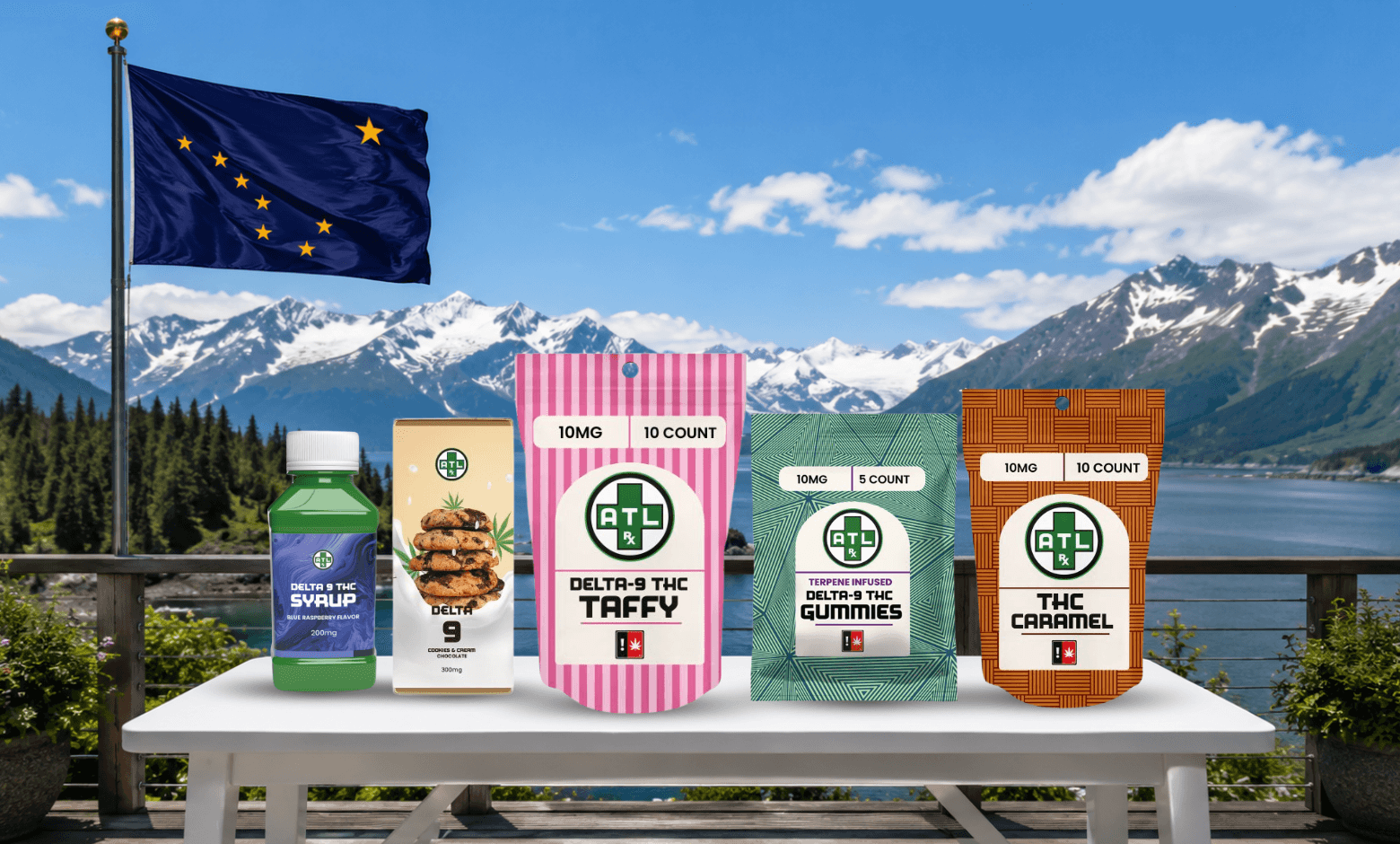
Delta 9 Legal Status in Alaska:
If you are wondering, “Is Delta 9 Legal in Alaska?” the honest answer is: it depends on the source. Marijuana-derived Delta 9 THC is legal for adults 21 and older through Alaska’s regulated cannabis dispensary system, while hemp-derived Delta 9 sits in a much stricter category under Alaska’s Industrial Hemp Program. Federal rules are also shifting in November 2026, which makes 2026 the most important year in years to read the fine print before buying.
Alaska is one of the most confusing states in the country when it comes to Delta 9 THC. On one hand, Alaska was one of the first states in the U.S. to legalize recreational cannabis, with adults 21 and older able to walk into a licensed dispensary and buy Delta 9 THC products that would be illegal under federal law. On the other hand, Alaska is also one of a small handful of states where hemp-derived Delta 9 THC products, which are legal in most of the country under the 2018 Farm Bill, cannot be sold to consumers under state rules.
That two-track system catches a lot of shoppers off guard. People who have ordered hemp-derived Delta 9 gummies online without issue in Texas, Florida, or Tennessee are surprised when their order to an Anchorage or Juneau address is declined at checkout. Visitors who assume “recreational state means anything goes” are surprised to learn the state’s Industrial Hemp Program has its own, much stricter rules. And shoppers reading older blog posts are reading information that no longer reflects the regulations Alaska has enforced since November 2023.
Layered on top of all of that is a major federal change scheduled for November 12, 2026. H.R. 5371, signed in November 2025, narrows the federal definition of hemp and effectively ends the national market for most intoxicating hemp products. For Alaska shoppers, that change reinforces what the state has already been doing, but it is the most search-relevant national hemp story heading into the second half of 2026.
This guide cuts through the confusion. It explains what Delta 9 THC is, what makes hemp-derived and marijuana-derived Delta 9 different under the law, exactly what Alaska does and does not allow, what changes federally in November 2026, and how to shop compliantly as an Alaska adult 21 or older. Where competitors gloss over the state’s hemp rules or repeat outdated claims, this guide goes to the actual statutes, the Alaska Administrative Code, and the Division of Agriculture’s published guidance.
Keep Browsing
Explore Our Delta 9 THC Categories
Shop real Delta 9 THC products and collections.
Key Takeaways
- 01Marijuana-derived Delta 9 THC is legal in Alaska for adults 21 and older through the state-licensed dispensary system, established by Ballot Measure 2 (2014) and regulated by the Marijuana Control Board.
- 02Hemp-derived Delta 9 THC is not endorsed for consumer sale under Alaska’s Industrial Hemp Program. Since November 2023, the Alaska Division of Agriculture has expressly refused to endorse any consumable hemp product containing Delta 9 THC.
- 03Two state agencies are involved: the Department of Natural Resources (Division of Agriculture) runs the Industrial Hemp Program; the Department of Commerce, Community, and Economic Development houses AMCO and the Marijuana Control Board.
- 04Possession limits for adults 21+: up to 1 ounce of usable marijuana, plus home cultivation of up to six plants (no more than three flowering) per household. Public consumption is prohibited.
- 05The federal hemp definition is changing on November 12, 2026. H.R. 5371 (P.L. 119-37, Section 781) replaces the Delta-9-only standard with a ‘total THC’ standard (Delta-9 plus THCA, with FDA authority to add more THC-class cannabinoids) and caps finished consumable products at 0.4 mg of total THC per innermost retail container.
- 06Most online retailers, including ATLRx, do not ship Delta 9 products to Alaska because the state’s hemp program does not endorse them.
Bottom line: if you are an Alaska adult 21+, the state-licensed dispensary system is the recognized legal pathway for Delta 9 THC.
The Short Version: Hemp vs. Marijuana
Delta 9 THC (delta-9-tetrahydrocannabinol) is the cannabinoid most people picture when they hear the word “THC.” It naturally occurs in both hemp and marijuana plants. The legal difference is not the molecule itself but the plant it came from and how the finished product is regulated.
In Alaska, those two pathways are treated very differently:
- Marijuana-derived Delta 9 THC: Legal for adults 21 and older through the state-licensed cannabis dispensary system. Ballot Measure 2 (2014) created the underlying legal framework at AS 17.38, and House Bill 123 (2015) established the Marijuana Control Board to regulate it.
- Hemp-derived Delta 9 THC: Heavily restricted under Alaska’s Industrial Hemp Program. The Alaska Division of Agriculture, housed within the Department of Natural Resources, does not endorse Delta 9 THC products (or several other intoxicating cannabinoids) for sale to consumers under the hemp program.
That is the core of the answer. The rest of this guide explains why and what it means for shoppers in Anchorage, Fairbanks, Juneau, and elsewhere across the state.
Alaska’s Cannabis Timeline at a Glance
A quick history helps the rest make sense:
- 1998: Alaska legalized medical cannabis through Ballot Measure 8.
- 2014: Ballot Measure 2 legalized recreational cannabis for adults 21 and older, codified at AS 17.38.
- 2015: House Bill 123 established the Marijuana Control Board to regulate the cultivation, manufacture, possession, and sale of marijuana in Alaska. The Board sits within the Department of Commerce, Community, and Economic Development and shares staff with the Alcoholic Beverage Control Board through the Alcohol and Marijuana Control Office (AMCO).
- 2018: The federal Agriculture Improvement Act (commonly called the 2018 Farm Bill) defined hemp as cannabis containing no more than 0.3% Delta 9 THC by dry weight.
- 2021–2022: Alaska Senate Bill 27, signed in September 2021, authorized a permanent Industrial Hemp Program under the Department of Natural Resources, Division of Agriculture. The USDA approved Alaska’s program on December 28, 2021, and it took effect January 1, 2022.
- November 2023: Alaska’s updated industrial hemp regulations took effect, expressly prohibiting the sale of hemp products containing Delta 9 THC intended for human or animal consumption.
- November 2025: H.R. 5371 (P.L. 119-37, Section 781) was signed into law, redefining hemp using a total-THC standard with a 0.4 mg per-container cap on finished consumable products, effective November 12, 2026.
The 2018 Farm Bill and the 0.3% Threshold
The 2018 Farm Bill is the federal law most often referenced in Delta 9 conversations. It removed hemp from the list of federally controlled substances and defined hemp as Cannabis sativa L. with no more than 0.3% Delta 9 THC by dry weight. Many products sold online across the country rely on that definition.
Alaska adopted the same 0.3% threshold for industrial hemp through Alaska Stat. § 03.05.076. Cultivators registered with the Alaska Division of Agriculture must keep their crops at or below the 0.3% line. Samples between 0.3% and 1.0% Delta-9 THC trigger a notice of violation, with the option to recondition the lot by blending it with a compliant lot to bring the average below 0.3%. Samples above 1.0% trigger a notice of violation, mandatory destruction of the batch and any products derived from it, and notification to the Department of Public Safety and the Marijuana Control Board.
So far, this looks like the rest of the country. The Alaska twist comes at the consumer-product level.
Alaska’s Industrial Hemp Program: Why It’s Different
This is where Alaska diverges from many other states.
To be sold to consumers in Alaska under the state’s Industrial Hemp Program, a hemp product intended for human or animal consumption must be endorsed by the Alaska Division of Agriculture. Under 11 AAC 40.400(d), the Division may not endorse a product that contains Delta-9 THC or a non-naturally occurring cannabinoid, including a cannabinoid made from an ingredient extracted from industrial hemp and modified beyond its original form.
In practice, that means the Division does not endorse products containing:
- Delta 9 THC
- Delta 8 THC, Delta 8 THC-O, Delta 10 THC-O, Delta 6 THC-O
- THCA, THCP
- HHC, HHCP
- Other synthetic or lab-created cannabinoids derived from hemp, or naturally occurring cannabinoids that have been modified beyond their original form.”
In plain English: hemp-derived Delta 9 THC products are not endorsed for sale to consumers under Alaska’s hemp program. Products derived from the seeds of the hemp plant may be offered to consumers without endorsement. Non-consumable industrial hemp products (textiles, paper, rope, building materials, and similar goods) are governed by separate rules and are not subject to the consumption-product endorsement requirement. Consumable hemp goods that contain Delta-9 THC, however, cannot be endorsed and cannot be sold to Alaska consumers under the Industrial Hemp Program.
That is the core reason Alaska is often listed alongside Idaho and Delaware as a state where hemp-derived Delta 9 faces meaningful restrictions, even though the federal 0.3% rule technically allows it elsewhere.
The legal pathway for adult Delta 9 access in Alaska runs through the state’s regulated marijuana market, not through the hemp market.
The November 2025 Federal Update (H.R. 5371)
In November 2025, President Trump signed H.R. 5371 (P.L. 119-37), the Continuing Appropriations, Agriculture, Legislative Branch, Military Construction and Veterans Affairs, and Extensions Act, 2026. Section 781 of that law amends the federal hemp definition in three important ways:
- Total THC standard. The definition shifts from “Delta 9 THC only” to a “total THC” measurement. As written, the statute defines total THC as Delta-9 THC plus THCA at no more than 0.3% on a dry-weight basis. The FDA is directed to publish a list of additional cannabinoids with similar effects to THC, which may then count toward the cap.
- 0.4 mg per-container cap. Finished hemp-derived consumable products are capped at 0.4 milligrams of total THC (including THCA and any FDA-listed THC-like cannabinoids) per innermost retail container, regardless of serving size or total package volume.
- Synthetic and converted cannabinoid exclusion. Cannabinoids that cannot be naturally produced by the cannabis plant, or that could be naturally produced but were synthesized or manufactured outside the plant, are excluded from the hemp definition. In practice, this captures Delta-8, Delta-10, HHC, THC-O, THCP, and similar conversion products.
The new definition takes effect on November 12, 2026. Several bills have been introduced in Congress to delay or reshape the rule, but as of this writing, the November 2026 effective date is still on the calendar.
For Alaska shoppers, the federal change matters less than it does in other states, because Alaska’s state-level rules already restrict hemp-derived Delta 9 products at the consumer level. The federal update tightens the national picture and reinforces what Alaska has been doing since November 2023.
Hemp-Derived vs. Marijuana-Derived Delta 9 in Alaska
| Factor | Hemp-Derived Delta 9 | Marijuana-Derived Delta 9 |
|---|---|---|
| Source plant | Cannabis sativa with ≤ 0.3% Delta 9 by dry weight | Cannabis with > 0.3% Delta 9 by dry weight |
| Federal status (today) | Operating under the 2018 Farm Bill (≤ 0.3% Delta 9 by dry weight). Section 781 of H.R. 5371 takes effect November 12, 2026, narrowing the definition to a total-THC standard. | Schedule I controlled substance |
| Alaska state status | Not endorsed by Division of Agriculture for consumer sale | Legal for adults 21+ through licensed dispensaries |
| Where adults 21+ can buy in Alaska | Limited; non-endorsed Delta 9 products are not approved for retail under the hemp program | State-licensed marijuana retailers |
| Lab-test verification | COA confirming ≤ 0.3% Delta 9 | State testing through AMCO-approved labs |
| Common product types in Alaska’s legal market | Endorsed non-Delta 9 hemp products only | Flower, edibles, gummies, vapes, concentrates |
If you are an Alaska adult 21+ looking to purchase Delta 9 in compliance with state law, the regulated dispensary system is the recognized pathway.
Age, Possession, and Public-Use Rules
Alaska’s marijuana statutes are clear about who can legally buy and how much they can carry:
- Age: 21 or older.
- Possession limit (adults 21+): Up to 1 ounce of usable marijuana.
- Home cultivation: Up to six plants per household, no more than three flowering at the same time.
- Public use: Public consumption of cannabis is prohibited and can result in a fine.
- Driving: Driving under the influence of cannabis is illegal.
Shop Delta 9
View all →


These rules apply to marijuana-derived Delta 9 purchased through licensed Alaska dispensaries. Hemp-derived Delta 9 products are governed by the Industrial Hemp Program rules described above.
Where Adults 21+ Can Legally Buy Delta 9 in Alaska
For adults 21 and older, the recognized retail pathway for Delta 9 THC in Alaska is the state-licensed marijuana retailer system overseen by the Alcohol and Marijuana Control Office (AMCO).
When shopping in Alaska:
- Verify the retailer’s state license through AMCO’s online license search.
- Look for products with state-required testing labels, batch numbers, and expiration dates.
- Confirm the retailer scans your government-issued ID at entry.
- Keep in mind that public consumption is not allowed in Alaska.
Because Alaska’s hemp program does not endorse Delta 9 THC products for consumer sale, ATLRx does not ship Delta 9 products to Alaska addresses. We update our shipping policy as state and federal rules evolve, and we follow the Alaska Division of Agriculture and AMCO guidance closely.
Shipping, Travel, and Out-of-State Purchases
A few quick notes for travelers and online shoppers:
- Online orders into Alaska: Because Alaska’s state rules are stricter than the federal 2018 Farm Bill on hemp-derived Delta 9, many compliant online retailers (including ATLRx) restrict or do not ship Delta 9 products to Alaska.
- Crossing state lines: Marijuana-derived Delta 9 cannot legally cross state lines, even between two states where it is legal. Federal law still classifies marijuana as Schedule I.
- Flying within Alaska: TSA officers do not actively search for marijuana, but they are required to refer suspected controlled substances to law enforcement when discovered. Hemp products that comply with the federal hemp definition are not TSA’s concern. State-licensed marijuana products remain federally illegal, so carrying them on commercial flights — including intra-Alaska flights through federally regulated airports — is not authorized, regardless of state law.
- Federal lands and tribal lands: Cannabis remains federally illegal, so possession on federal property (national parks, federal buildings) is prohibited regardless of state law.
How Alaska Compares to Other States
Alaska sits in a small group of states that restrict hemp-derived Delta 9, even while operating a legal recreational cannabis market.
| State | Recreational Marijuana | Hemp-Derived Delta 9 (Consumer Products) |
|---|---|---|
| Alaska | Legal for adults 21+ | Not endorsed by state hemp program |
| Idaho | Not legal | Effectively prohibited (state requires 0% THC for legal hemp products) |
| Delaware | Legal for adults 21+ | Restricted |
| California | Legal for adults 21+ | Banned in food, beverages, and dietary supplements with detectable THC; AB 8 Phase 1 (effective Jan 1, 2026) added a smokable hemp ban and tighter purity standards |
| Texas | Not legal | Hemp-derived Delta 9 widely available (subject to ongoing legislation) |
| Florida | Medical only | Currently available, but subject to active enforcement and pending legislation; landscape changing through 2026 |
The key takeaway: Alaska’s rules look more like Idaho’s at the hemp-product level, even though it operates a fully legal recreational market like California’s. That combination is unusual and is the reason so many shoppers find the state’s rules confusing.
How to Verify a Delta 9 Product Is Compliant
Whether you’re shopping in Alaska’s regulated dispensary system or in another state where hemp-derived Delta 9 is legal, the same checklist applies:
- COA (Certificate of Analysis): A current, batch-specific lab report from an independent, accredited laboratory.
- Cannabinoid profile: Delta 9 THC concentration must match what the label claims.
- Source documentation: U.S.-grown hemp or in-state regulated cannabis, with traceability.
- Heavy metals, pesticides, and microbial testing: Each batch should show “pass” results.
- Label clarity: Total milligrams per serving and per container, batch number, manufacturer, and expiration date.
- Age verification: Reputable retailers require 21+ verification at checkout.
- Brand transparency: A real address, customer service contact, and a public COA library.
ATLRx publishes COAs for every Delta 9 product on the product page itself, uses U.S.-grown hemp, and runs third-party batch testing. We follow each state’s regulations and do not ship into states where our products are not permitted.
Frequently Asked Questions
Is Delta 9 Legal in Alaska?
+
No. Delta 8 THC is among the cannabinoids that are not endorsed under Alaska’s Industrial Hemp Program. The upcoming federal change goes further: H.R. 5371 excludes synthesized and converted cannabinoids from the federal definition of hemp, which effectively removes Delta-8 (and similar conversion products like Delta-10, HHC, and THC-O) from the federally legal hemp market beginning November 12, 2026.
Can I Buy Delta 9 Gummies Online and Have Them Shipped to Alaska?
+
Most reputable online hemp retailers, including ATLRx, do not ship Delta 9 products to Alaska because the state’s hemp program does not endorse Delta 9 consumer products. Always check the retailer’s shipping policy before ordering.
How Old Do I Have to Be to Buy Delta 9 in Alaska?
+
You must be 21 or older to buy any Delta 9 THC product in Alaska through the state’s licensed marijuana retailer system.
What Is the Difference Between Hemp-derived and Marijuana-derived Delta 9?
+
The molecule is the same. The legal difference is the source plant. Hemp contains no more than 0.3% Delta 9 THC by dry weight; marijuana contains more. Federal and state laws regulate the two pathways differently.
Does the 2018 Farm Bill Make Hemp-derived Delta 9 Legal Everywhere?
+
No. The Farm Bill sets the federal floor, but each state can write stricter rules. Alaska is one of the states with stricter rules at the consumer-product level.
What Changes on November 12, 2026?
+
Section 781 of H.R. 5371 (P.L. 119-37) redefines federal “hemp” using a total-THC standard. As written, total THC includes Delta-9 plus THCA, with FDA authority to add other THC-class cannabinoids. The law also caps finished consumable products at 0.4 mg of total THC per container and excludes synthetic and converted cannabinoids (such as Delta-8, Delta-10, HHC, and THC-O) from the hemp definition through a separate provision. The change is currently scheduled to take effect on November 12, 2026.
Is Delta 8 Legal in Alaska?
+
No. Delta 8 THC is among the cannabinoids that are not endorsed under Alaska’s Industrial Hemp Program. The upcoming federal change will further restrict Delta 8 nationally beginning November 12, 2026.
Can I Grow My Own Cannabis in Alaska?
+
Adults 21 and older can grow up to six plants per household, with no more than three flowering at the same time, for personal use under Alaska’s marijuana laws.
Can I Use Delta 9 in Public in Alaska?
+
No. Public consumption of cannabis is prohibited in Alaska and can result in a fine.
Will Hemp-derived Delta 9 Ever Be Legal in Alaska?
+
That depends on future state legislation. Alaska’s rules can change, and ATLRx monitors developments at the Division of Agriculture and AMCO and updates this guide accordingly.
Disclaimer: The statements in this article have not been evaluated by the U.S. Food and Drug Administration. This content is for general informational purposes only and does not constitute legal advice. Cannabis and hemp laws are complex and subject to change. Always consult current federal, state, and local laws before purchasing or consuming any Delta 9 THC products. When in doubt, consult a qualified attorney familiar with cannabis law in Alaska.
Why Trust This Guide
- ATLRx has sold third-party lab-tested hemp products out of Georgia since 2019.
- Every real batch we sell is tested by an accredited outside lab, with the Certificate of Analysis published before you buy.
- We operate 3 real physical stores in Georgia — this isn't a drop-shipped storefront.
- Legal information is rechecked and updated as rules change, not published once and forgotten.
This guide is for general information only and is not legal advice. While we update it as rules change, state laws can shift quickly. Please confirm current laws with your state’s official sources.
Don't Trust the Label. Check the Lab.
ATLRx publishes third-party Certificates of Analysis for real batches so you can verify cannabinoid content before you buy — not just take the package's word for it.
View Lab Results →Have Questions?
Visit an ATLRx store in Georgia and talk to our team.
Real Customers, Real Reviews
What Customers Are Saying

Jen Hight
Cannabis Industry Expert & Compliance Specialist Jen Hight is a cannabis industry professional with extensive experience in hemp compliance, product development, and consumer education. With a background in regulatory affairs and a passion for helping consumers navigate the complex world of cannabinoids, Jen provides accurate, up-to-date information on hemp legality and best practices. Her work focuses on making cannabis knowledge accessible while ensuring readers understand both the opportunities and responsibilities that come with legal hemp products.
View all articles →Keep Learning

Where To Buy Delta 9 Gummies Near Me?
You can buy Delta 9 gummies near you at five types of retailers: a licensed cannabis dispensary, a hemp or CBD store, a vape or smoke shop, a convenience store, or online, directly from a hemp brand. In many states, these sit on ordinary retail shelves and can be mailed to a home address. The […]
Oct 21, 2026 · 10 min read

Where to Buy Delta 9 in Texas?
Delta 9 Availability in Texas: Yes. Hemp-derived Delta 9 is legal to buy in Texas in August 2026. To qualify, a product has to come from hemp and test at 0.3% or less total THC on a dry weight basis. Texas has computed that figure as (0.877 x THCA) + Delta 9 since March 31, […]
Aug 7, 2026 · 26 min read

Where to Buy Delta 9 in Oklahoma?
Delta 9 Availability in Oklahoma: Yes. Delta 9 THC derived from hemp is legal in Oklahoma starting in 2026 for adults 21 and older. It must be made from hemp, not marijuana, and contain less than 0.3% Delta-9 THC by dry weight. Medical marijuana does not require a card. You can buy it online or […]
Aug 5, 2026 · 23 min read

Where to Buy Delta 9 in Iowa?
Delta 9 Availability in Iowa: Yes, hemp-derived Delta 9 is legal in Iowa in 2026, but only if it follows the state’s rules. Consumable hemp products cannot contain more than 4 mg of total THC per serving and 10 mg of total THC per container. The product also has to come from legal hemp, be […]
Aug 4, 2026 · 25 min read
Stay Informed
New product releases, hemp law updates, and useful cannabinoid guides.