

$34.99

ARE YOU 21 YEARS OF AGE OR OLDER?
REMEMBER ME
Seriously, by using this site you are confirming that you are of legal age (21+) to view and purchase these products. If you are you are not over 21. you are not authorized by us to use or view any of the pages of this site. Please review our terms and conditions at checkout for further stipulations.
 >
Blogs
>
THCA >
Is THCA Legal in Mississippi? 2026 State Law Explained
>
Blogs
>
THCA >
Is THCA Legal in Mississippi? 2026 State Law Explained
THE STATEMENTS ON THIS BLOG ARE NOT INTENDED TO DIAGNOSE, TREAT, CURE, OR PREVENT ANY DISEASE. THE FOOD AND DRUG ADMINISTRATION HAS NOT EVALUATED ANY STATEMENTS CONTAINED WITHIN THE BLOG. ATLRX DOES NOT IN ANY WAY GUARANTEE OR WARRANT THE ACCURACY, COMPLETENESS, OR USEFULNESS OF ANY MESSAGE. THE INFORMATION CONTAINED WITHIN THIS BLOG IS FOR GENERAL INFORMATIONAL PURPOSES ONLY.
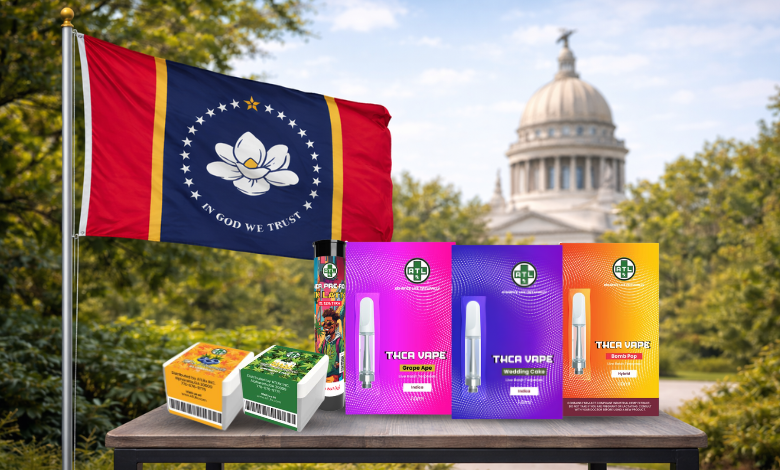
THCA Legal Status in Mississippi
No. THCA is not legal in Mississippi for general retail purchase in Mississippi. The 2025 AG opinion limits consumable hemp products, including flower, vapes, gummies, edibles, concentrates, and tinctures, to FDA-approved items or the licensed medical cannabis program. Only registered medical cannabis patients can legally access THCA through licensed dispensaries.
Federal level: Under the 2018 Farm Bill, hemp-derived THCA is legal if it tests at or below 0.3% Delta-9 THC on a dry-weight basis.
State level: Mississippi’s legal situation is restrictive and unsettled. As of June 20, 2025, AG Lynn Fitch issued a formal opinion requiring consumable hemp products to be either FDA-approved or sold through the state’s licensed medical cannabis program. This opinion is not statutory law but has driven active enforcement by local law enforcement agencies.
If you live in Mississippi and want to know whether THCA is legal, the honest answer is it depends, but leans toward no, and in 2026, the situation remains unsettled and is continuing to evolve. Hemp-derived THCA is technically legal under federal law, but Mississippi’s state-level enforcement has shifted sharply since a June 2025 Attorney General opinion, and new legislation in the 2026 session is reshaping the landscape further. Retail sales of THCA products fall into a legal gray area under state law.
Before you purchase THCA flower, vapes, or any other hemp-derived product in Mississippi, it is worth understanding both the federal framework and the important 2025–2026 developments that have changed how Mississippi law is applied.
Important: This article is intended for general educational and informational purposes only. The ATLRx hemp products are not medicines and are not intended to diagnose, treat, cure, or prevent any disease. Statements made here have not been evaluated by the Food and Drug Administration (FDA). Consult a healthcare provider before using any hemp-derived product.
Table of contents:
THCA stands for tetrahydrocannabinolic acid. Cannabinoids naturally occur in raw, unheated hemp and cannabis plants. The raw form of THCA does not produce the psychoactive effects associated with Delta-9 THC.
What matters most is what happens to THCA when it is exposed to heat. Decarboxylation, which occurs during smoking, vaping, or cooking, converts THCA into Delta-9 THC, the compound primarily responsible for the intoxicating effects of cannabis. This conversion is at the heart of nearly every legal question surrounding THCA.
Because THCA begins as a non-intoxicating compound but becomes intoxicating when heated, regulators in many states — including Mississippi — have scrutinized it closely. Whether THCA should be regulated as hemp or as marijuana depends almost entirely on how its conversion potential is assessed under applicable law.
THCA and THC are chemically related but have been treated as legally distinct under federal hemp definitions since 2018. THCA does not significantly bind to the brain’s CB1 receptors in its raw form, which is why it is non-intoxicating until heated. Once decarboxylation occurs, the resulting Delta-9 THC freely binds to those receptors.
The 2018 Farm Bill defined hemp by its Delta-9 THC content before harvesting, not by THCA content. This is the legal foundation that originally allowed hemp-derived THCA products to enter the market. However, both Mississippi’s enforcement posture and the new federal law (effective November 2026) have moved away from this delta-9-only standard.
The 2018 Farm Bill legalized hemp at the federal level, defining it as cannabis plants with less than 0.3% Delta-9 THC before harvest. Since THCA in its raw form is not Delta-9 THC, hemp-derived THCA products that test below the 0.3% Delta-9 threshold have been technically legal under federal law since then.
However, Congress has already changed this framework. On November 12, 2025, the President signed H.R. 5371 into law. Section 781 of this legislation — which takes effect on November 12, 2026 — redefines hemp to require a total THC standard, explicitly including THCA. Also, finished hemp-derived products intended for ingestion, inhalation, or topical use cannot contain more than 0.4 milligrams of total THC per container. This is not a pending regulatory proposal; it is already enacted federal law with a one-year implementation window. A repeal bill (H.R. 6209) has been introduced in the House, but it has not passed as of February 2026, and its outcome is uncertain.
2025 was a pivotal year for THCA in Mississippi, and 2026 is adding new layers to the legal picture. Three major developments define the current state of play.
A legal opinion issued by Mississippi Attorney General Lynn Fitch on June 11, 2025, had a significant impact on the retail THCA market in the state. Her opinion stated that Mississippi’s Uniform Controlled Substances Law forbids the sale of consumable hemp products — including those containing THCA — unless those products are either approved by the U.S. FDA or sold through the state’s licensed medical cannabis program.
Important caveat: The AG’s opinion is not a statute or court ruling. It is a formal interpretation of existing law, and the opinion itself acknowledged the ambiguity: “Mississippi law does not specifically address the possession or sale of products derived from the hemp plant designed for human ingestion and/or consumption.” Industry representatives and some legal commentators have challenged the opinion’s reach. Enforcement has varied by locality, with some county sheriffs issuing warnings and deadlines to retailers while others have taken no action.
Practically speaking, the opinion covers flower, vapes, edibles, oils, and other consumable formats. It makes Mississippi one of the most restrictive states in the country for over-the-counter hemp-derived cannabinoid products — but the legal picture remains contested.
In 2025, Mississippi lawmakers introduced House Bill 1502, which sought to establish a formal regulatory framework for intoxicating hemp products. Contrary to how some sources have characterized it, HB 1502 was primarily a restrictive bill — it aimed to impose restrictions and bans on most intoxicating hemp products, with only narrow exceptions. It was not primarily a bill designed to open up retail access to THCA flower.
The bill failed to pass in the Mississippi Legislature. As a result, there is currently no clear statutory framework — either permissive or restrictive — governing over-the-counter THCA sales outside the medical program. The AG’s opinion fills this void in practice, but remains legally untested.
SB 2645 — Hemp Beverage Ban (Died in Committee, February 3, 2026): Senate Bill 2645 was introduced in January 2026 and would have imposed a categorical ban on the sale or distribution of all beverages containing hemp, THC, or kratom in Mississippi. The bill died in the Senate Public Health and Welfare Committee on February 3, 2026. While its failure provides temporary relief for hemp beverage retailers, it signals ongoing legislative appetite for outright bans on hemp-derived product categories.
HB 1152 — Right to Try Medical Cannabis Act (Passed the House 104–7, February 5, 2026): House Bill 1152 is primarily a patient access bill. It creates a petition process through the Mississippi Department of Health, allowing patients with serious illnesses not currently on the state’s qualifying conditions list — specifically those that are chronic, progressive, severely disabling, or terminal — to seek authorization to participate in the medical cannabis program. The State Health Officer has sole, final, and non-appealable authority over petitions.
Notably, HB 1152 amends the definition of “THC” under the Mississippi Medical Cannabis Act to explicitly include THCA, Delta-9, Delta-8, Delta-10, and Delta-6 THC. If signed into law, this further reinforces the state’s legal position that THCA is a form of THC that belongs within the regulated medical program — not in the general hemp retail market.
Federal H.R. 5371 — Already Enacted, Effective November 12, 2026: This is the most consequential development, and it is important to understand that it is not a proposed rule or pending regulation — it is already signed federal law. Section 781 of H.R. 5371, enacted November 12, 2025, amends the Agricultural Marketing Act’s definition of hemp to require that total THC (including THCA) not exceed 0.3% on a dry-weight basis. It also prohibits chemically converted or synthetic cannabinoids and sets a finished-product cap of 0.4 mg total THC per container. The one-year implementation window ends November 12, 2026. A repeal bill (H.R. 6209) has been introduced but has not passed.
Mississippi’s enforcement approach involves evaluating products using a “total THC” metric rather than just Delta-9 THC. Total THC is calculated by factoring in both existing Delta-9 THC and the THC that could result if all the THCA in the product were decarboxylated.
This formula, often expressed as (THCA × 0.877) + Delta-9 THC = Total THC, means a product can contain very little Delta-9 THC at the time of testing but still be deemed non-compliant once THCA conversion potential is factored in. High-THCA hemp flower is particularly exposed under this approach.
This state-level standard is now aligned with where federal law is heading: the November 2026 federal rule also adopts a total THC standard.
| Year/Date | Event |
| 2018 | Federal 2018 Farm Bill legalized hemp nationwide, defining it as cannabis with ≤0.3% Delta-9 THC on a dry-weight basis. |
| 2020 | Mississippi passes the Mississippi Hemp Cultivation Act, legalizing hemp cultivation in the state. However, necessary funding was never appropriated, so federal licensing remains the operative framework. |
| 2022 | The Mississippi Medical Cannabis Act, signed by Governor Tate Reeves on February 3, 2022, created a legal pathway for medical cannabis through licensed dispensaries. |
| 2024 | DEA signals that THCA should be counted toward “total THC” calculations, increasing scrutiny of high-THCA hemp products nationally. |
| June 2025 | AG Lynn Fitch issues a formal legal opinion (not a statute) stating consumable hemp products must be FDA-approved or sold through the state’s licensed medical cannabis program. Local law enforcement agencies begin citing the opinion as justification for enforcement actions. |
| 2025 | House Bill 1502, which aimed to establish a regulatory framework (including restrictions and limited retail allowances) for intoxicating hemp products, failed to pass in the Mississippi Legislature. No clear statutory framework for over-the-counter THCA sales. |
| Nov 12, 2025 | The President signs H.R. 5371 into law. Section 781 amends the federal hemp definition to require a total THC standard (including THCA) and sets a 0.4 mg per container cap on finished hemp-derived products. Effective date: November 12, 2026. |
| Feb 3, 2026 | SB 2645 (categorical ban on hemp/THC/kratom beverages) dies in the Mississippi Senate Public Health and Welfare Committee. |
| Feb 5, 2026 | HB 1152 (“Right to Try Medical Cannabis Act”) passes the Mississippi House 104–7, advancing to the Senate. The bill’s definition of THC includes THCA, Delta-8, Delta-9, Delta-10, and Delta-6. |
| Nov 12, 2026 | Federal total THC rule under H.R. 5371 takes effect. Products exceeding 0.3% total THC or 0.4 mg per container would be reclassified as controlled substances. A repeal bill (H.R. 6209) has been introduced but has not passed as of February 2026. |
Patients registered in Mississippi’s medical cannabis program have a clear legal pathway to access cannabis products — which may include THCA-containing products — through licensed dispensaries. Under the Mississippi Medical Cannabis Act, qualifying patients with a valid medical cannabis card and a physician certification can purchase products from state-licensed dispensaries.
A debilitating medical condition listed under the Act, a certification from a state-registered medical provider, and registration with the Mississippi State Department of Health. Products available through the program are subject to state testing and oversight requirements.
If HB 1152 becomes law, additional patients with serious unlisted conditions may petition the State Health Officer for program access on a case-by-case basis.
For Mississippi residents who are not part of the medical cannabis program, the situation is considerably more uncertain. Following the June 2025 AG opinion, there is no clear legal pathway to purchase THCA flower or other consumable hemp THCA products from local retailers in Mississippi.
Some consumers choose to order hemp-derived THCA products online from out-of-state vendors who ship under federal hemp compliance standards. However, the AG’s opinion suggests that even federally compliant products may violate state law when sold or possessed as consumer goods intended for ingestion or inhalation in Mississippi. Enforcement varies by locality.
If you are considering purchasing THCA products, consulting a legal professional familiar with Mississippi hemp law before doing so is strongly advisable.
THCA is available in several formats, each with specific compliance considerations under Mississippi’s current legal landscape.
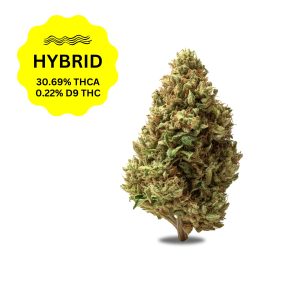
Raw hemp flower with high THCA content is called THCA flower. Because it is intended to be smoked or vaped — triggering decarboxylation and conversion to Delta-9 THC — it draws the most regulatory scrutiny under Mississippi’s enforcement approach. You should always seek out products with third-party Certificates of Analysis confirming Delta-9 THC content and total cannabinoid profiles. ATLRx provides lab-tested THCA flower with COAs available for review.
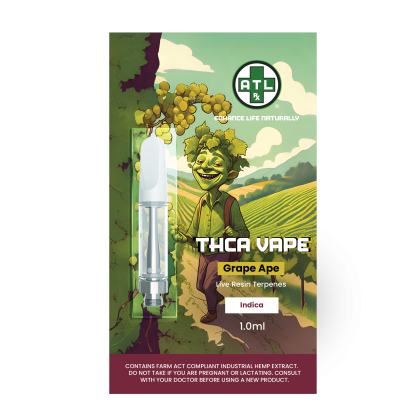
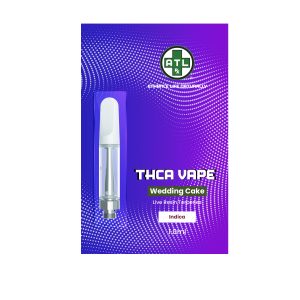
THCA vape cartridges are designed for use with compatible vape devices. Because vaping directly triggers decarboxylation, they are treated similarly to flower from a regulatory standpoint. Always verify that any vape product carries a compliant COA and falls within federal Delta-9 THC limits.
THCA gummies and edibles are consumable products that may contain raw or decarboxylated THCA. Edibles processed with heat may already contain Delta-9 THC rather than raw THCA. In Mississippi, edibles are specifically covered by the AG’s June 2025 opinion, making their retail availability outside the medical program particularly uncertain.
THCA concentrates, including diamonds and crystalline THCA, are highly purified extracts with very high THCA concentrations. These products are subject to the same legal considerations as other consumable THCA formats in Mississippi. Third-party lab verification is especially important given their high cannabinoid content.
A Certificate of Analysis is an independent lab report that verifies a product’s cannabinoid content. A complete COA should confirm Delta-9 THC content (to verify Farm Bill compliance), THCA percentage, total cannabinoid profile, and the absence of pesticides, heavy metals, and residual solvents. ATLRx makes third-party COAs available for all products. Never purchase THCA from a vendor who cannot provide current, verifiable lab results.
Under the 2018 Farm Bill framework, hemp-derived THCA products must currently test at or below 0.3% Delta-9 THC on a dry-weight basis. Responsible vendors track this compliance across their catalog and do not ship to states where products cannot legally be received.
A reputable THCA retailer enforces age restrictions (21+) and provides clear product labeling that contains cannabinoid content, serving instructions, and applicable disclaimers — including the FDA-required statement that the product has not been evaluated by the FDA and is not intended to diagnose, treat, cure, or prevent any disease.
If you are ordering THCA products online, choose vendors who are transparent about their shipping policies and who do not ship to states where products are restricted. Contact ATLRx directly to discuss current availability and shipping eligibility before placing an order.
Yes, THCA can result in a positive drug test if it is consumed by smoking, vaping, or cooking — methods that trigger decarboxylation and convert THCA to Delta-9 THC, which the body then metabolizes into compounds detectable by standard urine tests.
If you are subject to workplace drug testing, athletic screening, or any other testing program, treat THCA products with the same caution as Delta-9 THC products. Raw THCA consumed in cold form (such as through juicing) is less likely to convert to detectable THC metabolites, but this is not a guaranteed outcome, and individual metabolic variation exists.
Traveling with THCA in Mississippi carries real risk, even with federally compliant products. THCA flower looks and smells similar to regulated cannabis, making it difficult to distinguish during a law enforcement encounter. To minimize risk:
At ATLRx, we are committed to transparency, compliance, and quality. Here is what sets our products apart:
Explore our full range of THCA products at ATLRx.com. If you have questions about current availability for Mississippi customers, contact our team directly before placing an order.
The legal situation for THCA in Mississippi is among the most complex and rapidly changing in the country. Hemp-derived THCA remains federally legal under the current 2018 Farm Bill standard, but that federal framework is already changing through enacted legislation (H.R. 5371) that takes effect in November 2026.
At the state level, the June 2025 AG opinion — while not a statute — has had real enforcement consequences, and the 2026 legislative session continues to reinforce Mississippi’s position that THCA belongs within the regulated medical cannabis program rather than the general retail market.
For medical cannabis patients, the path is clear: licensed dispensaries under the Mississippi Medical Cannabis Act provide legal access. For everyone else, caution is warranted.
Stay informed as laws evolve, purchase only from vendors who provide full COA documentation, and consult a legal professional if you have specific questions about your situation. ATLRx will continue to monitor the legal landscape and update this content as significant changes occur.
The situation is complex but leans heavily towards no. Hemp-derived THCA is technically legal under the current federal standard (0.3% Delta-9 THC) but is effectively restricted at the state level. According to the June 2025 AG opinion, THCA products must be FDA-approved or sold through the state’s medical cannabis program. Most retail THCA sales exist in a legal gray area in Mississippi as of 2026.
No. For general consumers, there is currently no clear legal pathway to purchase THCA flower from local retailers in Mississippi following the 2025 AG opinion. Cannabis products are available to medical cannabis patients through licensed dispensaries. Some consumers order from online vendors shipping under federal hemp compliance, but state-level legal risk remains.
The HB 1502 law was introduced in 2025 in order to establish a regulatory framework for intoxicating hemp products. Contrary to some characterizations, the bill was primarily restrictive in nature — focused on limiting or banning most intoxicating hemp products with narrow exceptions. It failed to pass, leaving no clear statutory structure governing over-the-counter THCA sales.
Yes. Mississippi evaluates products using a total THC calculation that accounts for both existing Delta-9 THC and the THC that could be formed through decarboxylation. This means a product can be compliant under the federal Delta-9-only standard but still exceed Mississippi’s enforcement threshold.
H.R. 5371 is a federal law signed by the President on November 12, 2025. Section 781 amends the definition of hemp to require a total THC standard (including THCA) not exceeding 0.3% on a dry-weight basis and caps finished consumer products at 0.4 mg total THC per container. This provision takes effect on November 12, 2026. It is already enacted law, not a proposed rule. A repeal bill (H.R. 6209) has been introduced but has not passed as of February 2026.
Yes, it can. Smoking or vaping THCA converts it to Delta-9 THC, which is then metabolized into compounds that drug tests detect. If you are subject to drug testing, treat THCA products with the same caution as Delta-9 THC products.
The Mississippi Medical Cannabis Act was signed into law by Governor Tate Reeves on February 3, 2022. It created a legal framework for medical cannabis in the state, allowing qualifying patients with a debilitating medical condition to access cannabis products through licensed dispensaries. The patient must obtain a physician’s certification and register with the Mississippi State Department of Health.
THCA is a non-intoxicating precursor to THC in its raw form. Cannabis’s primary psychoactive cannabinoid is delta-9-THC. Delta-8 THC is a hemp-derived cannabinoid with milder psychoactive properties that is also restricted in many states. All three are regulated differently, and their legal status in Mississippi should be reviewed separately and verified with current sources.

July 30, 2026
July 27, 2026
$39.99
$49.99
$49.99
$49.99
$39.99