

$39.99

ARE YOU 21 YEARS OF AGE OR OLDER?
REMEMBER ME
Seriously, by using this site you are confirming that you are of legal age (21+) to view and purchase these products. If you are you are not over 21. you are not authorized by us to use or view any of the pages of this site. Please review our terms and conditions at checkout for further stipulations.
 >
Blogs
>
THCA >
Is THCA Legal in Colorado? The Complete 2026 Guide
>
Blogs
>
THCA >
Is THCA Legal in Colorado? The Complete 2026 Guide
THE STATEMENTS ON THIS BLOG ARE NOT INTENDED TO DIAGNOSE, TREAT, CURE, OR PREVENT ANY DISEASE. THE FOOD AND DRUG ADMINISTRATION HAS NOT EVALUATED ANY STATEMENTS CONTAINED WITHIN THE BLOG. ATLRX DOES NOT IN ANY WAY GUARANTEE OR WARRANT THE ACCURACY, COMPLETENESS, OR USEFULNESS OF ANY MESSAGE. THE INFORMATION CONTAINED WITHIN THIS BLOG IS FOR GENERAL INFORMATIONAL PURPOSES ONLY.
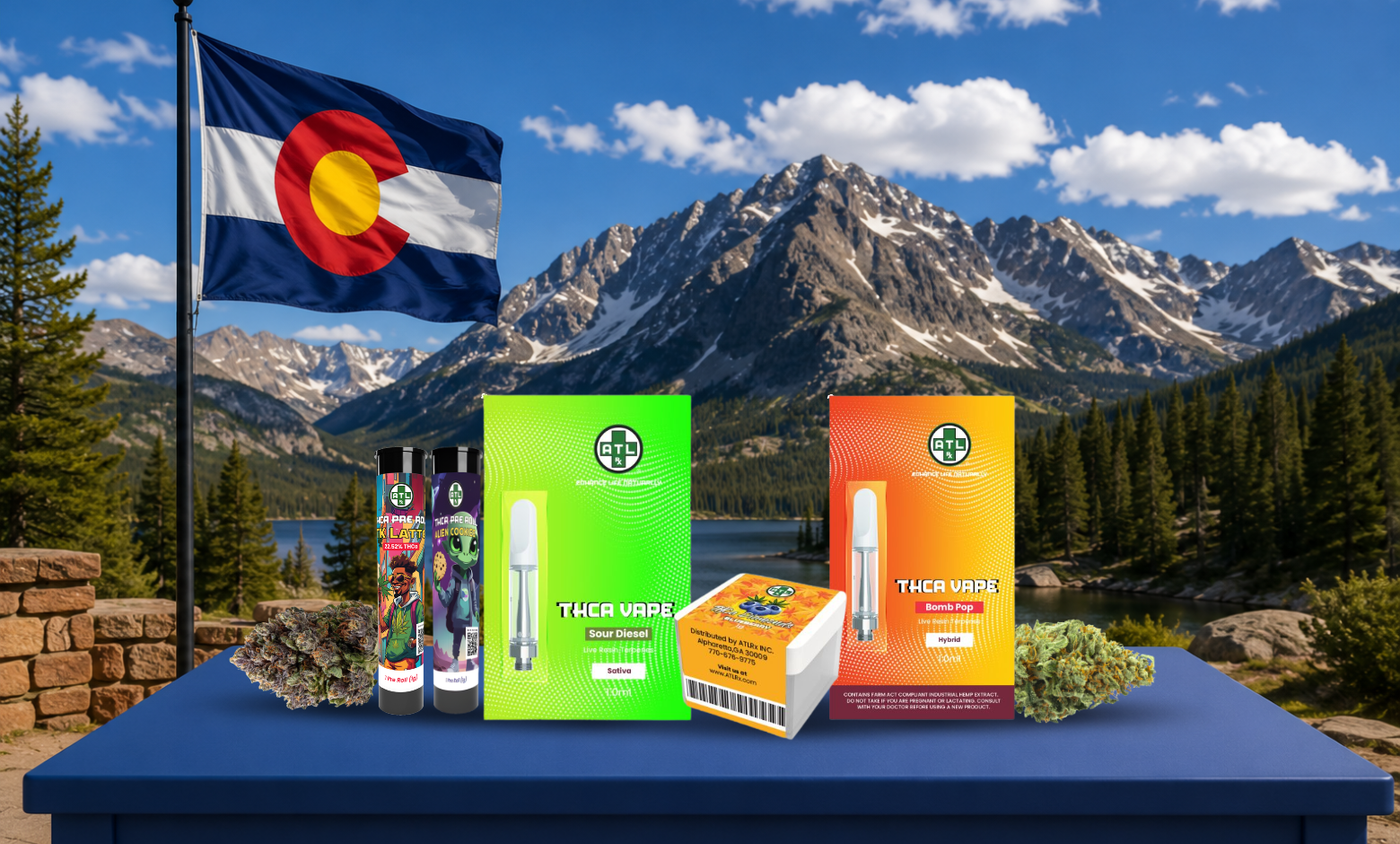
THCA Legal Status in Colorado:
If you are asking whether THCA is legal in Colorado, the honest 2026 answer is more nuanced than a simple yes or no: hemp-derived THCA is heavily restricted in Colorado and is channeled into the state’s licensed cannabis system rather than sold openly on smoke shop and gas station shelves. Colorado measures cannabis products by “total THC” rather than delta-9 THC alone, and that single rule changes everything for THCA flower, THCA vape Cart, and THCA concentrates. This guide breaks down exactly how Colorado treats THCA in 2026, why the federal definition of hemp is also changing, and what residents and visitors should understand before they buy or carry these products.
Table of contents:
| Question | 2026 Status in Colorado |
| Is high-THCA hemp flower freely sold in Colorado smoke shops? | No. Colorado’s total-THC standard treats it as marijuana. |
| Can you buy THCA-rich products at all? | Yes, but through licensed Marijuana Enforcement Division (MED) dispensaries, 21+. |
| Does Colorado follow the federal delta-9-only hemp rule? | No. Colorado uses a stricter total-THC calculation. |
| Will federal law change this further? | Yes. Public Law 119-37 takes effect on November 12, 2026. |
| Can out-of-state brands ship THCA flower to Colorado addresses? | Only low-THC, compliant products; many SKUs are geofenced out. |
The essentials before you read further:
In raw, living cannabis and hemp plants, tetrahydrocannabinolic acid (THCA) is the most abundant cannabinoid. In its natural, unheated state, the THCA molecule carries an extra carboxyl group. In contrast to delta-9 THC, raw THCA does not produce an intoxicating “high.”
The relationship between THCA and THC is the single most important concept for understanding Colorado’s rules. THCA undergoes a chemical reaction called decarboxylation when exposed to heat or UV light through smoking, vaping, or cooking. THCA loses its carboxyl group during decarboxylation, converting into delta-9 THC.
This is why regulators no longer treat THCA as an inert precursor. A flower bud labeled “THCA flower” can convert into a substantial amount of delta-9 THC the moment a consumer lights it. Lawmakers in Colorado and at the federal level have written rules specifically to account for that conversion potential.
Total THC = delta-9 THC + (THCA × 0.877)
This multiplier reflects the weight lost when THCA sheds its carboxyl group. A hemp flower that tests at 22% THCA and 0.18% delta-9 THC would calculate to roughly 19.5% total THC, far above any hemp threshold.
Colorado has one of the longest-running adult-use cannabis markets in the country and, at the same time, one of the strictest frameworks for intoxicating hemp-derived cannabinoids. The two systems are deliberately kept separate.
Colorado Uses a “Total THC” Standard
Most people assume hemp is judged only by its delta-9 THC content. That was the original 2018 federal approach. Colorado moved away from it. Through SB22-205, which created the Intoxicating Hemp Task Force, and the follow-on SB23-271, Colorado requires hemp products to be measured for post-decarboxylation total THC using the delta-9 + (THCA × 0.877) calculation, judged against the 0.3% dry-weight threshold.
Because high-THCA flower contains so much convertible THCA, it almost always fails this test. Under Colorado’s reading, that flower is legally treated as marijuana, not hemp.
Senate Bill 23-271: The Framework That Governs Today
In June 2023, Colorado enacted Senate Bill 23-271, codified at C.R.S. 25-5-427 and implemented through rule 6 CCR 1010-24. This law, which followed recommendations from the SB22-205 Intoxicating Hemp Task Force, created the regulatory structure still in force in 2026. The task force itself was established the prior year by SB22-205, the state’s first legislative response to intoxicating hemp-derived cannabinoids. SB23-271 sorts cannabinoids into three categories:
Note: Confirm the current 6 CCR 1010-24 rule version on the Colorado Secretary of State CCR portal before publishing — CCR links are version-specific.
For finished hemp products that do contain small amounts of THC, SB23-271 also sets milligram limits (generally in the range of 1.25 mg to 1.75 mg of THC per serving, depending on age and packaging) and CBD-to-THC ratio requirements (generally between 15:1 and 20:1). Penalties for violations can be substantial and are set by statute and rule.
Colorado regulators have actively enforced these rules. The Colorado Attorney General’s office has brought multiple enforcement actions against companies selling intoxicating hemp products outside the licensed system.
Partially, and the window is narrowing. Some out-of-state hemp brands still ship THCA products to Colorado addresses, but reputable sellers curate their Colorado-eligible catalogs carefully. Because Colorado reads products on a total-THC basis, brands generally limit Colorado-bound shipments to lower-potency items that can pass the threshold. High-THCA flower that ships freely to other states is frequently geofenced out of Colorado entirely.
Adults 21 and older may purchase regulated cannabis products from MED-licensed dispensaries. Colorado also restricts the sale of certain THC-containing hemp products to people under 21 based on milligram content and CBD-to-THC ratio.
Colorado’s rules do not exist in a vacuum. The federal definition of hemp is undergoing its most significant change since 2018.
According to the 2018 Farm Bill, hemp is Cannabis sativa L. containing no more than 0.3% delta-9 THC on a dry-weight basis. Because the law measured only delta-9 THC at the point of testing, hemp flower could legally contain high levels of THCA. This is the “delta-9-only” framework that allowed the national THCA market to grow.
The Continuing Appropriations and Extensions Act, 2026 (Public Law 119-37) was signed into law on November 12, 2025. Section 781 rewrites the federal definition of hemp. The key changes, which take effect on November 12, 2026:
Industry and legal analysts generally expect that many finished hemp products and high-THCA hemp flower will no longer meet the federal definition of hemp. Several bills to delay or modify the change have been introduced in Congress, and the situation continues to evolve. Readers should treat the November 2026 date as the current effective deadline while watching for legislative updates.
Colorado already applies a total-THC standard, so the state’s hemp retail market is in some ways ahead of the federal change. State officials, including the governor, have publicly criticized the federal ban, and Colorado advocates have discussed legislation affecting regulated hemp categories within the state’s framework. The interaction between a stricter federal law and Colorado’s own framework is an area to monitor closely through late 2026.
To put THCA in context, here is how Colorado treats related compounds in 2026:
| Cannabinoid | Colorado Treatment (2026) |
| THCA (high-potency) | Intoxicating; restricted to the licensed MED system. |
| Delta-8 THC | Intoxicating; Colorado was an early restrictor; licensed channels only. |
| Delta-10 THC | Treated as an intoxicating cannabinoid; licensed channels only. |
| HHC | Treated as an intoxicating/synthetic conversion compound; restricted. |
| CBD (nonintoxicating) | Permitted in general retail when it meets total-THC and ratio rules. |
| Marijuana (adult-use) | Fully legal for adults 21+ through licensed dispensaries. |
The pattern is consistent: Colorado regulates by intoxicating effect and total THC content, not by whether a compound was extracted from hemp or marijuana.
So, is THCA legal in Colorado? In 2026, the accurate answer is that hemp-derived high-THCA products are restricted, not freely legal. Colorado measures products by total THC, treats intoxicating THCA the same way it treats marijuana, and routes those products into its licensed dispensary system. In addition, a new federal definition of hemp takes effect on November 12, 2026, tightening the national standard as well.
For Colorado residents and visitors, the safest approach is straightforward: buy intoxicating cannabis products only through licensed, 21+ dispensaries; insist on a current third-party Certificate of Analysis for any hemp product; confirm shipping eligibility before ordering online; and never transport cannabis products across state lines. Laws in this space are changing quickly, so verify the current statute or consult a qualified attorney before making purchasing or business decisions.
ATLRx offers third-party lab-tested hemp products with Certificates of Analysis available for every item. If you are shopping from Colorado, confirm product eligibility and shipping availability at checkout, and always review the COA before purchasing. For questions about whether a specific product can ship to your address, contact ATLRx customer support.
Generally no. Because Colorado uses a total-THC standard, high-THCA flower is treated as marijuana and is restricted to the state’s licensed dispensary system rather than general retail.
Yes, through licensed Marijuana Enforcement Division dispensaries, which serve adults 21 and older. The product is available; the channel is regulated.
No. Colorado adopted a stricter total-THC calculation through SB22-205 and SB23-271, which counts THCA toward the THC total.
The federal change in November 2026 narrows the definition of hemp nationally; it does not loosen Colorado’s rules. Colorado’s own framework already restricts intoxicating THCA, and any future change would come from state legislation.
Some brands ship lower-potency, total-THC-compliant products to Colorado, but high-THCA flower is often blocked at checkout. Always confirm shipping eligibility and review the Certificate of Analysis.
The transportation of cannabis products across state lines remains illegal under federal law, regardless of the laws in either the origin or destination state.
THCA is the raw, nonintoxicating acidic form found in the living plant. When heated, it converts (decarboxylates) into delta-9 THC, the intoxicating compound. Because THCA converts into THC, regulators count it as part of the total THC.
Disclaimer
This article is for general informational purposes only and does not constitute legal advice. These statements have not been evaluated by the Food and Drug Administration. These products are not intended to diagnose, treat, cure, or prevent any disease. Cannabis and hemp laws change frequently at both the state and federal levels. Consult a licensed attorney or the relevant Colorado state agency for guidance specific to your situation. You must be 21 or older to purchase regulated cannabis products in Colorado.

June 19, 2026
June 18, 2026
June 17, 2026
June 16, 2026
June 14, 2026
$39.99
$49.99
$29.99
$39.99
$39.99
$39.99