


$39.99
ARE YOU 21 YEARS OF AGE OR OLDER?
REMEMBER ME
Seriously, by using this site you are confirming that you are of legal age (21+) to view and purchase these products. If you are you are not over 21. you are not authorized by us to use or view any of the pages of this site. Please review our terms and conditions at checkout for further stipulations.
 >
Blogs
>
CBD >
Is CBD Legal in South Carolina? 2026 Legal Guide
>
Blogs
>
CBD >
Is CBD Legal in South Carolina? 2026 Legal Guide
THE STATEMENTS ON THIS BLOG ARE NOT INTENDED TO DIAGNOSE, TREAT, CURE, OR PREVENT ANY DISEASE. THE FOOD AND DRUG ADMINISTRATION HAS NOT EVALUATED ANY STATEMENTS CONTAINED WITHIN THE BLOG. ATLRX DOES NOT IN ANY WAY GUARANTEE OR WARRANT THE ACCURACY, COMPLETENESS, OR USEFULNESS OF ANY MESSAGE. THE INFORMATION CONTAINED WITHIN THIS BLOG IS FOR GENERAL INFORMATIONAL PURPOSES ONLY.
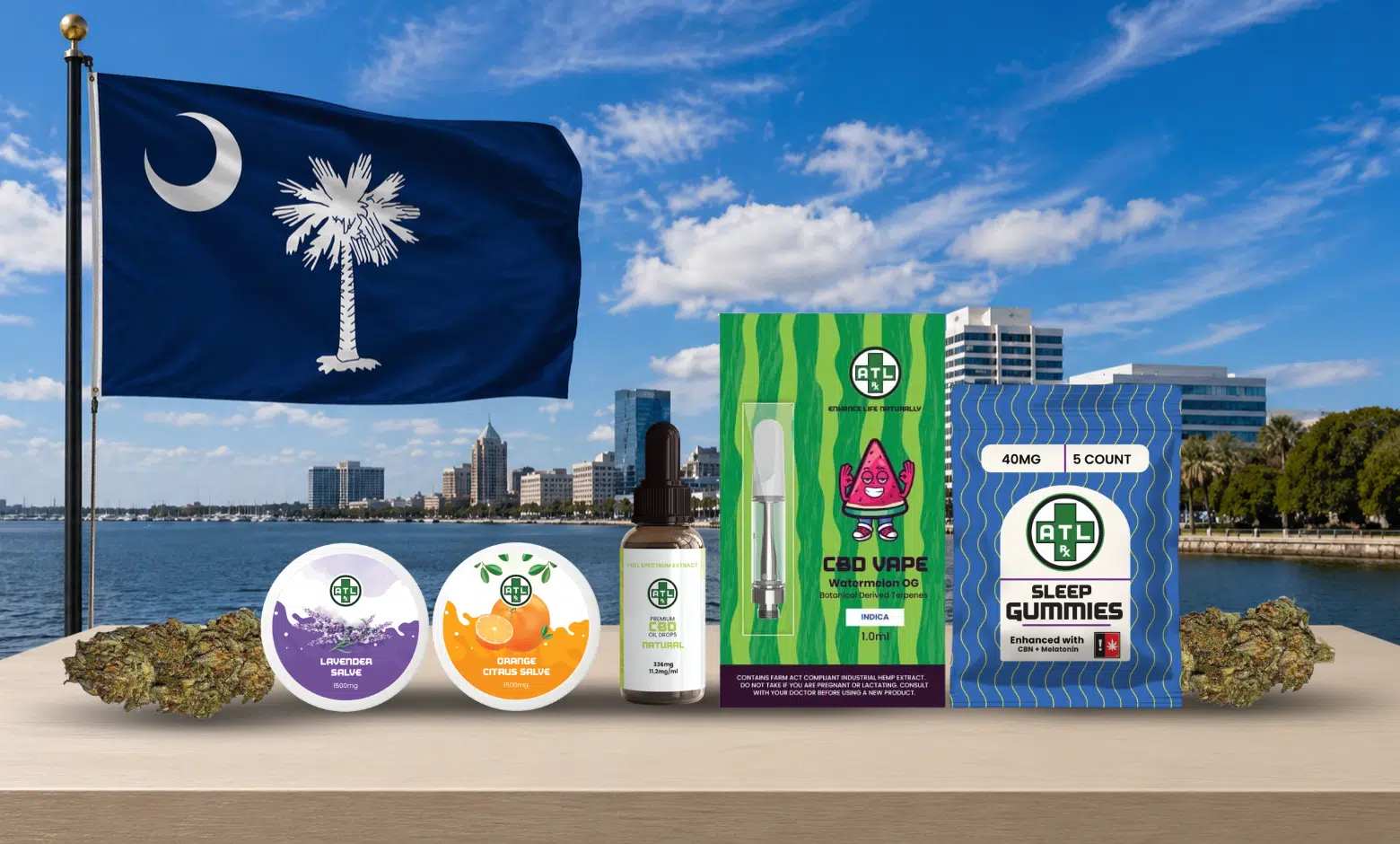
CBD Legal Status in South Carolina:
Yes. CBD derived from hemp is legal in South Carolina as long as the product:
The recreational use of marijuana-derived CBD remains illegal in South Carolina. A separate, very narrow legal carve-out applies under Julian’s Law for qualifying epilepsy patients with a physician’s written certification.
If you live in the Palmetto State or plan to visit, one of the first questions shoppers ask at the register is, “Is CBD legal in South Carolina?” The short answer for 2026 is yes, hemp-derived CBD is legal in South Carolina when the product meets federal and state compliance standards, but the rules have shifted noticeably since the 2018 Farm Bill. With multiple hemp bills moving through Columbia this session and a major federal change to the definition of hemp taking effect on November 12, 2026, shoppers need current information, not outdated 2024 summaries. This ATLRx guide breaks down the current legal landscape, the active hemp legislation in the 2025–2026 session (H.3924, H.4758, and H.4759), the pending federal redefinition of hemp, what retailers can and cannot sell, and how to confirm that a CBD product is fully compliant before you buy.
Table of contents:
CBD’s legal status in every U.S. state, including South Carolina, starts with federal Law. The 2018 Farm Bill amended the Controlled Substances Act to exclude hemp from the federal definition of marijuana. Any cannabis plant containing 0.3% or less Delta-9 THC by dry weight is classified as hemp, not marijuana. This single threshold is the foundation every state law builds upon.
In November 2025, President Trump signed Public Law 119-37, which included Section 781 – a provision that substantially rewrote the federal definition of hemp. Effective November 12, 2026, hemp is defined based on total THC (including THCA, Delta-8 THC, and other THC-class cannabinoids) rather than Delta-9 THC alone, and finished hemp-derived products for human or animal consumption are capped at 0.4 milligrams of total THC per container. This change is significant: industry analysts estimate it will affect a large share of hemp-derived products currently on the market, including many non-intoxicating CBD products. Legislation to delay or repeal Section 781 has been introduced in Congress, but as of April 2026, the November 12, 2026, effective date remains in place. This is a major reason CBD shoppers in South Carolina should focus on 2026 guidance rather than older 2024 or 2025 articles.
South Carolina’s CBD legal framework sits on four main pillars.
Julian’s Law was the state’s first CBD-specific statute. It creates a narrow legal carve-out permitting patients diagnosed with severe, treatment-resistant epilepsy — including Lennox-Gastaut Syndrome and Dravet Syndrome — to possess cannabis-derived CBD oil containing no more than 0.9% THC and at least 15% CBD. The patient must have a written certification from a licensed South Carolina physician. The Law does not establish licensed dispensaries or manufacturers inside South Carolina, and it does not create a broad medical cannabis program.
HB 3559, signed into Law on May 10, 2017, created the South Carolina Industrial Hemp Program as a three-year pilot program under the South Carolina Department of Agriculture (SCDA). The bill recognized industrial hemp as an agricultural crop (defined as Cannabis sativa L. with no more than 0.3% Delta-9 THC on a dry-weight basis), permitted qualifying institutions of higher education to conduct hemp research, and laid the foundation for commercial hemp cultivation that would follow in 2019.
Passed shortly after the 2018 federal Farm Bill, this act (H.3449) expanded the state’s industrial hemp program beyond its pilot phase. It expanded the number of hemp cultivation licenses the SCDA can issue, allowed commercial hemp farming statewide, aligned state law with the 0.3% Delta-9 THC federal threshold, and paved the way for legal hemp-derived consumer products, including CBD oils, tinctures, topicals, and edibles.
South Carolina’s Controlled Substances Act continues to classify any cannabis plant that exceeds the 0.3% Delta-9 THC threshold as marijuana, which remains a Schedule I controlled substance under state law. This is what separates federally compliant hemp-derived CBD (legal) from marijuana-derived CBD (illegal outside the narrow Julian’s Law carve-out).
Provided the 0.3% Delta-9 THC threshold is met and labeling rules are followed, the following product categories are legal for adults in South Carolina in 2026:
A Certificate of Analysis (COA) from an accredited third-party laboratory confirms cannabinoid potency and the absence of heavy metals, residual solvents, and pesticides.
South Carolina has three hemp bills moving through the 2025–2026 legislative session. Each targets intoxicating hemp products — gummies, vapes, and THC beverages — rather than traditional non-intoxicating CBD.
H.3924 is the furthest along. On March 19, 2026, the South Carolina Senate passed a heavily amended version 35–4. Core provisions of the Senate-amended bill include:
H.3924 is currently back in the legislative process for further action before reaching the Governor’s desk.
H.4758, introduced by Rep. W. Newton on January 13, 2026, would have broadly prohibited the sale, manufacture, and distribution of consumable hemp products that contain THC. The bill explicitly preserved the lawful sale of CBD, CBG, CBC, and CBN products that do not cause a psychoactive reaction. H.4758 was sent back to committee in early February 2026 and has not advanced since.
H.4759, also introduced on January 13, 2026, focuses specifically on hemp-derived beverages. Core provisions include:
H.4759 was last amended on February 4, 2026, and currently resides in the House.
All three bills focus on intoxicating hemp products — primarily Delta-8, Delta-9, THCA, and THC beverages — not traditional non-intoxicating CBD. Pure CBD, CBG, CBC, and CBN products are carved out of the most restrictive state provisions. If you are shopping for a standard CBD oil, topical, or gummy that contains no intoxicating cannabinoids, the state legal path remains open. Retailers will need to comply with stricter labeling, age verification, and packaging rules as the year progresses, and shoppers should also watch the federal November 12, 2026, hemp redefinition, which is a separate and significant change at the national level.
Historically, South Carolina did not mandate a statewide minimum purchase age for non-intoxicating hemp-derived CBD. Many retailers, including ATLRx, voluntarily require customers to be 21 or older as a matter of responsible business practice.
Under pending 2026 legislation, particularly the Senate-amended H.3924, the state is moving toward formal age restrictions for hemp-derived cannabinoid products, particularly anything with measurable intoxicating THC content. Once H.3924 or similar legislation is signed, the legal purchase age for intoxicating hemp products will be 21 years old, and retailers will be required to verify age with a valid government-issued photo ID.
ATLRx policy: We recommend all CBD customers be 21 years of age or older, and we follow strict age-verification practices at checkout to stay ahead of pending regulations.
Not every hemp product on the shelf meets South Carolina’s legal standard. Use this checklist before purchasing.
| Compliance Factor | What to Look For |
| Delta-9 THC Content | 0.3% or less on a dry-weight basis |
| Source Plant | Derived from industrial hemp (not marijuana) |
| Third-Party Lab Testing | Current Certificate of Analysis (COA) accessible via QR code or link |
| Labeling | Product labeled as “hemp” or “hemp extract,” with cannabinoid content clearly listed |
| Ingredients | Full ingredient list provided; no undisclosed synthetic cannabinoids |
| Manufacturer Information | Brand name, contact information, batch number, and expiration date |
| Marketing Claims | No unapproved disease or health claims on packaging |
If a product lacks any of these, treat it as a red flag and choose a different brand.
Traveling by car within South Carolina with a compliant hemp-derived CBD product is legal, provided the product stays within the 0.3% THC threshold and is in its original, labeled packaging. Keep a copy of the COA with you when possible.
Air travel is regulated by the Transportation Security Administration (TSA). Under current TSA guidance, hemp-derived CBD that complies with the federal Farm Bill is permitted in carry-on and checked bags. Out-of-state shoppers should confirm the laws in their destination state because CBD regulations still vary significantly across the country.
Hemp-derived CBD is sold across South Carolina at licensed hemp retailers, CBD specialty stores, wellness shops, pharmacies, convenience stores, and gas stations, as well as online. The quality gap between retailers can be substantial. To make sure you are buying compliant, lab-tested CBD:
Avoid unlabeled products sold out of vehicles, pop-up kiosks without verifiable business information, or any retailer that cannot provide a COA on request.
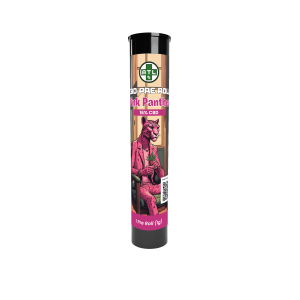
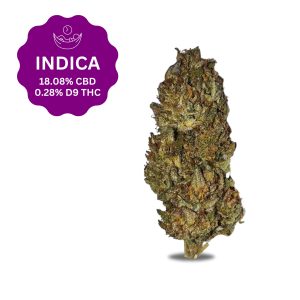
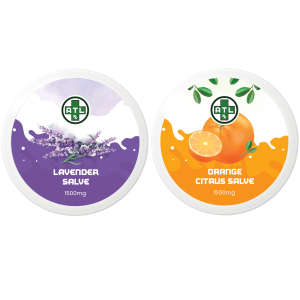
ATLRx has been in the hemp and cannabinoid space for nearly a decade, and every product we ship is built to meet the standards South Carolina shoppers expect in 2026.
Shop the full collection at ATLRx and confirm lab results before you check out.
The question “Is CBD legal in South Carolina?” has a straightforward 2026 answer: yes, when the product is hemp-derived, tested, labeled, and sits at or below 0.3% Delta-9 THC. The state’s legal framework is tightening around intoxicating hemp products, but non-intoxicating CBD enjoys a stable legal home under the 2018 Farm Bill, the South Carolina Hemp Farming Act, and the carve-outs written into this year’s pending legislation. The federal November 12, 2026, hemp redefinition is the single most important development to watch, and ATLRx is actively adapting its catalog in response. Shop from transparent brands, keep a copy of the COA with your order, and you can enjoy compliant CBD anywhere in the Palmetto State.
Yes. South Carolina allows CBD oil derived from hemp as long as it contains no more than 0.3% Delta-9 THC and is sourced from federally compliant hemp.
No. CBD products derived from hemp are available over the counter in South Carolina. A doctor’s written certification is only required under the narrow Julian’s Law pathway, which applies to patients with severe, treatment-resistant epilepsy and involves cannabis-derived CBD with up to 0.9% THC.
There is no statewide age minimum for non-intoxicating CBD as of early 2026, though pending legislation (H.3924) will require buyers of intoxicating hemp-derived cannabinoid products to be 21 or older. ATLRx already requires customers to be 21 years old or older.
Yes. CBD shopping online is legal in South Carolina. Reliable retailers like ATLRx provide lab-tested, federally compliant CBD products shipped directly to South Carolina addresses.
CBD itself is not typically screened for, but full-spectrum CBD products contain up to 0.3% THC and can produce a positive result on THC-sensitive drug tests. Consider a broad-spectrum or CBD isolate product if drug testing is a concern instead.
Hemp-derived Delta-9 THC products that stay within the 0.3% dry-weight threshold are currently legal at the state level, though the regulatory framework is actively being rewritten under H.3924, H.4758, and H.4759. Delta-8 THC’s state status is contested: the South Carolina Attorney General has issued an opinion treating Delta-8 (and Delta-10) as controlled substances, even as many retailers continue to sell Delta-8 products. Separately, the federal redefinition of hemp taking effect on November 12, 2026, will reclassify most Delta-8 products and many Delta-9 products nationwide. Be sure to check the latest legislative updates and the product’s Certificate of Analysis before buying.
The three active South Carolina bills (H.3924, H.4758, H.4759) focus on intoxicating hemp products, not traditional CBD. Pure CBD, CBG, CBC, and CBN products are carved out of the most restrictive state provisions. However, the federal hemp redefinition under Section 781 of P.L. 119-37, taking effect November 12, 2026, will apply a total-THC standard and a 0.4 mg-per-container cap that could affect a significant share of CBD products sold nationwide. ATLRx is actively monitoring both state and federal developments and reformulating as needed to keep our catalog compliant.
Disclaimer: This article is for informational purposes only and does not constitute legal advice. South Carolina hemp laws and federal hemp regulations continue to evolve. Consult a licensed attorney or the South Carolina Department of Agriculture for the most current legal guidance.

August 12, 2026
August 7, 2026
August 5, 2026
August 4, 2026
$39.99
$39.99
$39.99
$49.99
$49.99
$49.99
$39.99