Is Delta 9 Legal in West Virginia? 2026 Law Updates & Buyer’s Guide
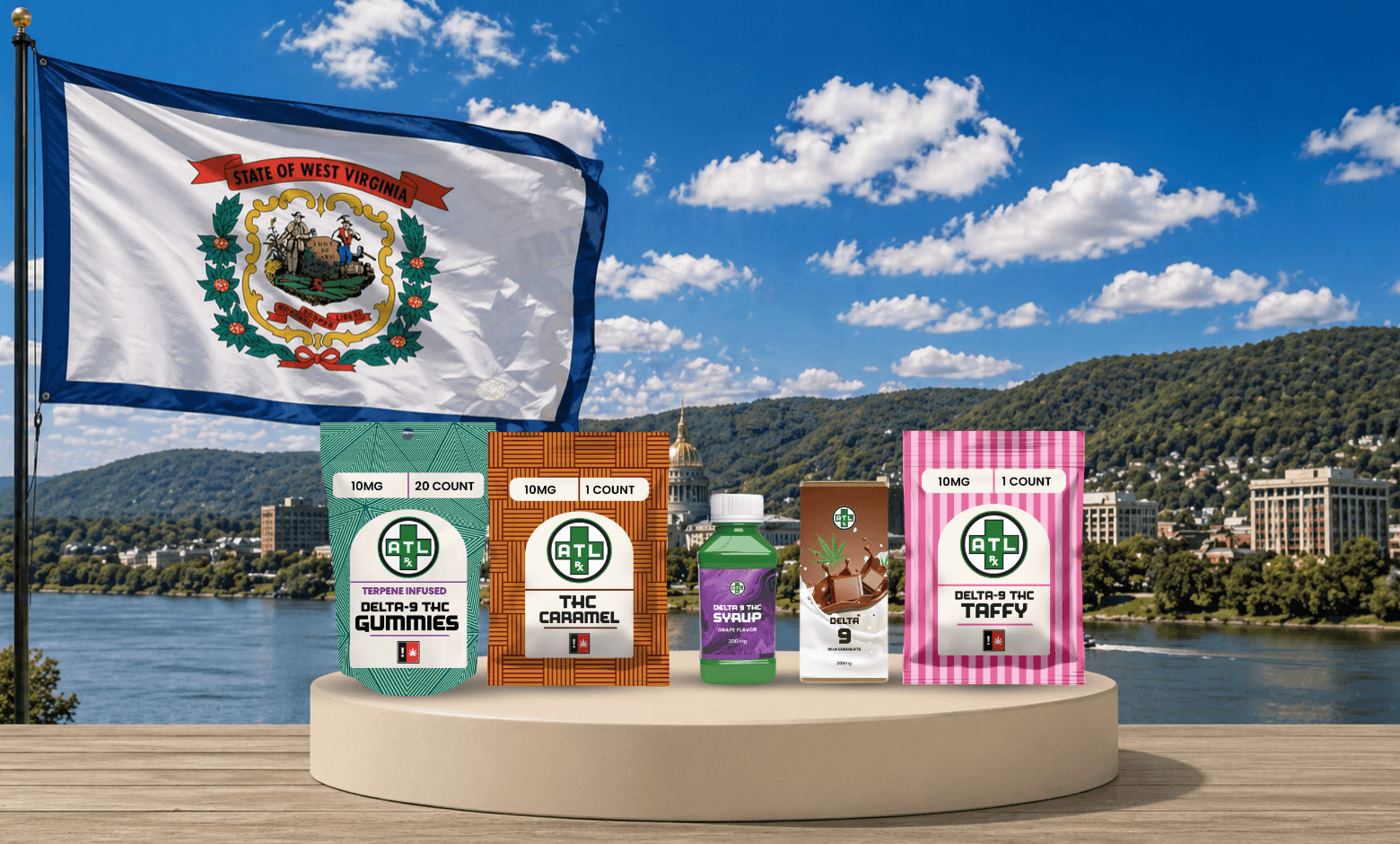
Delta 9 Legal Status in West Virginia:
Yes. As of April 2026, hemp-derived Delta 9 THC is legal in West Virginia for adults aged 21 and older, provided the product contains no more than 0.3% Delta 9 THC by dry weight. The 2018 Farm Bill and West Virginia’s Industrial Hemp Development Act allow 0.3% Delta 9 THC by dry weight. Delta 8 THC, Delta 10 THC, and other synthetic or non-naturally occurring cannabinoids are classified as Schedule I controlled substances under West Virginia law and are illegal to sell, distribute, or possess. Recreational marijuana remains prohibited; higher-THC products are limited to the state’s medical cannabis program.
Keep Browsing
Explore Our Delta 9 THC Categories
Shop real Delta 9 THC products and collections.

At a Glance
- Legal status: Legal (hemp-derived, ≤ 0.3% Delta 9 THC by dry weight)
- Minimum age: 21 years
- Medical card required: No (for hemp-derived Delta 9)
- Possession limit: No state-imposed limit for compliant hemp products
- Governing federal law: 2018 Farm Bill (P.L. 115-334); updates effective November 12, 2026, under P.L. 119-37
- Governing state law: SB 475 (2018), HB 2694 (2019), Industrial Hemp Development Act
- Key change ahead: Federal “total THC” standard + 0.4 mg per container cap takes effect November 12, 2026
If you’re browsing for hemp products and wondering, “Is Delta 9 legal in West Virginia?”, the direct answer in 2026 is yes, hemp-sourced Delta 9 THC can be lawfully bought and used in West Virginia, so long as the finished item holds no more than 0.3% Delta 9 THC and is derived from hemp cultivated under the 2018 Farm Bill. That said, the regulatory landscape is in motion. A federal measure enacted in November 2025 will overhaul how “hemp” is defined across the country beginning November 12, 2026, and West Virginia has independently restricted several other intoxicating cannabinoids derived from hemp at the state level. This guide walks through where things stand today, the statutes that matter, what the 2026 federal shift means for everyday shoppers, and how to buy safely from ATLRx.
Key Takeaways
- Hemp-derived Delta 9 is legal in West Virginia when it satisfies the 2018 Farm Bill’s 0.3% Delta 9 THC dry-weight ceiling.
- West Virginia SB 475 (2018) and the Industrial Hemp Development Act bring state law into alignment with federal hemp rules.
- SB 546 (2023) placed Delta 8 THC, Delta 10 THC, and synthetic or non-naturally occurring cannabinoids on West Virginia’s Schedule I controlled substances list, though compliant hemp-derived Delta 9 remains lawful.
- The federal FY2026 Appropriations Act (P.L. 119-37) rewrites the hemp definition around a “total THC” standard, taking effect November 12, 2026, and imposes a limit of 0.4 mg per container on finished goods.
- West Virginia does not have a recreational marijuana program; it runs a medical cannabis program under the 2017 Medical Cannabis Act.
- Shoppers should be 21+ and stick to brands that publish batch-matched third-party Certificates of Analysis (COAs).
What Is Delta 9 THC?
One of the most abundant cannabinoids produced naturally by the Cannabis sativa L. plant. Cannabis and hemp both contain this compound, and most people think of it when they hear the word “THC.”
Legally speaking, what determines how Delta 9 is treated is where it came from. When the molecule is drawn from hemp — meaning cannabis carrying 0.3% or less Delta 9 THC on a dry-weight basis — it qualifies as a federally lawful hemp ingredient. When it originates from marijuana (cannabis exceeding the 0.3% cutoff), it falls under federal controlled-substance rules and, inside West Virginia, is accessible only through the state’s medical cannabis framework.
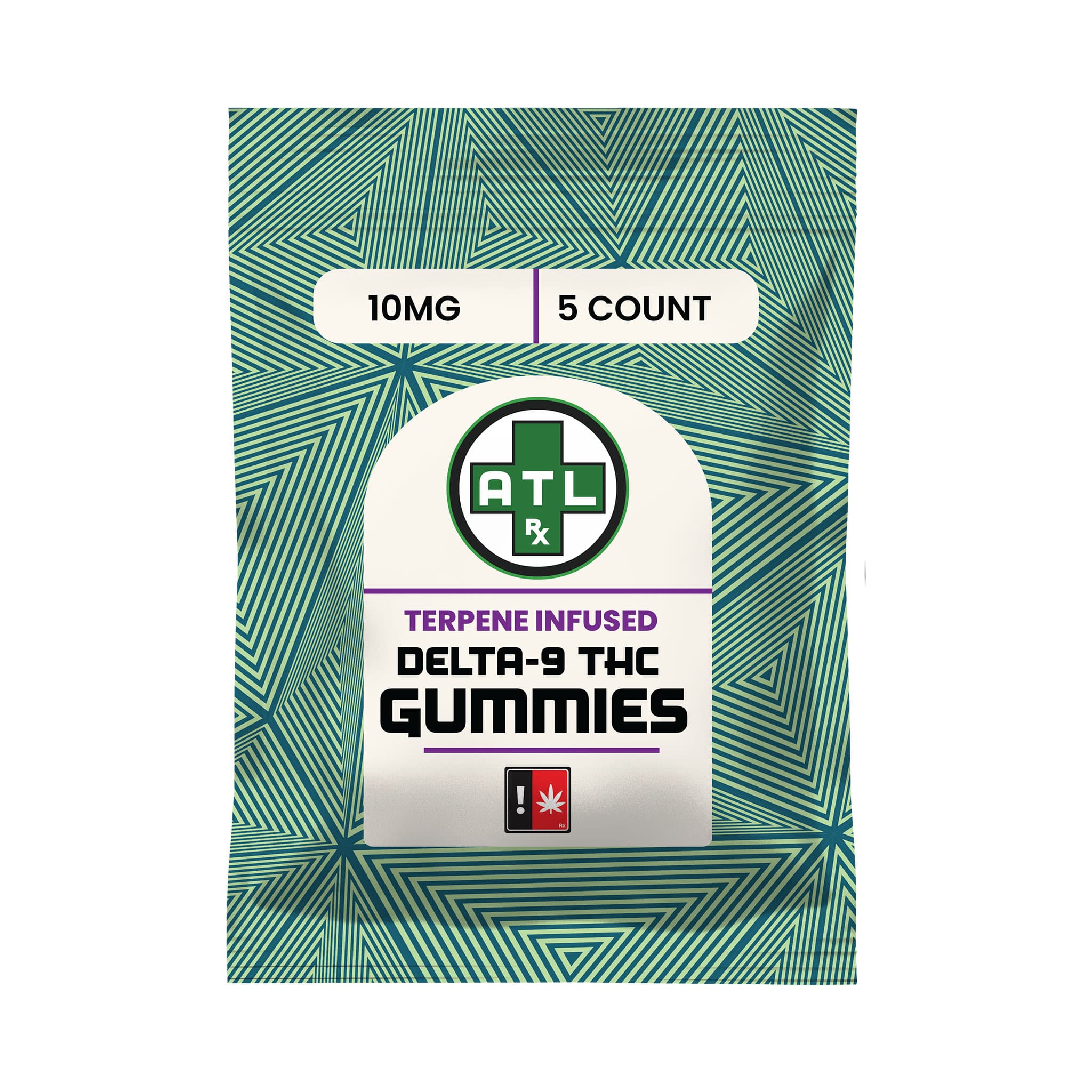
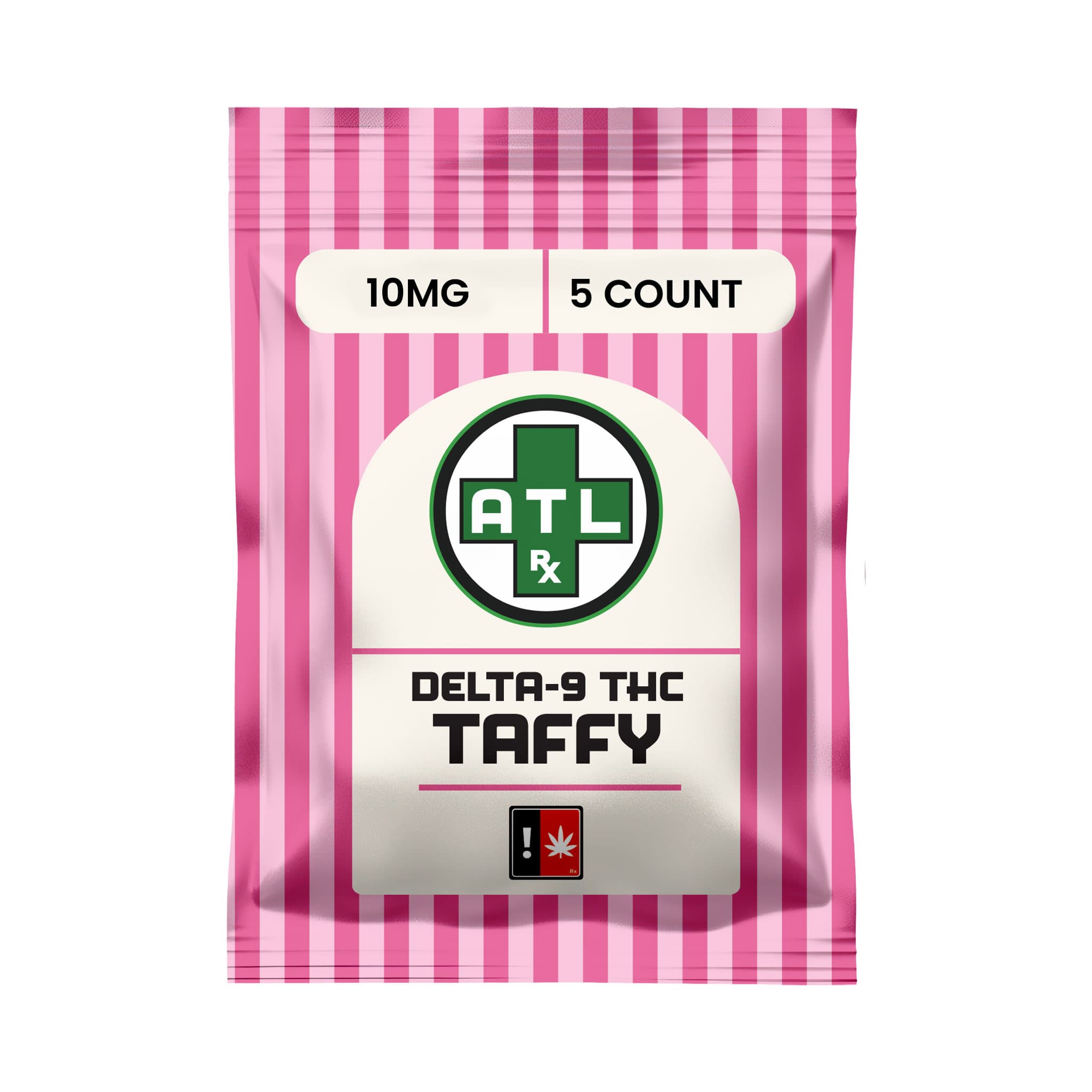
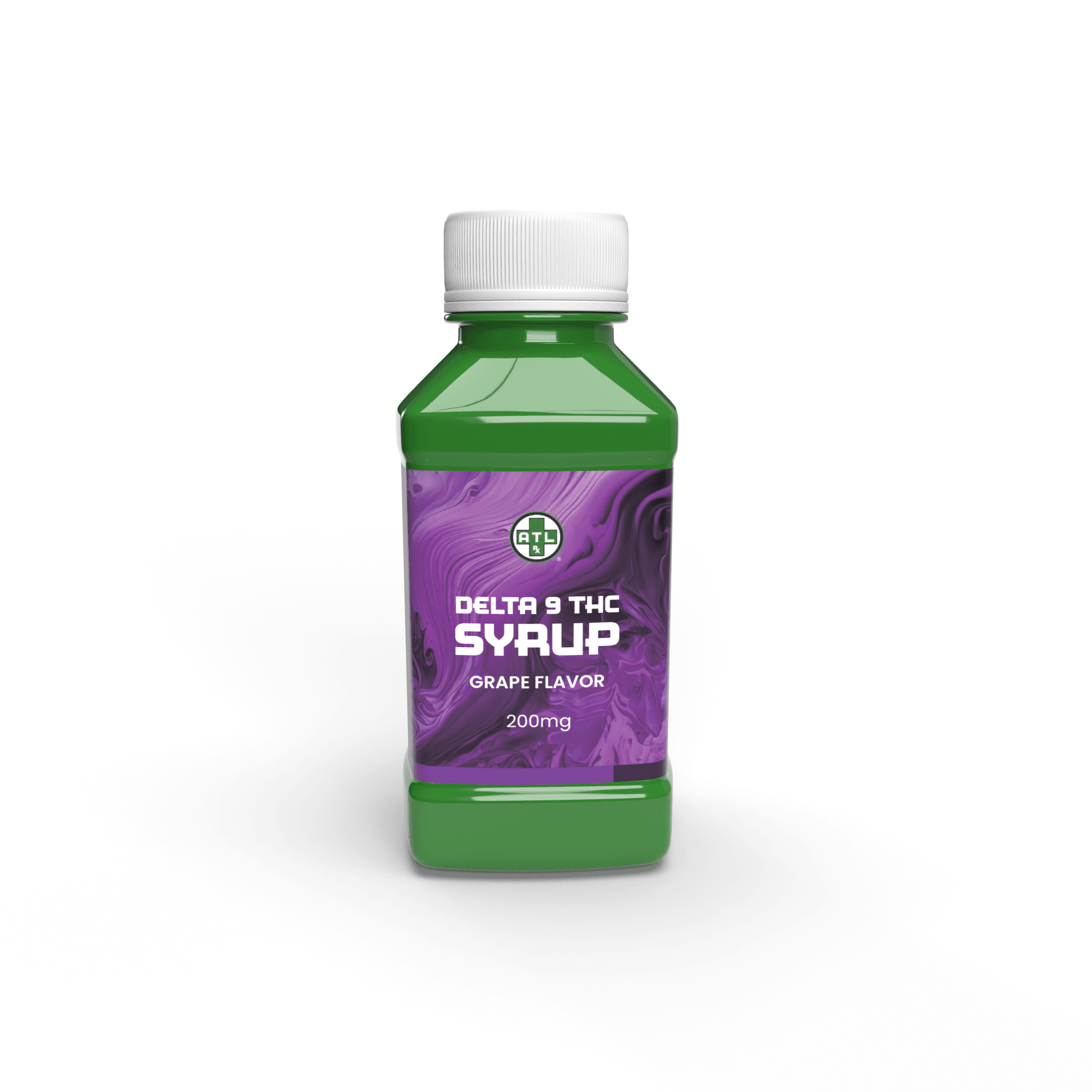
ATLRx stocks a wide lineup of hemp-derived Delta 9 formats — including Delta 9 gummies, caramels, taffy, syrup, and distillate — all produced to the 0.3% federal hemp threshold.
Is Delta 9 Legal in West Virginia in 2026?
Yes. As of April 2026, adults in West Virginia can lawfully purchase, possess, and consume hemp-derived Delta 9 THC so long as the product:
- Originates from hemp (Cannabis sativa L.) rather than marijuana,
- Stays at or below 0.3% Delta 9 THC measured on a dry-weight basis, and
- It is produced and sold in line with West Virginia’s Industrial Hemp Development Act.
This legality sits on two supports: the federal 2018 Farm Bill, which pulled compliant hemp out of the Controlled Substances Act, together with West Virginia Senate Bill 475 (2018) and House Bill 2694, which carried the federal definition into state law.
Recreational marijuana remains illegal in the state. Cannabis goods above the 0.3% Delta 9 line are reachable only through the state’s licensed medical cannabis system for enrolled patients.
Important 2026 Update
Congress passed the Continuing Appropriations Act (P.L. 119-37) on November 12, 2025. The law changes the hemp definition under 7 U.S.C. § 1639o by switching to a total THC measurement that includes THCA and other cannabinoids designated by HHS as having similar effects to THC, rather than tracking Delta 9 alone, and it caps finished hemp-derived cannabinoid products at 0.4 milligrams of total THC per container. The amended federal definition takes full effect on November 12, 2026. Until that point, the existing Delta 9 rule (0.3% by dry weight) keeps governing hemp-derived Delta 9 THC sold in West Virginia.
Federal Law: 2018 Farm Bill & the 2025/2026 Hemp Redefinition
The 2018 Farm Bill (Hemp Definition Governing Through November 2026)
The Agriculture Improvement Act of 2018 — widely referred to as the 2018 Farm Bill — took hemp out of Schedule I of the federal Controlled Substances Act. Under that law, “hemp” covers Cannabis sativa L. and its components (seeds, derivatives, extracts, cannabinoids, isomers, acids, and salts of isomers) provided Delta 9 THC stays below 0.3% by dry weight. The 2018 Farm Bill itself isn’t being wiped off the books in 2026. What shifts on November 12, 2026, is the statutory hemp definition codified at 7 U.S.C. § 1639o, which Section 781 of P.L. 119-37 narrows. The rest of the 2018 Farm Bill framework stays in force.
Because hemp-derived Delta 9 falls inside this definition, it can be cultivated, processed, sold, and transported across state borders under federal law. That’s the framework that made compliant Delta 9 gummies and edibles broadly accessible in states like West Virginia.
The 2025 Appropriations Act & the 2026 Redefinition
The Continuing Appropriations, Agriculture, Legislative Branch, Military Construction and Veterans Affairs, and Extensions Act, 2026 was passed by Congress on November 12, 2025 (P.L. 119-37). Section 781 rewrites the statutory hemp definition in three material ways:
- Total THC measurement: Hemp is now defined as cannabis whose total THC concentration — a figure that includes THCA and other cannabinoids designated by HHS as having effects similar to THC, rather than tracking Delta 9 by itself — sits at or under 0.3% on a dry-weight basis.
- Per-container ceiling of 0.4 mg: Finished hemp-derived cannabinoid goods can’t exceed 0.4 mg of THC per container.
- Carve-out for synthesized cannabinoids: Anything synthetic, synthesized, or chemically manufactured is pushed outside the hemp definition — even when the starting material was legal hemp.
These amendments become operative on November 12, 2026, opening a transition period during which manufacturers have to reformulate, and sellers have to refresh inventory. For West Virginia shoppers, that means the Delta 9 products on shelves today may look noticeably different by late 2026.
West Virginia State Law: SB 475, HB 2694 & the Industrial Hemp Development Act
West Virginia Senate Bill 475 (2018)
Following the federal 2018 Farm Bill, Governor Jim Justice signed West Virginia Senate Bill 475 into law that same year. SB 475 gave the West Virginia Department of Agriculture oversight of the state’s hemp program, authorized industrial hemp cultivation, and established the groundwork for commercial production of hemp and hemp-based consumer goods.
House Bill 2694 (2019)
One year later, West Virginia built on that foundation with House Bill 2694, which sharpened and broadened the state hemp law. The law permits all components of the hemp plant – derivatives, extracts, cannabinoids, isomers, acids, salts, and salts of isomers – as long as none exceed 0.3% THC. Under that framework, adult consumers in West Virginia can legally purchase hemp-derived Delta 9 THC products.
Senate Bill 220 (2023)
Running alongside SB 546, West Virginia also enacted Senate Bill 220 in 2023. SB 220 operates on the regulatory side of the ledger rather than the prohibition side. It lays out distribution and sale rules for hemp-derived cannabinoid products, locks sales to adults 21 and over, directs the Commissioner of Agriculture to draft guidelines preventing child-targeted advertising or packaging, and specifies what qualifies as an “adulterated hemp product.” SB 220 is the statute that anchors the 21+ age gate, COA expectations, and packaging standards that responsible retailers follow when they ship Delta 9 goods into the state.
The Industrial Hemp Development Act (Key Definitions)
The Industrial Hemp Development Act embeds the following legal definitions, which continue to drive enforcement in 2026:
Shop Delta 9
View all →

- Hemp’ or ‘industrial hemp’: every part and variety of Cannabis sativa L. — including seeds, derivatives, extracts, cannabinoids, isomers, acids, salts, and salts of isomers — with no greater than 0.3% tetrahydrocannabinol.
- “Hemp products”: any items manufactured from, or produced by processing, hemp plants or plant components that have been readied for retail sale.
- ‘Marijuana’: all plant material in the Cannabis genus that exceeds 1% tetrahydrocannabinol, along with germination-capable seeds of the genus. (Note: this 1% figure is legacy language from the 2002 Industrial Hemp Act that was never harmonized when HB 2694 brought the state’s hemp threshold down to 0.3% in 2019. In practice, the operative threshold separating lawful hemp from controlled marijuana in West Virginia is 0.3% Delta-9 THC, matching the federal standard. Cannabis above 0.3% Delta-9 THC is treated as marijuana under the federal Controlled Substances Act and West Virginia’s Uniform Controlled Substances Act.)
- “THC in industrial hemp”: not classified as a controlled substance under West Virginia law when it comes from compliant hemp.
West Virginia Medical Cannabis Act (2017)
Running in parallel to — and separate from — the hemp program, West Virginia administers a medical cannabis system under the West Virginia Medical Cannabis Act (Senate Bill 386), enacted in 2017. Enrolled patients can obtain higher-THC cannabis through licensed dispensaries in the formats the statute authorizes under §16A-3-2: pill, oil, topical forms (including gels, creams, or ointments), tincture, liquid, dermal patch, dry leaf or plant form, and forms medically appropriate for vaporization or nebulization. Edibles remain off the menu for the medical program as of April 2026. HB 5260 — legislation that would amend the Medical Cannabis Act to permit licensed processors to manufacture marijuana-infused edibles in lozenge or gelatin form (capped at 10 mg THC per serving) — advanced through the House of Delegates in March 2026 and would still need Senate approval and the Governor’s signature to become law.
What About Delta 8, Delta 10, and THCA in West Virginia?
Compared with many states, West Virginia has drawn tighter lines around intoxicating cannabinoids outside the Delta 9 category. Here’s how each sits in 2026:
| Cannabinoid | West Virginia Status (2026) | Governing Law / Notes |
| Delta 9 THC (hemp-derived) | Legal | Must stay ≤ 0.3% Delta 9 on a dry-weight basis under SB 475 / HB 2694; federal definition updates November 12, 2026. |
| Delta 8 THC | Illegal | Senate Bill 546 (effective June 8, 2023) put Delta 8 on Schedule I. |
| Delta 10 THC | Illegal | Also added to Schedule I via SB 546 (2023). |
| THCA (hemp-derived) | Legally Uncertain | THCA technically meets the current state hemp definition if Delta-9 THC remains under 0.3%, but West Virginia regulators have moved to restrict intoxicating hemp cannabinoids broadly. The 2026 federal total-THC standard will explicitly fold THCA into the calculation and is expected to end intoxicating THCA flower sales nationwide.” |
| HHC, THCP, THCB | Illegal | Captured by SB 546’s Schedule I catch-all for synthetic and non-naturally occurring cannabinoids, since these compounds are typically produced through chemical conversion. |
| Marijuana (recreational) | Illegal | No recreational market; higher-THC products are confined to registered medical patients. |
| Medical Marijuana | Legal (for registered patients) | West Virginia Medical Cannabis Act (SB 386, 2017). |
The measure driving the 2023 changes is West Virginia Senate Bill 546, which restructured the state’s Schedule I list to specifically call out Delta 8 THC, Delta 10 THC, and their optical isomers, and layered in a catch-all provision sweeping in synthetic and non-naturally occurring cannabinoids. Since most commercial Delta 8 and Delta 10 products get made by chemically transforming CBD, those converted items get pulled into the catch-all, even when they originated from legal hemp. The bottom line for shoppers: hemp-sourced Delta 9 THC is the main intoxicating hemp cannabinoid that’s still openly on the shelf for adult buyers in West Virginia in 2026. Delta 8 and Delta 10 goods shouldn’t be sold into or shipped into the state. For a dedicated look at THCA, see our companion guide on THCA legality in West Virginia.
How to Buy Delta 9 THC Legally in West Virginia
Since compliant hemp-derived Delta 9 is legal, you can pick it up from brick-and-mortar shops around the state and from online hemp brands that ship into West Virginia. To stay compliant and to protect yourself, watch for these signals before you check out:
- Third-party Certificates of Analysis (COAs): Each batch ought to be tested by an independent laboratory, with results verifying that Delta 9 THC stays at or below the 0.3% dry-weight line.
- Transparent hemp sourcing: Credible brands openly state that their Delta 9 comes from U.S.-grown hemp rather than being converted from murky starting material.
- Ingredient clarity: Full ingredient disclosures on gummies, caramels, and tinctures, paired with the milligram potency per serving.
- Age checks: Responsible retailers confirm buyers are 21 or older.
- Shipping clarity: Confirm the seller ships into West Virginia and isn’t quietly substituting restricted cannabinoids such as Delta 8.
Placing an online order is often the most dependable path for adult buyers in cities such as Charleston, Huntington, Morgantown, Wheeling, Parkersburg, and Martinsburg, because curated hemp retailers like ATLRx post COAs for every batch.
Who Can Purchase Delta 9 in West Virginia?
Buying compliant hemp-sourced Delta 9 THC in West Virginia doesn’t require a medical marijuana card or any special permit. The ground rules are straightforward:
- You have to be 21 years old or older.
- You need to show valid, government-issued photo identification at checkout (online sellers handle this through third-party age-verification services).
- The item has to satisfy both the federal hemp standard and the state’s hemp regulations.
The state imposes no specific possession cap on compliant hemp-derived products for adults 21 and older, though under-21 possession is a misdemeanor punishable by up to $1,000 in fines and one year in jail under §19-12E-12. Buyers should keep original packaging, batch markings, and COAs on hand in case questions come up.
Possession, Travel & Drug Testing
Possession Within West Virginia
Adults in West Virginia can lawfully possess hemp-derived Delta 9 products that fall within the 0.3% dry-weight rule. Anything above that threshold is handled as marijuana under state law, which carries significant penalties outside the medical cannabis program.
Traveling With Delta 9
Per current TSA guidance, hemp products made in compliance with the 2018 Farm Bill are generally accepted in carry-on and checked bags on domestic flights. Travelers should still double-check the laws at their destination, since states such as Idaho and Kansas apply tougher rules. Taking cannabinoid products across international borders generally isn’t advisable.
Drug Testing
Most drug panels screen for THC metabolites without telling the difference between hemp-origin Delta 9 and marijuana-origin Delta 9. That means a compliant Delta 9 purchase can still produce a positive screen. If you’re subject to workplace testing or court-ordered screening, check with the testing authority before consuming any THC product.
Future Outlook: West Virginia Cannabis Reform (2026 and Beyond)
Several moving pieces are worth keeping an eye on throughout 2026 and into 2027:
- House Joint Resolution 27 (HJR 27): Filed during the 2025 legislative session, HJR 27 proposes putting a constitutional amendment on the state ballot that would open adult-use cannabis to residents 21 and older, set a possession ceiling of up to two ounces, permit personal cultivation of up to four plants, and provide expungement or dismissal of certain past cannabis convictions.
- House Bill 2887: Would allow individual counties in West Virginia to opt in to cannabis sales and production.
- Federal hemp redefinition (November 12, 2026): The total-THC standard, together with the 0.4 mg per-container ceiling, will reshape the entire hemp-derived Delta 9 category. Anticipate widespread reformulation across the industry.
- Proposed rollbacks and delays: Two bills are moving on parallel tracks. The American Hemp Protection Act of 2025 (H.R. 6209), introduced by Rep. Nancy Mace, would fully strike Section 781 of P.L. 119-37 and reinstate the 2018 Farm Bill’s hemp definition. The Hemp Planting Predictability Act (H.R. 7024 in the House, S. 3686 in the Senate) takes a different approach — rather than repealing Section 781, it amends the implementation timeline (replacing the 365-day window with a 3-year window), effectively shifting the enforcement date from November 12, 2026, to November 12, 2028. Both bills are still unresolved.
These shifting pieces are precisely why responsible hemp retailers refresh their West Virginia pages on a regular cadence, and why shoppers should look for a recent “last updated” date before leaning on any guide.
Shop Delta 9 Products at ATLRx
ATLRx carries a curated lineup of hemp-derived Delta 9 THC products built to meet the 0.3% dry-weight standard and available to ship to West Virginia. Every batch goes through independent third-party laboratory testing, and the COA is posted openly on the product page so buyers have complete visibility.
Popular Delta 9 categories from ATLRx include:
- Delta 9 THC Gummies (a range of flavors and potency strengths)
- Delta 9 THC Caramels
- Delta 9 THC Taffy
- Delta 9 THC Syrup
- Delta 9 THC Distillate
Every order goes through age verification (21+), arrives in discreet packaging, and ships with batch-matched laboratory reports so West Virginia buyers can confirm compliance whenever they want. These products are not marketed for any medical or therapeutic purpose.
Frequently Asked Questions
Is Delta 9 Legal in West Virginia in 2026?
+
Yes. Hemp-sourced Delta 9 THC that contains no more than 0.3% Delta 9 by dry weight is lawful for adults 21 and older under West Virginia’s Industrial Hemp Development Act, together with the 2018 Farm Bill.
Do I Need a Medical Card to Buy Delta 9 in West Virginia?
+
No. Buying compliant hemp-derived Delta 9 doesn’t require a medical card. The card only matters for access to the state’s medical marijuana program, which deals with higher-THC cannabis.
Can I Buy Delta 9 Gummies Online and Ship Them to West Virginia?
+
Yes. Licensed online hemp retailers can deliver compliant Delta 9 gummies, caramels, and similar items to West Virginia addresses. Stick with brands that make a batch-specific third-party COA available for the exact lot you’re receiving.
What Is the Difference Between Hemp-derived and Marijuana-derived Delta 9?
+
Chemically, Delta 9 THC is the identical molecule either way. The legal treatment, however, hinges on the source plant. When Delta 9 comes out of hemp (≤ 0.3% Delta 9 by dry weight), it’s handled as a hemp product. When it comes from marijuana, it falls under controlled-substance rules, and inside West Virginia is only reachable through the medical cannabis program.
Is Delta 8 Legal in West Virginia?
+
No. Senate Bill 546, signed March 29, 2023, and operative as of June 8, 2023, moved Delta 8 THC, Delta 10 THC, their optical isomers, and synthetic or non-naturally occurring cannabinoids onto West Virginia’s Schedule I controlled substances list. Because the majority of commercial Delta 8 and Delta 10 items are produced by chemically converting CBD, they get caught by the synthetic-cannabinoid restriction even when they’re labeled “hemp-derived.”
What Happens to Delta 9 Products on November 12, 2026?
+
On that date, the federal hemp definition switches to a total-THC measurement, and finished hemp-derived cannabinoid items face a ceiling of 0.4 milligrams of total THC per container. A sizable portion of what’s on the market today will have to be reformulated or pulled. ATLRx is tracking the transition closely and will refresh its product lineup in step with the new rules.
Can I Travel to Other States With My Delta 9 Products?
+
Compliant hemp-sourced Delta 9 is lawful across most U.S. states, although a few — Idaho and Kansas among them- apply tighter rules. Always confirm the destination state’s statutes before you travel. Carrying cannabinoid products across international borders is generally not advisable.
Will Delta 9 Show up on a Drug Test?
+
Yes. The standard drug test looks for THC metabolites regardless of whether the source was hemp or marijuana. Even lawful, compliant Delta 9 products can produce a positive result.
Is Recreational Marijuana Legal in West Virginia?
+
Not as of April 2026. Only the state’s medical cannabis program provides access to higher-THC cannabis, and only to registered patients. Legislative proposals like HJR 27 could change the picture in the future.
Related Articles:
- Is Delta 9 Legal in Utah?
- Is Delta 9 Legal in Virginia?
- Is Delta 9 Legal in New Hampshire?
- Is Delta 9 Legal in New Mexico?
- Is Delta 9 Legal in Alabama?
Legal Disclaimer
This article is offered for general informational purposes and doesn’t constitute legal advice. Hemp and cannabis statutes shift frequently at both the federal and state levels. Readers should consult a licensed attorney for guidance tailored to their own circumstances and should independently confirm the current status of any statute referenced before making purchasing or compliance decisions. ATLRx products are not intended to diagnose, treat, cure, or prevent any disease and have not been evaluated by the U.S. Food and Drug Administration.
Why Trust This Guide
- ATLRx has sold third-party lab-tested hemp products out of Georgia since 2019.
- Every real batch we sell is tested by an accredited outside lab, with the Certificate of Analysis published before you buy.
- We operate 3 real physical stores in Georgia — this isn't a drop-shipped storefront.
- Legal information is rechecked and updated as rules change, not published once and forgotten.
Don't Trust the Label. Check the Lab.
ATLRx publishes third-party Certificates of Analysis for real batches so you can verify cannabinoid content before you buy — not just take the package's word for it.
View Lab Results →Have Questions?
Visit an ATLRx store in Georgia and talk to our team.
Real Customers, Real Reviews
What Customers Are Saying
“Product was smooth and mellow. Quite nice!”
“Exactly what was promised excellent product”
“Really nice high”

Jen Hight
Cannabis Industry Expert & Compliance Specialist Jen Hight is a cannabis industry professional with extensive experience in hemp compliance, product development, and consumer education. With a background in regulatory affairs and a passion for helping consumers navigate the complex world of cannabinoids, Jen provides accurate, up-to-date information on hemp legality and best practices. Her work focuses on making cannabis knowledge accessible while ensuring readers understand both the opportunities and responsibilities that come with legal hemp products.
View all articles →Keep Learning

Where to Buy Delta 9 in Texas?
Delta 9 Availability in Texas: Yes. Hemp-derived Delta 9 is legal to buy in Texas in August 2026. To qualify, a product has to come from hemp and test at 0.3% or less total THC on a dry weight basis. Texas has computed that figure as (0.877 x THCA) + Delta 9 since March 31, […]
Aug 7, 2026 · 26 min read

Where to Buy Delta 9 in Oklahoma?
Delta 9 Availability in Oklahoma: Yes. Delta 9 THC derived from hemp is legal in Oklahoma starting in 2026 for adults 21 and older. It must be made from hemp, not marijuana, and contain less than 0.3% Delta-9 THC by dry weight. Medical marijuana does not require a card. You can buy it online or […]
Aug 5, 2026 · 23 min read

Where to Buy Delta 9 in Iowa?
Delta 9 Availability in Iowa: Yes, hemp-derived Delta 9 is legal in Iowa in 2026, but only if it follows the state’s rules. Consumable hemp products cannot contain more than 4 mg of total THC per serving and 10 mg of total THC per container. The product also has to come from legal hemp, be […]
Aug 4, 2026 · 25 min read

Where to Buy Delta 9 in South Carolina?
Delta 9 Availability in South Carolina: A hemp-derived Delta 9 THC product that contains no more than 0.3% Delta 9 THC by dry weight is currently legal for sale in South Carolina under the 2018 Farm Bill and South Carolina’s Hemp Farming Act (Chapter 55, Title 46 of the SC Code). Marijuana-derived Delta 9 remains […]
Jul 30, 2026 · 18 min read
Stay Informed
New product releases, hemp law updates, and useful cannabinoid guides.