Is Delta 9 Legal in Delaware? 2026 Law Updates & Guide
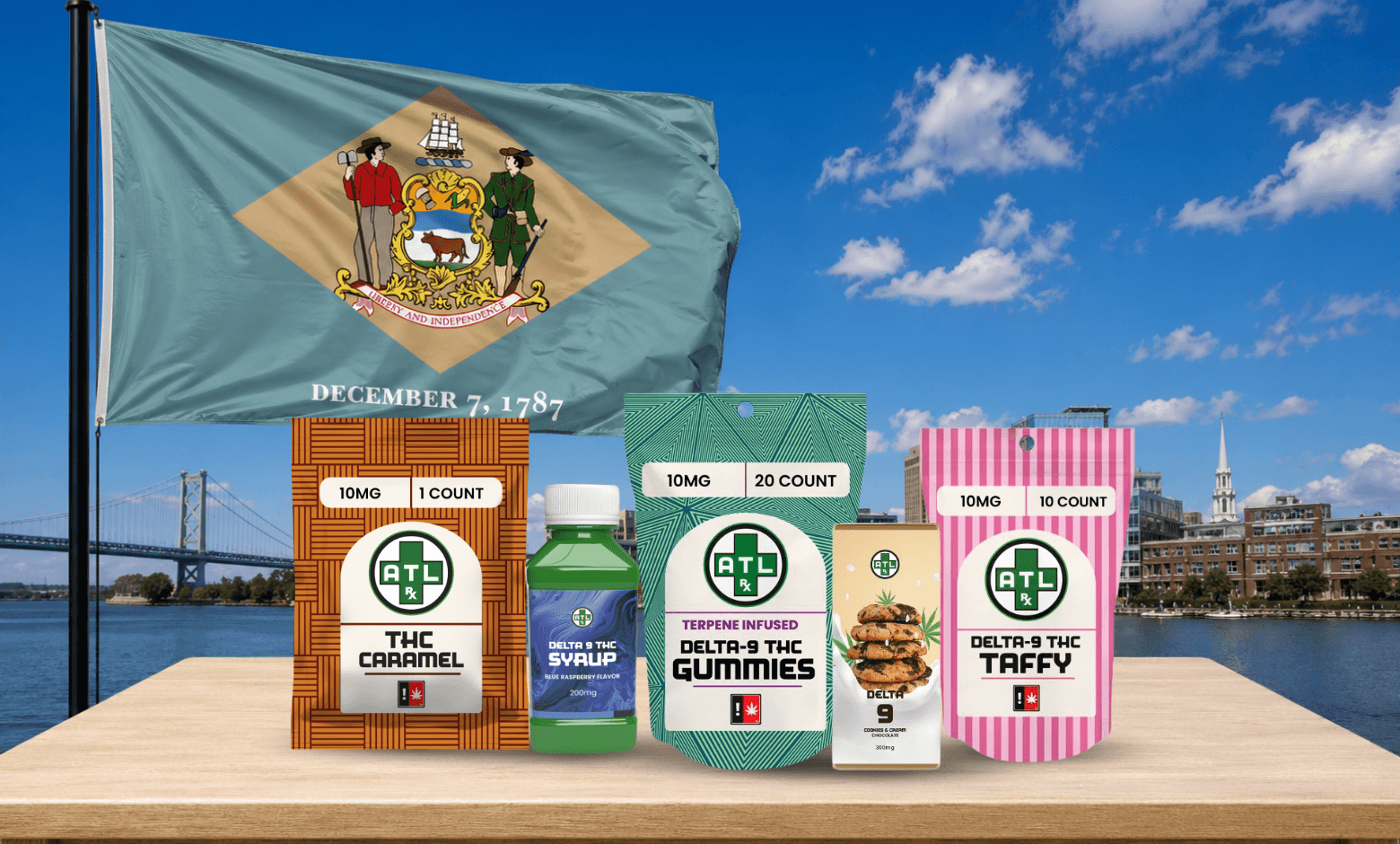
Delta 9 Legal Status in Delaware:
Delta 9 THC is legal in Delaware, but the route you take to obtain it determines whether you are operating inside the law or outside of it.
- Marijuana-derived Delta 9: Legal for adults 21+ through licensed Delaware dispensaries (recreational sales went live August 1, 2025) and through the Medical Marijuana Program for registered patients.
- Hemp-derived Delta 9 sold outside dispensaries: Operates in a legally precarious zone in Delaware. Unlike many states, Delaware did not write a hemp-THC carve-out into its controlled substances code.
- Coming November 12, 2026: A federal redefinition of hemp will sharply restrict what hemp-derived Delta 9 products can legally exist on shelves nationwide.
If you have been trying to make sense of Delaware’s Delta 9 THC rules, especially after the November 2025 federal hemp overhaul, you are not alone. The legal landscape shifted twice in the span of two years: first when Delaware launched adult-use cannabis sales in August 2025, and again when Congress redefined hemp at the federal level a few months later.
The sections below walk Delaware residents through what is actually permitted, what is restricted, and how the 2026 federal updates change the picture for hemp-derived products in the First State.
Keep Browsing
Explore Our Delta 9 THC Categories
Shop real Delta 9 THC products and collections.
Key Takeaways
- 01Hemp-derived Delta 9 is restricted in Delaware. While the 2018 Farm Bill federally legalized hemp containing 0.3% or less Delta 9 THC by dry weight, Delaware’s controlled substances law does not exempt hemp-derived THC isomers, and state regulators treat intoxicating hemp products as outside the legal retail market.
- 02Cannabis-derived Delta 9 is legal for adults 21+ through dispensaries licensed by the Delaware Office of the Marijuana Commissioner, following the April 2023 enactment of HB 1 and HB 2.
- 03Adult-use cannabis sales launched on August 1, 2025, starting with the state’s existing medical compassion centers as the first licensed retailers.
- 04Possession limits for adults 21 and older: up to 1 ounce of cannabis flower, 12 grams of concentrate, or cannabis products containing up to 750 milligrams of Delta 9 THC.
- 05A 15% excise tax applies to adult-use cannabis sales in Delaware under HB 2.
- 06November 12, 2026, is the key federal date. P.L. 119-37 redefines hemp by measuring total THC instead of Delta 9 alone and caps finished hemp products at 0.4 milligrams of total THC per container.
- 07Delaware is a restrictive state for hemp-derived intoxicating cannabinoids. Buyers should not assume that products legal under federal hemp law are automatically legal to purchase or possess in Delaware, and should consult current state guidance before ordering online.
- 08Home cultivation, public consumption, and driving under the influence of cannabis remain prohibited in Delaware regardless of source.
What Is Delta 9 THC?
Often shortened to Δ-9-THC or simply Delta 9, this compound is among the headline cannabinoids that the cannabis plant produces — and it is the molecule most directly responsible for the psychoactive effects users associate with marijuana.
Out of the 100-plus cannabinoid compounds cataloged in Cannabis sativa L., Delta 9 shows up naturally in both hemp varieties and marijuana varieties — the difference between the two plant categories comes down to concentration, not chemical presence.
At the federal level, the dividing line is set at 0.3% Delta 9 THC measured against the plant’s dry weight: anything at or beneath that figure is considered hemp.
Cross above that 0.3% line, and the same plant is reclassified as marijuana, which then falls under a completely different regulatory regime at both the federal level and within individual state codes.
That one figure — 0.3% — is what every hemp-derived Delta 9 brand, lab, and retailer in the country builds its compliance program around.
Delaware’s Stance vs. Federal Law
When it comes to hemp-derived Delta 9, Delaware takes a notably stricter stance than the federal government. The state’s controlled substances framework (Title 16 of the Delaware Code) keeps tetrahydrocannabinols listed as Schedule I substances and stops short of granting them the same hemp exemption written into federal statute. As a practical result, intoxicating hemp goods sold outside the licensed cannabis system are viewed by state authorities as falling beyond the boundaries of permitted commerce.
Possession caps for Delaware adults aged 21 and over are set at 1 ounce of dried cannabis flower, 12 grams of concentrate, or infused goods carrying no more than 750 mg of Delta 9 THC in total.
Three activities stay off-limits across the state, no matter where the product originated: growing your own plants at home, lighting up in any public setting, and operating a vehicle while impaired.
Federal Law: The 2018 Farm Bill and the 2026 Reset
Two federal milestones define how Delta 9 is treated nationally: the 2018 Agriculture Improvement Act, which opened the door, and the 2026 reset that is closing parts of it.
The 2018 Farm Bill
Signed into law in late 2018, the Agriculture Improvement Act — most people just call it the 2018 Farm Bill — pulled hemp and its derivatives out of the federal Controlled Substances Act schedule for the first time in decades.
That single statutory change made Cannabis sativa L. containing not more than 0.3% Delta 9 THC on a dry-weight basis a federally permitted agricultural commodity. That standard remains in place until November 12, 2026, when the total-THC measurement under P.L. 119-37 takes over. The hemp-derived Delta 9 industry includes Delta 9 gummies, beverages, tinctures, and similar products sold across state lines and online were built directly on top of that statutory opening.
Public Law 119-37 (November 2025)
Late in 2025, lawmakers attached a major hemp rewrite to a sweeping appropriations package, the FY2026 Continuing Appropriations and Extensions Act, and that bill became Public Law 119-37. President Trump signed it on November 12, 2025.
Three core revisions to the hemp definition sit at the heart of P.L. 119-37, and together they reshape what can legally reach store shelves:
- Total THC threshold replaces the Delta 9-only standard. The 0.3% dry-weight ceiling that defines hemp will now be measured as total THC — adding together Delta 9, THCA (adjusted for decarboxylation), Delta 8, and other THC-class analogs — instead of reading Delta 9 in isolation. This change alone eliminates the long-standing “THCA flower” and high-Delta 8 hemp categories, which relied on keeping only Delta 9 below 0.3%.
- 0.4 mg total THC per-container cap. Beyond the plant-level threshold, finished hemp-derived consumables (whether ingested, inhaled, or applied topically) face a separate hard ceiling of 0.4 milligrams of total THC for the entire container — not per serving, but per unit sold.
- Exclusion of non-naturally produced cannabinoids. Cannabinoids that are not capable of being naturally produced by the cannabis plant, or that are capable of being naturally produced but were synthesized or manufactured outside the plant, are excluded from the new hemp definition. This sweeps in most lab-converted analogs (Delta 8, Delta 10, HHC, and similar) even when the starting material was fully compliant CBD.
The new rules come online one year after the law’s enactment, with an effective date of November 12, 2026. Industry analysts estimate the change will remove roughly 95% of currently available intoxicating hemp products from legal circulation.
How Delaware Got Here
Delaware’s hemp industry only really got off the ground after federal sign-off arrived: USDA cleared the state’s Domestic Hemp Production plan in January 2020, and the Department of Agriculture followed up with finalized program rules the next year.
On the marijuana side, the state’s path to adult-use legalization ran through HB 1 and HB 2 in early 2023. Governor John Carney made his decision public on April 21, 2023, indicating he would let HB 1 and HB 2 take effect without putting his signature on either of them. HB 1 became effective on April 23, 2023, and HB 2 followed on April 27, 2023. Recreational dispensary sales launched on August 1, 2025, with 12 of Delaware’s existing medical compassion centers opening adult-use service that day under conversion licenses (two additional conversion-licensed locations could not open due to local municipal restrictions in Milford and Seaford).
Despite that progress, the state’s controlled substances statute keeps THC and its various isomers parked in Schedule I, and unlike the federal CSA, Delaware’s version was never updated with a clear-cut carve-out that releases hemp-derived THC from that classification. That gap is the reason hemp-derived Delta 9 products that move freely in many neighboring states sit in a legal gray area in Delaware.
What You Can Legally Buy in Delaware
Adult-Use Cannabis (Marijuana-Derived Delta 9)
For adults 21 and older, licensed Delaware dispensaries are the established legal channel for Delta 9 products. Permitted purchase and possession amounts are:
- Adults 21 and older may possess up to 28 grams (one ounce) of dried cannabis flower, up to 12 grams of cannabis concentrate, or cannabis products containing up to 750 milligrams of Delta 9 THC. These figures are personal possession limits, not single-transaction caps — dispensaries apply their own per-visit purchase limits within these statutory ceilings.
To purchase recreationally in Delaware, a customer needs to be at least 21 and able to show photo identification issued by a government body — driver’s license, state ID card, passport, or military ID all qualify. Residency is not a requirement; out-of-state visitors of legal age can shop at the same dispensaries.
Medical Marijuana
Delaware’s Medical Marijuana Program has been in place since 2011 and continues to operate alongside the new adult-use market. Registered patients in the state’s Medical Marijuana Program face their own purchase rhythm: a maximum of three ounces every two-week window, with a rolling possession ceiling of six ounces total.
Hemp-Derived Delta 9 (Online Retailers, Gas Stations, Smoke Shops)
These items fall outside the state-sanctioned retail pipeline because Delaware never wrote an exemption for hemp-derived THC isomers into its scheduling laws.
Most states copy the federal hemp definition word-for-word into their own controlled substances code — Delaware did not. Without that matching language, hemp-derived THC isomers remain scheduled under state law, and regulators have consistently signaled that intoxicating hemp goods sold outside dispensary channels do not have a legitimate place in Delaware retail.
What Stays Off-Limits
Even with adult-use cannabis legal, Delaware preserves several firm restrictions that apply regardless of whether the product is hemp-derived or dispensary-purchased:
- No home cultivation. HB 1 stopped short of allowing personal grow operations — even adults of legal age cannot keep a single plant at their residence, recreational or otherwise.
- No public consumption. Smoking, vaping, or eating cannabis products in public spaces remains a finable offense, and consumption inside a moving vehicle is treated separately and more severely.
- Closed-container transport rule. If you are moving cannabis from point A to point B by car, state law requires the product to ride in a sealed container that a driver or passenger cannot reach during the drive, typically the trunk.
- DUI applies. Operating a motor vehicle while impaired by Delta 9 is treated as a standard impaired-driving offense in Delaware, and the courts apply the same fines, license consequences, and potential jail exposure that an alcohol DUI would trigger.
Shop Delta 9
View all →


Buying Delta 9 Responsibly
Whether you’re shopping at a Delaware dispensary or evaluating a hemp-derived option before the federal rules tighten, a few signals separate trustworthy products from risky ones. Reputable hemp-derived Delta 9 brands typically share a common compliance profile, which usually includes hemp grown on US soil under USDA or state-licensed cultivation programs. Look for the following:
- Each product is currently formulated to stay at or below the 0.3% Delta 9 dry-weight ceiling that federal law uses to define hemp through November 11, 2026.
- A current, batch-specific Certificate of Analysis (COA) from an independent, accredited laboratory.
- Transparent ingredient and milligram-per-serving disclosure on the label.
- A clearly stated manufacturing facility and contact information for the brand.
- Awareness that, beginning November 12, 2026, the same 0.3% ceiling will be calculated on a total THC basis (Delta 9 + THCA + other THC analogs), and finished consumable products will face an additional 0.4 mg total-THC cap per container. Many products that pass today’s Delta 9-only test will not survive either change.
Bottom Line for Delaware Residents
Delaware in 2026 is a state where Delta 9 is legal — but the safest route is the dispensary route. Adult-use sales through licensed retailers are clearly authorized, possession limits are well-defined, and the medical program continues to serve patients with chronic conditions. The hemp-derived side, by contrast, sits in a narrowing corridor: state law has never embraced it, and the November 2026 federal rewrite will remove most of those products from legal commerce nationwide.
If you’re a Delaware resident weighing your options, the cleanest path forward is to purchase from a licensed dispensary, follow the possession caps, and keep transport, public-use, and driving rules firmly in mind. For anyone currently relying on hemp-derived Delta 9 ordered online, the year ahead is the right time to plan for the federal transition rather than be surprised by it.
Frequently Asked Questions
Can I Legally Use Delta 9 in Delaware This Year?
+
The answer hinges on where the product comes from. Marijuana-derived Delta 9 purchased from a licensed dispensary by an adult 21+ is fully legal. Hemp-derived Delta 9 purchased from gas stations, smoke shops, or out-of-state online retailers operates in a legally uncertain zone because Delaware does not exempt hemp-derived THC from its controlled substances schedule.
What Are Delaware’s Actual Possession Limits for Delta 9?
+
Adults 21 and older may possess up to one ounce of flower, 12 grams of concentrate, or infused products containing up to 750 mg of Delta 9 THC at any given time. Registered medical patients operate on a different system: up to three ounces every 14 days, with a six-ounce rolling possession ceiling.
Are Online Delta 9 Gummy Purchases Shipped Into Delaware Allowed?
+
Hemp-derived products marketed under the federal 0.3% threshold are routinely shipped into Delaware by national online retailers, but the state’s scheduling laws make this a gray-zone purchase rather than a clearly legal one. After November 12, 2026, the new 0.4 mg per-container federal cap will independently push most of these products out of compliance regardless of state law.
Does It Actually Matter Whether My Delta 9 Came From Hemp or From Marijuana?
+
From a pure chemistry standpoint, no, the Delta 9 molecule looks exactly the same under a microscope whether it was extracted from a hemp plant or from a high-THC marijuana cultivar. The differences are entirely legal: the source plant determines which statutes apply, which retailers can sell it, and what your possession limits look like.
Are Delta 9 and Delta 8 Treated As the Same Thing Under Delaware Law?
+
Both fall within Delaware’s controlled substances framework, since the state’s Uniform Controlled Substances Act treats THC isomers and substances with substantially similar chemical structures as scheduled, regardless of whether they originate from hemp or marijuana. Outside the state’s licensed cannabis system, Delta 8 has no clear legal pathway in Delaware. The November 2026 federal changes will reinforce this position nationally — P.L. 119-37 explicitly excludes cannabinoids that are not naturally produced by the cannabis plant (or that are produced through synthesis outside the plant) from the federal hemp definition, which captures most commercially available Delta 8.
What Happens If I Drive After Using Delta 9?
+
Getting pulled over while impaired by Delta 9 lands you in the same legal trouble as drunk driving — Delaware does not run a separate, lighter penalty track for cannabis-related impairment. Expect license suspension, fines, possible jail time, and the same insurance fallout an alcohol DUI would produce.
Should I Expect Delta 9 to Register on a Drug Screen?
+
Yes, count on it. The urine and saliva panels most employers use are calibrated to flag THC-COOH, the body’s primary metabolite of Delta 9, and that flag goes up identically whether the product came from a hemp field or a licensed dispensary. Anyone whose job, sport, probation, or custody arrangement involves periodic testing should treat that risk as the deciding factor before reaching for any THC product, regardless of how it’s marketed.
Is a Medical Marijuana Card Required to Purchase Delta 9 in Delaware?
+
No, not since adult-use sales went live. Anyone 21 or older with a valid ID can purchase from a licensed dispensary. A medical card still offers benefits for qualifying patients (different purchase amounts, no recreational tax, condition-specific product access), but it is no longer a prerequisite for legal Delta 9.
Disclaimer: This article is provided for informational purposes only and does not constitute legal advice. Cannabis laws in Delaware and at the federal level continue to evolve. For legal questions about a specific situation, consult a Delaware-licensed attorney.
Why Trust This Guide
- ATLRx has sold third-party lab-tested hemp products out of Georgia since 2019.
- Every real batch we sell is tested by an accredited outside lab, with the Certificate of Analysis published before you buy.
- We operate 3 real physical stores in Georgia — this isn't a drop-shipped storefront.
- Legal information is rechecked and updated as rules change, not published once and forgotten.
This guide is for general information only and is not legal advice. While we update it as rules change, state laws can shift quickly. Please confirm current laws with your state’s official sources.
Don't Trust the Label. Check the Lab.
ATLRx publishes third-party Certificates of Analysis for real batches so you can verify cannabinoid content before you buy — not just take the package's word for it.
View Lab Results →Have Questions?
Visit an ATLRx store in Georgia and talk to our team.
Real Customers, Real Reviews
What Customers Are Saying
“really fire”
“Buy all you can!! News laws take effect Dec. 11”
“After long day, or night, this helps to relax and relieve!”

Jen Hight
Cannabis Industry Expert & Compliance Specialist Jen Hight is a cannabis industry professional with extensive experience in hemp compliance, product development, and consumer education. With a background in regulatory affairs and a passion for helping consumers navigate the complex world of cannabinoids, Jen provides accurate, up-to-date information on hemp legality and best practices. Her work focuses on making cannabis knowledge accessible while ensuring readers understand both the opportunities and responsibilities that come with legal hemp products.
View all articles →Keep Learning

Where to Buy Delta 9 in Texas?
Delta 9 Availability in Texas: Yes. Hemp-derived Delta 9 is legal to buy in Texas in August 2026. To qualify, a product has to come from hemp and test at 0.3% or less total THC on a dry weight basis. Texas has computed that figure as (0.877 x THCA) + Delta 9 since March 31, […]
Aug 7, 2026 · 26 min read

Where to Buy Delta 9 in Oklahoma?
Delta 9 Availability in Oklahoma: Yes. Delta 9 THC derived from hemp is legal in Oklahoma starting in 2026 for adults 21 and older. It must be made from hemp, not marijuana, and contain less than 0.3% Delta-9 THC by dry weight. Medical marijuana does not require a card. You can buy it online or […]
Aug 5, 2026 · 23 min read

Where to Buy Delta 9 in Iowa?
Delta 9 Availability in Iowa: Yes, hemp-derived Delta 9 is legal in Iowa in 2026, but only if it follows the state’s rules. Consumable hemp products cannot contain more than 4 mg of total THC per serving and 10 mg of total THC per container. The product also has to come from legal hemp, be […]
Aug 4, 2026 · 25 min read

Where to Buy Delta 9 in South Carolina?
Delta 9 Availability in South Carolina: A hemp-derived Delta 9 THC product that contains no more than 0.3% Delta 9 THC by dry weight is currently legal for sale in South Carolina under the 2018 Farm Bill and South Carolina’s Hemp Farming Act (Chapter 55, Title 46 of the SC Code). Marijuana-derived Delta 9 remains […]
Jul 30, 2026 · 18 min read
Stay Informed
New product releases, hemp law updates, and useful cannabinoid guides.