Is Delta 9 Legal in Colorado? Complete 2026 Legal Guide
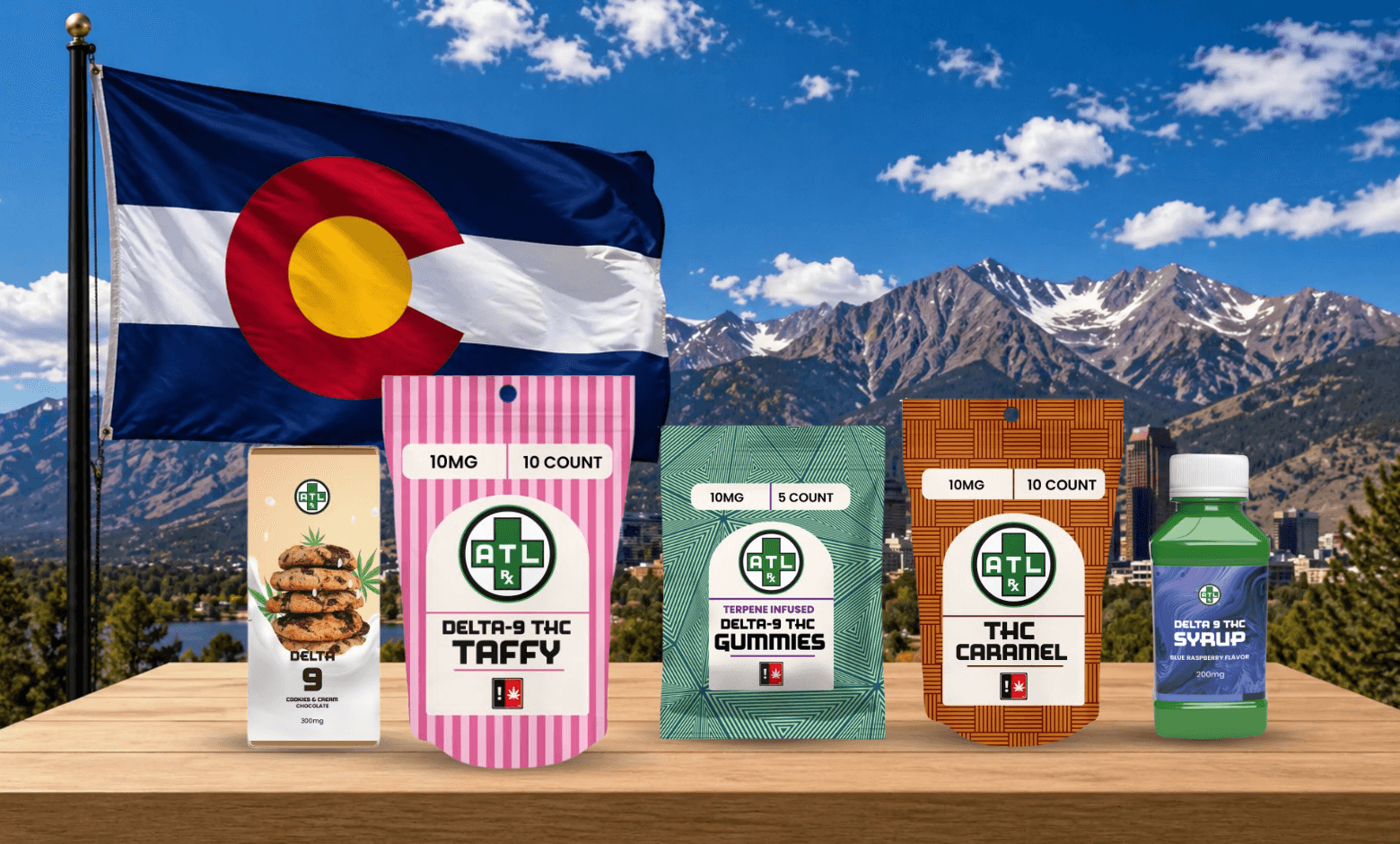
Delta 9 Legal Status in Colorado:
Yes. Delta 9 THC is legal in Colorado for adults 21 and older through two separate channels:
Marijuana-derived Delta 9 THC is legal under Colorado Amendment 64 (2012) for recreational use and under Amendment 20 (2000) for medical use. It is sold only at state-licensed dispensaries.
Hemp-derived Delta 9 THC is legal under the 2018 Farm Bill and Colorado Senate Bills 19-220 and 23-271 when the finished product contains 0.3% or less Delta 9 THC by dry weight, is not chemically modified or synthetically derived, and meets Colorado’s per-serving THC and CBD-to-THC ratio requirements. New federal restrictions enacted in November 2025 will further narrow this category beginning November 12, 2026.
If you have ever asked yourself, “Is Delta 9 legal in Colorado?” the short answer is yes, with important conditions that every adult buyer in the Centennial State should understand before shopping. Colorado has one of the most established cannabis markets in the United States, and Delta 9 tetrahydrocannabinol (THC) is available through two separate, legally distinct channels: licensed adult-use marijuana dispensaries and federally compliant hemp-derived Delta 9 retailers. The rules around potency, packaging, age, possession, and where you can use these products are not the same for both pathways, and a 2023 state law, plus sweeping new 2025 federal funding-bill provisions, have continued to shape the landscape into 2026.
This guide walks through exactly what is allowed, what is restricted, and what is changing, so that adults 21 and older can shop with clarity and confidence.
Key Takeaways
- 01Delta 9 THC is legal in Colorado for adults 21 and older through two separate legal pathways: state-licensed marijuana dispensaries (under Amendment 64) and federally compliant hemp-derived retailers (under the 2018 Farm Bill).
- 02Delta 9 products derived from hemp are legal if they contain 0.3% or less Delta 9 THC by dry weight, are naturally derived (not chemically converted), and meet Colorado’s per-serving and labeling rules.
- 03The minimum age is 21 for purchasing any intoxicating Delta 9 product, regardless of whether it comes from a dispensary or a hemp retailer. Valid government-issued identification is required.
- 04A possession limit applies. It is legal for adults to possess up to 2 ounces of marijuana flower. Per-transaction purchasing at a licensed retailer is capped at 1 ounce of flower or its equivalent, with HB 21-1317 (effective 2022) setting the equivalent caps at 8 grams of concentrates and 800 milligrams of edible THC per day.
- 05Delta 8 and Delta 10 are prohibited in Colorado. Under SB 22-205, chemically converted intoxicating cannabinoids cannot be sold outside the licensed marijuana system.
- 06Public use is prohibited. Cannabis cannot be consumed in parks, sidewalks, ski resorts, restaurants, bars, or business establishments.
- 07Driving rules are strict. Under Colorado law, a blood THC level of 5 nanograms per milliliter or greater creates a permissible inference of impairment, and DUI of cannabis is a misdemeanor on a first offense. Drivers can also be charged based on observed impairment below 5 ng/mL.
- 08Despite the fact that cannabis is fully legal in some states, crossing state lines is illegal under federal law.
- 092026 brings major change. The November 2025 federal funding bill caps finished hemp products at 0.4 mg total THC per container on November 12, 2026, eliminating most current hemp-derived Delta 9 products from federally legal commerce. Colorado SB 26-164, introduced in the 2026 session, would separately loosen state rules on hemp-derived beverages.
- 10Always verify compliance by checking that products carry a current third-party Certificate of Analysis (COA), are sold by a registered manufacturer, and use child-resistant packaging.
Colorado does not allow chemically converted intoxicating cannabinoids, such as Delta 8 or Delta 10, to be sold outside the licensed marijuana system. Naturally occurring, hemp-derived Delta 9 products that meet both the federal threshold and Colorado’s state-level retail rules are legal to buy, possess, and use within the state’s age and quantity rules.
Understanding the Two Legal Pathways for Delta 9 in Colorado
Delta 9 THC is the primary intoxicating compound in the cannabis plant. It is found naturally in both hemp and marijuana, and Colorado law treats these two source plants very differently.
Marijuana-Derived Delta 9 THC
In Colorado, marijuana is defined as cannabis containing more than 0.3% Delta 9 THC by dry weight. Amendment 64 allows adults 21 and older to purchase, possess, and use marijuana products. Medical patients with a state-issued red card can access higher-potency products through Colorado’s medical marijuana program, which has been in place since 2000.
Hemp-Derived Delta 9 THC
Cannabis classified as hemp contains 0.3% or less Delta 9 THC by dry weight (until the November 2025 federal amendment takes effect in November 2026, after which a “total THC” standard and a 0.4 mg per container cap apply). As a result of the 2018 Farm Bill, hemp and its derivatives were removed from the federal Controlled Substances Act. Colorado created its industrial hemp program through Senate Bill 14-184 (2014) and later aligned it with the 2018 Farm Bill through Senate Bill 19-220 (2019). State law was further refined by Senate Bill 23-271 (2023), which set per-serving THC limits and CBD-to-THC ratio requirements for hemp products sold in Colorado (detailed below). Therefore, not every hemp-derived Delta 9 product that meets the federal 0.3% dry-weight rule is legal to sell in Colorado; the product must also meet Colorado’s per-serving and packaging rules.
The key distinction is not whether a product makes you feel something. It is the source plant, the concentration, whether the cannabinoid was naturally extracted or chemically converted, and whether the finished product meets state-level serving and packaging caps.
Federal Legal Framework: The 2018 Farm Bill and 2025–2026 Updates
Colorado’s hemp policy is built on top of federal law. Three key federal milestones matter for understanding the current status of Delta 9.
Industrial hemp was legalized nationwide under the 2018 Farm Bill, defined as cannabis with defined as cannabis with 0.3% or less Delta 9 THC by dry weight and removed from Schedule I of the Controlled Substances Act.
H.R. 5371, signed November 12, 2025, enacted the most consequential change to federal hemp policy since the 2018 Farm Bill. According to Section 781 of the Continuing Appropriations and Extensions Act, 2026, “hemp” is defined with a total THC standard (THCA, Delta-8, Delta-10, and other isomers) rather than just Delta-9 THC, and hemp-derived cannabinoid products are limited to 0.4 milligrams of total THC per container. In addition, any cannabinoids synthesized or manufactured outside of the cannabis plant are excluded from the definition of hemp. The new federal definition will take effect on November 12, 2026, following a one-year transition period. Industry analysts estimate the change will eliminate the substantial majority of consumable hemp-derived THC products currently on the U.S. market, including most hemp-derived Delta 9 gummies, beverages, and edibles. Buyers should plan accordingly.
Colorado’s response in 2026. State lawmakers, including Sen. Julie Gonzales (D-Denver), along with Reps. Matthew Martinez and Steven Woodrow have introduced Senate Bill 26-164, which is narrowly focused on hemp-derived beverages. As drafted, the bill would allow hemp beverages with up to 10 milligrams of THC per serving in licensed venues where alcohol is sold (bars, restaurants, music venues, liquor stores), and up to 3 milligrams per container in grocery and convenience stores. The bill does not address gummies, tinctures, or other edibles. Even if SB 26-164 passes, federal law beginning November 12, 2026, will still cap finished hemp products at 0.4 mg total THC per container, creating a state-vs-federal conflict similar to the one that exists today for state-licensed marijuana.
For shoppers today, the practical takeaway is that the hemp-derived Delta 9 category is in active transition. At the state level, Colorado already imposes per-serving, and CBD-to-THC ratio limits that many products on the broader U.S. market do not meet (see SB 23-271 below). At the federal level, the November 2025 amendment will, on its November 12, 2026, effective date, eliminate the federal “0.3% by dry weight” framework most hemp-derived Delta 9 products are sold under today. Always check the published date of any guide you read and confirm a product’s current compliance status before purchase.
Colorado-Specific Delta 9 Laws You Should Know
Possession Limits for Marijuana-Derived Delta 9
Adults 21 and older in Colorado can possess up to 2 ounces of marijuana flower at a time, according to the state’s official cannabis information page. Per-transaction purchasing at a licensed retailer is capped at 1 ounce of flower or its equivalent (a limit that has been in place since adult-use legalization). Under House Bill 21-1317 (2021), the equivalent caps were tightened to 8 grams of marijuana concentrates and 800 milligrams of edible THC per day, effective January 1, 2022 — a significant reduction from the prior 40-gram concentrate limit.
You may also gift up to 2 ounces to another adult 21 or older, but selling outside a licensed channel is prohibited.
Possession Limits for Hemp-Derived Delta 9
There is no specific state-level possession cap on compliant hemp-derived Delta 9 products purchased from non-dispensary retailers, but every product must independently meet both federal and Colorado retail rules. Under Colorado Senate Bill 23-271 (2023), a “hemp product” sold in Colorado must contain no more than 1.75 milligrams of THC per serving, with a CBD-to-THC ratio that is at least 15:1. Additional restrictions kick in for products above 1.25 milligrams of THC per serving with a CBD-to-THC ratio under 20:1, including a prohibition on sale to anyone under 21 and limits on the number of servings per container (no more than 5 servings if the ratio is under 20:1, or no more than 30 servings if the ratio is 20:1 or higher). A registered safe-harbor pathway allows products up to 2.5 mg per serving in narrow circumstances.
Many commercial hemp-derived Delta 9 gummies sold elsewhere in the U.S. (typically 5–10 mg per serving) exceed Colorado’s per-serving cap and are not legal to sell to Colorado consumers under state law, even when they comply with the federal 0.3% dry-weight rule. Civil penalties for selling non-compliant products run up to $10,000 per day, per product, per violation.
Age Requirement
Both adult-use marijuana and hemp-derived intoxicating cannabinoid products require the buyer to be 21 or older. A valid government-issued ID is required at the point of sale, and licensed retailers can refuse entry to anyone under 21 in restricted areas.
Public Use Restrictions
Cannabis use, regardless of source, is not allowed in public in Colorado. That includes parks, sidewalks, ski resorts, concert venues, restaurants, bars, and the common areas of apartment buildings. Private property is the safest option, though landlords and hotel operators may also prohibit on-site use.
Driving Under the Influence
A standard for cannabis-impaired driving in Colorado is 5 nanograms of active Delta 9 THC per milliliter of whole blood. In contrast to alcohol’s 0.08% BAC, this is not a per-se rule: a blood test at or above 5 ng/mL gives rise to a “permissible inference” that the driver was under the influence, but the prosecution still has to demonstrate actual impairment, and a driver can also be arrested and charged based on observed impairment with a blood level below 5 ng/mL. DUI of cannabis is a misdemeanor on a first offense, with escalating penalties for repeat offenses, and felony exposure where injury or death is involved.
Home Cultivation
Adults 21 and older may grow up to 6 marijuana plants per person (no more than 3 of which may be mature, flowering plants at any time), with a maximum of 12 plants per household regardless of the number of adults living there. Plants must be grown in an enclosed, locked space away from the public. There may be stricter rules imposed by local jurisdictions.
Shop Delta 9
View all →


Crossing State Lines
The federal government prohibits the transport of Delta 9 THC across state lines, even between states where cannabis is legal. Colorado’s legal market is intra-state only.
Delta 8, Delta 10, and Other Converted Cannabinoids
This is where Colorado diverges significantly from many other states.
By signing Senate Bill 22-205 on May 31, 2022, Governor Jared Polis authorized the Colorado Department of Public Health and Environment (CDPHE) to prohibit chemical modification, conversion, or synthetic derivation of intoxicating THC isomers from hemp. The Marijuana Enforcement Division (MED) and CDPHE jointly issued guidance in May 2021 stating that chemically altering or converting naturally occurring cannabinoids in industrial hemp is not compliant with the statutory definition of a hemp product. According to that guidance, food, dietary supplements, and cosmetics cannot contain Delta-9, Delta-8, and Delta-10 THC isomers produced by chemical conversion. SB 23-271 (2023) further codified and expanded this framework.
In practical terms:
- Delta 8 THC products sold as hemp items are generally not legal in Colorado.
- Synthetically converted Delta 9 does not meet the state’s hemp standard, even if the finished percentage is below 0.3%.
- Naturally occurring, hemp-derived Delta 9 in compliant products remains legal at the state level, subject to the 1.75 mg per serving and ratio rules above.
If you are shopping online, look for brands that clearly disclose extraction methods and provide third-party Certificates of Analysis (COAs) showing both the cannabinoid profile and the absence of converted isomers.
How to Identify Legal Hemp-Derived Delta 9 in Colorado
When shopping for Delta 9 products outside the licensed marijuana system, use this checklist to confirm compliance.
- Delta 9 THC should not exceed 0.3% by dry weight. This must be visible on the label or COA.
- Within Colorado’s per-serving cap. No more than 1.75 mg of THC per serving (with the appropriate CBD-to-THC ratio) under SB 23-271.
- Naturally derived, not chemically converted. Look for clear language about extraction from hemp flower or biomass, not “isomerization” or “conversion” from CBD. Note that “naturally derived” is itself a contested concept for hemp Delta-9 products, since most are produced by concentrating Delta-9 from large amounts of hemp biomass — review extraction disclosures carefully.
- Third-party lab testing. An independent lab’s COA should confirm potency, cannabinoid profile, and the absence of pesticides, heavy metals, residual solvents, and microbial contaminants.
- Clear labeling. The label should list total THC content per serving and per package, the source state of the hemp, and a batch or lot number.
- Child-resistant packaging. Required under Colorado hemp rules for any product containing intoxicating cannabinoids.
- Sold by a registered manufacturer. Manufacturers of hemp food and supplements selling into Colorado must register with the Colorado Department of Public Health and Environment.
When a product fails on any of these points, consider it a red flag.
Where to Buy Delta 9 Products Legally in Colorado
There are two compliant routes, and they serve different shoppers.
Licensed marijuana dispensaries are the right choice for high-potency flower, concentrates, and edibles produced under the Marijuana Enforcement Division. You will need to be 21 or older with a valid ID, and products are taxed at the state’s marijuana sales tax rate.
Compliant hemp-derived Delta 9 retailers (online and in select brick-and-mortar locations) are the right choice for federally compliant gummies, tinctures, beverages, and other products that meet both the 0.3% dry-weight rule and Colorado’s 1.75 mg per-serving cap. Reputable hemp brands ship to Colorado addresses, provide COAs, and verify age at checkout. Note that not every hemp-derived Delta 9 product available to ship into Colorado is actually compliant under Colorado state law — out-of-state retailers may sell products that exceed the state’s per-serving cap.
ATLRx offers a curated catalog of hemp-derived Delta 9 products, with batch-specific COAs available for every item. Whether you live in Denver, Colorado Springs, Boulder, Fort Collins, Aurora, Lakewood, or anywhere else in the state, confirm a product’s compliance with both federal and Colorado state rules before ordering.
Common Mistakes That Can Land Buyers in Trouble
- Buying from unverified online sellers. Sites without lab reports, business addresses, or age verification at checkout are a risk.
- It is assumed that Delta 8 is legal because it is “hemp.” Under SB 22-205, it is not.
- Assuming any 0.3% Delta 9 product is legal in Colorado. Colorado adds a 1.75 mg per-serving cap on top of the federal rule. Many out-of-state hemp gummies (5–10 mg per serving) exceed this.
- Carrying more than the legal possession limit. The personal possession limit for marijuana flower is two ounces for adults 21 and older.
- Using in public spaces. Even legal products cannot be consumed in parks, on sidewalks, or in business establishments.
- Driving after use. A blood THC level of 5 ng/mL or higher creates a permissible inference of impairment, and drivers can also be charged below that level if impairment is observed.
- Shipping or carrying across state lines. Always illegal at the federal level.
- Confusing hemp-derived percentages with milligram totals. A product can have 0.3% Delta 9 by weight and still contain a meaningful per-serving milligram dose. Read the full label.
Penalties for Non-Compliance
Penalties scale with the offense:
- Possession over the legal limit: Fines, confiscation, and, in larger quantities, potential criminal charges.
- Sale to minors or sale without a license: Criminal penalties under Colorado law.
- Sale of non-compliant hemp products under SB 23-271: Civil penalties up to $10,000 per day, per product, per violation.
- Public use: A petty offense, generally fineable.
- Driving under the influence: Misdemeanor on first offense, with escalating penalties for repeat offenses, and felony exposure where injury or death is involved.
- Possession of converted intoxicating cannabinoids: Treated under the state’s Controlled Substances Act provisions for unauthorized THC isomers.
Final Word
Delta 9 THC is legal in Colorado for adults 21 and older, with two distinct legal pathways and a clearly defined set of state and federal rules that govern potency, sourcing, age, possession, public use, and driving. The state’s stance on chemically converted cannabinoids such as Delta 8 makes Colorado one of the more carefully regulated markets, and 2026 is bringing significant legislative change at both the state and federal level — most notably a federal cap of 0.4 mg total THC per container effective November 12, 2026.
Whichever pathway you choose, buy from a licensed dispensary or a reputable hemp retailer that publishes third-party lab results, verifies your age, and clearly discloses the source and extraction method of every product. Verify that any hemp-derived product also meets Colorado’s state-level per-serving cap before purchase.
ATLRx publishes COAs for every batch and ships compliant hemp-derived Delta 9 products to addresses in Colorado. Browse our Delta 9 collection to learn more.
Frequently Asked Questions
Is Hemp-derived Delta 9 Legal to Buy Online in Colorado?
+
Yes, when the product is compliant with both federal and Colorado state rules. Adults 21 and older can purchase compliant hemp-derived Delta 9 products online from retailers that verify age and ship to Colorado. The product must contain 0.3% or less Delta 9 THC by dry weight, must be naturally derived rather than chemically converted, and must meet Colorado’s 1.75 mg per serving and CBD-to-THC ratio rules under SB 23-271.
What Is the Difference Between Hemp-derived and Marijuana-derived Delta 9?
+
Molecules are the same. Legal classification depends on the source plant and the concentration. Hemp products contain 0.3% or less Delta 9 by dry weight. Marijuana products contain more than 0.3%. Hemp-derived Delta 9 is sold by general retailers under federal hemp law (subject to state rules). Delta 9 derived from marijuana is only available at state-licensed dispensaries.
How Old Do I Have to Be to Buy Delta 9 in Colorado?
+
You must be 21 or older to purchase any intoxicating Delta 9 product, whether it is sold at a licensed marijuana dispensary or a hemp retailer.
Can I Bring Delta 9 Products from Colorado to Another State?
+
No. Federal law prohibits the crossing of state lines with any cannabis- or hemp-derived intoxicating product, even between states with similar legal frameworks.
Will Delta 9 Show up on a Drug Test?
+
In standard drug tests, THC metabolites are detected without distinguishing between hemp-derived Delta 9 and marijuana-derived Delta 9. Plan accordingly if you are subject to drug testing.
Is Delta 8 Legal in Colorado?
+
No. Colorado prohibits the sale of converted intoxicating hemp cannabinoids, including Delta 8 and Delta 10, outside the licensed marijuana system.
How Much Delta 9 Can I Possess in Colorado?
+
It is legal for adults 21 and older to possess up to 2 ounces of marijuana flower or its equivalent. There is no specific state-level possession cap on compliant hemp-derived Delta 9 products, but every product must independently meet the federal 0.3% dry-weight threshold (transitioning to a 0.4 mg per container total-THC cap in November 2026) as well as Colorado’s per-serving (1.75 mg) and CBD-to-THC ratio (at least 15:1) retail rules under SB 23-271.
Are Delta 9 Gummies Legal in Colorado?
+
Yes, when they are either (a) sold at a licensed marijuana dispensary to a buyer 21 or older, or (b) hemp-derived with 0.3% or less Delta 9 THC by dry weight, naturally derived, and compliant with Colorado’s 1.75 mg per serving and CBD-to-THC ratio rules. Many out-of-state hemp gummies (typically 5–10 mg per serving) do not meet Colorado’s state-level rules even when they meet the federal threshold.
What Are the Penalties for Breaking Colorado Delta 9 Laws?
+
Penalties depend on the offense and range from petty fines for public use to civil penalties up to $10,000 per day for non-compliant hemp sales, and misdemeanor or felony charges for driving under the influence, possession over the legal limit, or unlicensed sale.
Is Colorado’s Delta 9 Law Changing in 2026?
+
Yes, significantly. The federal funding bill signed on November 12, 2025, redefines hemp using a “total THC” standard and caps finished hemp products at 0.4 milligrams of total THC per container, effective November 12, 2026 — a change that will remove most current hemp-derived Delta 9 edibles and beverages from federally legal commerce. Separately, Colorado Senate Bill 26-164 (introduced in the 2026 session) would loosen state restrictions specifically on hemp-derived beverages, allowing up to 10 mg of THC per serving in licensed venues where alcohol is sold and up to 3 mg per container in grocery and convenience stores. The state and federal directions are pulling apart; always verify current rules before purchasing.
Disclaimer: This article is for general informational purposes only and does not constitute legal advice. Cannabis laws change frequently at both the state and federal levels. Always consult a licensed Colorado attorney or the relevant state agency for guidance on your specific situation. Information was current as of April 2026.
Why Trust This Guide
- ATLRx has sold third-party lab-tested hemp products out of Georgia since 2019.
- Every real batch we sell is tested by an accredited outside lab, with the Certificate of Analysis published before you buy.
- We operate 3 real physical stores in Georgia — this isn't a drop-shipped storefront.
- Legal information is rechecked and updated as rules change, not published once and forgotten.
This guide is for general information only and is not legal advice. While we update it as rules change, state laws can shift quickly. Please confirm current laws with your state’s official sources.
Don't Trust the Label. Check the Lab.
ATLRx publishes third-party Certificates of Analysis for real batches so you can verify cannabinoid content before you buy — not just take the package's word for it.
View Lab Results →Have Questions?
Visit an ATLRx store in Georgia and talk to our team.
Real Customers, Real Reviews
What Customers Are Saying
“really fire”
“Buy all you can!! News laws take effect Dec. 11”
“After long day, or night, this helps to relax and relieve!”

Jen Hight
Cannabis Industry Expert & Compliance Specialist Jen Hight is a cannabis industry professional with extensive experience in hemp compliance, product development, and consumer education. With a background in regulatory affairs and a passion for helping consumers navigate the complex world of cannabinoids, Jen provides accurate, up-to-date information on hemp legality and best practices. Her work focuses on making cannabis knowledge accessible while ensuring readers understand both the opportunities and responsibilities that come with legal hemp products.
View all articles →Keep Learning

Where to Buy Delta 9 in Texas?
Delta 9 Availability in Texas: Yes. Hemp-derived Delta 9 is legal to buy in Texas in August 2026. To qualify, a product has to come from hemp and test at 0.3% or less total THC on a dry weight basis. Texas has computed that figure as (0.877 x THCA) + Delta 9 since March 31, […]
Aug 7, 2026 · 26 min read

Where to Buy Delta 9 in Oklahoma?
Delta 9 Availability in Oklahoma: Yes. Delta 9 THC derived from hemp is legal in Oklahoma starting in 2026 for adults 21 and older. It must be made from hemp, not marijuana, and contain less than 0.3% Delta-9 THC by dry weight. Medical marijuana does not require a card. You can buy it online or […]
Aug 5, 2026 · 23 min read

Where to Buy Delta 9 in Iowa?
Delta 9 Availability in Iowa: Yes, hemp-derived Delta 9 is legal in Iowa in 2026, but only if it follows the state’s rules. Consumable hemp products cannot contain more than 4 mg of total THC per serving and 10 mg of total THC per container. The product also has to come from legal hemp, be […]
Aug 4, 2026 · 25 min read

Where to Buy Delta 9 in South Carolina?
Delta 9 Availability in South Carolina: A hemp-derived Delta 9 THC product that contains no more than 0.3% Delta 9 THC by dry weight is currently legal for sale in South Carolina under the 2018 Farm Bill and South Carolina’s Hemp Farming Act (Chapter 55, Title 46 of the SC Code). Marijuana-derived Delta 9 remains […]
Jul 30, 2026 · 18 min read
Stay Informed
New product releases, hemp law updates, and useful cannabinoid guides.