


$39.99

ARE YOU 21 YEARS OF AGE OR OLDER?
REMEMBER ME
Seriously, by using this site you are confirming that you are of legal age (21+) to view and purchase these products. If you are you are not over 21. you are not authorized by us to use or view any of the pages of this site. Please review our terms and conditions at checkout for further stipulations.
 >
Blogs
>
CBD >
Is CBD Legal in Illinois? 2026 Legal Guide
>
Blogs
>
CBD >
Is CBD Legal in Illinois? 2026 Legal Guide
THE STATEMENTS ON THIS BLOG ARE NOT INTENDED TO DIAGNOSE, TREAT, CURE, OR PREVENT ANY DISEASE. THE FOOD AND DRUG ADMINISTRATION HAS NOT EVALUATED ANY STATEMENTS CONTAINED WITHIN THE BLOG. ATLRX DOES NOT IN ANY WAY GUARANTEE OR WARRANT THE ACCURACY, COMPLETENESS, OR USEFULNESS OF ANY MESSAGE. THE INFORMATION CONTAINED WITHIN THIS BLOG IS FOR GENERAL INFORMATIONAL PURPOSES ONLY.
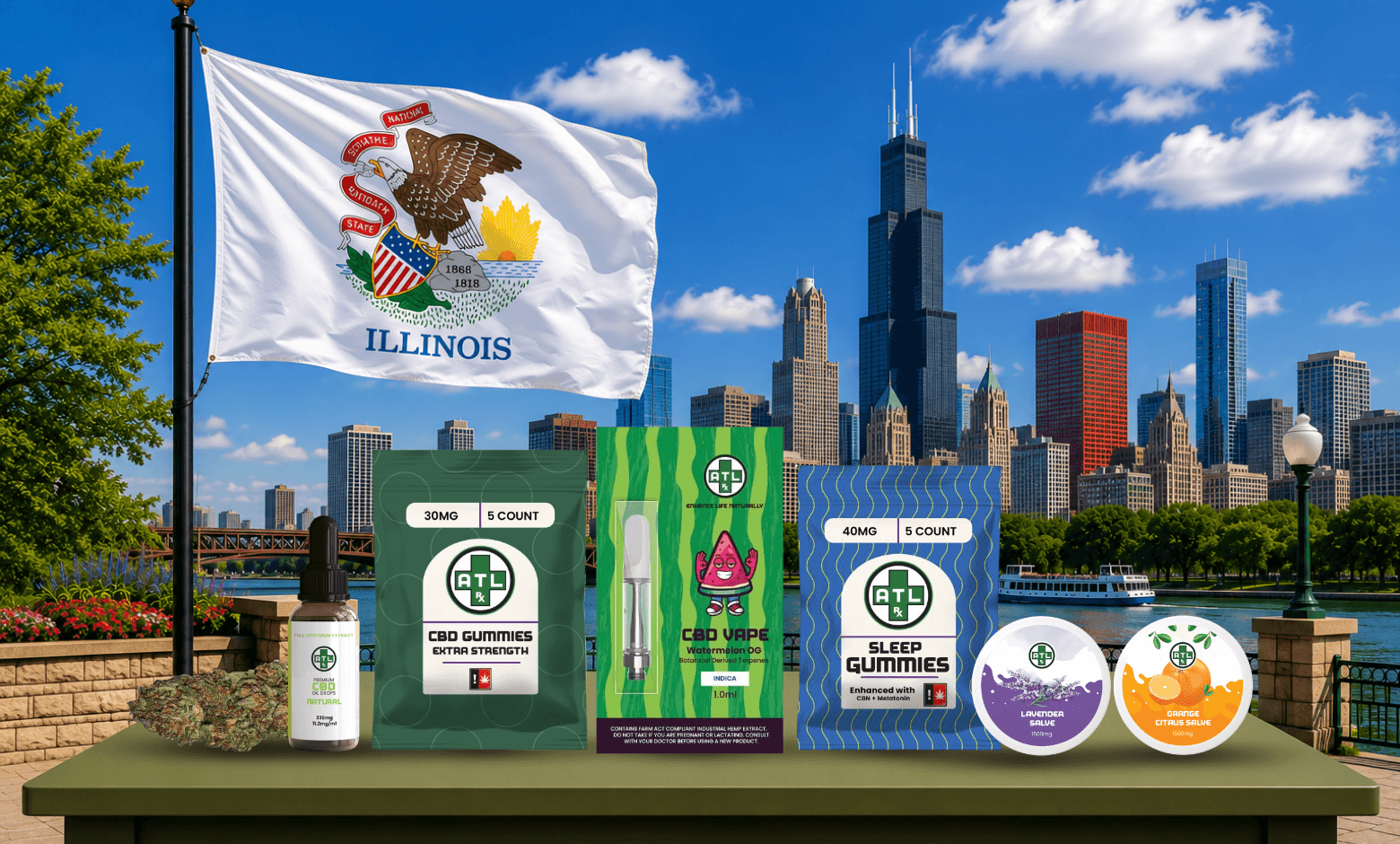
CBD Legal Status in Illinois:
Yes, CBD is legal in Illinois in 2026 for adults, provided the product is derived from hemp and meets both state and federal requirements. That said, the rules governing hemp and CBD are in the middle of the biggest shift since 2018, and what is compliant today may look different by the end of the year. This guide explains exactly where the law stands right now, what is changing in November 2026, and how to shop in a way that keeps you on the right side of the rules.
Few questions come up more often among shoppers in the state than whether CBD is legal in Illinois, and the honest answer in 2026 is that it is legal, but the rules deserve a closer look than they did a year or two ago. CBD, short for cannabidiol, is one of many compounds found in the cannabis plant, and it is now sold in stores, pharmacies, and online across Illinois in the form of oils, tinctures, capsules, topicals, and more.
The challenge is that hemp and CBD laws sit at the intersection of state rules, federal rules, and even local city ordinances, and all three layers have been changing. Illinois lawmakers have spent recent sessions debating how to handle intoxicating hemp products, the city of Chicago has moved on its own measures, and most importantly, the federal government has rewritten the legal definition of hemp itself, with a new nationwide standard scheduled to take effect on November 12, 2026.
That federal shift is the single biggest reason older guides, including many written in 2024, no longer tell the full story. Everything in this guide has been updated for 2026. It explains what the law says today, what is scheduled to change, where you can buy CBD legally, how to tell whether a product is compliant, and what to keep in mind around travel and workplace testing. The goal is simple: to help Illinois shoppers make confident, well-informed decisions.
Table of contents:
Hemp-derived CBD remains legal to buy, possess, and use in Illinois for adults as of 2026. Illinois treats hemp-derived CBD separately from marijuana, and no prescription or medical card is required to purchase a compliant hemp-derived CBD product, such as an oil, tincture, capsule, or topical.
The important update for 2026 is this: the federal definition of hemp has been rewritten, and a new nationwide standard takes effect on November 12, 2026. This change does not make CBD itself illegal, but it changes which products legally qualify as hemp. Anyone buying or selling CBD in Illinois should understand this timeline, because it affects product availability and labeling for the rest of the year and beyond.
The single most important distinction in Illinois CBD law is the source of the CBD.
Hemp-derived CBD comes from the Cannabis sativa plant grown under a licensed hemp program. Under the rules in place before November 2026, hemp is defined by a delta-9 THC limit of no more than 0.3% on a dry-weight basis. CBD products derived from hemp are widely available in Illinois retail stores and online.
Marijuana-derived CBD is derived from cannabis plants that contain more THC than hemp. In Illinois, marijuana is legal for adults 21 and older through the state’s regulated adult-use program, so marijuana-derived CBD is also available, but only through state-licensed dispensaries and subject to the state’s cannabis possession limits, taxes, and ID rules.
For most shoppers looking for a simple, non-dispensary purchase, hemp-derived CBD is the relevant category. In the rest of this guide, we will primarily discuss hemp-derived CBD.
Illinois built its hemp framework through the Illinois Industrial Hemp Act, which authorized licensed hemp cultivation and brought the state in line with the federal hemp framework established in 2018. Separately, the Cannabis Regulation and Tax Act, effective January 1, 2020, legalized adult-use marijuana for people 21 and older.
In recent years, Illinois lawmakers have repeatedly debated how to regulate intoxicating hemp-derived products such as delta-8 THC. Several proposals have been introduced, including bills that would route intoxicating hemp products into the licensed dispensary system and bills that would create a dedicated Hemp Consumer Products Act with manufacturer licensing, registration, packaging, labeling, and testing requirements (see Illinois SB0020). As of early 2026, a comprehensive statewide hemp-regulation bill had not become law, and the Illinois legislature has continued to revisit the issue in its sessions.
What this means for consumers: non-intoxicating hemp-derived CBD has remained legal and available throughout this debate. The unresolved legislative questions have centered on intoxicating hemp products rather than standard CBD oils, tinctures, capsules, and topicals.
Cannabis sativa containing no more than 0.3% delta-9 THC by dry weight is defined as hemp under the 2018 Farm Bill (the Agriculture Improvement Act of 2018). The federal Controlled Substances Act no longer covers hemp and its derivatives, including CBD. The USDA Domestic Hemp Production Program administers the federal hemp framework. This is the framework most existing CBD articles, including 2024-era guides, describe.
That framework has now changed. On November 12, 2025, a federal appropriations package (Public Law 119-37) was signed into law. Section 781 of that law redefines hemp. Section 781 includes a built-in delayed effective date: the new provisions are scheduled to take effect one year after enactment, on November 12, 2026.
This one-year runway was written directly into the statute. The effective date of November 12, 2026, is set by the law itself and will apply automatically unless Congress acts to delay, amend, or repeal Section 781 before then. This is the central reason a 2024 guide is now outdated, and the central reason this article carries a 2026 update.
Section 781 makes three principal changes to federal hemp law. Understanding all three helps explain why product shelves may look different later in 2026.
Change 1: A “total THC” standard replaces the delta-9-only standard. The 0.3% threshold will now apply to total tetrahydrocannabinol, calculated using a weighted formula that combines delta-9 THC and 0.877 times the THCA concentration, rather than delta-9 THC alone. This means THCA, delta-8 THC, delta-10 THC, and other THC isomers and analogs are now factored into compliance testing.
Change 2: A cap per container on finished products. A hemp-derived consumer product cannot contain more than 0.4 milligrams of total THC per container.
Change 3: Synthetic and chemically converted cannabinoids are excluded. Cannabinoids produced by chemical synthesis or conversion, such as CBD isomerized into delta-8 THC, will no longer qualify as hemp, even when the resulting molecule is identical to one that occurs naturally in the plant.
Industry groups, including the U.S. Hemp Roundtable, have estimated that the amended definition could affect a very large share of currently marketed hemp-derived cannabinoid products. Some industry advocates have also warned that, depending on how the final language and any follow-up regulations are written, certain full-spectrum CBD products could be affected because they naturally contain trace THC.
It is also important to note that this is an evolving area. Several bills have been introduced in response to Section 781. The American Hemp Protection Act of 2025 (HR 6209), introduced by Rep. Nancy Mace (R-SC), would repeal Section 781 outright but has only been referred to the House Committee on Agriculture. The Hemp Planting Predictability Act (HR 7024), introduced in January 2026 by Rep. Jim Baird (R-IN), would delay implementation by two years to November 2028 and has broader bipartisan support, including a Senate companion bill (S. 3686) introduced by Senators Klobuchar, Paul, and Merkley. None of these has been enacted as of this writing. Readers should treat the November 12, 2026, date as the current scheduled effective date while recognizing the rules may be refined, delayed, or repealed before then.
Illinois law is not the only layer to consider. Local governments have moved on their own.
Chicago has advanced a city ordinance restricting most hemp-derived THC products sold at unlicensed retailers, with a narrow carve-out discussed for certain hemp beverages sold through licensed alcohol or packaged-goods sellers. Other Illinois municipalities have considered or adopted their own local measures as the November 2026 federal date approaches.
For shoppers, the practical takeaway is to check local rules in your specific city, because the availability of certain hemp-derived products can vary between municipalities even within Illinois. Standard non-intoxicating CBD oils, capsules, and CBD topicals are generally the least affected category, but local ordinances are worth a quick check.
Illinois does not have a single, simple statewide minimum age written into one CBD statute, and practice can vary by retailer and product type. In general:
The safest assumption for 2026 is that you should expect to be 21 or older and prepared to show ID when buying CBD or any hemp-derived product in Illinois.
You can purchase compliant hemp-derived CBD in Illinois through several channels:
Important: FDA notice
Under current FDA policy, CBD has not been approved for use as a dietary supplement or food additive under the Federal Food, Drug, and Cosmetic Act. ATLRx products are sold as hemp-derived products for general wellness use and are not intended to diagnose, treat, cure, or prevent any disease. Customers should consult a healthcare professional with any medical questions.
Across all channels, buying from a licensed, transparent retailer is the most reliable way to get a product that matches its label.
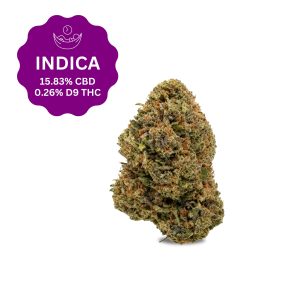

Whether you shop in person or online, use this checklist before you buy:
If a product is missing a COA, lacks clear labeling, or comes from a seller who cannot answer basic sourcing questions, treat that as a reason not to buy.
Within Illinois, carrying a compliant hemp-derived CBD product is generally treated like carrying any other legal consumer good. When crossing state lines, it is more complex because each state sets its own hemp and CBD rules, and some neighboring states regulate hemp-derived products differently than Illinois.
For air travel, the Transportation Security Administration permits hemp-derived CBD products that meet the federal definition of hemp, but security screening focuses on safety rather than verifying cannabinoid content. The most cautious approach when traveling is to keep products in their original, clearly labeled packaging, carry the COA, and check the rules of your destination state before you go.
Legality and drug testing are two separate issues. Standard workplace urine tests look for THC metabolites, not CBD. Full-spectrum CBD products contain trace amounts of THC, and broad-spectrum or isolate products are formulated to reduce or remove THC, but no product can guarantee a particular drug-test outcome.
If you are subject to workplace testing, review your employer’s policy, and if testing is a concern, consider that product type and cannabinoid content matter. This guide does not provide employment or legal advice, and an attorney or your HR department is the appropriate source for questions about your specific situation.
So, is CBD legal in Illinois? Yes. In 2026, Illinois adults can legally buy, possess, and use hemp-derived CBD without a prescription or medical card. Illinois has long treated hemp-derived CBD separately from marijuana, and that distinction remains the foundation of how the state approaches these products.
The pace of change around 2026 makes it unique. The federal definition of hemp has been rewritten, with a new total THC standard and a per-container cap scheduled to take effect on November 12, 2026, and that timeline may still be refined by later legislation. At the same time, Illinois lawmakers continue to weigh statewide hemp rules, and cities such as Chicago have adopted their own measures. The result is a legal picture that is settled in its basics but genuinely in motion at the edges.
For shoppers, the practical path forward stays consistent regardless of how the rules evolve: buy from licensed, transparent retailers, check for a recent third-party Certificate of Analysis, read the label, and confirm any local rules in your city. Doing those few things keeps you on solid ground today and prepared for the changes ahead. ATLRx will continue to update this guide as Illinois and federal hemp laws develop, so you always have a current, reliable reference.
Yes. CBD derived from hemp will be legal in Illinois for adults in 2026. A federal change to the definition of hemp takes effect on November 12, 2026, which affects which products qualify as hemp, so product availability may shift later in the year.
No. Hemp-derived CBD does not require a prescription or medical card. Medical cards are associated with the state’s medical cannabis program, which is a separate framework.
Hemp-derived CBD comes from hemp plants that meet the legal THC threshold and is sold through general retail and online channels. Marijuana-derived CBD comes from cannabis that exceeds the hemp threshold and is sold only through licensed dispensaries.
Expect to be 21 or older and to show ID. Dispensary purchases require 21+, and many hemp retailers apply the same standard.
As scheduled, federal law shifts to a “total THC” standard calculated as delta-9 THC plus 0.877 times the THCA concentration, capped at 0.3% dry weight, caps finished hemp products at 0.4 mg total THC per container, and excludes synthetically derived cannabinoids from the definition of hemp. Several bills have been introduced to repeal or delay this change, including HR 6209 (repeal) and HR 7024 / S. 3686 (two-year delay), but none have been enacted as of this writing.
Delta-8 has been sold in Illinois under the previous federal framework, but it is intoxicating and has been the focus of state and local regulation, as well as the federal change taking effect in November 2026. Treat delta-8 as a heavily evolving category and distinct from standard CBD.
Yes. Reputable online retailers ship compliant hemp-derived CBD to Illinois addresses. Choose a retailer that offers third-party lab testing.

August 12, 2026
August 7, 2026
August 5, 2026
August 4, 2026
$39.99
$39.99
$39.99
$49.99
$49.99
$49.99
$39.99