


$34.99

ARE YOU 21 YEARS OF AGE OR OLDER?
REMEMBER ME
Seriously, by using this site you are confirming that you are of legal age (21+) to view and purchase these products. If you are you are not over 21. you are not authorized by us to use or view any of the pages of this site. Please review our terms and conditions at checkout for further stipulations.
 >
Blogs
>
Delta 9 >
Is Delta 9 Legal in Illinois? 2026 Law Updates & Guide
>
Blogs
>
Delta 9 >
Is Delta 9 Legal in Illinois? 2026 Law Updates & Guide
THE STATEMENTS ON THIS BLOG ARE NOT INTENDED TO DIAGNOSE, TREAT, CURE, OR PREVENT ANY DISEASE. THE FOOD AND DRUG ADMINISTRATION HAS NOT EVALUATED ANY STATEMENTS CONTAINED WITHIN THE BLOG. ATLRX DOES NOT IN ANY WAY GUARANTEE OR WARRANT THE ACCURACY, COMPLETENESS, OR USEFULNESS OF ANY MESSAGE. THE INFORMATION CONTAINED WITHIN THIS BLOG IS FOR GENERAL INFORMATIONAL PURPOSES ONLY.
Delta 9 Legal Status in Illinois:
Yes, Delta 9 THC is legal in Illinois for adults aged 21 and over, through two separate legal pathways. Hemp-sourced Delta 9 products are permitted statewide under the 2018 Farm Bill and the Illinois Industrial Hemp Act (505 ILCS 89/) as long as they contain no more than 0.3% Delta 9 THC measured by dry weight. Marijuana-sourced Delta 9 is available through state-licensed adult-use dispensaries under the Cannabis Regulation and Tax Act (410 ILCS 705/), which has been active since January 1, 2020. Before buying, confirm the product carries a third-party Certificate of Analysis (COA) and purchase only from reputable retailers that publish lab results and verify customer age. Note: a major federal shift under Section 781 of H.R. 5371 is scheduled to take effect on November 12, 2026, which could redefine which hemp products stay compliant.
Wondering whether Delta 9 THC is legal where you live in Illinois? You’re in good company — thousands of Illinois residents and visitors search for straightforward answers on this topic every month, and the landscape has shifted considerably with recent federal legislation on the horizon. The short answer is yes, but the complete picture involves two distinct legal frameworks, upcoming regulatory changes, and important compliance steps every buyer should understand.
Whether you’re shopping online for hemp-sourced gummies, planning a visit to a licensed Chicago dispensary, or simply trying to figure out what’s safe to keep in your car, this guide breaks down exactly where Illinois law currently stands in 2026 and what’s expected to change before the year ends. We’ll walk through the difference between hemp-sourced and marijuana-sourced Delta 9, possession rules, how to read a COA, and the pending federal update that every Illinois consumer should be tracking.
Table of contents:
Delta 9 THC, the full chemical name Delta-9-tetrahydrocannabinol, is a cannabinoid that occurs naturally within the Cannabis sativa plant species. Although Delta 9 THC appears in both hemp and marijuana plants, the amounts present in each differ dramatically.
Federal statute identifies hemp as Cannabis sativa L. with Delta 9 THC levels of 0.3% or less by dry weight (which is the hemp category). Goods containing hemp-sourced Delta 9 THC rely on extracts pulled from hemp that meet this threshold.
The Illinois Industrial Hemp Act, codified at 505 ILCS 89/, serves as the foundational legal structure governing hemp agriculture and hemp-based goods within the state. It defines hemp using the same 0.3% Delta 9 THC ceiling by dry weight.
Oversight responsibilities for hemp farmers and regulatory compliance fall under the Illinois Department of Agriculture. Products with measurable cannabinoid content that are meant for inhaling or eating may not be sold to individuals younger than 21.
Illinois earned its place as the eleventh state in the nation to approve adult-use cannabis in 2019 — and notably, it was the first to achieve this through its legislature rather than a ballot question put to voters.
The bill, HB 1438, received Governor J.B. Pritzker’s signature on June 25, 2019. Known formally as the Cannabis Regulation and Tax Act (410 ILCS 705/), the statute became operational on January 1, 2020. Licensing authority for retail dispensaries rests with the Illinois Department of Financial and Professional Regulation.
Hemp-derived Delta 9 THC: Permitted for individuals 21 and older whenever the product stays within the 0.3% Delta 9 THC by dry weight limit. Marijuana-sourced Delta 9 is also permitted for adults 21+, available exclusively through state-authorized dispensaries under the CRTA framework.
Those who keep tabs on hemp policy news are likely aware of a pivotal federal shift that will reshape Delta 9 product availability nationwide — Illinois included.
Here’s everything residents of Illinois should be aware of at this moment.
The Agriculture Improvement Act of 2018, commonly called the 2018 Farm Bill, cleared the path for legal hemp and hemp-sourced products falling under the 0.3% Delta 9 THC threshold.
Congress approved H.R. 5371, the Continuing Appropriations, Agriculture, Legislative Branch, Military Construction and Veterans Affairs, and Extensions Act of 2026, on November 12, 2025. Section 781 within the legislation modifies how hemp is defined under the Agricultural Marketing Act in three substantial ways:
The FDA has been directed to publish clarifying guidance within 90 days of enactment, including a list of naturally occurring cannabinoids and further details on what counts as a “container” under the new rule.
Throughout the remainder of 2026, specifically, up until November 12, hemp-sourced Delta 9 goods meeting the current 0.3% Delta 9 THC benchmark continue to hold federal legal status.
What happens after the November 2026 deadline remains unclear. Several pieces of pending legislation could soften or postpone the shift, notably the Hemp Planting Predictability Act (aimed at moving the effective date out to 2028) and the American Hemp Protection Act of 2025 (H.R. 6209), introduced November 20, 2025, by a bipartisan group of representatives, which would repeal Section 781 in full. Both measures remain in committee as of April 2026, and neither has a guaranteed path to passage before the November 12, 2026, deadline.
These two product categories address distinct consumer needs and operate under entirely separate regulatory regimes.
Adult Illinois residents who have reached age 21 can choose from a broad selection of lawful hemp-sourced Delta 9 offerings.
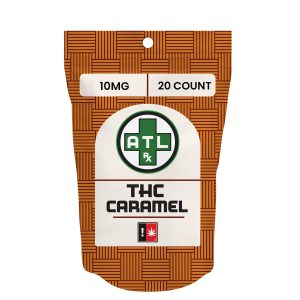
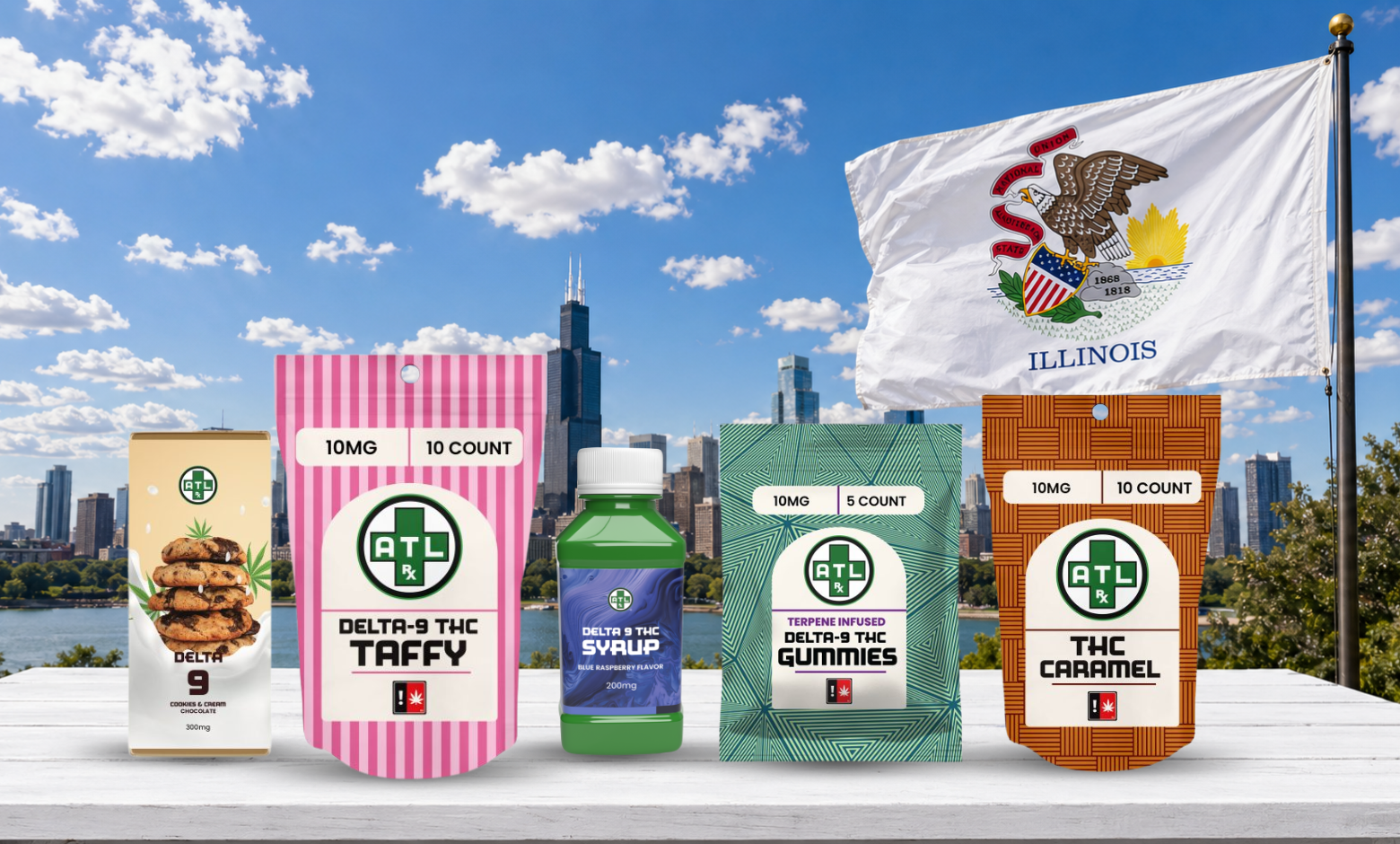
Every Delta 9 caramel is packaged individually and subjected to laboratory testing, verifying both cannabinoid profile and purity. ATLRx taffy originates from hemp grown domestically in the United States and ships with a COA specific to each production batch.
Delta 9 distillate refers to a concentrated extract produced from hemp-sourced Delta 9. ATLRx’s distillate undergoes independent laboratory verification for both potency levels and contaminant screening.
Adult Illinois consumers 21 and older are free to shop at any of the state’s authorized adult-use cannabis dispensaries for marijuana-sourced Delta 9 products.
For Illinois shoppers, ordering compliant hemp-sourced Delta 9 through a trusted internet retailer tends to be the most practical route.
Compliant hemp-sourced Delta 9 orders can ship to the majority of addresses throughout Illinois.
To access marijuana-sourced Delta 9 products, Illinois residents can visit any state-licensed adult-use dispensary. Skip any gas station or convenience store that cannot furnish third-party lab reports.
Dispensary locations are distributed statewide, with coverage in cities such as Chicago, Naperville, Aurora, Rockford, Springfield, and Peoria. Entering requires showing government-issued identification proving you are 21 or older.
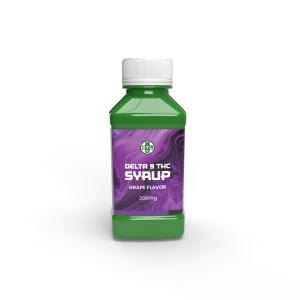
For compliant hemp-sourced Delta 9 goods meeting the 0.3% Delta 9 by dry weight threshold, the product is lawful in Illinois per the 2018 Farm Bill and the Illinois Industrial Hemp Act. Marijuana-sourced Delta 9 is lawful for consumers 21 and up through the state’s network of licensed dispensaries governed by the Cannabis Regulation and Tax Act.
Illinois consumers 21 and older who are state residents may have in their possession up to 30 grams of flower, 5 grams of concentrate, and cannabis-infused products totaling 500 mg of THC.
Growing cannabis at home for adult-use purposes is not an option. However, registered medical cannabis patients who are Illinois residents aged 21 or older may cultivate up to five cannabis plants more than five inches tall per household (not per person), provided the plants are kept in an enclosed, locked space.
Make sure dispensary exit bags remain closed throughout the trip back home. Moving cannabis across any state border violates federal law, regardless of how each state classifies the substance.
Several Illinois localities, Chicago and Oak Park among them, have enacted their own municipal rules limiting where hemp-sourced products can be sold. Specifically, Oak Park implemented local regulations concerning retail sales of intoxicating hemp goods starting June 1, 2025, covering age verification requirements, packaging standards, and display rules for retailers.
Chicago’s City Council approved a local ordinance on January 21, 2026, that limits the retail sale of most intoxicating hemp-sourced cannabinoid products within city limits. The rules take effect April 1, 2026. Here’s what the measure does:
Several Chicago wards had already enacted ward-level hemp bans before the citywide ordinance was approved. The Village of Oak Park adopted its own rules governing intoxicating hemp product sales effective June 1, 2025, covering age verification, packaging, and in-store display. Other Illinois municipalities are weighing comparable measures as the federal November 2026 deadline approaches.
If you live in Chicago or Oak Park, ordering compliant hemp-sourced Delta 9 from an online retailer that ships to Illinois — such as ATLRx — remains an option, though you should confirm your specific address is eligible before placing an order.
Follow these procedures to confirm both regulatory compliance and product quality:
A Certificate of Analysis functions as an independent third-party laboratory document verifying the cannabinoid makeup, strength, and cleanliness of a given product.
For a Delta 9 item to qualify as legal in Illinois under hemp regulations, the COA must demonstrate: Delta 9 THC levels at 0.3% or lower.
Stick to purchases from licensed, trustworthy sellers who publish their COAs and provide responsive customer service.
Lawful Delta 9 needs to originate from hemp farmed through either a state-authorized or USDA-sanctioned hemp initiative.
Yes. Hemp-sourced Delta 9 THC at 0.3% Delta 9 by dry weight or below is lawful in Illinois under both the 2018 Farm Bill and the Illinois Industrial Hemp Act.
Purchasing any hemp-sourced Delta 9 product or adult-use cannabis product in Illinois requires being 21 years of age or older. Sellers must check government-issued ID at the checkout counter.
Yes. Compliant hemp-sourced Delta 9 orders can ship to most Illinois addresses, though shoppers in Chicago and other municipalities with local hemp ordinances should verify that their specific location is eligible before ordering.
Hemp-sourced Delta 9 comes from hemp plants containing 0.3% Delta 9 THC or less by dry weight, regulated under the 2018 Farm Bill and Illinois Industrial Hemp Act.
This is a federal offense regardless of how either the starting state or destination state treats the substance legally.
Adult Illinois residents who are 21 or older may carry up to 30 grams of flower, 5 grams of concentrate, and cannabis-infused products containing up to 500 mg of THC.
Before placing an order, always check what rules currently apply at your local level.
Related Articles:
Disclaimer
The content shared in this article is intended solely for general informational purposes and should not be treated as legal counsel. Cannabis and hemp regulations are subject to regular updates at federal, state, and municipal tiers. For current, situation-specific guidance, always reach out to a qualified lawyer or review official government sources.
These claims have not undergone review by the Food and Drug Administration. ATLRx offerings are not meant to serve as diagnostics, treatments, cures, or preventive measures for any health condition.

July 30, 2026


July 27, 2026

$39.99
$49.99
$49.99
$49.99
$39.99