


$39.99
ARE YOU 21 YEARS OF AGE OR OLDER?
REMEMBER ME
Seriously, by using this site you are confirming that you are of legal age (21+) to view and purchase these products. If you are you are not over 21. you are not authorized by us to use or view any of the pages of this site. Please review our terms and conditions at checkout for further stipulations.
 >
Blogs
>
CBD >
Is CBD Legal in Kansas? 2026 Law Updates & Guide
>
Blogs
>
CBD >
Is CBD Legal in Kansas? 2026 Law Updates & Guide
THE STATEMENTS ON THIS BLOG ARE NOT INTENDED TO DIAGNOSE, TREAT, CURE, OR PREVENT ANY DISEASE. THE FOOD AND DRUG ADMINISTRATION HAS NOT EVALUATED ANY STATEMENTS CONTAINED WITHIN THE BLOG. ATLRX DOES NOT IN ANY WAY GUARANTEE OR WARRANT THE ACCURACY, COMPLETENESS, OR USEFULNESS OF ANY MESSAGE. THE INFORMATION CONTAINED WITHIN THIS BLOG IS FOR GENERAL INFORMATIONAL PURPOSES ONLY.
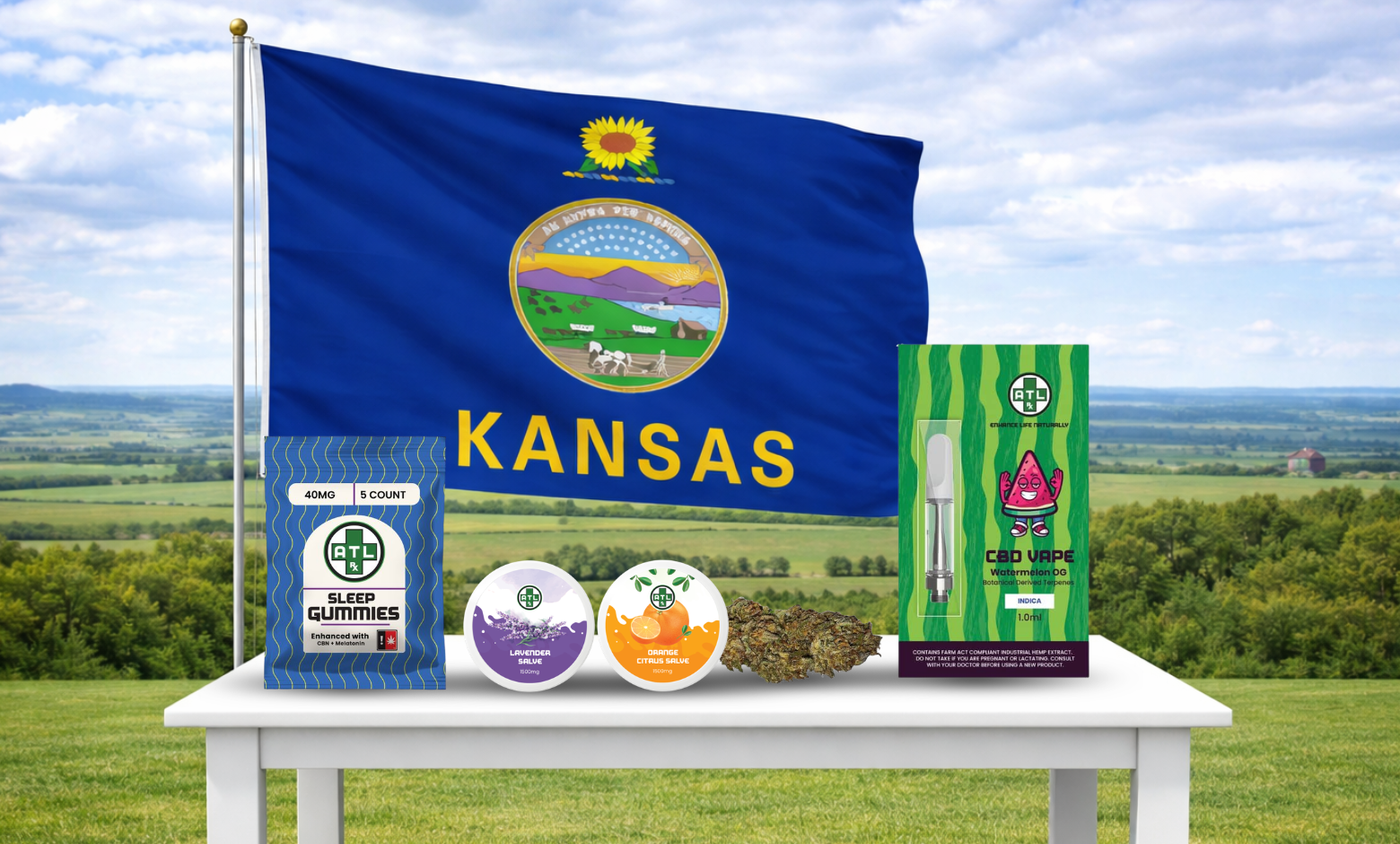
CBD Legal Status in Kansas:
Yes, CBD derived from hemp is legal in Kansas as long as it contains less than 0.0% THC.
Kansas is one of only two states (alongside Idaho) that maintains a strict 0% THC threshold for CBD sold in-state.
CBD products can be legally shipped to Kansas from other states, including from ATLRx.
Smokable CBD flower remains Illegal in Kansas.
New 2025-2026 federal rules introduce a 0.4 mg per container THC cap, set to take effect in November 2026.
If you’re a Kansas resident wondering whether CBD is legal in your state, the short answer is: yes, but with some of the strictest rules in the entire country. Kansas maintains a 0% THC requirement for CBD products sold within state borders, bans smokable hemp flower, and actively enforces these restrictions in ways that have surprised even long-time CBD users.
The legal landscape also shifted at the federal level in late 2025, introducing new THC-per-container limits that could impact what products remain available by November 2026. This guide breaks down exactly what is and isn’t legal in Kansas right now, explains the key laws you need to know, and helps you find compliant CBD products without running afoul of state or local enforcement.
Table of contents:
To understand Kansas CBD law, you first need to understand how the state distinguishes between legal hemp and illegal marijuana. They both come from the Cannabis sativa plant, but their legal status is determined entirely by their THC content.
CBD is a naturally occurring, non-intoxicating compound found in the hemp plant. Federally, hemp is defined as Cannabis sativa that contains less than 0.3% THC by dry weight. CBD products that meet this threshold are considered industrial hemp (not marijuana) and are legal to buy, own, and ship across state lines under the U.S. Constitution’s Commerce Clause.
Kansas aligns with the federal definition of hemp but adds its own additional restriction: CBD products sold within Kansas must contain 0.0% THC, not just less than 0.3%.
Cannabis is primarily intoxicated by delta-9 tetrahydrocannabinol (THC). Under federal law, it remains a Schedule I controlled substance, and it is illegal to use it recreationally and for medical purposes in Kansas. Kansas does not have a traditional medical marijuana dispensary program.
Kansas law creates a notable two-tiered system: federally compliant hemp CBD (up to 0.3% THC) is not the same as Kansas-legal CBD (0.0% THC). This distinction is rarely spelled out clearly, but has resulted in arrests of individuals who purchased CBD products lawfully sold in neighboring states.
Kansas has passed several pieces of hemp-related legislation over the years. Unlike most states that simply adopted federal standards, Kansas has consistently taken a more restrictive approach. The following is a chronological list of the most important laws:
Kansas got ahead of the federal 2018 Farm Bill by passing SB 263, which created a framework for industrial hemp research. While largely superseded by later legislation, it placed Kansas among the early states exploring hemp regulation.
This bill technically legalized CBD in Kansas, but only for products containing exactly 0% THC. This established the highly restrictive standard that still governs in-state CBD sales today. Any product with detectable THC, even at trace levels, is not legal to sell within Kansas under this framework.
This law created an affirmative legal defense (not a full legalization) for Kansans who possess CBD-rich oils containing up to 5% THC, but only if they have a written recommendation from a Kansas physician and have been diagnosed with a debilitating medical condition. This is often described as a limited medical CBD program, though it is far more restricted than true medical marijuana programs in other states.
The most significant piece of Kansas hemp law to date, HB 2167, created licensing requirements for hemp growers, processors, and sellers in Kansas. Critically, it also formally banned the sale of smokable hemp flower, a restriction that places Kansas alongside a small group of states with explicit smokable hemp bans. The bill retained the 0.0% THC requirement for CBD products sold in-state.
One of the most significant recent legislative developments, SB 292, is currently active in committee review as part of Kansas’s 2025–2026 legislative session. This bill targets hemp-derived intoxicating products (delta-8, delta-10, and similar cannabinoids) that have entered the market through regulatory gray areas. The key provisions under discussion include:
While SB 292 primarily targets intoxicating hemp products rather than standard CBD, its passage would reshape the regulatory environment for all Kansas hemp retailers. Consumers should monitor its progress in early 2026.
A significant federal development occurred in November 2025. President Trump signed the Continuing Appropriations Act (Pub. L. No. 119-37), which fundamentally rewrites the federal definition of hemp in three important ways. First, it shifts the THC measurement standard from delta-9 THC only to total THC — meaning THCA, delta-8 THC, and all other THC isomers now count toward the threshold. Second, it imposes a ceiling of 0.4 milligrams of total THC per container for finished hemp-derived cannabinoid products, effective November 12, 2026. Third, it prohibits hemp-derived products containing cannabinoids that were synthesized or manufactured outside of the cannabis plant — this explicitly captures products like delta-8 THC (which is typically converted from CBD) and HHC.
This is a dramatic change from the current 0.3% by dry weight standard. While the rule is designed to address high-potency intoxicating hemp products, it also potentially affects standard CBD products. Legislation to address this, including the Cannabinoid Safety and Regulation Act (CSRA), has been introduced in Congress, but no resolution has been reached as of March 2026.
What this means for Kansas CBD buyers: Products that comply with Kansas’s existing 0.0% THC rule are likely already well within the federal 0.4 mg limit. In fact, broad-spectrum and 0% THC CBD products should remain compliant regardless of the outcome. However, customers should look for updated lab reports from their CBD suppliers confirming product compliance through 2026.
Important: The Federal Rule Goes Further Than a Simple THC Cap. P.L. 119-37 is more than a dosage limit. It also (1) replaces the delta-9-only standard with a total THC measurement inclusive of THCA and delta-8, and (2) bans hemp-derived cannabinoids synthesized outside the cannabis plant, such as most commercial delta-8 and HHC products. Kansas consumers should verify that any product they purchase complies with both the new total THC dry-weight standard and the 0.4 mg per-container cap.
| 2026 Kansas CBD Law Summary Table — Key Rules at a Glance |
| CBD legality (in-state): Legal, with 0.0% THC only |
| CBD online purchase and shipping: Legal, federal Commerce Clause protections apply |
| Smokable hemp flower: ILLEGAL |
| Marijuana (recreational): ILLEGAL |
| Medical cannabis: Affirmative defense only (Claire & Lola’s Law, up to 5% THC, physician required) |
| Minimum age to buy CBD: No official state age limit (most retailers require 18–21) |
| CBD vaping: Legal (product must be 0.0% THC) |
| Hemp farming/processing: Legal with state license |
| Delta-8 / intoxicating hemp: Unresolved; targeted by pending SB 292 |
| Federal 0.4 mg THC/container rule: Takes effect November 12, 2026 |
CBD oils (tinctures) are legal to buy and use in Kansas, provided they contain 0.0% THC. Broad-spectrum CBD oils, which retain minor cannabinoids and terpenes but are processed to eliminate all THC, are the safest and most compliant option for Kansas residents. Full-spectrum oils, which naturally contain trace THC, are not compliant for in-state sales.
Edible CBD products, including CBD gummies and capsules, are legal in Kansas as long as they contain no detectable THC. There is no specific Kansas ban on CBD edibles, and no minimum age has been established by state law (though SB 292 could change this for intoxicating products).
CBD Topicals products (creams, balms, and roll-ons) are legal in Kansas and are among the least controversial CBD product types in the state. Because they are not ingested, they present a lower regulatory risk than ingestible products.
CBD flower is explicitly illegal in Kansas under HB 2167. Because hemp flower inherently contains some THC (even at trace levels), it cannot meet Kansas’s 0.0% THC threshold. Most CBD-related arrests in Kansas have involved individuals in possession of smokable hemp. ATLRx does not recommend purchasing or carrying CBD flower in Kansas.
The legal status of delta-8 THC and other hemp-derived intoxicating cannabinoids in Kansas is uncertain and actively being reviewed through SB 292. Kansas’s 0.0% THC standard would technically make any delta-8 product non-compliant for in-state sale. Consumers should avoid these products within the state until the regulatory picture clears.
The most practical way to purchase quality CBD as a Kansas resident is to shop online from a reputable out-of-state retailer. The U.S. Constitution’s Commerce Clause protects interstate commerce, which means a Kansas resident can legally order CBD products from another state, including products that comply with federal hemp law rather than just Kansas’s stricter in-state rules.
ATLRx ships broad-spectrum, 0% THC CBD products directly to Kansas residents. Every product in the ATLRx lineup comes with third-party Certificates of Analysis (COAs) confirming cannabinoid content, including THC levels. Shopping online also gives you access to a far wider selection, better pricing, and the full confidence of lab-verified products.
Physical CBD retail in Kansas is limited and challenging. Any brick-and-mortar store selling CBD within Kansas must carry products with 0.0% THC, which drastically narrows the available selection.
Additionally, many Kansas CBD shop owners have faced raids and legal complications, leading a significant number to close. Vitamin stores, natural food shops, and wellness retailers may carry a limited selection of compliant CBD products, but availability is not guaranteed.
Kansas does not have any licensed adult-use or standard medical cannabis dispensaries. The state’s limited medical CBD program under Claire and Lola’s Law is administered by physicians, not dispensary retail.
Yes, you can travel to Kansas with CBD products. The Commerce Clause provides protection for interstate travel, and Kansas has not enacted a ban on importing CBD. However, if you are traveling by car within the state with CBD products, exercise caution: Kansas law enforcement has historically been proactive in investigating suspected marijuana possession. Carrying your product’s COA documentation and original packaging is strongly advised to help demonstrate legal compliance if questioned.
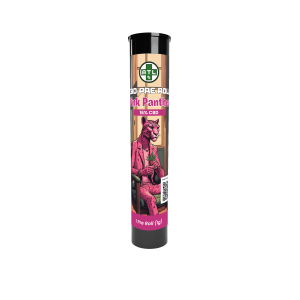
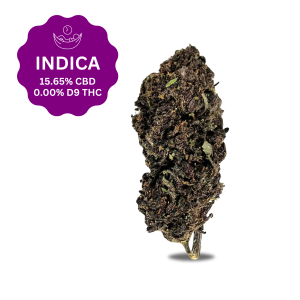

Not every CBD product on the market is appropriate for Kansas residents. Here’s what to look for when selecting compliant products:
Kansas has some of the strictest CBD laws in the United States, with a 0.0% THC threshold, a ban on smokable hemp, and active enforcement that has resulted in real arrests. At the same time, Kansas residents are fully protected by federal law in their ability to purchase legal, compliant CBD products from out-of-state retailers.
ATLRx offers a full range of broad-spectrum, 0% THC CBD products, including CBD oils, gummies, CBD topicals, and CBN/CBG options, all backed by third-party lab testing. Every product ships directly to Kansas addresses, giving you access to premium-quality CBD without the limitations of the local market.
Given ongoing legislative developments, including the pending SB 292 and the approaching federal 0.4 mg THC-per-container deadline, staying informed is especially important in 2026. Bookmark this guide and check back for updates as Kansas’s regulatory landscape continues to evolve.
Yes, CBD is legal in Kansas, provided the product contains 0.0% THC. This is stricter than federal law, which allows up to 0.3% THC in hemp products. Broad-spectrum and isolate CBD products that meet this threshold can be legally possessed and used in Kansas.
Yes. The U.S. Constitution’s Commerce Clause permits interstate commerce in federally legal hemp products. You can order CBD from out-of-state retailers like ATLRx and have it shipped to a Kansas address.
Kansas enacted its stricter 0.0% THC standard through its own state hemp legislation (SB 282, 2018; HB 2167, 2019). State legislatures can impose requirements more restrictive than federal minimums. Kansas lawmakers chose to do so, reflecting a conservative approach to hemp regulation that has been more restrictive than virtually every other state.
CBD flower is explicitly illegal in Kansas. Because it visually and chemically resembles marijuana (containing trace THC), Kansas law enforcement can and does treat it as a controlled substance. Possession can result in arrest and criminal charges. The burden of proof under Kansas law falls on the individual to demonstrate that a product does not contain THC, which is difficult with flower. Avoid it entirely.
No. Standard CBD products with 0.0% THC can be purchased without a prescription. A physician’s written recommendation is only required to access CBD products under Claire and Lola’s Law, specifically those containing up to 5% THC for qualifying medical conditions.
The new rule (0.4 mg THC per container, effective November 2026) is primarily aimed at intoxicating hemp products. If you purchase broad-spectrum or 0% THC CBD products from a reputable brand like ATLRx, you are unlikely to be affected, as these products contain no detectable THC. Monitor updates from your CBD retailer as the November 2026 deadline approaches.
Yes. CBN (cannabinol) and other minor cannabinoids derived from hemp are legal in Kansas, provided the overall product meets the 0.0% THC standard. Kansas has not passed specific legislation banning CBN, CBG, CBC, or other minor cannabinoids.
Kansas state law has not established a minimum age for purchasing CBD. However, most reputable online retailers, including ATLRx, require customers to be at least 18 years of age. Pending legislation (SB 292) could establish a minimum age of 21 for hemp-derived cannabinoid products if passed.

August 12, 2026
August 7, 2026
August 5, 2026
August 4, 2026
$39.99
$39.99
$39.99
$49.99
$49.99
$49.99
$39.99