CBD vs. Delta-8 THC
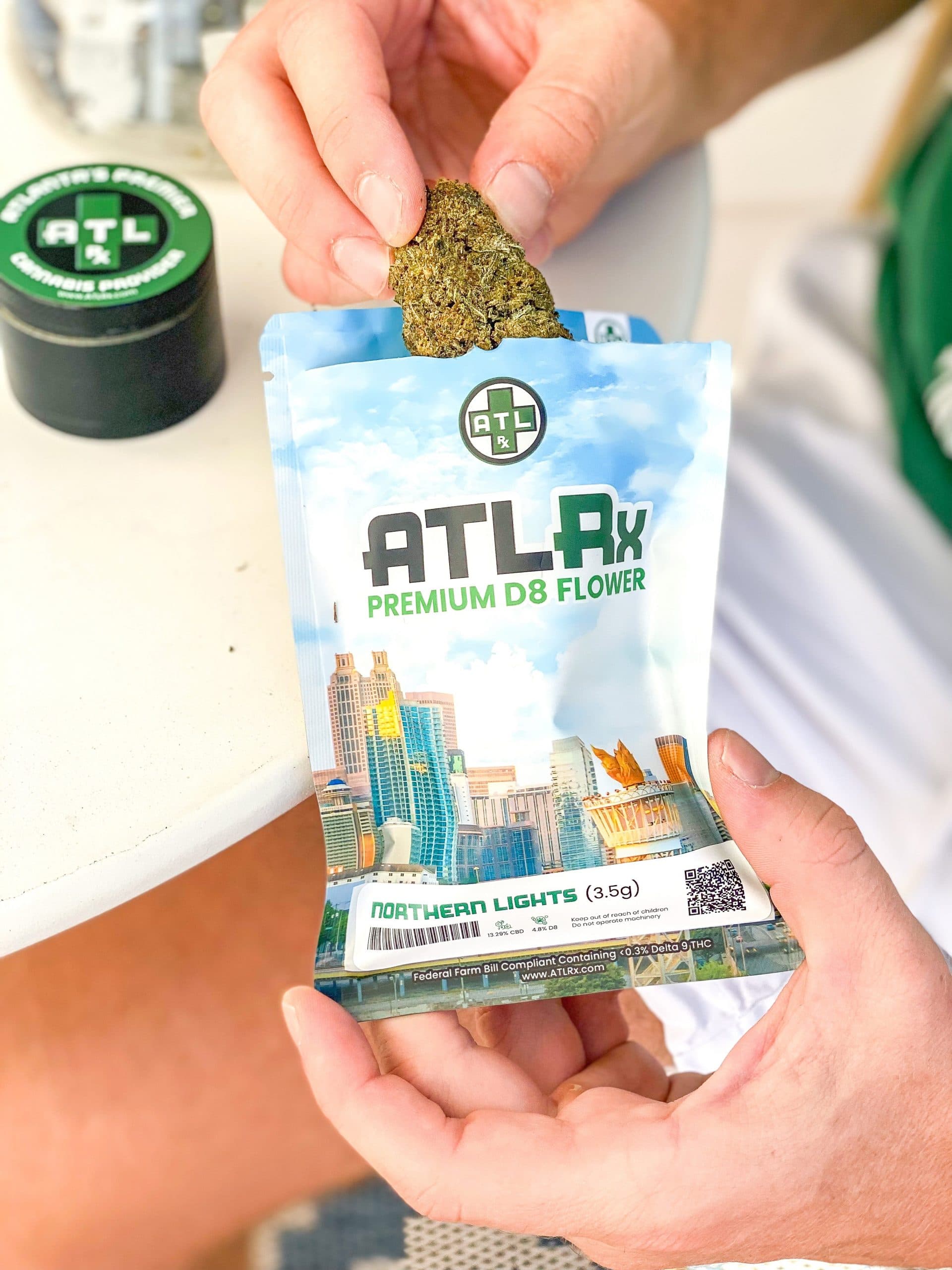
CBD and Delta-8 THC have an almost symbiotic relationship, where you can’t have one before the other. It’s a bit like Romeo and Juliet, and Shakespeare must’ve foreseen the future of Delta-8 THC when he was writing the pinnacle of tragedy. It’s a great time in this industry because there is something new every day. The rapid growth is almost mind-blowing; we are amidst a Hemp Industry Revolution. Both CBD and Delta 8 THC are relatively new, but their chemical compounds have permitted us to create other alternate cannabinoids (Delta 10, THCv, and THC-O).
ATLRx is often asked, “what is the difference between CBD and Delta-8 THC?” Don’t mind if I do.

Key Takeaways
- 01Symbiotic Relationship: CBD and Delta-8 THC have a close relationship, with Delta-8 THC being an isomer of CBD created through a lab process.
- 02CBD Extraction: ATLRx uses the purest extraction methods, Supercritical CO2 and Ethanol, to create immaculate CBD products in distillate form.
- 03Product Forms and Potential Effects: Delta-8 THC offers a less potent alternative to Delta-9 THC, at around 60% potency, and comes in various forms, including distillates and flower replicas.
- 04Regulation and Transparency: The CBD industry is federally unregulated, but ATLRx commits to transparency and quality by complying with federal regulations and providing lab test results via QR codes on packaging.
What is CBD?
Cannabidiol or CBD is a non-psychoactive cannabinoid. CBD sets up shack in cannabis plants which includes hemp and marijuana. Cannabidiol comes in various forms. Now, CBD has to be extracted. ATLRx uses the purest form of extraction called Supercritical CO2 and Ethanol, giving us an immaculate product to use in distillate form or for CBD Oil.
Isolates vs. Full-Spectrum
This is where CBD isolates and full-spectrum CBD differ. For an isolate, there is more filtration to avoid cannabinoids that you may not want—say, for drug test reasons. ATLRx offers full- Spectrum CBD only. Full-spectrum CBD is where the idea of the entourage effect came to fruition. It’s plain to see why those who drug tested avoid full-spectrum because you are getting CBD, CBN, CBC, CBG, and the compliant trace amount of Delta-9 THC with a 0.3% limit. This goes with all of our CBD products. If you get drug tested, look for an isolate. ATLRx cannot guarantee that CBD won’t trigger a failure on a drug test.
What is Delta-8 THC?
Delta-8 THC is a naturally occurring psychoactive cannabinoid that lives in cannabis plants such as Hemp and Marijuana. Although it is natural, it is only in trace amounts of plants. The Delta-8 THC that we all love is an isomer of CBD, which requires a lab. It’s a relatively straightforward process, but it’s more about the correct combination and timing; otherwise, the chemical process will turn the CBD into Delta 9 THC.
Delta-8 came at a perfect time, amid our entire country legalizing Delta-9 THC. However, some states were left behind, leaving only low-level THC oils. Georgia was one of those states. Delta-8 THC is precisely as it sounds, a less potent form of Delta-9 THC or traditional marijuana. The potency of Delta-8 THC is around 60% of Delta-9 THC.

How is Delta-8 THC Created?
Delta-8 THC is essentially altered CBD extract turning it into a clear distillate. The mystery behind Delta-8 THC’s relation to CBD didn’t last very long. It wasn’t even the CBD industry that was annoyed by the legal loophole in the Federal Farm Bill of 2018; it was the traditional marijuana industry, likely because they saw a competitive market, not because of the fiscal confusion or the almighty moral compass. Delta-8 is here to stay, and it brought friends like Delta-10, THCv, THC-O, and HHC.
Delta-8 THC comes in different forms. One of the most asked questions about Delta-8 THC is how we can replicate a flower with a similar smell to Delta-9 THC Flower. First, the buds are hemp flowers with a natural amount of CBD. We source from the best in Colorado, Oregon, and Northern California. These expert farmers cross-breed strains to get the best results; this means that the terpenes stick out more.
The second step is getting the Delta 8 distillate on the buds. The Delta-8 distillate is frozen with dry ice; this combination turns the distillate into a powdery substance that is then sprayed onto the buds. Then it is the hands of the cultivators if they want to kief roll or double sift to give an even more convincing appearance and punch. The process is why CBD and Delta-8 THC are hand in hand; there needs to be a little from those in the lab to ensure there is a plentiful amount of Delta-8 THC for everyone.
The Future of the Delta-8 Market
It is important to note that the CBD industry is federally unregulated. American’s cringe when they hear unregulated due to its history. The same goes with anything synthetic. The problems begin with poor extraction methods and the lack of testing. Some brands withhold information regarding your health and don’t abide by the federal regulations of the Farm Bill of 2018. But there are always vulture tactics in every new market, so please do your research before purchasing delta 8 products. ATLRx complies with the Federal Regulations of states like recreational states like Colorado and Oregon.
We provide you with a QR Code that displays our DEA-certified lab panel test that shows there aren’t any metals, pesticides, or solvents with the QR code right on your packaging. We are committed to transparency because it’s what everyone deserves. We are all in this together, so we need to look out for each other.
Why Trust This Guide
- ATLRx has sold third-party lab-tested hemp products out of Georgia since 2019.
- Every real batch we sell is tested by an accredited outside lab, with the Certificate of Analysis published before you buy.
- We operate 3 real physical stores in Georgia — this isn't a drop-shipped storefront.
- Legal information is rechecked and updated as rules change, not published once and forgotten.
Don't Trust the Label. Check the Lab.
ATLRx publishes third-party Certificates of Analysis for real batches so you can verify cannabinoid content before you buy — not just take the package's word for it.
View Lab Results →Have Questions?
Visit an ATLRx store in Georgia and talk to our team.
Real Customers, Real Reviews
What Customers Are Saying

Jen Hight
Cannabis Industry Expert & Compliance Specialist Jen Hight is a cannabis industry professional with extensive experience in hemp compliance, product development, and consumer education. With a background in regulatory affairs and a passion for helping consumers navigate the complex world of cannabinoids, Jen provides accurate, up-to-date information on hemp legality and best practices. Her work focuses on making cannabis knowledge accessible while ensuring readers understand both the opportunities and responsibilities that come with legal hemp products.
View all articles →Keep Learning
Is THCA Legal in Tennessee? 2026 Expert Guide
Updated November 4, 2026 THCA Legal Status in Tennessee: No, high-THCA products exceeding Tennessee’s 0.3% total-THC limit are not legal for manufacture or sale under the state’s current hemp-derived cannabinoid laws. Tennessee’s Public Chapter 526 introduced stricter cannabinoid limits, licensing requirements, and retail restrictions effective January 1, 2026. The transition period for businesses holding legacy […]
Nov 4, 2026 · 20 min read
Is THCA Legal in Florida? 2026 Law Updates & Guide
Updated November 3, 2026 THCa Legal Status in Florida: Yes, THCA can be legal in Florida as of October 26, 2026, provided the product meets Florida’s definition of hemp and all applicable regulations. The state of Florida limits the total delta-9 THC content of hemp to no more than 0.3%, including THCA. This limit applies […]
Nov 3, 2026 · 22 min read
Is THCa Legal in Georgia? Complete 2026 Legal Guide
Updated November 3, 2026 THCa Legal Status in Georgia: No. THCa is not legal in Georgia in most forms. Georgia prohibits the majority of THCa products sold today. The state counts THCa toward its 0.3% total delta-9 THC limit, and state law bans the retail sale of hemp flower and leaves regardless of THC content. […]
Nov 3, 2026 · 25 min read
Live Resin vs Distillate: Which One Is Right for You?
Live resin vs distillate comes down to one trade-off: flavor or potency. Live resin is made from fresh, flash-frozen hemp, so it keeps more natural terpenes and has a richer, strain-true taste. Distillate is made from dried hemp and refined into a nearly pure, flavorless cannabinoid oil. In general, distillate is more potent and costs […]
Oct 30, 2026 · 9 min read
Stay Informed
New product releases, hemp law updates, and useful cannabinoid guides.