

$39.99
ARE YOU 21 YEARS OF AGE OR OLDER?
REMEMBER ME
Seriously, by using this site you are confirming that you are of legal age (21+) to view and purchase these products. If you are you are not over 21. you are not authorized by us to use or view any of the pages of this site. Please review our terms and conditions at checkout for further stipulations.
 >
Blogs
>
Delta 9 >
Is Delta 9 Legal in Maryland? 2026 Legal Guide
>
Blogs
>
Delta 9 >
Is Delta 9 Legal in Maryland? 2026 Legal Guide
THE STATEMENTS ON THIS BLOG ARE NOT INTENDED TO DIAGNOSE, TREAT, CURE, OR PREVENT ANY DISEASE. THE FOOD AND DRUG ADMINISTRATION HAS NOT EVALUATED ANY STATEMENTS CONTAINED WITHIN THE BLOG. ATLRX DOES NOT IN ANY WAY GUARANTEE OR WARRANT THE ACCURACY, COMPLETENESS, OR USEFULNESS OF ANY MESSAGE. THE INFORMATION CONTAINED WITHIN THIS BLOG IS FOR GENERAL INFORMATIONAL PURPOSES ONLY.
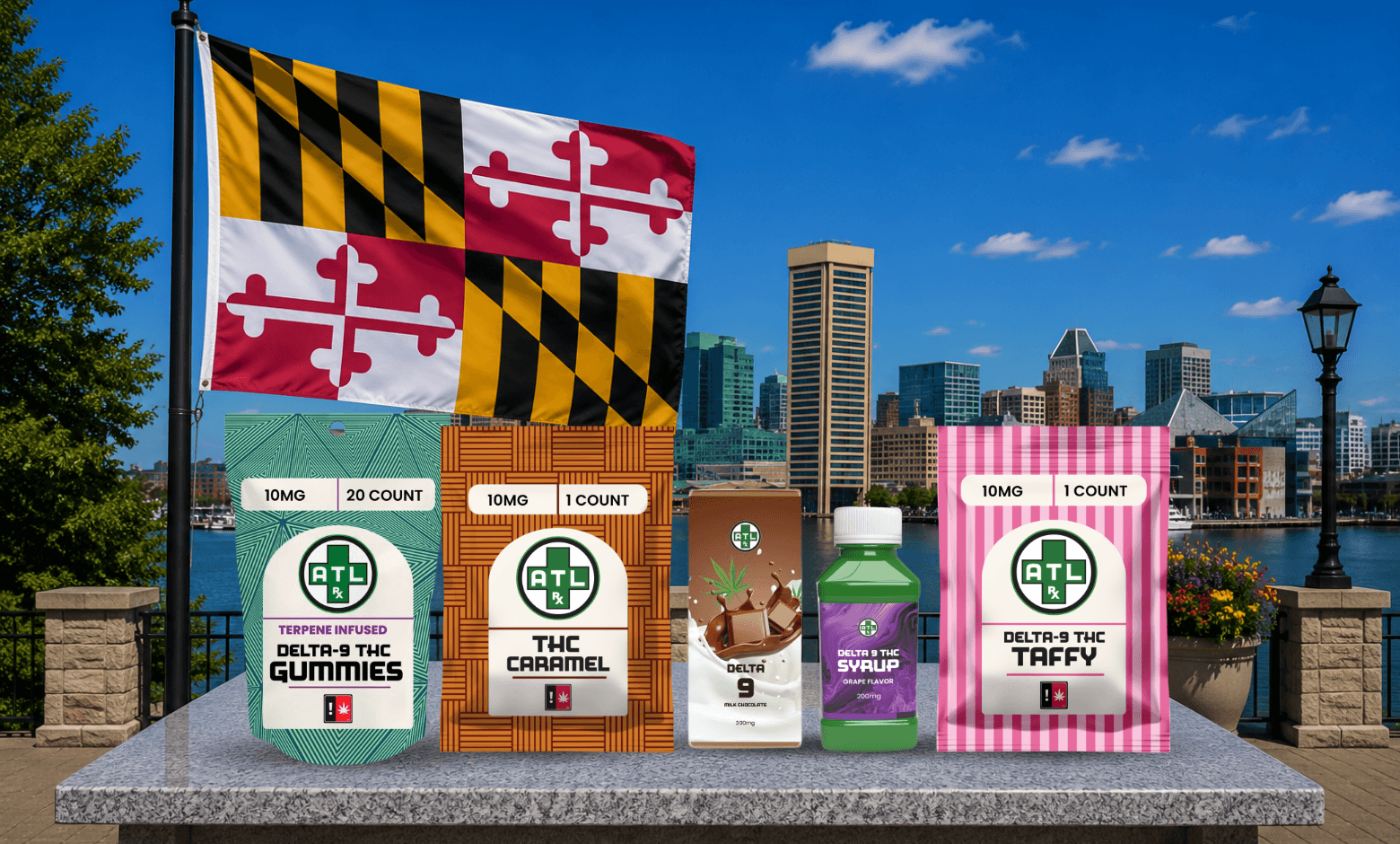
Delta 9 Legal Status in Maryland:
Maryland law in 2026 separates hemp products into two buckets based on THC content per serving and per package.
| Factor | Current Maryland Rule (2026) |
| General retail (smoke shops, online, convenience) | Allowed only up to 0.5 mg total THC per serving and 2.5 mg total THC per package |
| Above those limits | Only through Maryland Cannabis Administration (MCA)-licensed dispensaries |
| Minimum age | 21+ for any THC-containing hemp product |
| Governing law | Cannabis Reform Act (HB 556 / SB 516, 2023), upheld September 2025 |
| Intoxicating Delta 8 / Delta 10 / HHC outside licensed dispensaries | Restricted to MCA-licensed dispensaries; synthetic cannabinoids (e.g., THC-O) are barred outright |
The old “under 0.3% by dry weight and you’re fine anywhere” understanding no longer reflects how Maryland regulates these products at retail.
If you are asking if Delta 9 is legal in Maryland, the short answer for 2026 is “yes, but with strict limits that changed significantly in the last year.” Hemp-derived Delta 9 THC remains legal to buy and possess in Maryland, yet the state no longer treats it the same way the 2018 Farm Bill does. Maryland now applies its own milligram caps and channel rules that determine where a product can legally be sold. This guide explains exactly what is allowed today, what has changed, and how to shop without crossing a line.
Table of contents:
Delta 9 tetrahydrocannabinol (Delta 9 THC) is a well-known cannabinoid found in cannabis plants, including hemp. It is the compound most associated with the classic psychoactive profile of cannabis. Hemp naturally contains low concentrations of Delta 9 THC, which is why hemp-derived Delta 9 products can fall under the 0.3% dry-weight definition while still containing measurable THC.
Delta 9 differs from Delta 8 by the position of a double bond on the carbon chain (ninth carbon for Delta 9, eighth for Delta 8), a small structural difference that affects how each interacts with the body.
Both are forms of THC, but Maryland treats their intoxicating forms similarly under the Cannabis Reform Act. Higher-potency Delta 8 and Delta 10 products are no longer available through general retail and are restricted to the licensed dispensary channel, the same as above-cap Delta 9. For Maryland shoppers, the relevant question is no longer “which isomer is it” but “how many milligrams of total THC are in each serving and package, and which channel is selling it.”
Separately, Maryland prohibits cannabinoids “not derived from naturally occurring biologically active chemical constituents.” This means synthetically produced cannabinoids such as THC-O are barred outright, not merely routed to dispensaries. The dispensary-channel rule applies to naturally derived intoxicating cannabinoids above the milligram caps; purely synthetic cannabinoids face a stricter ban.
Most older articles on this topic, including pages still ranking today, describe Maryland through the lens of the 2018 Farm Bill and 2019’s House Bill 1123. Under that framing, any hemp product under 0.3% Delta 9 THC by dry weight was treated as broadly legal.
That framing is now incomplete. A 10 mg Delta 9 gummy can sit under 0.3% by dry weight when the piece is heavy enough (a 10 mg piece stays under 0.3% only if it weighs roughly 3.34 grams or more) while still containing far more than the 2.5 mg per package that Maryland allows outside a licensed dispensary. Maryland closed that gap by regulating total THC in milligrams per serving and per package, not just the dry-weight percentage. This is the single most important update for 2026, and it is the detail competitor pages currently miss.
According to the Appellate Court of Maryland in Moore v. Maryland Hemp Coalition (decided September 9, 2025), intoxicating hemp-derived cannabinoids fall under the Cannabis Reform Act, not the more permissive federal Farm Bill baseline. The court reversed an earlier injunction that had let pre-2023 hemp retailers keep selling without a cannabis license.
Critically, the court did not treat these products as merely reshuffled into a new channel. The panel stated that intoxicating hemp products “are now and have always been illegal in Maryland,” even though loose enforcement and federal ambiguity let them spread for years. In practice, above-cap products are prohibited at general retail, not simply relocated to a friendlier shelf.
The practical results now in force in 2026:
By early 2026, county-level enforcement notices in parts of Maryland were already informing residents that intoxicating THC products had been pulled from gas stations, convenience stores, and unlicensed vape shops.
Outside a licensed dispensary, a compliant hemp Delta 9 product in Maryland generally must meet all of the following together (the 0.3% dry-weight figure is necessary but not sufficient on its own):
Products that exceed the milligram caps cannot be sold through general retail in Maryland, even if they pass the 0.3% dry-weight test. They are regulated as cannabis, and the only lawful retail path runs through MCA-licensed dispensaries, where adults 21+ can buy higher-potency items under the state’s separate dispensary limits. Because Maryland’s cannabis licensing regime is highly restrictive, the realistic effect for most general retailers and direct-to-consumer sellers is a prohibition, not a simple change of aisle. (See the Maryland People’s Law Library for a plain-language overview of these thresholds.)
Note one narrow exception: Hemp-derived tinctures with a CBD: THC ratio of 15:1 or greater are allowed up to 2.5 mg THC per serving and 100 mg per bottle outside the dispensary channel, provided the seller submits samples for potency and contaminant testing. This is the only notable departure from the flat 0.5 mg / 2.5 mg retail caps.
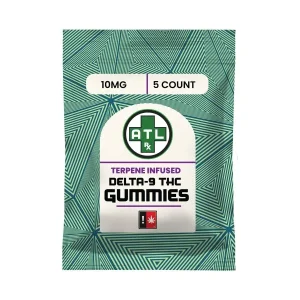
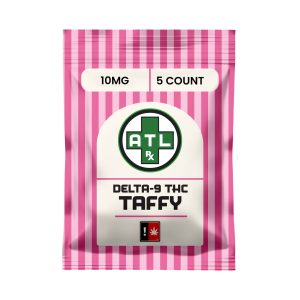
Many popular hemp Delta 9 gummies sold nationwide contain 10 mg of Delta 9 THC per piece. Under Maryland’s current per-package cap of 2.5 mg total THC for general retail, a standard 10 mg gummy is above the threshold for non-dispensary sale in the state. This applies across product formats, so when comparing options such as Delta 9 THC Gummies, Delta 9 THC Syrup, Delta 9 THC Caramels, or Delta 9 THC Taffy, Maryland shoppers should weigh the milligram math per serving and per package rather than the format alone. Brands like ATLRx publish per-serving and per-package totals alongside lab results so buyers can confirm where a product falls relative to these caps.
Possession and personal consumption are governed by Maryland’s broader cannabis possession rules, a separate question from retail sale. What is clear is that selling a 10 mg gummy through general hemp retail is not compliant in Maryland. The only lawful retail path for above-cap products runs through MCA-licensed dispensaries rather than general online or in-store hemp retail. If you are a Maryland shopper, confirm a product’s per-serving and per-package THC totals against the 0.5 mg / 2.5 mg thresholds, and use licensed dispensary channels for anything above them.
You can buy hemp products online in Maryland, but the milligram caps still apply. Out-of-state shipments into Maryland are permitted only when products meet the low-dose thresholds (0.5 mg THC per serving and 2.5 mg per package). Shipments exceeding those limits are treated as intoxicating cannabis and must move through the licensed system rather than direct-to-consumer mail.
Before checking out, Maryland buyers should:
Maryland still allows hemp-derived Delta 9 in 2026, but it is no longer a simple Farm Bill story. The state now governs these products by total THC in milligrams and by sales channel, and the 2025 court ruling locked that framework into active enforcement. Knowing the 0.5 mg per-serving and 2.5 mg per-package caps, the 21+ requirement, and the dispensary channel for higher-potency products is what separates a compliant purchase from a risky one.
Yes. Hemp-derived Delta 9 is legal to buy and possess, but general retail is limited to products with no more than 0.5 mg total THC per serving and 2.5 mg per package. Higher-potency products are sold through MCA-licensed dispensaries.
Each serving may contain no more than 0.5 mg of total THC, and each package no more than 2.5 mg of total THC. Anything above that must go through a licensed cannabis dispensary.
You must be 21 years of age or older to purchase any hemp product containing THC.
Yes. The Moore v. Maryland Hemp Coalition ruling in September 2025 confirmed that intoxicating hemp products fall under the state’s Cannabis Reform Act and its licensing and milligram requirements, with enforcement beginning in 2026.
Their intoxicating forms are restricted to the licensed dispensary channel and are not sold through general retail.
Selling a 10 mg gummy through general hemp retail is not compliant in Maryland, since it exceeds the 2.5 mg per-package retail cap. The lawful retail path for above-cap products runs through MCA-licensed dispensaries. Personal possession is governed separately by Maryland’s cannabis possession rules.
No. In Maryland, driving or operating machinery while impaired is illegal regardless of the product’s source.
Disclaimer: This content is informational and reflects publicly available sources as of June 2026. It is not legal advice. Verify current requirements with the Maryland Cannabis Administration, the ATCC, or qualified counsel. These statements have not been evaluated by the Food and Drug Administration. This product is not intended to diagnose, treat, cure, or prevent any disease.

August 25, 2026
August 23, 2026
August 20, 2026
August 20, 2026
August 18, 2026
$39.99

$14.99
$39.99
$49.99
$39.99
$39.99