

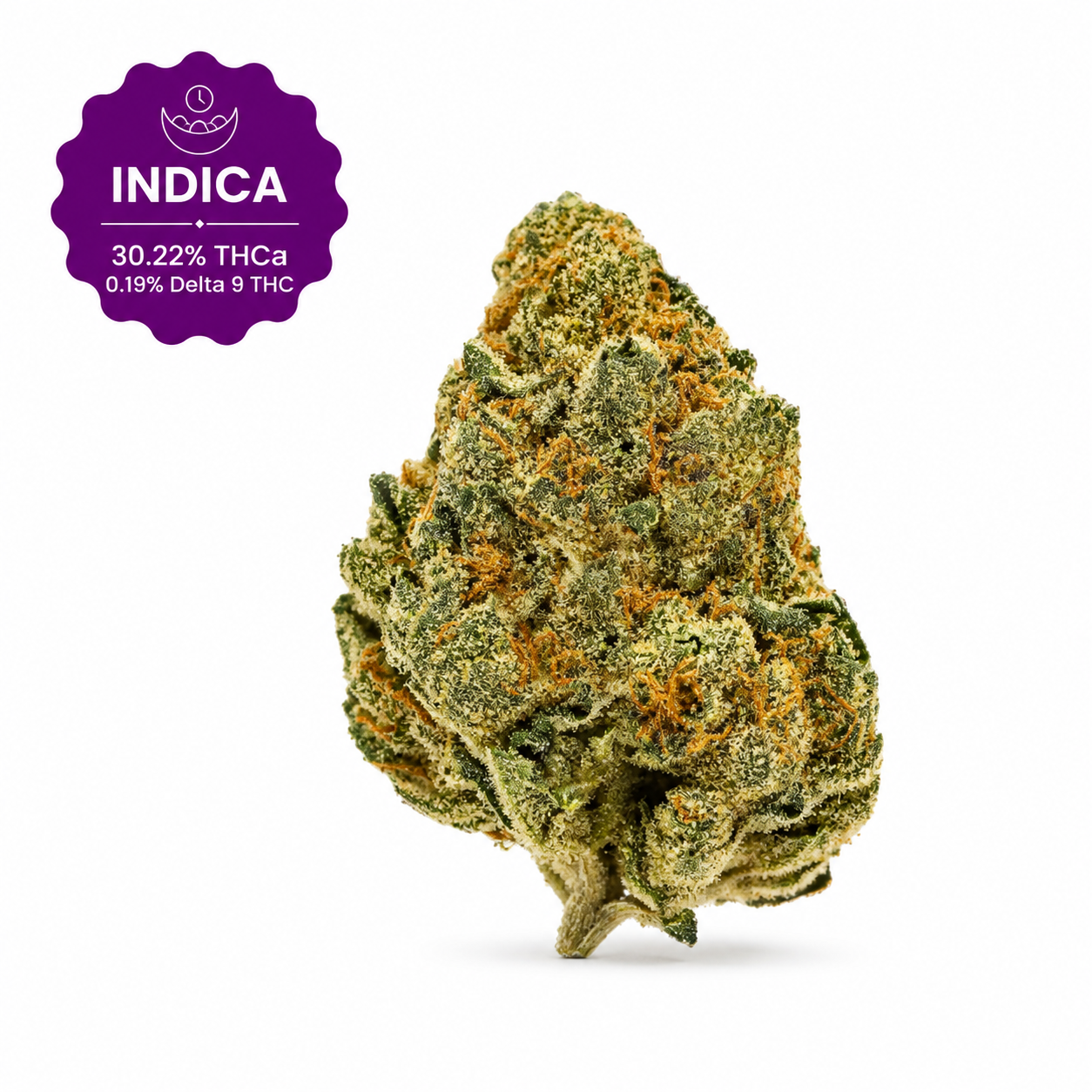
$39.99

ARE YOU 21 YEARS OF AGE OR OLDER?
REMEMBER ME
Seriously, by using this site you are confirming that you are of legal age (21+) to view and purchase these products. If you are you are not over 21. you are not authorized by us to use or view any of the pages of this site. Please review our terms and conditions at checkout for further stipulations.
 >
Blogs
>
THCA >
Is THCA Legal in Montana? 2026 Law Updates & Guide
>
Blogs
>
THCA >
Is THCA Legal in Montana? 2026 Law Updates & Guide
THE STATEMENTS ON THIS BLOG ARE NOT INTENDED TO DIAGNOSE, TREAT, CURE, OR PREVENT ANY DISEASE. THE FOOD AND DRUG ADMINISTRATION HAS NOT EVALUATED ANY STATEMENTS CONTAINED WITHIN THE BLOG. ATLRX DOES NOT IN ANY WAY GUARANTEE OR WARRANT THE ACCURACY, COMPLETENESS, OR USEFULNESS OF ANY MESSAGE. THE INFORMATION CONTAINED WITHIN THIS BLOG IS FOR GENERAL INFORMATIONAL PURPOSES ONLY.
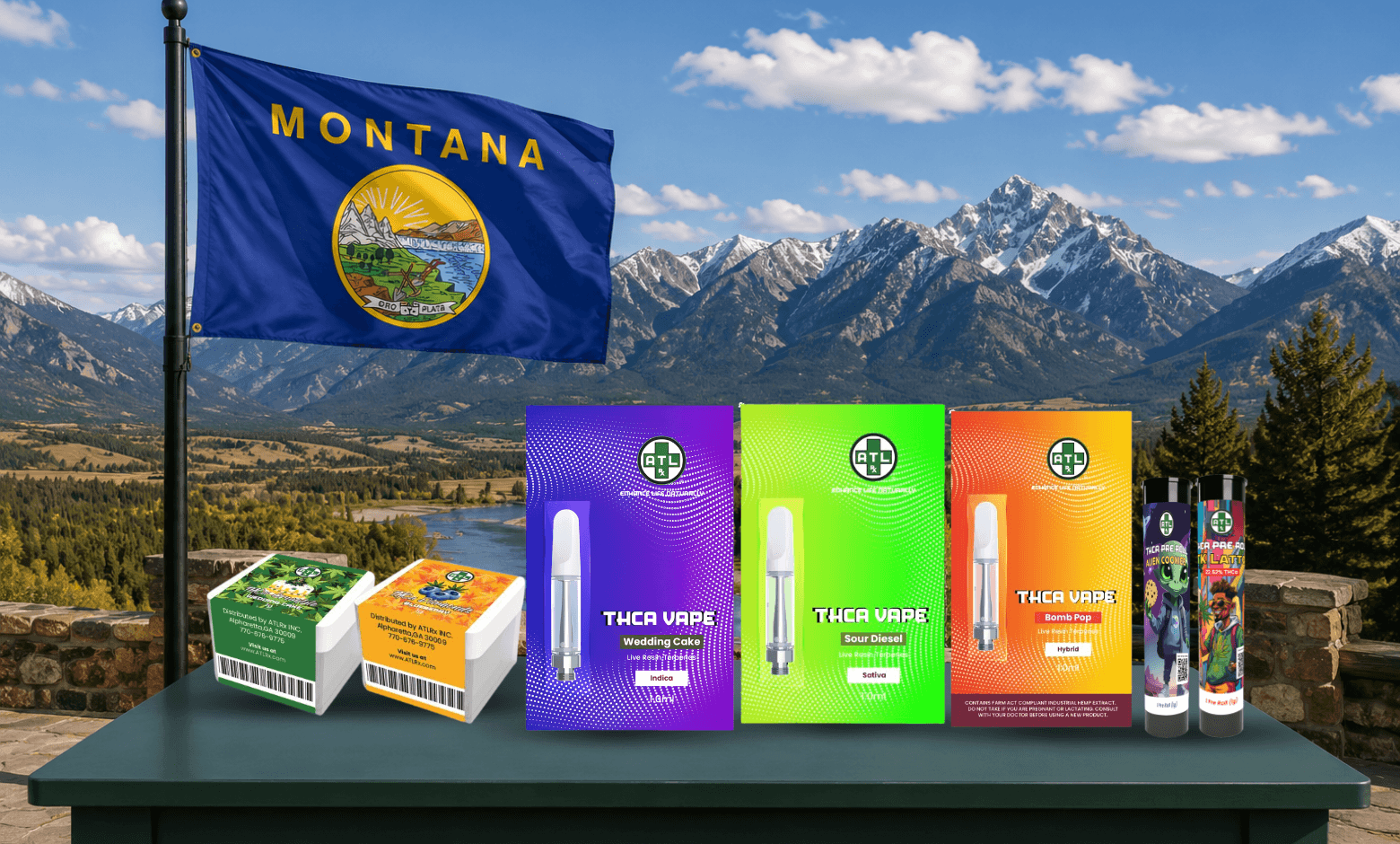
THCA Legal Status in Montana:
Montana enacted major hemp restrictions in 2025 that go beyond the federal framework. Senate Bill 375 (effective May 2025) bans the retail sale of consumable hemp products containing detectable delta-9 THC unless FDA-authorized. House Bill 49 (effective April 2025) further caps hemp products at 0.5 mg THC per serving and 2 mg per package.
President Trump signed H.R. 5371 (P.L. 119-37) on November 12, 2025. Section 781 of that law takes effect November 12, 2026, redefining hemp to use a total-THC standard (inclusive of THCA) and capping finished consumer products at 0.4 mg total THC per container.
THCA flower has sat in a legal gray area under a delta-9-only reading of the hemp definition. That gray area is narrowing rapidly at the state level in Montana right now, and federally as of November 12, 2026. Always confirm the current status with a recent Certificate of Analysis and up-to-date legal guidance before you buy or sell.
If you are shopping for ATLRx hemp products in Big Sky Country, one of the first questions worth asking is, “Is THCA legal in Montana?” The short answer is that it depends on when you are reading this and which rules you are looking at. Montana has allowed hemp-derived products since it adopted the federal hemp framework, but the state enacted its own significant restrictions in 2025 that go further than federal law. Federal lawmakers have also enacted changes to how THCA flower and similar products are treated nationwide, with a deadline of November 12, 2026. This guide breaks down the current Montana rules, the federal changes shaping 2026, and what it practically means for buyers and sellers in the state.
Table of contents:
THCA stands for tetrahydrocannabinolic acid. It is a cannabinoid found in raw and live cannabis and hemp plants. In its raw form, THCA is the acidic precursor to delta-9 THC. The key chemistry detail for any legal discussion is decarboxylation: when THCA is exposed to heat, it converts into delta-9 THC. This single fact sits at the center of the entire THCA legal debate.
Because raw THCA is not the same molecule as delta-9 THC, finished products marketed as “THCA flower” have often been tested and sold on their delta-9 THC content. If a sample measured at or below 0.3% delta-9 THC by dry weight, it could be marketed as legal hemp even though heating it would raise the active THC level. Regulators and lawmakers have spent the past few years debating whether that approach reflects the intent of the law, and they have now acted, both in Montana and at the federal level.
| Factor | THCA (Raw) | Delta-9 THC |
| Found in | Raw, unheated cannabis and hemp | Heated or aged cannabis |
| State changes | Converts to THC when heated | Already in active form |
| How it is tested | Delta-9 only, or total THC | Measured directly |
| Why it matters legally | A delta-9-only reading set it apart; a total-THC approach counts it | Always counted toward THC limits |
To understand Montana, you first have to understand the federal framework, because state law is built on top of it.
The 2018 Farm Bill legalized hemp federally and defined it as cannabis containing no more than 0.3% delta-9 THC by dry weight. In practice, the USDA’s cultivation rules have used a total-THC measurement for testing hemp crops at harvest since 2021. The gap that THCA flower relied on was narrower than it is sometimes described: it applied mainly to finished retail products, which were often tested and marketed on their delta-9 figure alone, even though heating them would raise the active THC level.
Federal law has changed. President Trump signed H.R. 5371 (P.L. 119-37) on November 12, 2025. Section 781 of that law rewrites the federal hemp definition in three key ways, effective November 12, 2026:
Under a total-THC standard, a lab calculates total THC using a conversion formula, roughly THCA × 0.877, plus the delta-9 THC already present. The 0.877 factor accounts for the weight lost when THCA decarboxylates. Because THCA-rich flower starts with a high THCA number, it typically exceeds a total-THC limit even when its delta-9 reading is low. After November 12, 2026, most current ATLRx THCA flower and THCA concentrate products will not qualify as federally legal hemp unless reformulated to meet the 0.4 mg per container cap.
Action point for readers: The November 12, 2026, federal deadline is confirmed and enacted. Treat any product compliant under the old delta-9-only reading as potentially non-compliant after that date. The reliable approach is to check the current rule and a recent Certificate of Analysis before every purchase.
Montana built its hemp program on the federal foundation, and then went further with its own 2025 legislation. Here is how the state side works.
Montana legalized industrial hemp and aligned its state program with the federal hemp framework administered by the USDA. The Montana Department of Agriculture oversees hemp cultivation, grower licensing, and the state hemp program. Under the cultivation framework, hemp is defined using the federal delta-9 THC standard. However, Montana’s 2025 legislative session produced major changes to finished consumer hemp products that go significantly beyond the federal baseline.
Two bills passed in 2025 fundamentally changed what hemp products can be sold to consumers in Montana:
Montana voters approved adult-use cannabis through Initiative 190 in 2020, and licensed retail sales began in 2022. The state runs a regulated, licensed dispensary system for cannabis that exceeds the hemp THC limit. It is important not to confuse the two systems:
ATLRx THCA flower has typically been sold through the hemp channel rather than the dispensary channel. Montana’s 2025 laws have now effectively closed that route for THCA products in the state.
Here is the honest, current answer. The legality of THCA products in Montana depends on which rules apply and how the product is structured.
| Scenario | How THCA Is Treated |
| Montana retail hemp channel (SB 375) | Hemp products with detectable delta-9 THC cannot be sold to Montana consumers through retail hemp channels unless FDA-authorized. This closes the standard ATLRx hemp retail route. |
| Montana product mg caps (HB 49) | Hemp products are capped at 0.5 mg THC per serving and 2 mg per package. Most intoxicating THCA products exceed this. |
| Licensed Montana dispensary channel | High-THC cannabis products remain available to adults 21+ through the regulated system. |
| Federal standard (before Nov. 12, 2026) | THCA flower testing at or below 0.3% delta-9 THC can still be marketed as hemp federally, but Montana’s state rules apply independently. |
| Federal standard (after Nov. 12, 2026) | Total-THC standard applies. Most THCA-rich flower and concentrates will exceed the new federal threshold. |
The practical takeaway: Montana is one of the most restrictive states for hemp-derived THCA products. ATLRx does not ship THCA products to Montana consumers through the retail hemp channel, as SB 375 and HB 49 prohibit it under current state law. Montana residents 21+ may access regulated cannabis products through licensed dispensaries.
Whether you are a consumer or a retailer, due diligence protects you. Use this checklist before any purchase.
Hemp rules vary from state to state, and federal changes interact with each state’s own framework. If you travel or ship across state lines, the rules can shift quickly. Researching neighboring states helps you avoid surprises:
If you came here asking whether THCA is legal in Montana, the most accurate 2026 answer is that the window has largely closed for retail hemp THCA sales in the state. Montana’s 2025 laws (SB 375 and HB 49) effectively prohibit the retail sale of intoxicating hemp products to consumers. At the federal level, the total-THC standard signed into law in November 2025 takes effect on November 12, 2026, which will further restrict the broader THCA market nationwide.
The smartest approach is to stay informed, verify every ATLRx product with a current Certificate of Analysis, and rely on up-to-date official guidance rather than older articles. Laws in this space move fast, and what was accurate in 2024 may not be accurate today.
Montana’s 2025 laws (SB 375 and HB 49) prohibit the retail sale of consumable hemp products containing detectable delta-9 THC unless FDA-authorized, and cap products at 0.5 mg THC per serving / 2 mg per package. This effectively closes the retail hemp channel for intoxicating THCA products. High-THC cannabis products remain available through Montana’s licensed dispensary system to adults 21+. At the federal level, the total-THC standard takes effect on November 12, 2026.
THCA is the raw, acidic form of the cannabinoid. When heated, THCA converts to delta-9 THC through a process called decarboxylation. Delta-9 THC is the form already in its active state. This conversion is the reason lawmakers have shifted toward a total-THC measurement at both the state and federal levels.
Cannabis products, including THCA flower that is heated before use, can lead to a positive result on a standard drug test because of THC. If you are subject to drug testing, factor that in before using any cannabis product.
ATLRx does not ship THCA products to Montana consumers through the retail hemp channel. Montana’s SB 375 (2025) prohibits consumable hemp products with detectable THC outside the licensed dispensary system. Montana’s licensed dispensary system remains the regulated channel for high-THC cannabis products for adults 21 and older.
Lawmakers concluded that a delta-9-only reading allowed intoxicating products — such as THCA flower to be sold as hemp in ways that did not match the original intent of the law. H.R. 5371 (signed November 12, 2025) moves to a total-THC standard and restricts intoxicating hemp-derived products, taking full effect on November 12, 2026.
Ask for a recent, batch-matched Certificate of Analysis from an accredited third-party lab, and check the total-THC figure rather than the delta-9 number alone. When in doubt, confirm the current legal status with official guidance and check whether shipping to your state is permitted.
Disclaimer: These statements have not been evaluated by the Food and Drug Administration. ATLRx products are not intended to diagnose, treat, cure, or prevent any disease. This article is for general informational purposes only and does not constitute legal advice. Cannabis and hemp laws change frequently at both the state and federal levels. Consult a qualified attorney and review official Montana and federal sources before making decisions about buying, selling, or transporting any hemp or cannabis product.

August 18, 2026
August 15, 2026
August 12, 2026
August 7, 2026

August 5, 2026
$39.99
$39.99
$39.99
$49.99
$49.99
$49.99
$39.99