

$39.99

ARE YOU 21 YEARS OF AGE OR OLDER?
REMEMBER ME
Seriously, by using this site you are confirming that you are of legal age (21+) to view and purchase these products. If you are you are not over 21. you are not authorized by us to use or view any of the pages of this site. Please review our terms and conditions at checkout for further stipulations.
 >
Blogs
>
THCA >
Is THCA Legal in Massachusetts? 2026 Law Updates & Guide
>
Blogs
>
THCA >
Is THCA Legal in Massachusetts? 2026 Law Updates & Guide
THE STATEMENTS ON THIS BLOG ARE NOT INTENDED TO DIAGNOSE, TREAT, CURE, OR PREVENT ANY DISEASE. THE FOOD AND DRUG ADMINISTRATION HAS NOT EVALUATED ANY STATEMENTS CONTAINED WITHIN THE BLOG. ATLRX DOES NOT IN ANY WAY GUARANTEE OR WARRANT THE ACCURACY, COMPLETENESS, OR USEFULNESS OF ANY MESSAGE. THE INFORMATION CONTAINED WITHIN THIS BLOG IS FOR GENERAL INFORMATIONAL PURPOSES ONLY.
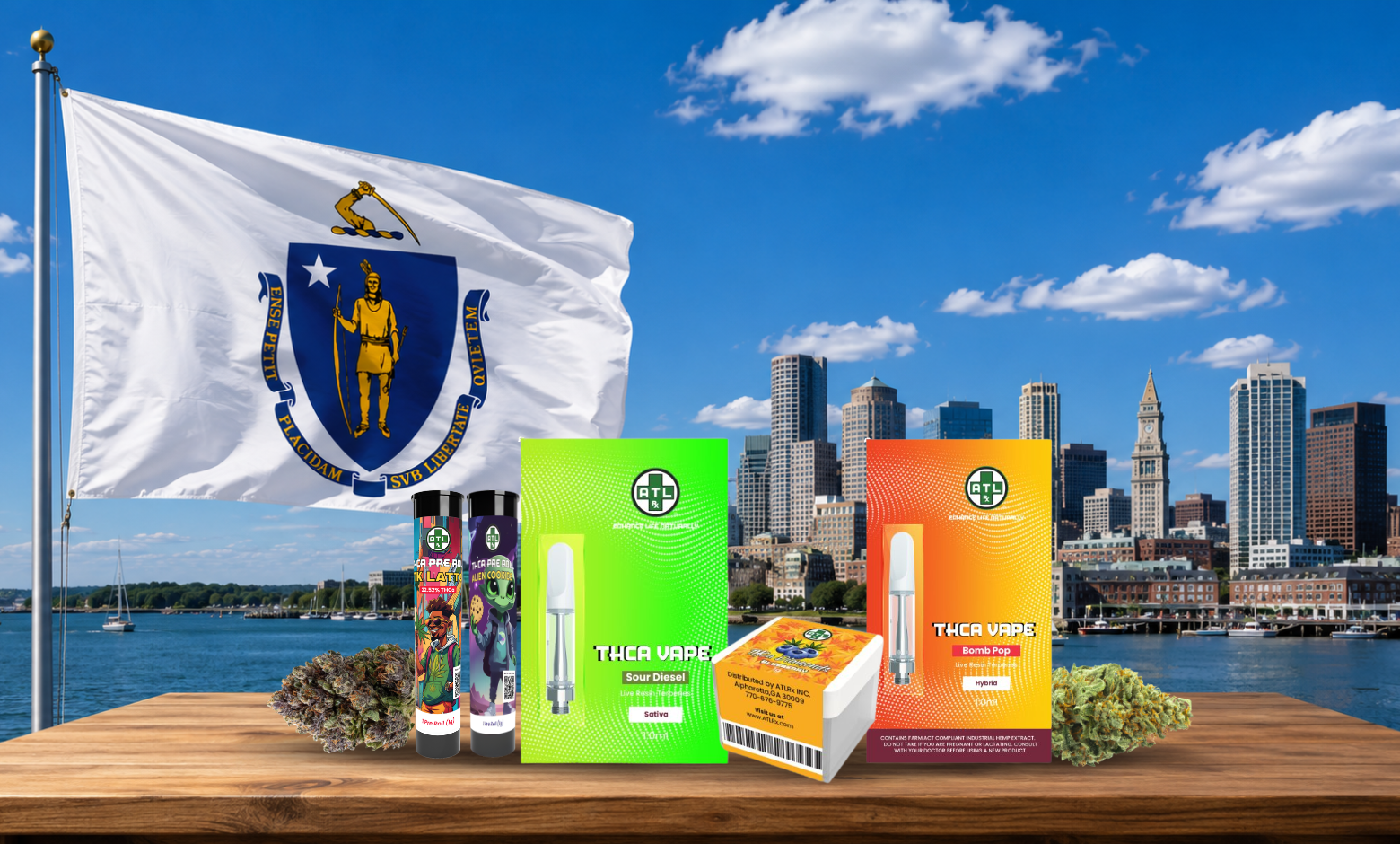
THCA Legal Status in Massachusetts:
Yes. Hemp-derived THCA products containing less than 0.3% delta-9 THC on a dry weight basis are legal in Massachusetts as of May 2026, in accordance with the 2018 Farm Bill and Massachusetts hemp law. It is legal for adults 21 and older to purchase THCA flower, vapes, and concentrates. Federal hemp rules change on November 12, 2026, which may reshape what is sold after that date.
If you have ever stood inside a Boston smoke shop or scrolled through hemp products online and paused on the label, you have probably wondered, “Is THCA legal in Massachusetts?” The short answer in 2026 is yes, hemp-derived THCA is currently legal in the Commonwealth when it follows the 2018 Farm Bill standard, but the rules have more moving parts than the Green Line at rush hour, and a major federal change is set to land on November 12, 2026. This guide walks you through where the law stands today, what is shifting, and how to shop with confidence in the Bay State.
ATLRx tracks state-by-state hemp rules so you do not have to play paralegal between purchases. Below is a plain-English breakdown built around the Massachusetts statutes, agency guidance, and the federal updates that affect every THCA buyer from Boston to the Berkshires.
Table of contents:
THCA is a naturally occurring cannabinoid found in cannabis plants that are alive and freshly harvested. THCA is non-intoxicating in its raw form. A process called decarboxylation occurs when the flower is smoked, vaporized, or baked, which converts it to delta-9 THC.
That single chemistry detail is the reason the legal framework exists at all. Federal hemp testing currently measures delta-9 THC at the time of sale, not after heating. A flower with 22% THCA and 0.21% delta-9 THC still qualifies as hemp under the 2018 Farm Bill.
If you want a deeper dive into the compound itself, see our explainer on What Is THCA and the side-by-side breakdown in THCA vs Delta 9 THC.
In the United States, THCA is legal under the 2018 Farm Bill (the Agriculture Improvement Act of 2018). Cannabis sativa L., also known as hemp, is a plant that contains less than 0.3% delta-9 THC on a dry weight basis and is no longer controlled under federal law.
Key points of the 2018 federal framework:
Hemp flower can carry high THCA percentages and still meet federal hemp definitions as long as delta-9 THC does not exceed 0.3%. It is because of this structural detail that THCA products are widely available today.
Yes. Massachusetts follows the 2018 Farm Bill’s definition of hemp for hemp-derived products. Under Chapter 55 of the Acts of 2017 and Massachusetts General Laws Chapter 128, hemp is defined separately from marijuana, and jurisdiction over hemp sits with the Massachusetts Department of Agricultural Resources (MDAR). Marijuana, by contrast, falls under the Cannabis Control Commission (CCC).
What that means for THCA in 2026:
Massachusetts is currently grouped with states that permit shipment, possession, and personal use of hemp-derived THCA products that meet the federal definition. Several industry trackers describe the state’s posture toward intoxicating hemp as a “gray area” because Massachusetts has not passed a standalone statute targeting THCA. The state has, however, taken narrower enforcement actions: in December 2022, MDAR issued a memo prohibiting the sale and manufacture of hemp-derived delta-8 THC products in the Commonwealth, citing the synthetic-conversion process used to produce delta-8. That memo did not address THCA, which occurs naturally in the cannabis plant.
Massachusetts state law defines hemp using language that includes the “combined per cent of delta-9-THC and tetrahydrocannabinolic acid (THCA)” for plant material grown in the state. MDAR tests hemp using the formula:
Total THC = delta-9 THC + (THCA × 0.877)
This testing method applies to hemp cultivated in Massachusetts, not to finished hemp products manufactured outside the state and shipped in under the 2018 Farm Bill. The distinction matters because it explains why locally grown high-THCA flower is uncommon in the Commonwealth, even though imported, lab-tested THCA flower from compliant hemp programs in other states remains available to Massachusetts residents.
Massachusetts Department of Public Health (DPH), MDAR, and the Alcoholic Beverages Control Commission (ABCC) issued a joint warning in May 2024 that hemp-derived cannabinoids and CBD cannot be added to food, beverages, or dietary supplements under state law.
For THCA shoppers, the practical takeaway is straightforward:
If you are looking for ingestible options, the regulated dispensary channel is the cleaner path within the state. For inhalable or topical THCA formats, federally compliant online retailers continue to serve Massachusetts buyers.
On April 19, 2026, Maura Healey signed H.5350, also known as “An Act Modernizing the Commonwealth’s Cannabis Laws.” Key provisions
| Provision | Change |
|---|---|
| Adult possession limit | Increased from 1 ounce to 2 ounces |
| Cannabis Control Commission | Restructured from 5 commissioners to 3 |
| Retail license cap per owner | Raised from 3 to 6 |
| Hemp-derived cannabinoid framework | CCC directed to study and issue recommendations |
The final legislation did not create a new retail framework for hemp-derived edibles, and it did not change the underlying definition of legal hemp. The House version of the bill included a regulated path for hemp-derived THC beverages, but the Senate removed it during conference negotiations. What remained was a directive for the CCC to study the hemp-derived cannabinoid market and deliver recommendations, with a report expected by December 2026. That signals further state-level action is coming, but for now, the post-H.5350 status quo on hemp THCA in Massachusetts is unchanged. For the official summary, see Governor Healey’s press release on the signing and the CCC’s Bulletin No. 1 dated April 17, 2026.
H.R. 5371, the Continuing Appropriations, Legislative Branch, Military Construction, and Veterans Affairs, and Extensions Act of 2026, was signed into law on November 12, 2025. As of November 12, 2026, Section 781 of that act fundamentally rewrites the federal definition of hemp.
What changes on that date:
For a deeper analysis of how the new definition affects the hemp industry, see this Congressional Research Service report.
For Massachusetts consumers, this matters because the federal change will override the current state-level treatment of hemp-derived THCA. THCA flower and high-potency concentrates sold today will not meet the new federal definition once it takes effect.
Bipartisan legislative efforts to delay, repeal, or replace Section 781 are active. Key bills include:
On April 23, 2026, President Trump publicly called on Congress via Truth Social to update the law to preserve consumer access to full-spectrum CBD products. Whether any of these efforts advance, and in what form, before the November 12, 2026, deadline is an open question.
Massachusetts residents have a few channels for accessing THCA in 2026:
Reputable out-of-state hemp brands ship federally compliant THCA flower, pre-rolls, vapes, and concentrates to Massachusetts under the interstate-commerce protections of the 2018 Farm Bill. Massachusetts has not affirmatively authorized intoxicating hemp products like THCA flower, but no Massachusetts agency has clearly claimed enforcement jurisdiction over inhalable, hemp-derived products shipped in from compliant out-of-state hemp programs — which is why these products remain available to Massachusetts buyers as of May 2026. When ordering online, look for:
ATLRx ships lab-tested THCA Flower and THCA Concentrates with COAs available on every product page, so you can verify compliance before checkout.
For marijuana-derived products that may contain THCA, the Cannabis Control Commission maintains a licensee map of adult-use retailers. To make adult-use purchases, you must be 21 or older with a valid ID.
Some Massachusetts retailers carry hemp-derived THCA products like flower and vapes. Always ask for the COA before purchasing, since not every shelf product is independently verified.
No matter where you shop, the same checklist applies:
When a retailer cannot show you a COA, that is the moment to walk away.
A few practical rules for Massachusetts adults considering THCA:
| Topic | Current Status (May 2026) |
|---|---|
| Is hemp-derived THCA legal? | Yes, under the 2018 Farm Bill framework |
| Marijuana-derived THCA legal? | Yes, through CCC-licensed dispensaries (21+) |
| State hemp testing standard (locally grown) | Total THC formula (delta-9 + THCA × 0.877) |
| Adult possession limit (state) | 2 ounces (effective April 19, 2026) |
| Minimum age | 21 for adult use |
| Hemp-infused food and beverages | Restricted by May 2024 DPH/MDAR/ABCC advisory |
| Federal change | November 12, 2026 |
| Regulating agencies | MDAR (hemp), CCC (marijuana) |
So, is THCA legal in Massachusetts? As of May 2026, yes, hemp-derived THCA products that meet the 2018 Farm Bill standard are legal, and marijuana-derived THCA is available through the licensed dispensary system. The federal rewrite, landing on November 12, 2026, is the date every THCA shopper in the Commonwealth should mark on the calendar, because it will reshape what counts as legal hemp nationwide.
The smartest move for now is to stick to lab-tested products, verify COAs before you buy, and stay informed as both Beacon Hill and Capitol Hill continue to refine the rules. ATLRx keeps its state guides current as the laws shift, so check back ahead of the November 2026 deadline.
Browse our THCA Flower, THCA Concentrates, THCA Pre-Rolls, and THCA Vape Carts collections to see the full lineup. Have more questions? Reach our expert support team at 1-855-420-8278.
Yes. According to the 2018 Farm Bill, hemp-derived THCA containing less than 0.3% delta-9 THC is legal in Massachusetts. For adults 21 and older, marijuana-derived THCA is also legal in dispensaries licensed by the Cannabis Control Commission.
Yes, as of May 2026. Hemp-derived THCA flower with a current Certificate of Analysis showing delta-9 THC below 0.3% can be shipped to Massachusetts. The federal hemp definition is expected to change on November 12, 2026, to a total THC standard.
Raw, non-intoxicating acid precursor that converts to delta-9 THC when heated. Massachusetts hemp law currently treats them as distinct compounds for finished products imported under the 2018 Farm Bill, while applying a total THC formula to hemp grown inside the state.
No. The 2018 Farm Bill allows adults 21 and older to purchase hemp-derived THCA products without state registration. Marijuana-derived products from CCC-licensed adult-use dispensaries are also available to adults 21 and older with a valid government-issued ID.
Cannabis sativa L. and hemp are two different legal categories of the same plant species, differentiated by delta-9 THC concentration. The THCA flower derived from hemp that tests below the 0.3% delta-9 threshold is classified as hemp, not marijuana.
As of November 12, 2026, the federal definition of hemp will include THCA. Most high-THCA flower and concentrates will not meet the new federal definition. Pending legislation could delay or modify the change.
THC metabolites can be detected in standard drug tests. Smoking or vaping THCA can produce metabolites that appear on a drug test when it is heated and converted to delta-9 THC. Raw, unheated THCA generally is not the target of standard screens, but specialized tests can detect it.
ATLRx ships federally compliant, lab-tested hemp-derived THCA products to states where they are permitted under current law. Check the product page and the COA for compliance details and the latest shipping status for Massachusetts.
This article is for general informational purposes only and is not legal advice. Cannabis and hemp laws change frequently and vary by jurisdiction. Consult a qualified attorney for advice on your specific situation. The statements on this blog are not intended to diagnose, treat, cure, or prevent any disease. The Food and Drug Administration has not evaluated any statements contained within the blog.

July 23, 2026
July 22, 2026
July 21, 2026
July 20, 2026
$39.99
$49.99
$49.99
$49.99
$39.99
$39.99
$49.99