

$39.99

ARE YOU 21 YEARS OF AGE OR OLDER?
REMEMBER ME
Seriously, by using this site you are confirming that you are of legal age (21+) to view and purchase these products. If you are you are not over 21. you are not authorized by us to use or view any of the pages of this site. Please review our terms and conditions at checkout for further stipulations.
 >
Blogs
>
Delta 9 >
Is Delta 9 Legal in Arizona? Complete 2026 Legal Guide
>
Blogs
>
Delta 9 >
Is Delta 9 Legal in Arizona? Complete 2026 Legal Guide
THE STATEMENTS ON THIS BLOG ARE NOT INTENDED TO DIAGNOSE, TREAT, CURE, OR PREVENT ANY DISEASE. THE FOOD AND DRUG ADMINISTRATION HAS NOT EVALUATED ANY STATEMENTS CONTAINED WITHIN THE BLOG. ATLRX DOES NOT IN ANY WAY GUARANTEE OR WARRANT THE ACCURACY, COMPLETENESS, OR USEFULNESS OF ANY MESSAGE. THE INFORMATION CONTAINED WITHIN THIS BLOG IS FOR GENERAL INFORMATIONAL PURPOSES ONLY.
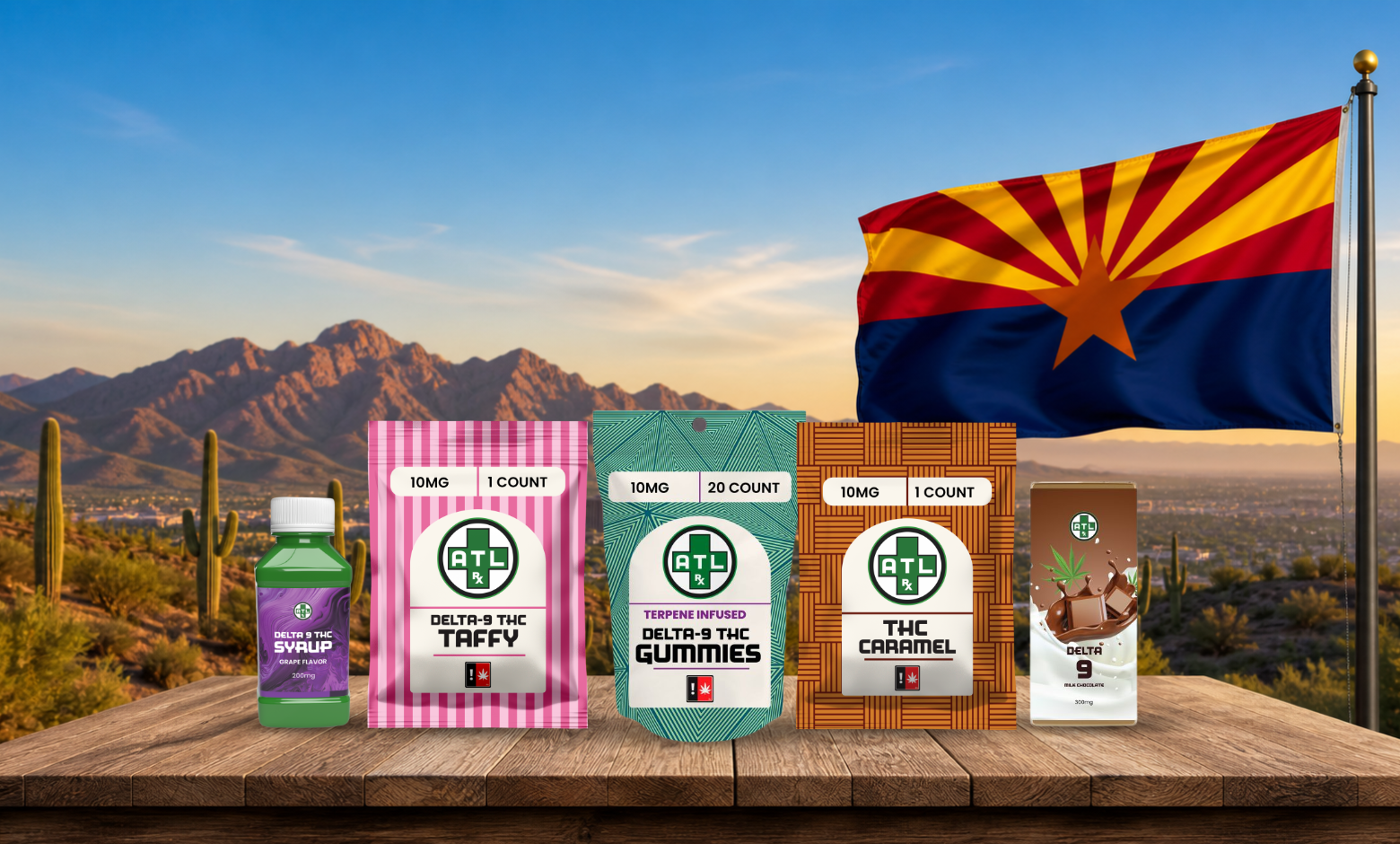
Delta 9 Legal Status in Arizona:
Yes, Federal law treats hemp-sourced Delta 9 as lawful whenever the finished item stays at or beneath the 0.3% dry-weight threshold established by the 2018 Farm Bill. Arizona’s own SB 1098, signed the same year, established the state’s hemp framework. For marijuana-derived Delta 9, Arizona voters legalized adult-use access through Proposition 207 in 2020, with sales restricted to dispensaries holding a license from the Arizona Department of Health Services (ADHS). Arizona’s Attorney General has taken the position that THC-infused edibles and beverages, including hemp-derived Delta 9, may only be sold in Arizona through ADHS-licensed dispensaries, and that enforcement position remains in effect as of early 2026 while related litigation continues.
Arizona’s Delta 9 rules sit at the intersection of two legal systems that don’t always agree. Federal law, through the 2018 Farm Bill, treats hemp-derived Delta 9 as lawful when a finished product stays at or below 0.3% Delta 9 by dry weight. Arizona law, through Proposition 207, permits marijuana-derived Delta 9 for adults 21 and older, but only through dispensaries licensed by the Arizona Department of Health Services. The friction point is hemp-derived Delta 9 edibles: the Arizona Attorney General has taken the position that these may only be sold through licensed dispensaries, a stance currently being tested in court. This guide explains what each layer of law actually says, what changes at the federal level on November 12, 2026, and what every adult buyer should verify before purchasing, carrying, or having Delta 9 products shipped to an Arizona address.
Table of contents:
Anyone tracking U.S. cannabis rules quickly discovers the regulatory picture is stacked — Congress sets one floor, and each state builds its own framework on top. Delta 9 sits inside both layers of regulation, and each layer has seen meaningful revisions during the last twelve months.
Arizona residents asking whether Delta 9 THC can be legally purchased and consumed in 2026 will find the answer to be a qualified yes — adult buyers, however, need to understand exactly which products are permitted and under what circumstances. The bottom line is permissive but rule-bound, and anyone over 21 buying these products in Arizona this year should know precisely what those rules cover.
Two separate legal tracks govern Delta 9 access in Arizona today. Proposition 207 opened the door for residents 21 and over to purchase marijuana-sourced Delta 9 through state-licensed channels, while a parallel federal pathway — the 2018 Farm Bill — keeps hemp-sourced Delta 9 lawful nationwide so long as the finished product tests at no more than 0.3% by dry weight.
What follows is a practical breakdown of the rules that apply when you purchase, carry, or have Delta 9 products mailed to an Arizona address.
Better known by its informal name — the 2018 Farm Bill — the Agriculture Improvement Act of that year stripped hemp out of Schedule I and ended its decades-long status as a federally controlled substance. Under the statute, “hemp” covers the cannabis sativa L. plant along with its component parts, isolates, and naturally occurring cannabinoids — provided that whatever is being measured carries 0.3% Delta 9 THC or less when assessed by dry weight.
That single numeric threshold is the legal foundation under every compliant hemp gummy, tincture, or beverage sold in Arizona today.
Congress passed, and the President signed the Continuing Appropriations Act of 2026 — codified as Public Law 119-37 — on November 12, 2025. Tucked into that legislation is Section 781, a provision that overhauls how federal law describes hemp itself.
Three shifts matter for Arizona buyers:
The effective date for these revisions arrives one year after enactment — November 12, 2026. Until that switchover, the Delta 9-only framework from 2018 continues to apply.
Arizona codified its own hemp rules through SB 1098, which now lives in Title 3, Chapter 2, Article 4.1 of the Revised Statutes (sections 3-311 and following). The statute classifies industrial hemp as cannabis sativa L. material whose Delta 9 reading does not exceed 0.3% measured against dry weight. The Arizona Department of Agriculture oversees licensing, testing, and enforcement for hemp grown or processed inside the state.
During the general election held on November 3, 2020, Arizonans backed Proposition 207 — known on the ballot as the Smart and Safe Arizona Act — by a margin of roughly six in ten voters. The measure created a regulated adult-use market for cannabis, set possession limits, established expungement procedures for past low-level offenses, and placed the new market under ADHS oversight.
Today, that framework is what allows licensed dispensaries to sell marijuana-derived Delta 9 products to anyone 21 or older with a valid ID.
When cannabis material crosses the 0.3% Delta 9 line on a dry-weight basis, it falls outside the hemp definition entirely and is classified instead as marijuana. At the national level, anything tagged as marijuana keeps its Schedule I designation under the Controlled Substances Act.
Arizona has carved out its own exception, though: Proposition 207 lets anyone 21 or older buy marijuana-based Delta 9, and those transactions take place at retailers carrying licenses from the Arizona Department of Health Services.
Hemp-derived Delta 9 products that comply with the 2018 Farm Bill’s 0.3% dry-weight ceiling are sold nationally through online retailers, specialty hemp shops, and certain general retailers in many states. In Arizona, however, the Attorney General has taken the position that hemp-derived Delta 9 edibles and beverages may only be sold through ADHS-licensed dispensaries, and that enforcement position remains in effect as of early 2026 (see “What the Arizona Attorney General Has Said About Hemp THC” below). Common product formats include gummies, beverages, tinctures, and softgels, and many of these products continue to be shipped into Arizona by out-of-state retailers under the 2018 Farm Bill — but Arizona shoppers should understand the active state-level enforcement risk before purchasing.
A quick note on Delta 8 and Delta 10:
A formal legal opinion from Attorney General Kris Mayes — Opinion I24-005, dated March 2024 — concluded that Arizona statutes bar unlicensed retailers from selling Delta 8, Delta 10, and other hemp-synthesized intoxicants. The opinion rests on the SB 1098 carve-out for ingestible hemp products and Proposition 207’s licensing structure for adult-use cannabis, not on a synthesis-versus-extraction distinction. In a March 24, 2025, follow-up letter, Mayes extended that position to all THC-infused edible products, expressly including hemp-derived Delta 9. Under the AG’s current enforcement stance, only ADHS license holders may legally sell THC-infused edibles or beverages in Arizona, regardless of whether the THC is derived from hemp or marijuana, and regardless of how it was produced. The position is being challenged in court, but it remains in effect as of early 2026.
In March 2024, Arizona Attorney General Kris Mayes issued Opinion I24-005, concluding that Arizona law does not permit unlicensed retailers to sell Delta 8, Delta 10, or other hemp-synthesized intoxicants. The opinion rests on the SB 1098 carve-out for ingestible hemp products and on Proposition 207’s licensing structure for adult-use cannabis.
On March 24, 2025, Mayes sent an open letter to Arizona’s county attorneys, sheriffs, and police chiefs extending that position to cover all THC-infused edible products, expressly including hemp-derived Delta 9 and similar derivatives. The letter announced that the AG’s Office would begin civil and criminal enforcement against unlicensed businesses selling THC-infused edibles on April 24, 2025, after a 30-day grace period for retailers to clear their shelves. Mayes’ position is that THC-infused edibles or beverages sold without a marijuana establishment license from the Arizona Department of Health Services are illegal under Arizona law, and that the 2018 Farm Bill does not preempt the state’s stricter rules.
The Hemp Industry Trade Association of Arizona (HITA) has challenged this position in state court, arguing that federal law preempts state restrictions on federally compliant hemp products. So far, the industry has lost the key preliminary rulings. In April 2025, Maricopa County Superior Court Judge Randall Warner denied HITA’s request for a temporary restraining order, and on June 25, 2025, he denied HITA’s preliminary injunction, ruling that the Attorney General is likely not exceeding her authority and that HITA was not likely to succeed on the merits. The underlying case continues, and HITA has pursued appellate review, but as of early 2026, the AG’s enforcement position remains in effect.
The practical takeaway for Arizona shoppers: enforcement risk for unlicensed sales of hemp-derived edibles in Arizona is real. The safest path is to buy from a brand with transparent compliance practices and current third-party lab reports, and to track any court ruling that changes the landscape.
Once Section 781 takes effect:
Most current hemp Delta 9 edibles on the market today, many of which contain 5 mg or 10 mg of Delta 9 per piece, will need to be reformulated, repositioned, or pulled from non-dispensary shelves. Marijuana-derived Delta 9 sold through ADHS-licensed dispensaries under Proposition 207 will not be affected, since that channel operates entirely under state authority.
Online shelves carry plenty of hemp-sourced Delta 9 options for Arizona buyers, provided the product holds to the federal 0.3% dry-weight cap. Look for retailers who publish current Certificates of Analysis, verify customer age at checkout, and ship in child-resistant packaging.
For marijuana-derived Delta 9, purchases must take place in person at an ADHS-licensed dispensary. The ADHS maintains a public list of licensees, and any legitimate dispensary will display its license on-site.
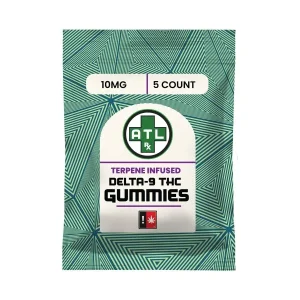
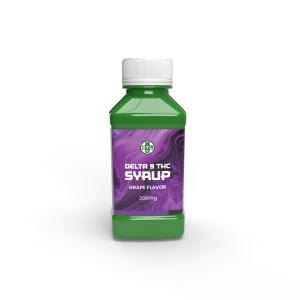
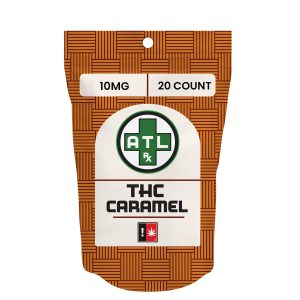
Think of a Certificate of Analysis (COA) as the product’s lab transcript — an independent testing facility breaks down its contents so consumers can see exactly what they are buying. Before you buy, run through this short check:
Residents of legal age, 21 or older, are allowed a personal cultivation limit of six cannabis plants kept at their primary residence. When a residence is shared by two or more adults of qualifying age, the home’s combined cultivation cap rises to twelve plants. All home grows must be kept inside a secure, lockable space that members of the public cannot see into from the outside.
These rules apply to marijuana cultivation under Proposition 207. Hemp cultivation in Arizona requires a separate license issued by the Arizona Department of Agriculture under SB 1098.
Under A.R.S. § 36-2853, adults 21 and over can possess up to one ounce of marijuana total, of which no more than five grams may be in concentrate form. Possession of more than one ounce but less than two and a half ounces is a petty offense punishable by a civil fine. Public consumption remains prohibited, as does driving while impaired. Crossing state lines with any cannabis product — even hemp-derived Delta 9 that is federally compliant — adds legal complexity, since destination states may treat it differently.
They can. Marijuana-derived Delta 9 is available at ADHS-licensed dispensaries, and hemp-derived Delta 9 meeting the 0.3% threshold is sold through a wider retail network.
Yes for hemp-derived gummies that meet the federal 0.3% standard, when shipped by a compliant retailer with current COA documentation. Marijuana-derived edibles cannot be shipped — they must be purchased in person at an Arizona dispensary.
Chemically, the molecule is identical in either case — it is the same Delta 9 THC compound. What separates them in the eyes of the law is botanical origin paired with potency: cannabis material testing at or under 0.3% Delta 9 by dry weight is classified as hemp, while anything registering above that mark is treated as marijuana.
Yes. Conventional urine or blood panels are designed to detect THC metabolites in the body, and the assays cannot tell whether those metabolites came from a hemp product or a marijuana product. Anyone subject to workplace or athletic testing should weigh that risk before consuming any Delta 9 product.
Not quite. Inside Arizona, a buyer 21 or older can lawfully obtain Delta 9 THC at any state-licensed dispensary, and on the federal track, hemp-derived options that meet the 2018 Farm Bill’s parameters continue to be available throughout the state. Delta 8, by contrast, is restricted under AG Opinion I24-005 to ADHS-licensed dispensaries only because it is produced through chemical conversion rather than direct extraction.
The federal ceiling for Delta 9 sits at three-tenths of one percent of the finished product’s dry weight. After November 12, 2026, that calculation shifts to total THC and adds a 0.4 mg per-container ceiling.
Disclaimers
A note to readers: the material above is provided strictly for informational and educational use and should not be treated as legal counsel. Cannabis statutes evolve quickly at the federal, state, and local levels — verify the current rules with the Arizona Department of Health Services, the Arizona Department of Agriculture, or a licensed attorney before acting on any guidance here.
The U.S. Food and Drug Administration has not reviewed or assessed any ATLRx product covered by this content. These products are not intended to diagnose, treat, cure, or prevent any condition. Refrain from driving any vehicle or handling heavy equipment after consumption. Store these products somewhere that children and household animals cannot access them. Not for sale to or use by anyone under 21.

August 23, 2026
August 20, 2026
August 20, 2026
August 18, 2026
August 15, 2026
$39.99
$49.99
$39.99
$39.99
$39.99
$39.99
$49.99