

$39.99

ARE YOU 21 YEARS OF AGE OR OLDER?
REMEMBER ME
Seriously, by using this site you are confirming that you are of legal age (21+) to view and purchase these products. If you are you are not over 21. you are not authorized by us to use or view any of the pages of this site. Please review our terms and conditions at checkout for further stipulations.
 >
Blogs
>
THCA >
Is THCA Legal in Indiana? 2026 Expert Legal Guide
>
Blogs
>
THCA >
Is THCA Legal in Indiana? 2026 Expert Legal Guide
THE STATEMENTS ON THIS BLOG ARE NOT INTENDED TO DIAGNOSE, TREAT, CURE, OR PREVENT ANY DISEASE. THE FOOD AND DRUG ADMINISTRATION HAS NOT EVALUATED ANY STATEMENTS CONTAINED WITHIN THE BLOG. ATLRX DOES NOT IN ANY WAY GUARANTEE OR WARRANT THE ACCURACY, COMPLETENESS, OR USEFULNESS OF ANY MESSAGE. THE INFORMATION CONTAINED WITHIN THIS BLOG IS FOR GENERAL INFORMATIONAL PURPOSES ONLY.
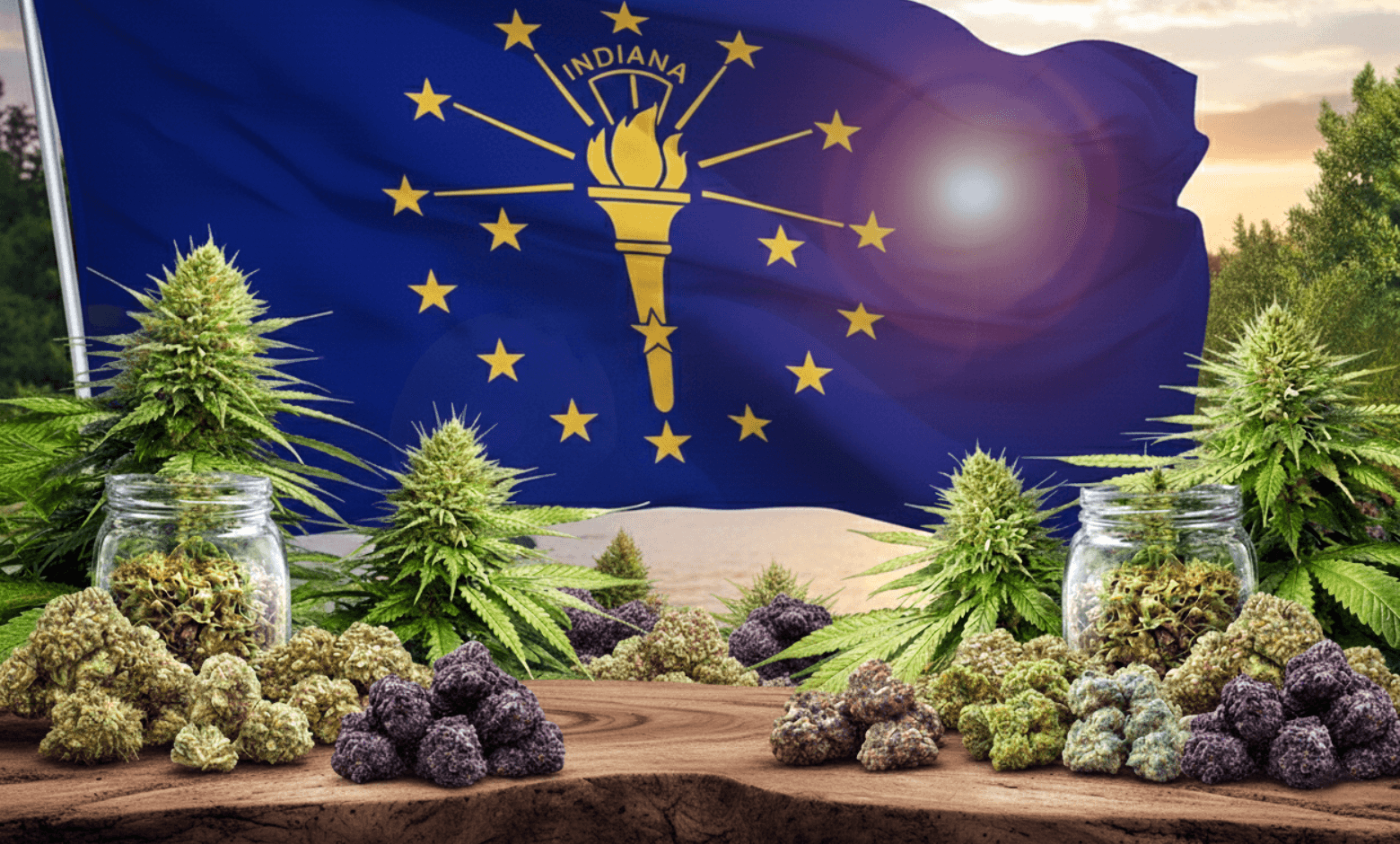
THCA Legal Status in Indiana.
Yes, THCA is legal in Indiana, but only in a specific form with significant restrictions. Non-smokable THCA products like tinctures, edibles, and topicals are permitted when derived from hemp with Total THC levels at or below 0.3%. However, Indiana explicitly bans smokable THCA flower, pre-rolls, and similar inhalable products under state law, even if they meet federal hemp standards. If you’ve been searching for clarity on THCA legality in the Hoosier State, you’re not alone.
Indiana’s hemp laws create a complicated landscape where federal regulations, state-specific bans, and recent 2025-2026 legislative changes all intersect. Unlike neighboring states such as Ohio, Michigan, and Illinois, Indiana takes a stricter stance on cannabis-related products, making it essential to understand exactly what’s legal and what could land you in legal trouble.
This comprehensive guide breaks down Everything Indiana residents need to know about THCA: current state laws, recent federal changes, specific product restrictions, where to buy legally, and how to stay compliant with both state and federal regulations.
Table of contents:
Tetrahydrocannabinolic acid (THCA) comes from raw hemp and cannabis plants. Unlike its well-known cousin THC (delta-9 tetrahydrocannabinol), THCA is non-psychoactive in its raw, unheated form—meaning it doesn’t produce the intoxicating effects typically associated with cannabis use.
Chemically, THCA and THC differ in their structure and effects:
This difference matters significantly for Indiana law because the state regulates these compounds differently based on their form and method of consumption.
THCA doesn’t stay THCA forever. In response to heat, such as from smoking, vaping, or cooking, it undergoes a chemical transformation known as decarboxylation:
How Decarboxylation Works:
Legal Implications in Indiana:
This chemical transformation is precisely why Indiana has banned smokable THCA products. A hemp flower containing 20% THCA and 0.2% Delta-9 THC might technically meet federal hemp standards when tested in its raw state. However, once someone lights it, that “legal” product instantly becomes a high-THC cannabis product that far exceeds Indiana’s 0.3% limit.
This is the “loophole” that Indiana legislators aim to close—and why the state treats smokable and non-smokable THCA products completely differently under law.
To understand THCA’s legal status in Indiana, you first need to understand the federal foundation upon which state laws are built.
The Agriculture Improvement Act of 2018, also known as the 2018 Farm Bill, fundamentally changed hemp’s legal status nationwide. This federal legislation:
The 2018 Farm Bill primarily targeted Delta-9 THC concentration, excluding total THC or THCA levels. This led to what’s often referred to as the “THCA loophole”—allowing products to have high THCA levels, as long as the Delta-9 THC stayed under 0.3%.
On November 12, 2025, Congress enacted significant changes through the Continuing Appropriations Resolution (H.R. 5371) that fundamentally alter the federal hemp landscape. These changes represent the most substantial federal hemp policy shift since 2018.
Key Changes Taking Effect November 12, 2026:
1. Hemp is now defined as Cannabis sativa L. or any part of the plant containing a total tetrahydrocannabinol concentration (including THCA) of no more than 0.3% on a dry weight basis. This replaces the previous Delta-9 THC-only measurement.
2. Product Category Distinctions The law now distinguishes between:
3. Synthetic Cannabinoid Exclusion The legislation explicitly excludes synthetic cannabinoids (like Delta-8 THC, Delta-10 THC, and synthetically-derived THCA) from the definition of legal hemp, even when derived from legal hemp starting material.
4. FDA Regulatory Deadlines The Food and Drug Administration must publish the following by February 10, 2026:
What This Means for Indiana THCA Consumers:
These federal changes will further restrict THCA products starting in November 2026. Indiana’s existing ban on smokable hemp already aligns with this stricter federal direction. Even non-smokable THCA products will face tighter scrutiny, as the “total THC” standard eliminates most high-THCA hemp products from the legal market.
Critical Timeline:
The Drug Enforcement Administration has increasingly focused on “total potential THC” in its enforcement approach, even before the 2025 legislative changes:
DEA’s Current Stance:
Practical Impact: The DEA’s position has created legal uncertainty that Indiana has addressed through its restrictive smokable hemp ban. While the federal “total THC” standard wasn’t law until November 2025, many states—including Indiana—already incorporated this stricter interpretation into their enforcement practices.
Indiana’s approach to THCA is more restrictive than federal baseline standards, reflecting the state’s overall conservative stance on cannabis-related products.
Indiana Code § 15-15-13-6 establishes Indiana’s legal hemp program in alignment with federal law, defining hemp as:
“The plant Cannabis sativa L. and any part of that plant, including the seeds thereof and all derivatives, extracts, cannabinoids, isomers, acids, salts, and salts of isomers, whether growing or not, with a delta-9 tetrahydrocannabinol concentration of not more than three-tenths percent (0.3%) on a dry weight basis.”
Senate Bill 516 (2019) operationalized Indiana’s hemp program following the 2018 Farm Bill, establishing:
Indiana law goes beyond federal requirements by explicitly prohibiting smokable hemp, regardless of THC content.
Indiana Code § 35-48-1-26.6 defines “smokable hemp” as:
“A product containing not more than 0.3% delta-9 THC, including precursors and derivatives of THC, in a form that allows THC to be introduced into the human body by inhalation of smoke.”
Indiana Code § 35-48-4-10.1 makes it illegal to:
Exception: The law allows for the shipment of smokable hemp from a licensed producer in one state, passing through Indiana in continuous transit, to a licensed handler in another state (i.e., interstate commerce in transit).
What This Means for THCA: Even if THCA flower contains compliant Delta-9 THC levels (≤0.3%), it’s illegal in Indiana because:
While federal and Indiana law historically focused on Delta-9 THC concentration, testing methodologies account for “Total THC” content to reflect THCA’s conversion potential.
The Total THC Formula:
Total THC = Delta-9 THC + (THCA × 0.877)
Why 0.877? This conversion factor reflects the molecular weight ratio when THCA loses its carboxyl group during decarboxylation. In simple terms, 87.7% of THCA’s weight transforms into THC when heated. Essentially, 87.7% of THCA’s weight converts to THC when heated.
Real-World Example: A THCA product tested with:
Total THC calculation:
This product would be illegal in Indiana because its Total THC far exceeds the 0.3% threshold, despite having compliant Delta-9 THC levels when tested raw.
Testing Timing Matters:
Indiana enforces its hemp laws with criminal penalties that escalate based on violation type and criminal history.
Class A Misdemeanor (Smokable Hemp Violations):
Under Indiana Code § 35-48-4-10.1, manufacturing, delivering, or possessing smokable hemp can result in:
Enhanced Penalties for THC Violations:
If products exceed 0.3% Total THC (treated as marijuana):
Law Enforcement Challenges:
The visual identification of legal hemp and illegal marijuana is extremely difficult, if not impossible, in the field. This creates practical enforcement issues:
Important: Even legal, non-smokable THCA products should be transported with Certificates of Analysis to demonstrate compliance if questioned by law enforcement.
Not all THCA products are created equal under Indiana law. The form, method of consumption, and THC content all determine legality.
| Product Type | Legal Status | Compliance Risk | Recommendation |
| THCA Flower | ❌ Illegal | Very High | Avoid – Explicitly banned as smokable hemp |
| THCA Pre-Rolls | ❌ Illegal | Very High | Avoid – Explicitly banned as smokable hemp |
| THCA Vape Cartridges | ⚠️ Gray Area | High | Risky – Inhalable products face strict scrutiny |
| THCA Tinctures | ✅ Legal* | Low | Safest Option – If ≤0.3% Total THC with documentation |
| THCA Edibles | ✅ Legal* | Low | Safest Option – If ≤0.3% Total THC with documentation |
| THCA Gummies | ✅ Legal* | Low | Safest Option – If ≤0.3% Total THC with documentation |
| THCA Topicals | ✅ Legal* | Low | Safest Option – If ≤0.3% Total THC with documentation |
| THCA Concentrates (non-inhalable) | ✅ Legal* | Medium | Acceptable – If ≤0.3% Total THC, not for smoking/vaping |
| THCA Diamonds (for smoking) | ❌ Illegal | Very High | Avoid – Designed for inhalation |
*Legal only if derived from hemp, Total THC ≤0.3%, and accompanied by proper COA documentation.
Indiana’s distinction between smokable and non-smokable products reflects two legal concerns:
Non-smokable products (tinctures, edibles, topicals) don’t pose these same concerns because:
A Certificate of Analysis is your legal protection when purchasing and possessing THCA products in Indiana. Here’s how to verify product compliance.
Every legitimate THCA product should have an accessible COA containing:
1. Testing Date
2. Delta-9 THC Level
3. Total THC Calculation
4. THCA Content
5. Third-Party Laboratory
6. Batch/Lot Number
7. Comprehensive Cannabinoid Panel
8. Contaminant Testing Superior COAs also screen for:
❌ No COA Available
❌ COA Older Than 6-12 Months
❌ Only Shows Delta-9 THC Without THCA
❌ Missing or Mismatched Batch Numbers
❌ Results From Manufacturer’s Own Lab
❌ Suspiciously Perfect Results
❌ Photocopied or Low-Resolution COAs
Step 1: Request the COA before purchase
Step 2: Verify batch number matches product packaging
Step 3: Calculate Total THC yourself: Delta-9 + (THCA × 0.877)
Step 4: Confirm the testing date is recent (within 6 months)
Step 5: Contact the lab to verify COA authenticity (if concerned)
Step 6: Save digital and physical copies for your records
Reputable retailers like ATLRx provide easily accessible COAs:
Never purchase THCA products without reviewing the corresponding COA first.
Finding compliant THCA products in Indiana requires knowing where to shop and what to verify before buying.
Advantages:
✅ Better Selection – Online retailers offer diverse non-smokable THCA products (tinctures, edibles, topicals, capsules)
✅ Transparent Testing – Reputable sites provide immediate COA access
✅ Legal Shipping – Established retailers understand state-specific restrictions
✅ Clear Documentation – Products arrive with proper labeling and compliance paperwork
✅ Customer Support – Ability to verify legality before purchase
Top Online Considerations:
ATLRx and Indiana Compliance: ATLRx ships THCA tinctures, edibles, and other non-smokable products to Indiana, all with:
Limited Local Options: Due to Indiana’s smokable hemp ban, local retailers have restricted THCA inventory:
If Buying Locally:
⚠️ Verify Retailer Licensing – Confirm they’re authorized hemp retailers
⚠️ Request COAs Before Purchase – Don’t assume products are compliant
⚠️ Avoid Gray-Market Shops – Some retailers sell non-compliant products anyway
⚠️ Check Product Labels – Ensure clear hemp-derived labeling and THC content disclosure.
❌ Gas Stations and Convenience Stores
❌ Unlicensed Online Sellers
❌ Retailers Without COAs
❌ “Too Good to Be True” Pricing
❌ Vague Product Descriptions
Before Purchasing:
✅ Verify product is non-smokable (tincture, edible, topical, capsule)
✅ Request current COA (within 6 months)
✅ Confirm Total THC calculation is ≤0.3%
✅ Check third-party lab credentials
✅ Verify batch number will match COA
✅ Confirm retailer understands Indiana’s smokable ban
When Receiving Products:
✅ Save all COAs and packaging materials
✅ Keep products in original containers with labels intact
✅ Store documentation accessible for potential law enforcement encounters
✅ Verify batch number on packaging matches COA
✅ Never transfer products to unmarked containers
During Storage and Use:
✅ Store in a secure location away from minors
✅ Keep COAs with products
✅ Use only as directed on the Packaging
✅ Do not heat, smoke, or vaporize THCA products
✅ Do not transport across state lines
✅ Dispose of Packaging properly to avoid confusion with marijuana products.
Indiana’s hemp laws may be on the verge of significant changes through proposed legislation attempting to create a regulated “craft hemp flower” market.
Two competing bills defined Indiana’s 2026 legislative session on hemp. Senate Bill 478 proposed creating a regulated craft hemp flower market, while Senate Bill 250 — the bill that actually advanced — sought to align Indiana with the stricter federal definition of hemp, effectively banning most THCA and intoxicating cannabinoid products statewide.
Senate Bill 250 (the bill that passed the Senate) included these key provisions:
2. Age Restrictions
3. Mandatory Licensing Requirements
4. Rigorous Product Testing Standards
5. Packaging and Labeling Mandates
SB 250 faced strong opposition from the hemp industry. Industry representatives warned the bill would devastate Indiana’s hemp market, forcing layoffs and business closures. The Indiana Attorney General’s office, however, publicly supported SB 250, calling on House members to adopt its language and close what they called the ‘Farm Bill loophole.’ The Attorney General stated that failure to act would effectively legalize marijuana in Indiana by default.
Law Enforcement Concerns:
Industry Perspective:
As of March 2026, both SB 478 and SB 250 failed to pass during the 2026 legislative session. SB 250 passed the Indiana Senate 35-13 but died in the House after missing the February 24, 2026, deadline. A last-ditch effort to insert SB 250’s language into another bill during conference committee was also unsuccessful, with lawmakers from all four caucuses agreeing to remove the hemp ban language on February 27, 2026 — the final day of the session. Current Indiana law, therefore, remains unchanged. However, Sen. Freeman and Rep. Bascom have publicly signaled they intend to reintroduce similar legislation in the 2027 session.
Potential Outcomes:
Outcome (confirmed): Both SB 478 and SB 250 failed in the 2026 session. Indiana’s existing smokable hemp ban remains in place. Non-smokable THCA products compliant with the 0.3% Delta-9 THC standard remain legal for now. The most significant remaining threat is the federal November 12, 2026 deadline, which will impose total THC limits regardless of state legislative outcomes. Expect renewed state legislative efforts in 2027.
If SB 478 Passes:
If SB 478 Fails:
Monitoring Developments: Indiana residents interested in THCA should:
Even as Indiana considers state-level reforms, incoming federal regulations will dramatically reshape the national THCA landscape.
The Continuing Appropriations Resolution (H.R. 5371), enacted November 12, 2025, includes provisions that take effect exactly one year later: November 12, 2026.
Major Federal Changes:
1. Total THC Definition Becomes Federal Law. Previously, a testing methodology, “Total THC” (including THCA), became the statutory standard for hemp compliance. Products exceeding 0.3% Total THC will be federally illegal controlled substances.
2. Container Limits for Final Products. Final hemp-derived products cannot exceed 0.4 milligrams combined total THC per container. This effectively caps potency for:
Impact Example: A 30mL tincture bottle at 0.3% Total THC concentration would be illegal under the 0.4mg container limit. Most current THCA products will require reformulation or reduced package sizes.
3. Intermediate vs. Final Product Distinction
Intermediate Products (Wholesale/Manufacturing):
Final Products (Consumer Retail):
4. Exclusion of synthetic cannabinoids Delta-8 THC, Delta-10 THC, THC-O, and other semi-synthetic cannabinoids, even when derived from hemp precursors.
The FDA must publish comprehensive cannabinoid classifications by February 10, 2026:
List 1: All Naturally Occurring Cannabinoids. Complete catalog of compounds naturally produced by Cannabis sativa L., based on peer-reviewed scientific literature.
List 2: THC-Class Cannabinoids Specific identification of all naturally occurring tetrahydrocannabinol variants.
List 3: THC-Like Cannabinoid Compounds with “similar effect to, or marketed to have similar effects to” THC—potentially capturing novel cannabinoids currently in legal gray areas.
Why This Matters:
These lists will determine which cannabinoids remain legal under the new framework. Any cannabinoid not on the “naturally occurring” list but marketed for psychoactive effects could be deemed illegal, regardless of whether it’s technically prohibited by name.
Pre-November 2026 (Current State):
Post-November 2026 (New Federal Standard):
Consumer Action Timeline:
Now – February 10, 2026:
February 10 – November 12, 2026:
Post-November 12, 2026:
Indiana’s restrictive hemp laws stand in stark contrast to those of surrounding states, creating confusion for residents who travel or shop online.
| State | THCA Flower Legal? | Smokable Hemp Status | Recreational Cannabis | Key Differences from Indiana |
| Indiana | ❌ No | Banned | ❌ Illegal | Similar to Indiana, conservative enforcement; some hemp flower is available |
| Ohio | ✅ Yes* | Legal | ✅ Legal (2024) | Regulated recreational market; hemp products are widely available |
| Michigan | ✅ Yes | Legal | ✅ Legal (2018) | Mature recreational market; THCA treated as legal hemp |
| Illinois | ✅ Yes | Legal | ✅ Legal (2020) | Similar to Indiana, conservative enforcement; some hemp flower available |
| Kentucky | ⚠️ Limited | Restricted | ❌ Illegal | Similar to Indiana, conservative enforcement; some hemp flower is available |
*State laws subject to change; verify current status before traveling
❌ DO NOT Assume “Legal Nearby” Means “Legal in Indiana.”
✅ What IS Legal to Transport:
Non-smokable THCA products (tinctures, edibles, topicals) purchased in other states and properly documented CAN be brought into Indiana if:
Scenario 1: Visiting Ohio/Michigan/Illinois
Scenario 2: Passing Through Indiana
Scenario 3: Ordering Online to Indiana
Several factors explain Indiana’s conservative approach:
1. Law Enforcement Priorities
2. Political Landscape
3. Public Safety Perspective
4. Economic Considerations
Navigating Indiana’s THCA laws requires diligence, Documentation, and smart decision-making. Here’s your complete compliance roadmap.
Before Buying Any THCA Product:
✅ Verify Product Form
✅ Request Current COA
✅ Confirm Total THC Compliance
✅ Verify Third-Party Testing
✅ Check Batch Number
✅ Confirm Retailer Reputation
When Products Arrive:
✅ Inspect Packaging
✅ Save All Documentation
✅ Proper Storage Protocol
✅ Documentation Organization
During Consumption:
✅ Follow Label Directions
✅ Never Heat THCA Products
✅ Responsible Consumption
If Stopped by Law Enforcement:
✅ Remain Calm and Cooperative
✅ Provide Documentation
✅ Know Your Rights
❌ NEVER:
Steps to Take if Arrested or Cited:
1. Exercise Your Rights
2. Document Everything
3. Gather Your Evidence
4. Consult Legal Counsel
5. Consider Contacting the Retailer
For more information about THCA and hemp regulations, explore these trusted resources:
Indiana’s THCA laws reflect the state’s cautious, conservative approach to cannabis-related products. While non-smokable THCA remains legally accessible, the regulatory landscape is complex and evolving rapidly.
Key Takeaways for Indiana Consumers:
✅ Stay Informed – Laws are changing at both the federal and state levels. What’s legal today may not be tomorrow.
✅ Prioritize Compliance – Always choose non-smokable products with verified Total THC ≤0.3% and accessible COAs.
✅ Shop Smart – Purchase from reputable retailers like ATLRx that understand Indiana’s specific restrictions and provide transparent testing.
✅ Document Everything – Keep COAs, receipts, and Packaging to demonstrate compliance if questioned.
✅ Monitor Legislative Changes – Watch Senate Bill 478 developments and the November 2026 federal deadline for market-shifting changes.
✅ Be Cautious – When in doubt about a product’s legality, don’t purchase it. The legal risk isn’t worth the potential consequences.
Looking Ahead:
Indiana’s THCA market faces significant uncertainty:
For now, Indiana consumers can legally access THCA through tinctures, edibles, and topicals while staying informed about the rapidly changing legal environment.
Yes and no, depending on the product form. Non-smokable THCA products (tinctures, edibles, topicals, capsules) derived from hemp with Total THC ≤0.3% are legal in Indiana. However, smokable THCA products (Flower, pre-rolls) are explicitly illegal under Indiana Code § 35-48-4-10.1, regardless of THC content.
No. Indiana law specifically bans smokable hemp, which includes THCA flower intended for smoking or vaping. Possession, sale, or manufacture of smokable hemp is a Class A misdemeanor punishable by up to 180 days in jail and fines up to $1,000.
Delta-9 THC is the psychoactive compound in its activated form. Total THC includes both Delta-9 THC and THCA (calculated as Delta-9 + THCA × 0.877), accounting for THCA’s potential to convert to THC when heated. Indiana testing uses Total THC to determine compliance.
Yes, but only non-smokable products. Reputable online retailers like ATLRx ship compliant THCA tinctures, edibles, and topicals to Indiana. They will not ship smokable products (Flower, pre-rolls) to Indiana addresses due to state law. Always verify the retailer understands Indiana’s restrictions before ordering.
Possession of smokable hemp (including THCA flower) is a Class A misdemeanor in Indiana, carrying penalties of up to 180 days in jail and fines up to $1,000. If the product exceeds 0.3% Total THC, it may be treated as marijuana with potentially enhanced penalties.
Check three things: (1) Product form – must be non-smokable (tincture, edible, topical); (2) Certificate of Analysis (COA) – must show Total THC ≤0.3%; (3) Hemp-derived – must come from legal hemp, not marijuana. Always request and review COAs before purchasing.
No. While Ohio and Michigan allow THCA flower sales, transporting it into Indiana violates Indiana law. The smokable hemp ban applies regardless of where products were purchased. Interstate transport doesn’t exempt products from destination state laws.
Senate Bill 478 was a 2026 Indiana proposal to create a regulated craft hemp flower market. It did not pass. The more significant 2026 bill was Senate Bill 250, which would have banned most THCA and intoxicating hemp products by aligning Indiana with the stricter federal definition. SB 250 passed the Senate 35-13 but died in the House on February 24, 2026. Both bills failed, leaving the current law unchanged. Similar legislation is expected to be reintroduced in the 2027 session.
Yes, significantly. Federal changes taking effect November 12, 2026, redefine hemp to include “total THC (including THCA)” and limit final products to 0.4mg Total THC per container. This will eliminate most current THCA products from the legal market, even in Indiana’s non-smokable categories.
Only with proper licensing. Indiana allows licensed hemp cultivation under the state hemp program overseen by the Office of the Indiana State Chemist & Seed Commissioner. Personal, unlicensed cultivation is illegal. Growers must register, test crops, and ensure Total THC compliance.
Manufacturing, financing, or dealing in smokable hemp is a Class A misdemeanor. If products exceed 0.3% Total THC or are classified as marijuana, penalties escalate to felony charges with potential years in prison and fines exceeding $10,000.
Yes. THCA can metabolize into THC in the body, and standard drug tests screen for THC metabolites. Even legal hemp-derived THCA products may cause positive drug test results, potentially affecting employment, probation, or other situations requiring drug screening.
While legal THCA products are permitted, Indiana has strict impaired driving laws. If THCA converts to THC in your system and affects your ability to drive safely, you can be charged with DUI. Any detectable THC can lead to arrest, even from legal hemp products.
Stop using the product immediately. Request COAs and verify the Total THC content. If the product exceeds 0.3% Total THC or is smokable, report the retailer to the Indiana Attorney General’s Consumer Protection Division. Contact an attorney if you face legal consequences from using mislabeled products.
This is a gray area. While some argue non-smokable vapes differ from “smokable hemp,” Indiana law enforcement may treat inhalable products as prohibited. Vape cartridges carry a high legal risk in Indiana and are best avoided. Stick to tinctures, edibles, and topicals for clear legal compliance.
There’s no current timeline for recreational marijuana legalization in Indiana. The state maintains some of the strictest cannabis laws in the nation, with no pending legislation likely to pass. While neighboring states have legalized, Indiana shows little political will for change in the near term.
Check with your probation/parole officer first. Even legal hemp-derived THCA products may violate conditions of supervision. Drug testing could show THC metabolites, leading to violations. Err on the side of caution and get explicit permission in writing before using any cannabinoid products.
Monitor these sources:
Disclaimer: This article provides general information about THCA legality in Indiana based on current law as of February 2026. It is not legal advice. Cannabis and hemp laws change frequently at both the state and federal levels. Consult with a licensed Indiana attorney for guidance specific to your situation. ATLRx is not responsible for legal consequences resulting from product use or possession.

August 25, 2026
August 23, 2026
August 20, 2026
August 20, 2026
August 18, 2026
$39.99

$14.99
$39.99
$49.99
$39.99
$39.99