

$6.99
ARE YOU 21 YEARS OF AGE OR OLDER?
REMEMBER ME
Seriously, by using this site you are confirming that you are of legal age (21+) to view and purchase these products. If you are you are not over 21. you are not authorized by us to use or view any of the pages of this site. Please review our terms and conditions at checkout for further stipulations.
FREE SHIPPING ON ALL ORDERS OVER $49 —— FREE EXPEDITED SHIPPING ON ALL ORDERS OVER $149 —— FREE SHIPPING ON ALL ORDERS OVER $49 —— FREE EXPEDITED SHIPPING ON ALL ORDERS OVER $149 —— FREE SHIPPING ON ALL ORDERS OVER $49 —— FREE EXPEDITED SHIPPING ON ALL ORDERS OVER $149 —— FREE SHIPPING ON ALL ORDERS OVER $49 —— FREE EXPEDITED SHIPPING ON ALL ORDERS OVER $149 ——
FREE SHIPPING ON ALL ORDERS OVER $49 —— FREE EXPEDITED SHIPPING ON ALL ORDERS OVER $149 —— FREE SHIPPING ON ALL ORDERS OVER $49 —— FREE EXPEDITED SHIPPING ON ALL ORDERS OVER $149 —— FREE SHIPPING ON ALL ORDERS OVER $49 —— FREE EXPEDITED SHIPPING ON ALL ORDERS OVER $149 —— FREE SHIPPING ON ALL ORDERS OVER $49 —— FREE EXPEDITED SHIPPING ON ALL ORDERS OVER $149 ——
 >
Blogs
>
CBD >
Is CBD Legal in Utah? – 2026 Utah CBD Laws Guide
>
Blogs
>
CBD >
Is CBD Legal in Utah? – 2026 Utah CBD Laws Guide
THE STATEMENTS ON THIS BLOG ARE NOT INTENDED TO DIAGNOSE, TREAT, CURE, OR PREVENT ANY DISEASE. THE FOOD AND DRUG ADMINISTRATION HAS NOT EVALUATED ANY STATEMENTS CONTAINED WITHIN THE BLOG. ATLRX DOES NOT IN ANY WAY GUARANTEE OR WARRANT THE ACCURACY, COMPLETENESS, OR USEFULNESS OF ANY MESSAGE. THE INFORMATION CONTAINED WITHIN THIS BLOG IS FOR GENERAL INFORMATIONAL PURPOSES ONLY.
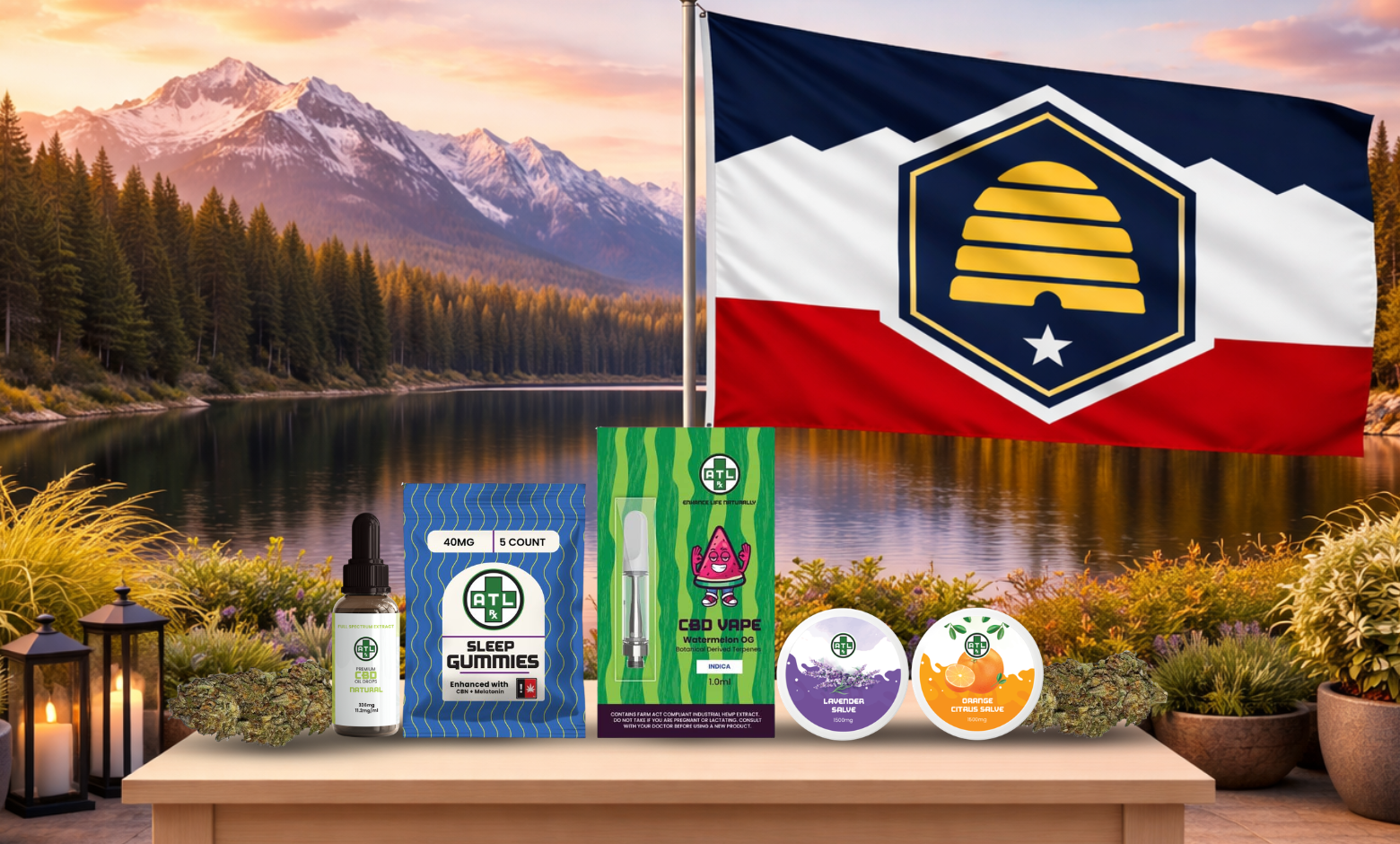
CBD Legal Status in Utah:
Yes, hemp-derived CBD is legal in Utah in 2026, but the state enforces some of the strictest product rules in the country. Products must contain ≤ 0.3% THC, ≤ 5 mg THC per serving, and ≤ 150 mg THC per package. CBD gummies and other food-form edibles remain banned statewide. Products sold in Utah must be registered with the Utah Department of Agriculture and Food (UDAF).
Read on for the complete breakdown, including the major federal changes effective November 2026.
Table of contents:
Utah has never been the most cannabis-friendly state. When it comes to hemp-derived CBD, the picture is more nuanced than a simple “yes” or “no.” As of 2026, Utahns can legally purchase, possess, and use CBD products, provided those products clear a lengthy checklist of state-level requirements.
What makes Utah unusual is the sheer density of its rules. Between the 2023 HB 227 amendments and the 2025 HB 54 update, Utah has progressively tightened what hemp products are allowed and how they must be sold. Add a landmark federal change effective November 2026, and the legal landscape shifts again.
This guide walks you through every layer, from foundational definitions to the freshest 2026 federal rules, so you know exactly what’s legal, what’s banned, and where to find fully compliant CBD products as a Utah resident.
Before unpacking Utah’s laws, it helps to understand the core legal distinction between CBD (cannabidiol) and marijuana, a distinction drawn not by chemistry but by federal statute.
CBD is a naturally occurring compound found in the Cannabis sativa plant. Non-intoxicating, meaning it does not produce the psychoactive “high” associated with THC. Breeders can cultivate Cannabis sativa to be rich in CBD while keeping THC levels extremely low. These strains are legally classified as hemp.
The primary psychoactive compound in cannabis is delta-9 tetrahydrocannabinol (THC). Under both federal law and Utah law, marijuana is defined by its THC content. Products derived from cannabis that exceed the legal THC threshold are treated as marijuana, not hemp.
Federal threshold (2018 Farm Bill): Hemp is cannabis with ≤ 0.3% delta-9 THC by dry weight.
Utah state threshold: Matches the federal standard of ≤ 0.3% delta-9 THC, but adds additional per-serving and per-package caps (more on those below).
Key note for 2026: Pending full federal implementation of Section 781 (effective November 12, 2026), the definition of hemp is being updated to measure total THC, not just delta-9. This will have significant implications for which products remain legal nationally.
Yes. CBD derived from hemp is legal in Utah. In line with federal law, the state allows the sale and use of CBD products derived from hemp containing no more than 0.3% delta-9 THC. However, Utah layers on multiple additional requirements that make its market one of the most tightly regulated in the nation.
• Hemp-derived CBD products: LEGAL (subject to state requirements)
• Legal only for medical cannabis patients who use marijuana-derived CBD products
• Synthetic/converted cannabinoids (delta-8, HHC, THCO, etc.): ILLEGAL in Utah
• CBD-infused food products (gummies, baked goods): BANNED in Utah
Utah’s first cannabis-related legislation, HB 105, permitted certain qualifying patients (as defined by the legislation) to access CBD oil containing at least 15% CBD and no more than 0.3% THC. While groundbreaking for its time, the law created no distribution framework, leaving patients unable to practically obtain the products they’d been authorized to use.
Passed in a special legislative session as a compromise to the broader Proposition 2 ballot measure, HB 3001 legalized hemp-derived CBD products containing up to 0.3% THC for general sale statewide. This placed Utah ahead of most states in aligning with the federal 2018 Farm Bill before its passage. Smokable hemp products remained banned under this legislation.
The Agriculture Improvement Act of 2018 is the foundational federal law defining hemp, and therefore legalizing hemp-derived CBD, across all 50 states. As a result, hemp was removed from the Controlled Substances Act, and states were given the authority to develop their own regulatory frameworks.
HB 227 represented the most significant overhaul to Utah’s hemp rules since the 2018 Farm Bill. Key changes included:
Effective May 7, 2025, House Bill 54 further tightened Utah’s hemp regulatory framework by:
On November 12, 2025, President Trump signed Section 781 into federal law as part of a Continuing
Appropriations Act. Effective November 12, 2026, this legislation fundamentally changes the federal
definition of hemp and the rules for hemp-derived CBD products.
What Section 781 changes:
For Utah residents, this federal change reinforces the state’s already-strict posture on hemp products. Utah-compliant CBD products purchased before or after this deadline should already be low-THC by design, but buyers should verify that products meet both the Utah state limits and, by late 2026, the new federal container cap.
| Category | Status in Utah (2026) | Key Condition |
|---|---|---|
| Hemp-derived CBD oil/tinctures | ✅ Legal | ≤ 0.3% THC; UDAF registered |
| CBD capsules / softgels / tablets | ✅ Legal | ≤ 5 mg THC per serving |
| CBD topicals (creams, balms) | ✅ Legal | UDAF registration required |
| CBD flower / smokable hemp | ✅ Legal (with restrictions) | Must carry an inhalable warning label |
| CBN, CBG, CBC products | ✅ Legal (natural cannabinoids) | Non-synthetic; comply with THC caps |
| CBD gummies / edible food items | ❌ BANNED | Utah bans all CBD-infused foods |
| Delta-8 THC products | ❌ BANNED | HB 54 (2025) explicit ban |
| HHC, THCO, THCP, delta-10 | ❌ BANNED | All synthetic/converted cannabinoids |
| THC-containing CBD (any amount) | 🔞 21+ Only | Age-restricted under HB 227 |
| Marijuana-derived CBD | 🏥 Medical patients only | Valid Utah medical cannabis card required |
Utah has not set a universal minimum age for all CBD purchases. However, any CBD product that contains even a trace amount of THC (including full-spectrum products with less than 0.3%) is restricted to purchasers who are 21 years of age or older.
Broad-spectrum CBD products that test at 0.0% THC (no detectable THC) sit in a gray zone. While no specific age restriction applies to truly THC-free products, retailers often apply the 21+ rule across the board as a compliance and liability measure. Consult the retailer and the product’s Certificate of Analysis (COA) to verify the specific THC content.
Can you buy CBD in Utah? Yes. Should you attempt to buy it in a local store? That’s a more complicated question, and online purchasing is almost universally the better option. Here’s a breakdown of your choices:
Thanks to the Commerce Clause of the U.S. Constitution, interstate commerce in legal hemp products cannot be blocked by state law. This means you can legally order CBD products from out-of-state retailers like ATLRx and have them shipped to your Utah address, even if those products (such as CBD oil tinctures or broad-spectrum softgels) might not be found locally due to Utah’s regulatory environment.
Advantages of buying CBD online from ATLRx:
The passage of HB 227 in 2023 and HB 54 in 2025 significantly disrupted brick-and-mortar CBD retailers in Utah. Registering every product with the UDAF, maintaining strict labeling compliance, and removing non-compliant items proved financially burdensome for many small businesses. As a result, physical CBD specialty stores in Utah are now rare, and inventory is often limited.
Medical cannabis dispensaries operate in Utah under the state’s regulated medical program. The facilities are not open to the general public. Only patients with valid Utah medical cannabis cards may purchase from these facilities. Product availability is primarily geared toward medical marijuana rather than standard hemp-derived CBD.
Natural food and vitamin stores in Utah may carry hemp-derived CBD products, but the compliance burden under HB 54 makes it economically difficult for mainstream retailers to stock significant CBD selections. If CBD is available at these stores, verify that each product carries a UDAF registration and a current third-party COA.

No. CBD gummies are not legal for sale or purchase in Utah. The state specifically bans all CBD-infused food items, including gummies, baked goods, beverages, and similar edibles. If you are looking for an orally ingestible CBD product as a Utah resident, options include tinctures (CBD oils), capsules, softgels, and tablets.
Yes. CBD oil (tinctures) is one of the most widely available legal CBD formats in Utah, provided it is UDAF-registered and meets the state’s THC limits. You can purchase CBD oil from compliant local retailers or through licensed online sellers like ATLRx.
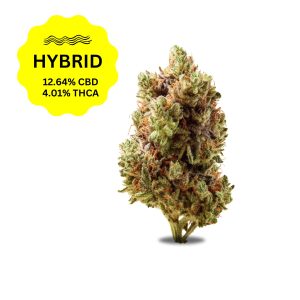
Yes, with conditions. Hemp flower, which was previously banned in Utah, became legal following the 2023 HB 227 legislation. However, smokable hemp products are tightly regulated. Products must comply with UDAF registration requirements, carry an inhalable product warning label, and meet all applicable THC limits. Note that the ban on smokable product forms in Utah’s medical cannabis program remains in place.
Yes. CBN is a naturally occurring cannabinoid that is not subject to Utah’s synthetic cannabinoid ban. CBN tinctures, capsules, and other CBN products are legal in Utah provided they comply with the state’s general hemp product requirements (UDAF registration, THC caps, etc.).
Yes. Cannabigerol (CBG) and cannabichromene (CBC) are both naturally occurring cannabinoids not covered by Utah’s synthetic cannabinoid prohibitions. Products containing these cannabinoids are legal to sell and purchase in Utah, subject to standard hemp regulations.
No. Delta-8 THC is explicitly banned in Utah under HB 227 (2023) and HB 54 (2025). Because delta-8 is produced by chemically converting CBD through a synthetic process, it falls squarely within Utah’s prohibition on converted intoxicating cannabinoids, regardless of its origin from legal hemp. The same applies to delta-10 THC, HHC, THCO, THCP, and all similar conversion-based cannabinoids.
It is one of Utah’s most distinctive CBD regulations to require hemp-derived cannabinoid products to be registered with the Utah Department of Agriculture and Food (UDAF). This requirement applies to every product sold within the state, not just products produced there.
What this means for buyers: When purchasing CBD products in-store in Utah, you should check that the product carries a UDAF registration. This registration indicates that the product has met Utah’s labeling and testing standards as submitted to the state regulator.
What this means for online buyers: Products purchased online from out-of-state retailers and shipped to Utah fall under interstate commerce protections, and you are not required to verify UDAF registration when purchasing for personal use. However, responsible retailers like ATLRx comply with federal hemp regulations and provide full third-party testing documentation, offering the same level of quality assurance.
Utah’s labeling requirements for CBD products are among the most comprehensive in the country. All regulated hemp-derived CBD products sold in the state must display:
No medical claims: CBD products sold in Utah cannot make any claims about diagnosing, treating, curing, or preventing any disease or health condition. This rule mirrors FDA guidance and is actively enforced.
Compliant, high-quality CBD products in 2026 require attention to a few key factors:
CBD is legal in Utah, but navigating the state’s regulatory framework requires knowing the details. Between HB 227’s 2023 THC caps and age restrictions, HB 54’s 2025 crackdown on synthetic cannabinoids, and the sweeping federal Section 781 changes arriving in November 2026, the rules around CBD in Utah have never been more layered.
The practical takeaway for Utah residents: prioritize online purchasing from established, compliant retailers. Physical CBD stores in Utah have been substantially reduced by the regulatory environment, and online retailers offer greater product variety, transparent third-party testing, and consistent compliance with both state and federal standards.
ATLRx offers a full range of hemp-derived CBD products, including tinctures, capsules, topicals, and more, all backed by independent Certificates of Analysis. Whether you’re a longtime CBD user or new to it, browse our product selection to find an option that’s right for you.
Yes, you may transport legal, compliant hemp-derived CBD products within Utah for personal use. However, public consumption of any CBD or cannabis product is prohibited under Utah law. If traveling across state lines, be aware that laws vary by destination state. Keep products in original packaging with a COA accessible if asked.
Yes, CBD is classified as non-intoxicating under federal and Utah law, and is not associated with the psychoactive impairment linked to THC. However, full-spectrum CBD products contain trace levels of THC, and individuals vary in how they respond to cannabinoids. Consult a healthcare professional if you have any concerns about impairment.
Yes, Broad-spectrum and isolate CBD products containing 0.0% THC are the safest choice for individuals subject to drug testing. Full-spectrum products contain trace THC (≤ 0.3%), which, with consistent use over time, can accumulate and potentially trigger a positive result on a THC drug screening. Always consult your employer’s drug testing policy before using any CBD product.
Yes, Utah has not established specific possession quantity limits for hemp-derived CBD products. However, possession must be for personal use, and products must comply with all applicable THC content rules. Quantities that suggest a sale or distribution intent may be subject to additional legal scrutiny.
Yes. Under the Commerce Clause of the U.S. Constitution, you can legally purchase hemp-derived CBD products online and have them shipped to a Utah address from out-of-state retailers. The federal legality of hemp allows interstate commerce in compliant products.
Yes, CBD’s effects vary from person to person, as do those of any supplement. Before adding CBD to your routine, consult a qualified healthcare professional, especially if you take prescription medications, since CBD may interact with certain drugs. Be sure to choose products that have been tested by a third party and are free of pesticides, heavy metals, and harmful contaminants. Statements made here have not been evaluated by the Food and Drug Administration.

March 19, 2026
March 19, 2026
March 19, 2026
$6.99
$5.99
$39.99
$39.99
$34.99
$39.99
$49.99