Is CBD Legal in North Carolina? Complete 2026 Legal Guide
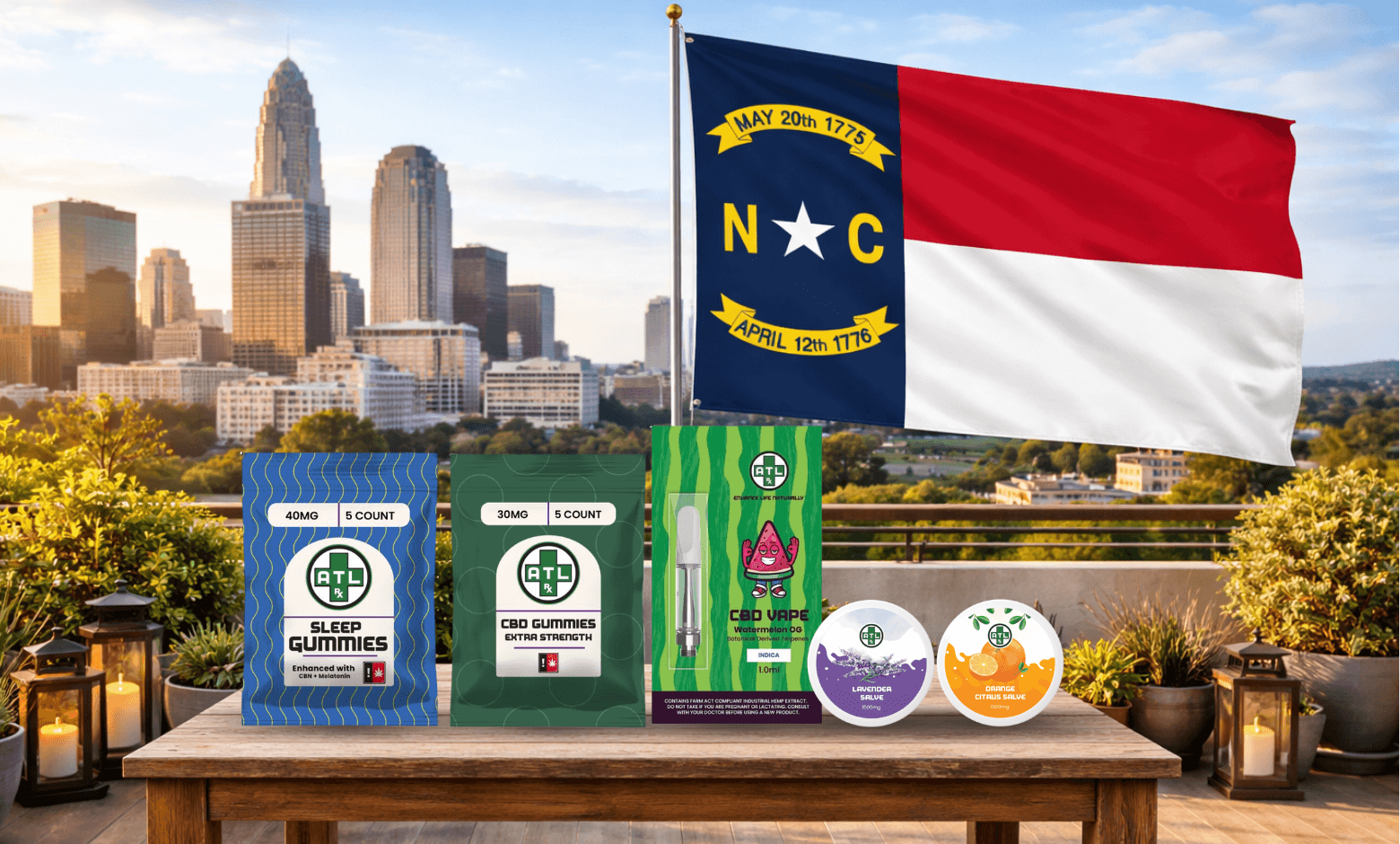
CBD Legal Status in North Carolina:
Yes. Hemp-derived CBD with ≤ 0.3% delta-9 THC is legal to buy, possess, and use in North Carolina as of 2026. However, critical federal regulatory changes are scheduled for November 2026. Read on for the full picture.
If you live in or visit North Carolina and are wondering whether you can legally purchase, possess, or use CBD products, the short answer is yes, with important conditions. In North Carolina, CBD derived from hemp is legal as long as it does not contain more than 0.3% delta-9 THC. However, 2026 brings significant new developments at both the state and federal levels that every NC resident and CBD consumer should understand before making a purchase.
This guide covers everything you need to know: current North Carolina CBD laws, the federal changes on the horizon, where to legally buy CBD, what to look for in a quality product, and answers to the most common questions about CBD legality in NC.
Keep Browsing
Explore Our CBD Categories
Shop real CBD products and collections.
Key Takeaways
- 01CBD derived from hemp is legal in North Carolina as long as it contains no more than 0.3% delta-9 THC.
- 02Marijuana-derived CBD remains illegal under state law.
- 03The 2022 NC Farm Act aligned state law with the federal 2018 Farm Bill, giving CBD a clear legal standing in North Carolina.
- 04Sellers may not make therapeutic or health claims about CBD products under FDA rules.
North Carolina CBD Laws: The Foundation
This is the federal starting point for the 2018 Farm Bill.
Under the landmark Agricultural Improvement Act of 2018 (the 2018 Farm Bill), hemp was removed from the federal Controlled Substances Act, giving it the same legal status as any other crop if it contains no more than 0.3% delta-9 THC by dry weight. This federal action opened the door for individual states to build their own hemp and CBD frameworks.
North Carolina’s Hemp Framework
North Carolina has been working with hemp since 2015. The state’s foundational legislation, Senate Bill 313 (SL 2015-299), launched the North Carolina Industrial Hemp Pilot Program, placing the NC Industrial Hemp Commission in charge of licensing and regulating hemp cultivation, processing, and distribution.
The North Carolina Farm Act of 2022 further aligned state law with the federal 2018 Farm Bill, solidifying the legal status of hemp-derived CBD products for NC residents and bringing clearer rules to an evolving marketplace.
In North Carolina, the following rules apply:
- CBD derived from hemp is legal if it contains less than 0.3% delta-9 THC.
- Marijuana-derived CBD is illegal because cannabis plants used for marijuana contain THC levels that exceed the 0.3% threshold, classifying them as a controlled substance under state law.
- CBD in foods and as a supplement: The FDA has historically classified CBD as a drug ingredient, creating a federal regulatory gray area around CBD-infused food products. Sellers are advised not to make any therapeutic or health claims about CBD products.
- Recreational marijuana remains illegal in North Carolina as of 2026, except on Eastern Band of Cherokee Indian (EBCI) tribal lands under tribal sovereignty.
2026 Update: Critical Federal Changes You Must Know
⚠️ Important 2026 Federal Development: A provision passed as part of the November 2025 federal Continuing Resolution introduced a new, stricter definition of hemp. Under this change, scheduled to take effect November 12, 2026, any product containing more than 0.4 milligrams of any type of THC per container would be classified as an illegal controlled substance under federal law. This would potentially affect a wide range of currently legal hemp products, including many CBD tinctures, oils, and full-spectrum extracts sold in North Carolina today.
This does not mean CBD is currently illegal, but the impact should not be underestimated. The 0.4mg per container threshold is extremely low — it would affect not just intoxicating products but also many non-intoxicating full-spectrum CBD oils, tinctures, and sleep aids currently sold legally in North Carolina. Some retailers estimate this threshold would remove 30% or more of their current CBD inventory from shelves.
Key points to understand:
- State law has NOT changed. Under current North Carolina state law, hemp-derived products with ≤ 0.3% delta-9 THC remain legal. State and federal law may be in conflict after November 2026.
- Industry advocacy is active. Hemp industry organizations have called on Congress to repeal or amend the provision, and at least two federal bills have been introduced to either repeal the new definition or create a proper regulatory framework for hemp-derived consumable products.
- An executive order issued in early 2026 acknowledged the issue and called for executive branch officials to work with Congress on a solution. It is possible that a resolution will be reached before the November 2026 effective date.
- North Carolina Advisory Council on Cannabis: Governor Josh Stein established this bipartisan council in June 2025 to study cannabis and hemp polic In June 2025, Governor Josh Stein established this bipartisan council to study cannabis and hemp policy. The council’s recommendations, due by the end of 2026, are expected to inform future state-level regulation.
ATLRx Recommendation: We are actively monitoring all federal and state developments. We recommend purchasing hemp-derived CBD products from compliant, third-party-tested brands and checking back here for the latest updates as the November 2026 date approaches.
A Brief History of Hemp and CBD Laws in North Carolina
Understanding how NC arrived at its current legal stance helps put today’s rules in context:
| Question | Answer |
| 1970 | The Controlled Substances Act was passed at the federal level, classifying all cannabis (including hemp) as a Schedule I controlled substance. |
| 1977 | North Carolina becomes the 11th state to decriminalize marijuana possession of small amounts (under 0.5 oz) of marijuana, reducing penalties to a maximum $200 fine. |
| 2014 Farm Bill | Federal law permits states to launch hemp pilot programs, enabling limited hemp cultivation for research purposes. |
| 2015 (SL 2015-299) | North Carolina passes Senate Bill 313, launching the NC Industrial Hemp Pilot Program and establishing the Industrial Hemp Commission. |
| 2018 Farm Bill | Hemp is removed from the federal Controlled Substances Act. Delta-9 THC concentration limit of 0.3% becomes the defining line between hemp (legal) and marijuana (illegal). |
| 2022 NC Farm Act | North Carolina formally aligns state hemp law with the 2018 federal Farm Bill, broadening legal access to CBD products statewide. |
| 2025–2026 | Governor Stein establishes the NC Advisory Council on Cannabis; new federal Continuing Resolution introduces stricter hemp THC limits effective November 2026. |
What Types of CBD Are Legal in North Carolina?
Not all CBD is the same, and legality in North Carolina depends on the source and THC content of the product.
✅ Legal: Hemp-Derived CBD (≤ 0.3% Delta-9 THC)
This is the CBD you’ll find in licensed retailers, online stores, and wellness shops across North Carolina. Hemp-derived CBD products include:
- CBD oils and tinctures
- CBD gummies and edibles
- CBD topicals: creams, balms, and roll-ons
- CBD capsules and softgels
- CBD flower (hemp flower with ≤ 0.3% delta-9 THC)
❌ Illegal: Marijuana-Derived CBD
Marijuana-derived CBD is illegal in North Carolina. Cannabis-derived CBD products typically contain THC levels far above the 0.3% limit, making them legally classified as marijuana under state law. Recreational marijuana remains illegal in the state (except on EBCI tribal lands).
⚠️ Gray Area: Delta-8 THC and Intoxicating Hemp Derivatives
As far as delta-8 THC, THCA, and other intoxicating hemp derivatives are concerned, there has been a legal gray area in North Carolina. These products are derived from hemp but can produce intoxicating effects. The NC Advisory Council on Cannabis is examining this market, and the November 2025 federal provision specifically targets many of these products. Regulatory changes in this space are likely.
Special Provision: Epilepsy Patients
Under North Carolina’s Epilepsy Alternative Treatment Act (House Bill 1220, passed in 2014), qualifying patients with intractable epilepsy may possess and use hemp extract containing less than 0.9% THC and at least 5% CBD, under medical guidance. This is the state’s only current medical cannabis provision. This legal provision is established under NC state law and is cited here for informational purposes only. ATLRx makes no claims regarding CBD’s effect on epilepsy or any other medical condition.
Where Can You Buy CBD in North Carolina?
In-Store
CBD-derived products are widely available across North Carolina in a variety of retail settings, including:
- Dedicated CBD and hemp retail shops
- Natural and organic grocery stores
- Pharmacies and drug stores
- Smoke shops and vape stores
- Select gas stations and convenience stores
Note: There are currently no state-licensed cannabis dispensaries in North Carolina for the general public, as medical and recreational marijuana dispensaries are not permitted under state law. If you encounter a store advertising “dispensary” services for standard CBD products, verify the product’s legality and lab testing.
Online
You can buy CBD Products from the most reputable brand, like ATLRx. Purchasing CBD online and having it shipped to a North Carolina address is legal, provided the product meets the ≤ 0.3% delta-9 THC requirement and the retailer is a legitimate, compliant distributor. Online shopping offers several advantages:
- Wider product selection than most local stores
- Direct access to Certificates of Analysis (COAs) and third-party lab results
- Competitive pricing and subscription options
- Convenience of home delivery
Can I Buy CBD at a Dispensary in North Carolina?
No. North Carolina does not have recreational or medical cannabis dispensaries for the general public as of 2026. The only cannabis dispensaries in the state are located on Eastern Band of Cherokee Indian tribal lands, where both medical and adult-use cannabis have been legalized under tribal sovereignty. These dispensaries are accessible to non-tribal members on tribal land, but bringing purchased cannabis products off tribal land and onto state property would violate North Carolina law.
Shop CBD
View all →
How to Choose a High-Quality, Legal CBD Product in North Carolina
Knowing what to look for when shopping for CBD products protects you both legally and as a consumer.
1. Verify Hemp Origin
Look for products made from U.S.-grown industrial hemp. Domestic hemp is grown under USDA oversight and must meet strict THC requirements from seed to sale.
2. Check Third-Party Lab Reports (COAs)
A CBD brand must provide a Certificate of Analysis (COA) from an accredited third-party laboratory. The COA should confirm:
- Delta-9 THC content at or below 0.3%
- Cannabinoid profile (CBD potency)
- Absence of pesticides, heavy metals, and residual solvents
- Microbial safety testing
3. Understand the Spectrum
CBD products come in three main formulations:
- Full-Spectrum CBD: Contains all naturally occurring cannabinoids in hemp, including trace amounts of THC (within legal limits), terpenes, and other plant compounds.
- Broad-Spectrum CBD: Like full-spectrum CBD, but without THC or reduced to undetectable levels.
- CBD Isolate: CBD is the only plant compound left after all other plant compounds have been removed. THC is not present in it.
4. Review Product Labeling
Compliant CBD products should display:
- The net weight and CBD concentration per serving
- Ingredient list and carrier oil information
- A QR code or link to the batch-specific COA
- The FDA disclaimer: “This statement has not been evaluated by the Food and Drug Administration. Please note that this product is not intended to diagnose, treat, cure, or prevent any disease.”
5. Age Requirements
You must currently be 18 years of age or older to purchase CBD products in North Carolina. Note that SB 328, which has passed both legislative chambers and is pending final concurrence, would raise this to 21. Many reputable online retailers already require age verification at checkout.
What businesses need to know about selling CBD in North Carolina
If you are a business owner looking to sell CBD products in North Carolina, here is what you currently need to know:
- No state retail license is currently required specifically for selling hemp-derived CBD products, though that may change as proposed legislation advances.
- Federal and state hemp compliance still applies: Products must meet the ≤ 0.3% delta-9 THC threshold.
- NC House Bill 328 (HB 328), currently stalled in the House Rules Committee, would require manufacturers, distributors, and retailers of hemp-derived consumable products to obtain a license from the NC Alcohol Law Enforcement (ALE) Division by July 1, 2026. Importantly, as amended by the Senate, HB 328 also goes beyond licensing — it would broadly restrict or ban many hemp-derived products, including Delta-8, THCa, HHC, CBN, and CBG. This bill has not yet become law and should be closely monitored by retailers throughout the legislative process.
- Age restrictions: Proposed regulations would require sales only to adults aged 21 and older for certain hemp-derived consumable products.
Will North Carolina Legalize Recreational or Medical Marijuana?
This is one of the most searched cannabis questions in North Carolina, and the answer in 2026 remains: not yet, but the policy landscape is evolving.
- No recreational marijuana: North Carolina remains one of approximately 26 states that have not legalized adult-use cannabis. Possession, sale, and cultivation of marijuana for recreational purposes remain criminal offenses.
- No medical marijuana for the general public: North Carolina is among a small number of states that have not established a comprehensive medical marijuana program. Although the NC Compassionate Care Act has been introduced, it has not yet become law.
- Active legislative proposals: The Marijuana Justice and Reinvestment Act (Senate) and the Marijuana Legalization and Reinvestment Act (House) have been filed in the 2025–2026 legislative session. However, the Republican-majority legislature has not advanced these measures.
- NC Advisory Council on Cannabis: Governor Josh Stein’s bipartisan council was tasked with delivering policy recommendations by March 2026. These recommendations could shape future legislation, though any law changes would take additional time to pass.
Polling consistently shows strong public support for cannabis reform in North Carolina. In recent surveys, approximately 78% of residents support medical marijuana legalization, and approximately 63% support adult recreational use. The political path to legalization, however, remains uncertain.
The Bottom Line: CBD and North Carolina Law in 2026
CBD derived from hemp with less than 0.3% delta-9 THC is legal in North Carolina. The state has a well-established hemp framework, and residents can purchase a wide range of CBD products from licensed retailers and reputable online brands.
What makes 2026 different from previous years is the level of regulatory activity, both at the state level with the NC Advisory Council on Cannabis and at the federal level with the November 2026 hemp definition changes. Staying informed is more important than ever.
At ATLRx, we believe in transparent, compliant CBD products backed by third-party lab testing. All of our hemp-derived CBD products are formulated to meet current federal and North Carolina state requirements.
Frequently Asked Questions
Is CBD Legal in North Carolina in 2026?
+
Yes. Hemp-derived CBD products containing less than 0.3% delta-9 THC are legal in North Carolina. Federal regulatory changes are scheduled for November 2026 that could affect the industry, but as of today, current laws remain in effect.
How Old Do You Have to Be to Buy CBD in North Carolina?
+
Currently 18 years old. However, SB 328, which passed the Senate 42–0 and the House 106–1 and is currently awaiting final concurrence, would raise the purchase age to 21. Retailers should prepare for this change as it is close to becoming law.
Can I Order CBD Online and Have It Shipped to North Carolina?
+
Yes. Legal hemp-derived CBD products can be purchased online and shipped to any North Carolina address, provided the products comply with federal and state THC limits and the retailer is a legitimate, compliant seller.
Is There a CBD Dispensary in North Carolina?
+
No. There are no public cannabis dispensaries in North Carolina under state law. CBD products are sold through retail stores, hemp retail shops, and online retailers. The only cannabis dispensaries within North Carolina’s borders are on Eastern Band of Cherokee Indian tribal lands.
Can I Fail a Drug Test From Using Legal CBD in North Carolina?
+
Yes, it is possible. With regular use, full-spectrum CBD products may accumulate trace amounts of THC (within legal limits) that trigger a positive result on a standard workplace drug screening. If drug testing is an issue, consider a broad-spectrum or isolate-based CBD product and consult your employer.
Is CBD Legal in North Carolina Without a Prescription?
+
Yes. No prescription is required to purchase hemp-derived CBD products in North Carolina. The only exception is the limited medical provision for intractable epilepsy patients.
Is Delta-8 THC Legal in North Carolina?
+
Yes, North Carolina’s legal status for delta-8 THC is gray. Despite being derived from hemp, it produces intoxicating effects. The NC Advisory Council on Cannabis is studying the regulation of these products, and the upcoming federal regulatory changes could significantly impact delta-8’s legal status. We recommend exercising caution.
Legal Disclaimer: This article is provided for educational and informational purposes only and does not constitute legal advice. CBD and hemp laws are constantly changing at the state and federal levels. Always verify current regulations before purchasing or selling hemp-derived CBD products. For legal guidance, consult a licensed attorney.
Why Trust This Guide
- ATLRx has sold third-party lab-tested hemp products out of Georgia since 2019.
- Every real batch we sell is tested by an accredited outside lab, with the Certificate of Analysis published before you buy.
- We operate 3 real physical stores in Georgia — this isn't a drop-shipped storefront.
- Legal information is rechecked and updated as rules change, not published once and forgotten.
This guide is for general information only and is not legal advice. While we update it as rules change, state laws can shift quickly. Please confirm current laws with your state’s official sources.
Don't Trust the Label. Check the Lab.
ATLRx publishes third-party Certificates of Analysis for real batches so you can verify cannabinoid content before you buy — not just take the package's word for it.
View Lab Results →Have Questions?
Visit an ATLRx store in Georgia and talk to our team.
Real Customers, Real Reviews
What Customers Are Saying
“really fire”
“Buy all you can!! News laws take effect Dec. 11”
“After long day, or night, this helps to relax and relieve!”

Jen Hight
Cannabis Industry Expert & Compliance Specialist Jen Hight is a cannabis industry professional with extensive experience in hemp compliance, product development, and consumer education. With a background in regulatory affairs and a passion for helping consumers navigate the complex world of cannabinoids, Jen provides accurate, up-to-date information on hemp legality and best practices. Her work focuses on making cannabis knowledge accessible while ensuring readers understand both the opportunities and responsibilities that come with legal hemp products.
View all articles →Keep Learning
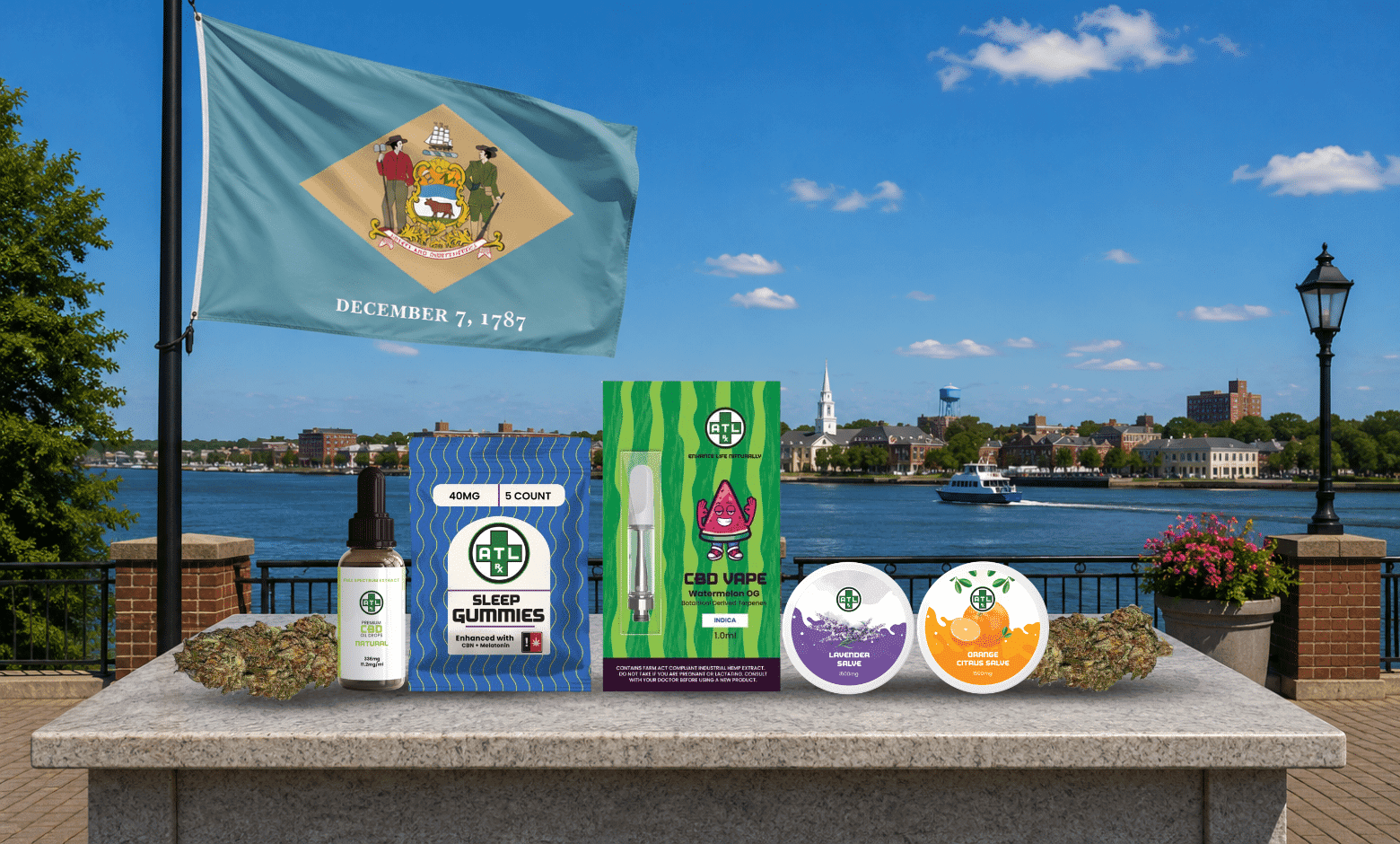
Is CBD Legal in Delaware? 2026 Law Updates & Guide
CBD Legal Status in Delaware: Yes, CBD is legal in Delaware. Under the federal 2018 Farm Bill and Delaware’s hemp program, hemp-derived CBD containing less than 0.3% delta-9 THC is legal to buy, possess, and use. Marijuana-derived (higher-THC) products are legal only through Delaware’s state-licensed dispensaries. ATLRx ships only hemp-derived Delta-9 (≤0.3% THC) and THCV […]
Jul 7, 2026 · 12 min read
Is CBD Legal in New Mexico? 2026 Legal Guide
CBD Legal Status in New Mexico: Yes. Hemp-derived CBD containing no more than 0.3% delta-9 THC on a dry-weight basis is legal in New Mexico for adults. Cannabis-derived CBD is also legal, but it can only be purchased from licensed dispensaries. New Mexico finalized a permanent hemp rule in January 2026, and a federal ban […]
Jul 3, 2026 · 14 min read
Is CBD Legal in New Jersey? The Complete 2026 Guide
CBD Legal Status in New Jersey: Yes. CBD derived from hemp that contains no more than 0.3% total THC is legal in New Jersey. The controlling development in 2026 is S4509 (P.L.2025, c.215), signed January 12, 2026. Key changes effective January 13, 2026, include a ban on online sales of any hemp-derived product and a […]
Jul 1, 2026 · 12 min read
Is CBD Legal in Montana? Complete 2026 Legal Guide
CBD Legal Status in Montana: Yes. CBD derived from hemp is legal in Montana. It is legal to purchase and possess hemp-derived CBD products in Montana, and they are sold widely across the state, provided they comply with both federal law and Montana’s hemp rules. Under Senate Bill 375 (effective May 2025), however, any consumable […]
Jun 30, 2026 · 16 min read
Stay Informed
New product releases, hemp law updates, and useful cannabinoid guides.