



$34.99

ARE YOU 21 YEARS OF AGE OR OLDER?
REMEMBER ME
Seriously, by using this site you are confirming that you are of legal age (21+) to view and purchase these products. If you are you are not over 21. you are not authorized by us to use or view any of the pages of this site. Please review our terms and conditions at checkout for further stipulations.
 >
Blogs
>
Delta 9 >
Is Delta 9 Legal in Ohio? The Complete 2026 Guide
>
Blogs
>
Delta 9 >
Is Delta 9 Legal in Ohio? The Complete 2026 Guide
THE STATEMENTS ON THIS BLOG ARE NOT INTENDED TO DIAGNOSE, TREAT, CURE, OR PREVENT ANY DISEASE. THE FOOD AND DRUG ADMINISTRATION HAS NOT EVALUATED ANY STATEMENTS CONTAINED WITHIN THE BLOG. ATLRX DOES NOT IN ANY WAY GUARANTEE OR WARRANT THE ACCURACY, COMPLETENESS, OR USEFULNESS OF ANY MESSAGE. THE INFORMATION CONTAINED WITHIN THIS BLOG IS FOR GENERAL INFORMATIONAL PURPOSES ONLY.

Delta 9 Legal Status in Ohio:
Yes. Hemp-derived Delta 9 THC products are legal in Ohio when they comply with both the 0.3% dry weight standard and the new 0.4 mg total THC per container threshold defined under Ohio Senate Bill 56. However, as of March 20, 2026, SB 56 prohibits the sale of intoxicating hemp Delta 9 products outside of Ohio licensed dispensaries. By November 12, 2026, Federal Public Law 119-37 will further tighten the definition of hemp by replacing the Delta-9-only standard with a total THC standard.
Marijuana-derived Delta 9 is legal for adults 21 and older through Ohio’s licensed adult-use cannabis dispensaries under Issue 2, and for qualified patients through the Ohio Medical Marijuana Control Program.
If you are asking “Is Delta 9 legal in Ohio?” in 2026, the short answer is: it depends on the source, the cannabinoid content per container, and the retail channel. The following guide will provide you with all the information you need to know about Delta 9 THC before you buy, possess, or sell it in the Buckeye State.
Table of contents:
THC, or delta-9 tetrahydrocannabinol, is a cannabinoid found in the cannabis sativa plant. It is the compound that Ohio law and federal law both reference by name when defining the “total THC” standard used to classify hemp and marijuana.
Delta 9 can be derived from two different sources under United States law:
Because these two sources carry different legal treatments, Ohio residents need to know which source a specific Delta 9 product came from before making a purchase.
Hemp and hemp-derived products were removed from the Controlled Substances Act as a result of the Agriculture Improvement Act of 2018. This law defined hemp as cannabis sativa L. containing 0.3% or less Delta-9 THC by dry weight.
This framework allowed hemp-derived Delta 9 products, such as gummies, tinctures, beverages, and edibles, to enter the mainstream retail market nationwide. Because a larger edible could contain a measurable amount of Delta 9 by weight while still staying under the 0.3% dry weight figure, hemp-derived Delta 9 grew into a substantial industry across states, including Ohio.
That framework has now changed.
On November 12, 2025, President Trump signed Public Law 119-37 — the Continuing Appropriations, Agriculture, Legislative Branch, Military Construction and Veterans Affairs, and Extensions Act, 2026 — whose Section 781 rewrites the federal definition of hemp. As a result of the statute, the federal definition of hemp has changed in three important ways:
The new federal definition will go into effect on November 12, 2026. Until that date, the 2018 Farm Bill definition still controls federally, but states, including Ohio, have already moved to tighten their own rules.
Yes, Delta 9 THC is legal in Ohio in 2026, but the legal category depends on the source of the Delta 9 and how much total THC a container holds. Ohio now operates on three distinct tracks:
Track 1: Delta-9 hemp-derived products containing less than 0.3% Delta-9 THC by dry weight and 0.4 milligrams or less of total THC per container are generally legal under Ohio law. CBD products and topicals are mostly low-dose items.
Track 2: Hemp-Derived Delta 9 (Intoxicating) Products that exceed the 0.4 mg total THC per container threshold (such as most Delta 9 gummies, beverages, taffy, and syrups on the general retail market) are now reclassified as marijuana under Ohio SB 56. They can only be lawfully sold through Ohio-licensed cannabis dispensaries.
Track 3: Marijuana-Derived Delta 9 Adults 21 and older can purchase marijuana products at Ohio’s licensed adult-use cannabis dispensaries under Issue 2. Patients who qualify can continue to purchase marijuana through the Ohio Medical Marijuana Control Program.
The path you use to buy Delta 9 in Ohio is now what determines legality as much as the Delta 9 itself.
Ohio Senate Bill 56 is the single most important piece of state legislation for Delta 9 in 2026. The bill was sponsored by Senator Steve Huffman, signed by Governor Mike DeWine on December 19, 2025, and went into effect on March 20, 2026.
Governor DeWine issued line-item vetoes on two provisions of SB 56. DeWine’s line-item veto struck a carve-out that would have allowed hemp-derived THC beverages containing up to 5 mg of THC per container to continue to be manufactured, distributed, and sold in Ohio until December 31, 2026. The result: THC-infused drinks, previously sold at bars, grocery stores, and beverage retailers, can only be sold through licensed dispensaries as of March 20, 2026.
A repeal measure was proposed by Ohioans for Cannabis Choice for the November 2026 ballot. The campaign needed to collect at least 248,092 valid signatures statewide — including signatures from at least 44 of Ohio’s 88 counties, equal to 3% of each county’s gubernatorial turnout — by the March 19, 2026, deadline. On March 18, 2026, the campaign confirmed it had fallen short. On March 20, 2026, the Ohio Supreme Court rejected a separate lawsuit filed by four Ohio breweries challenging DeWine’s line-item veto. A last-minute Franklin County Court of Common Pleas challenge also failed. There is no active legal or ballot challenge to SB 56 pending.
Ohio has two regulated cannabis channels that legally sell marijuana-derived Delta 9 products.
Issue 2, approved by Ohio voters in November 2023, legalized recreational cannabis for adults 21 and older. Licensed dispensary sales to adult-use customers began in August 2024. Under the current regulated market:
Ohio’s medical marijuana program was established by House Bill 523, signed by Governor Kasich in 2016. Under the program, qualified patients with a physician’s recommendation can purchase a variety of Delta 9 products, including edibles, tinctures, vapes, and flower. Medical patients continue to have access to products through licensed medical dispensaries under the Ohio Division of Cannabis Control.
| Date | Event | What It Means for Delta 9 in Ohio |
| December 20, 2018 | The 2018 Farm Bill was signed | Federally legalizes hemp-derived Delta 9 at 0.3% or less by dry weight |
| July 30, 2019 | Ohio SB 57 signed | Ohio adopts federal hemp framework, permits hemp-derived Delta 9 retail sales |
| June 2016 | Ohio HB 523 | Medical marijuana program established |
| November 7, 2023 | Ohio Issue 2 passed | Recreational cannabis approved for adults 21+ |
| August 2024 | Adult-use sales begin | Licensed Ohio dispensaries open to adult-use customers |
| November 12, 2025 | Federal P.L. 119-37 signed | New hemp definition: total THC standard + 0.4 mg per container cap |
| December 19, 2025 | Ohio SB 56 signed | Intoxicating hemp products restricted to licensed dispensaries |
| March 20, 2026 | SB 56 effective date | Smoke shops, gas stations, and unlicensed retailers stop selling intoxicating hemp Delta 9 |
| November 12, 2026 | Federal hemp redefinition effective | New 0.4 mg per container and total THC rules apply nationwide |
Under both Ohio SB 56 and the federal P.L. 119-37 framework, total THC is no longer just a measurement of Delta-9 THC at harvest. Regulators now apply the decarboxylation formula from 7 CFR § 990.1:
Total THC = Delta-9 THC + (THCA x 0.877)
Heat (decarboxylation) converts THCA into Delta-9 THC, which results in weight loss. This formula is applied to both plant material (at the 0.3% dry weight level) and to finished consumer products (at the 0.4 mg per container level).
Why this matters for Delta 9 in Ohio: a hemp gummy that lists 10 mg of Delta-9 THC on the label now far exceeds the 0.4 mg total THC per container threshold. Once SB 56 is in force, and federal rules follow in November 2026, that gummy moves from the “hemp” category into the “marijuana” category and can only be sold through a licensed dispensary.
| Product / Scenario | Legal Status in Ohio (2026) |
| Hemp-derived product with 0.4 mg or less total THC per container | Generally compliant as hemp |
| Hemp-derived Delta 9 gummy with 5-10 mg Delta 9 per gummy, sold at a smoke shop | Not permitted under SB 56 (effective March 20, 2026) |
| Hemp-derived Delta 9 beverage sold at a grocery store or bar | Not permitted under SB 56 |
| Marijuana-derived Delta 9 sold at an Ohio licensed dispensary (adult-use) | Legal for adults 21+ |
| Marijuana-derived Delta 9 is sold at an Ohio medical dispensary | Legal for qualified patients |
| Ordering hemp Delta 9 online and shipping to Ohio | Increasingly restricted; federal rules tighten further on Nov 12, 2026 |
| Bringing legally purchased marijuana from Michigan into Ohio | Criminal offense under SB 56 |
| CBD products with total THC at or below 0.4 mg per container | Generally permissible if compliant |
| Home-grown cannabis (adult 21+) | Legal, up to 6 plants per adult, 12 per household, no sharing |
| Public consumption of cannabis | Prohibited under SB 56 |
Before SB 56 took effect, Ohio residents could order hemp-derived Delta 9 gummies, tinctures, and beverages online and have them shipped to the state, provided the products tested below 0.3% Delta-9 THC by dry weight. That landscape has changed.
With SB 56 in full force and the federal P.L. 119-37 rules taking effect on November 12, 2026, the following points now apply to online Delta 9 orders:
If you are considering an online order, review the current guidance published at cannabis.ohio.gov and verify that any Delta 9 product you plan to purchase comes with a current, publicly accessible Certificate of Analysis that confirms compliance with both the 0.3% dry weight standard and the 0.4 mg per container threshold.
COAs are third-party lab reports that document a hemp product’s complete cannabinoid profile. Under the new Ohio and federal framework, the COA is the primary document used to verify whether a Delta 9 product qualifies as hemp.
The COA for a hemp-derived Delta 9 product in 2026 should show:
At ATLRx, all lab results are publicly accessible, batch-matched, and updated to reflect current testing standards. If you cannot locate a COA for a product you are considering, that is a compliance red flag under the 2026 framework.
Given how quickly Ohio’s cannabis and hemp rules have changed, here are practical steps for Ohio residents in 2026:
ATLRx has been committed to lab-tested, compliance-first hemp products since day one. A third-party Certificate of Analysis is included for every product on our site, and our team actively tracks state and federal regulatory developments so our catalog reflects what is actually permitted.
As laws change, we update our educational content and product offerings to match. We believe informed consumers make the best purchasing decisions, and we invest in detailed guides like this one so our customers always have the full picture before they buy.
If you have questions about products we carry or Ohio regulations, our team is happy to help. We do not provide legal advice, but we can point you to credible, primary-source resources and help you understand our COA documentation.
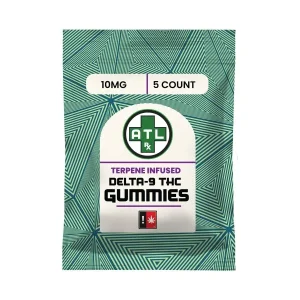
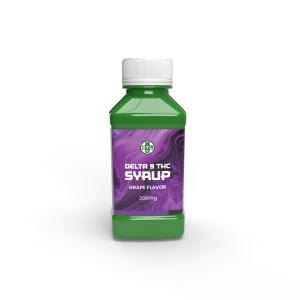
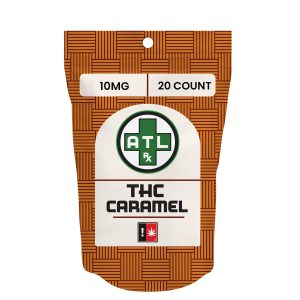
So, is Delta 9 legal in Ohio in 2026? The nuanced answer is yes, when the Delta 9 product is lawfully sourced and sold through the correct channel. Hemp-derived Delta 9 within the 0.4 mg total THC per container threshold remains generally permitted. Products above that threshold are now treated as marijuana under Ohio law and can only be sold through licensed dispensaries. Adults 21 and older can purchase marijuana-derived Delta 9 through the state’s regulated adult-use market, and qualified medical patients continue to have access through the Ohio Medical Marijuana Control Program.
SB 56 is fully in effect, the failed referendum is no longer a factor, and federal changes on November 12, 2026, will bring Ohio’s framework into alignment with the rest of the country. In order to stay on the right side of the law, Ohioans should consume hemp-derived products from licensed dispensaries and make sure their COAs are current and compliant before purchasing.
Yes. Delta 9 products derived from hemp that contain 0.4 milligrams or less of total THC remain generally legal under Ohio law. Marijuana-derived Delta 9 is legal for adults 21 and older through Ohio licensed dispensaries under Issue 2, and for qualified medical patients through the Ohio Medical Marijuana Control Program. Intoxicating hemp Delta 9 products that exceed the per-container limit can no longer be sold in smoke shops, gas stations, or unlicensed CBD retailers as of March 20, 2026.
Ohio Senate Bill 56, signed on December 19, 2025, and effective March 20, 2026, defined hemp under Ohio law to exclude intoxicating cannabinoids. The sale of hemp products containing more than 0.4 milligrams of THC per container is now restricted to licensed cannabis dispensaries in Ohio. As well as banning synthetic cannabinoids like isomerized Delta-8, the law also caps THC concentration in regulated-market extracts and vapes at 70%.
Not from smoke shops, gas stations, or unlicensed CBD retailers. SB 56 now regulates marijuana-containing gummies that contain more than 0.4 milligrams of total THC per container in Ohio. These products can only be purchased through state-licensed adult-use or medical cannabis dispensaries. Low-dose hemp Delta 9 items that stay within the per-container threshold may remain available, but always verify the COA.
Yes. Adults 21 and older can legally purchase marijuana-derived Delta 9 products from Ohio licensed adult-use cannabis dispensaries under Issue 2 (passed November 2023, sales launched August 2024). Medical marijuana can be purchased by patients with a physician’s recommendation through the Ohio Medical Marijuana Control Program.
The formula for calculating total THC is Delta-9 THC plus converted THCA: Total THC = Delta-9 THC + (THCA x 0.877). This formula accounts for the weight change that happens when THCA converts to Delta-9 THC through heating. Both Ohio SB 56 and the federal Public Law 119-37 (effective November 12, 2026) use total THC as the controlling measurement, replacing the Delta-9-only test.
Both Ohio SB 56 and federal P.L. 119-37 have capped hemp-derived cannabinoid products at 0.4 milligrams of total THC per container. The “container” refers to the immediate packaging presented to the consumer, such as a bottle, jar, can, or blister pack. Any hemp product exceeding this threshold is reclassified as marijuana.
In recent years, this has become increasingly restricted. Hemp Delta 9 products that exceed the 0.4 mg per container threshold can no longer be legally sold through general online retail to Ohio addresses. As of November 12, 2026, interstate shipment of hemp products containing THC will be further restricted. Before placing any online order, review the guidance at cannabis.ohio.gov and verify the product’s Certificate of Analysis.
Both are now treated as intoxicating cannabinoids under Ohio SB 56 when they exceed the 0.4 mg per container threshold. The chemistry is different: Delta-9 THC occurs naturally in cannabis plants in large quantities, while Delta-8 is typically produced through chemical isomerization of CBD. SB 56 specifically excludes synthesized cannabinoids, which target Delta-8 directly, but both fall under the same retail ban outside of licensed dispensaries.
Selling intoxicating hemp Delta 9 products from an unlicensed retail location after March 20, 2026, is a violation of Ohio Senate Bill 56. Other state agencies coordinate enforcement with the Ohio Division of Cannabis Control. Retailers who continue to sell these products may face fines, product seizure, and other legal consequences. Business owners should consult a cannabis-focused Ohio attorney before making any further decisions about Delta 9 inventory.
No. On March 18, 2026, Ohioans for Cannabis Choice announced that it had not collected the 248,092 valid signatures needed to place a repeal measure on the November 2026 ballot. On March 20, 2026, the Ohio Supreme Court rejected a separate lawsuit filed by four Ohio hemp-beverage industry plaintiffs — two Cincinnati-area breweries, a hemp-derived THC manufacturer, and a craft beer distributor — challenging DeWine’s line-item veto.
Certificates of Analysis (COAs) document a hemp product’s cannabinoid profile, including Delta-9 THC percentage, THCA percentage, and total THC per container. Under the 2026 framework, the COA is the primary document used to verify whether a hemp Delta 9 product is compliant. Always check that the COA shows compliance with both the 0.3% dry weight standard and the 0.4 mg total THC per container threshold.
For hemp-derived products that stay within Ohio’s total THC thresholds, ATLRx offers lab-tested, COA-verified options. Marijuana-derived Delta 9 can be purchased by Ohio residents 21 and older at state-licensed adult-use cannabis dispensaries regulated by the Ohio Division of Cannabis Control. Qualified medical patients can purchase through licensed medical dispensaries. ATLRx’s team is available to help you understand which of our products are appropriate for Ohio delivery under the current framework.
In their raw forms, Delta-9 THC and THCA differ chemically. Delta-9 THC is formed when THCA is heated. Under Ohio SB 56 and the federal P.L. 119-37 framework, both are measured together as part of total THC. This means high-THCA products are now regulated the same way as high-THC products. For a deeper breakdown, see our related guide: Is THCA Legal in Ohio?
Related Articles:


July 30, 2026


July 27, 2026

$39.99
$49.99
$49.99
$49.99
$39.99