

$39.99

ARE YOU 21 YEARS OF AGE OR OLDER?
REMEMBER ME
Seriously, by using this site you are confirming that you are of legal age (21+) to view and purchase these products. If you are you are not over 21. you are not authorized by us to use or view any of the pages of this site. Please review our terms and conditions at checkout for further stipulations.
 >
Blogs
>
Delta 8 >
Is Delta 8 Legal in Tennessee? Expert Guide 2026
>
Blogs
>
Delta 8 >
Is Delta 8 Legal in Tennessee? Expert Guide 2026
THE STATEMENTS ON THIS BLOG ARE NOT INTENDED TO DIAGNOSE, TREAT, CURE, OR PREVENT ANY DISEASE. THE FOOD AND DRUG ADMINISTRATION HAS NOT EVALUATED ANY STATEMENTS CONTAINED WITHIN THE BLOG. ATLRX DOES NOT IN ANY WAY GUARANTEE OR WARRANT THE ACCURACY, COMPLETENESS, OR USEFULNESS OF ANY MESSAGE. THE INFORMATION CONTAINED WITHIN THIS BLOG IS FOR GENERAL INFORMATIONAL PURPOSES ONLY.
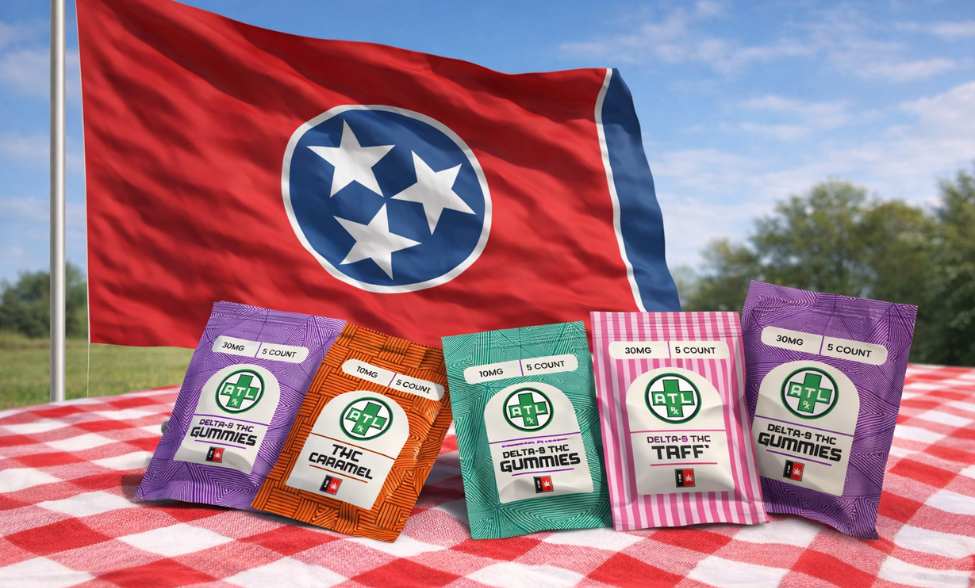
Delta 8 Legal Status in Tennessee
Tennessee’s legal landscape for hemp-derived cannabinoids changed significantly in 2025. House Bill 1376 (HB 1376), signed into law by Governor Bill Lee on May 21, 2025, and effective January 1, 2026, introduced sweeping changes that directly affect Delta 8 THC. Under HB 1376, Delta 8 THC is classified as a synthetic cannabinoid and is therefore prohibited from retail sale in Tennessee.
Online sales of hemp-derived cannabinoid products to Tennessee addresses are also banned. The Tennessee Department of Agriculture (TDA) has transferred regulatory authority to the Tennessee Alcoholic Beverage Commission (TABC). This guide reflects these critical legal updates. The original framing of Delta 8 as “fully legal” is no longer accurate.
Table of contents:
Delta 8 THC’s legal status in Tennessee is no longer straightforward. While Delta 8 was previously sold legally under the framework established by Senate Bill 357 (2019), House Bill 1376 — signed into law in May 2025 and effective January 1, 2026 — explicitly classifies Delta 8 as a synthetic cannabinoid and restricts its retail sale in the state.
There is a transition period in effect: businesses that held valid Tennessee Department of Agriculture hemp licenses on or before December 31, 2025 (“Legacy Licensees”) are permitted to continue operating under the prior 2023 regulatory framework until their existing licenses expire, which is expected to be no later than June 30, 2026. After that date, the full HB 1376 framework applies to all sellers.
Consumers should verify the current licensing status of any retailer before purchasing Delta 8 products in Tennessee. Laws are actively evolving and are expected to change again before mid-2026. You should consult a Tennessee attorney for guidance specific to your situation.
A cannabinoid called Delta-8 tetrahydrocannabinol (Delta 8 THC) can be found in trace amounts in the hemp plant. While chemically related to Delta-9 THC, the primary intoxicating compound in marijuana, it is structurally distinct. Delta 8 has a double bond on the 8th carbon chain, whereas Delta 9 has a double bond on the 9th.
Delta 8 is most commonly produced by converting hemp-derived CBD into Delta 8 by means of a chemical process called isomerization. Because this involves chemical synthesis, it has become a point of legal contention. The DEA’s position is that synthetically derived tetrahydrocannabinols — including Delta 8 produced through isomerization — are Schedule I controlled substances, regardless of the source plant. Tennessee’s HB 1376 reflects this approach by classifying Delta 8 as a synthetic cannabinoid.
Delta 8 products have historically been available in formats including gummies, flower, vape cartridges, tinctures, pre-rolls, concentrates, and capsules. However, the availability of these products in Tennessee is now significantly restricted.
The statements have not been evaluated by the Food and Drug Administration. The products offered by Delta 8 are not intended to diagnose, treat, cure, or prevent any disease or health condition. Individual experiences may vary.
Agricultural Improvement Act of 2018, commonly called the 2018 Farm Bill, provides the legal foundation for hemp-derived cannabinoids. Hemp, and its derivatives, extracts, and cannabinoids, are no longer considered marijuana under the Controlled Substances Act if they contain less than 0.3% Delta-9 THC by dry weight.
The 2018 Farm Bill defines hemp as:
“The plant Cannabis sativa L. and any part of that plant, including the seeds thereof and all derivatives, extracts, cannabinoids, isomers, acids, salts, and salts of isomers, whether growing or not, with a delta-9 tetrahydrocannabinol (THC) concentration of not more than three-tenths of one percent (0.3%) on a dry weight basis.”
While this language has been interpreted broadly by some in the hemp industry to include Delta 8 and other cannabinoids produced through chemical conversion, federal regulators — including the DEA — have maintained that synthetically derived THC isomers, including chemically converted Delta 8, remain Schedule I controlled substances regardless of their source plant. There have been conflicting rulings from federal courts on this question.
The 2018 Farm Bill also authorized states to regulate hemp within their own borders, which is precisely what Tennessee did with its subsequent hemp legislation. Tennessee has now enacted laws that are more restrictive than the federal standard, which is within its authority as a state.
Note: The 2018 Farm Bill has been extended several times without full reauthorization. Congressional changes to the Farm Bill could further affect Delta 8’s federal legal status.
To understand where things stand in 2026, it helps to understand how Tennessee’s hemp laws evolved.
In 2019, Tennessee passed Senate Bill 357, aligning state law with the federal Farm Bill. Cannabis containing no more than 0.3% Delta-9 THC by dry weight was defined as hemp, and it was excluded from the state’s definition of marijuana and controlled substances. Under this framework, hemp-derived cannabinoids, including Delta 8, operated in a largely permissive legal environment, with minimal state oversight.
In 2023, Tennessee passed SB 378, introducing the first substantive regulations for hemp-derived cannabinoid products. This law placed the Tennessee Department of Agriculture (TDA) in charge of licensing and inspections, required third-party lab testing and child-resistant packaging; prohibited sales within 1,000 feet of a K–12 school; added a 6% sales tax on hemp-derived cannabinoid products; and prohibited sales to persons under 21 years of age. At this stage, Delta 8 remained a legal, regulated product under state law.
House Bill 1376 (HB 1376) — also known as SB 1413 on the Senate side — was signed into law by Governor Bill Lee on May 21, 2025, and took effect January 1, 2026. It represents the most significant restriction on hemp-derived cannabinoids in Tennessee’s history.
Key changes under HB 1376:
It is important to note that there are differing legal interpretations of exactly which cannabinoids HB 1376 bans. Some legal analysts and sources read the bill’s amendments as limiting the synthetic cannabinoid ban to specific compounds. If you have questions about whether a specific product is lawful, consult a licensed Tennessee attorney and check the latest guidance from the TABC at tn.gov/abc.
To avoid abrupt disruption for businesses that had invested in compliance under the prior framework, HB 1376 includes a transition provision for “Legacy Licensees.”
Businesses that held a valid Tennessee Department of Agriculture hemp license on or before December 31, 2025, are permitted to continue operating under the 2023 regulatory framework (SB 378 rules) while the TABC transition is completed. This transition period is expected to last until existing TDA licenses expire — currently anticipated to be no later than June 30, 2026.
After June 30, 2026, all sellers must operate under the full HB 1376 framework, meaning products that do not comply with the new definitions — including Delta 8 — cannot be lawfully sold in Tennessee.
As a consumer, this means: during the transition period (through approximately June 30, 2026), some licensed retailers may still be selling Delta 8 products under their legacy TDA license. After the transition period ends, Delta 8 retail sales will not be permitted under HB 1376.
Legal Disclaimer: The above information is for general information only and does not constitute legal advice. The transition period framework is subject to ongoing regulatory and legal developments. A qualified Tennessee attorney can provide guidance specific to your circumstances.
Under HB 1376, a lawful hemp-derived cannabinoid product (HDCP) in Tennessee must meet all of the following criteria:
Any product that does not meet these criteria is considered a controlled substance under Tennessee law.
The minimum age to purchase any hemp-derived cannabinoid product in Tennessee is 21 years old. This requirement applies statewide and is enforced at all licensed retail locations. A government-issued photo ID is required by retailers, such as a driver’s license, state ID, or passport.
Because online sales of hemp-derived cannabinoid products are now banned in Tennessee under HB 1376, age verification at physical retail locations is the only lawful point of sale.
No. There is no medical marijuana program in Tennessee. Hemp-derived cannabinoid products do not require a prescription or medical card in Tennessee. Lawful hemp-derived products that meet HB 1376’s requirements are accessible to adults 21 and older at licensed retailers without any medical documentation.
However, it is important to note that neither the Tennessee state government nor the FDA recognizes hemp-derived cannabinoid products as medical treatments. The products are not intended for diagnosing, treating, curing, or preventing any disease or health condition. Always consult a healthcare provider before using any cannabinoid product, particularly if you have an existing medical condition or take prescription medications.
One of the most common questions is why the legal treatment of Delta 8 and Delta 9 THC differs. The key lies in how each state and the federal government classify these compounds.
| Factor | Delta 8 THC | Delta 9 THC (Hemp-Derived) |
| Chemical origin | Produced via isomerization of CBD (synthetic process) | Naturally occurring in hemp |
| Federal classification | DEA considers synthetically derived Delta 8 a Schedule I substance; federal courts are split | Legal in hemp up to 0.3% by dry weight under the 2018 Farm Bill |
| Tennessee status (2026) | Classified as a synthetic cannabinoid under HB 1376; retail sale is banned outside the legacy license period | Legal up to 0.3% in compliant hemp products |
| Retail availability in TN | Prohibited under HB 1376 (with legacy license transition through ~June 30, 2026) | Available at TABC-licensed retailers in compliant products |
| Online sales to TN | Banned under HB 1376 | Banned under HB 1376 |
| Medical card required? | No (but products are not medical treatments) | No (for compliant hemp products) |
The legal distinction comes down to how each cannabinoid is produced. Delta 9 THC occurs naturally in hemp and is measured directly. Delta 8 is typically produced through a chemical conversion process, which Tennessee (and the DEA) classify as synthetic, placing it outside the legal hemp umbrella under current Tennessee law.
If you purchased hemp-derived products legally from a licensed retailer during the transition period, transporting them within Tennessee for personal use in their original, sealed packaging with a receipt is generally permissible. However, given the evolving legal landscape, it is strongly advisable to carry your COA and purchase receipt. Law enforcement may not be familiar with the specific details of the transition period.
When crossing from Tennessee into another state, that state’s laws govern what you may legally possess. Hemp-derived cannabinoid products such as Delta 8 are not legal in every U.S. state. Before crossing any state line with these products, verify the current law in every state you will pass through or enter.
⚠ IMPORTANT TRAVEL WARNING: The list of states that restrict or prohibit Delta 8 and other hemp-derived cannabinoids changes frequently. Some sources list states such as Alaska, Colorado, Delaware, Idaho, Iowa, Montana, Nevada, North Dakota, Oregon, Rhode Island, South Carolina, Utah, and Vermont as having restrictions. Still, this list is not comprehensive and may be outdated. Many other states have enacted their own hemp laws. DO NOT rely on any list in this guide to determine what you can legally carry across a state line. Always independently verify the current law in your destination state and every state you will travel through before departing. Laws can change without notice.
Air travel with any hemp-derived cannabinoid product involves additional complexity. Airport facilities operate under federal jurisdiction. TSA agents focus on security, not drug enforcement; however, if agents identify an unmarked or unclear substance, they may refer the matter to law enforcement. Airlines also maintain their own policies regarding hemp products. If you choose to travel by air with any hemp product, keep it in its original labeled packaging, carry your COA and receipt, and verify the laws at your destination.
Tennessee’s criminal penalties for illegal controlled substance possession remain in effect. Products that do not comply with state law — including unlicensed Delta 8 products sold outside the legacy license transition period, or any product exceeding legal THC thresholds — may be treated as illegal controlled substances.
| Offense | Penalty |
| Marijuana possession — small amount, first offense | Class A misdemeanor: up to 11 months/29 days incarceration and/or up to $2,500 fine |
| Marijuana possession — subsequent offense or larger quantity | Class E felony: 1–6 years imprisonment |
| Hemp-derived product exceeding 0.3% Total THC threshold | Treated as marijuana under TCA § 39-17-418; same penalties apply |
| Sale of prohibited synthetic cannabinoid (e.g., Delta 8) outside licensed transition period | Subject to TABC enforcement; potential criminal penalties depending on quantity and circumstances |
| Unlabeled or untested product with THC content | Potentially treated as a controlled substance; penalties vary by content |
Legal Disclaimer: The above is general informational content only and does not constitute legal advice. For guidance specific to your circumstances, consult a qualified Tennessee attorney.
Given the significant changes under HB 1376, purchasing options for hemp-derived cannabinoid products in Tennessee are now more limited than before.
Under HB 1376, all hemp-derived cannabinoid product sales in Tennessee must occur in person at a licensed brick-and-mortar location. Online sales and direct-to-consumer delivery are prohibited. Licensed retailers must restrict entry to adults 21 and older or be specifically licensed by the TABC.
| City | Where to Find Compliant Hemp Products |
| Nashville | TABC-licensed hemp retailers throughout Davidson County; verify licensing before purchase |
| Memphis | Licensed hemp retailers in Shelby County; confirm current TABC license status |
| Knoxville | Licensed hemp and CBD shops; check for current compliance with HB 1376 |
| Chattanooga | Licensed hemp stores in North Shore, downtown, and Hamilton County |
| Cookeville | Licensed hemp specialty retailers; verify TABC compliance |
| Clarksville | Licensed hemp retailers: confirm licensing and product compliance before purchasing |
Regarding ATLRx: ATLRx is a reputable retailer that provides COA documentation for its products and has historically served Tennessee customers. However, given that HB 1376 bans online sales of hemp-derived cannabinoid products to Tennessee addresses effective January 1, 2026, consumers should verify ATLRx’s current delivery and sales policies directly with the retailer before placing any order. Visit atlrx.com or contact them directly for current Tennessee-specific shipping and availability information.
Pro Tip: Whether purchasing in-store or otherwise, always request or look up the Certificate of Analysis (COA) before buying any hemp product. This lab report, issued by an independent third-party laboratory, confirms cannabinoid content and verifies compliance with applicable THC thresholds.

Before purchasing any hemp-derived cannabinoid product in Tennessee, use this checklist:
Hemp-derived cannabinoid products, including any products that contain or have historically contained Delta 8 THC, are not approved by the U.S. Food and Drug Administration (FDA) for any medical purpose. There has been no FDA evaluation of whether these products are safe or effective for diagnosing, treating, curing, or preventing any disease or health condition.
All hemp-derived cannabinoid products, including CBD, Delta 8 (where lawful), and similar products, must comply with federal regulations prohibiting the marketing of unapproved drugs. This includes prohibitions on:
ATLRx is committed to complying with federal and state regulations governing the marketing and sale of hemp-derived products. Please note that all product descriptions are for informational purposes only and do not constitute medical advice.
FDA DISCLAIMER: These statements have not been evaluated by the Food and Drug Administration. Products described on this page are not intended to diagnose, treat, cure, or prevent any disease or health condition. Consult a qualified healthcare provider before using any hemp-derived cannabinoid product, particularly if you have a medical condition, are pregnant or nursing, or take prescription medications.
Tennessee’s hemp industry is undergoing its most significant regulatory transformation to date. As of early 2026, the following developments are actively shaping the legal landscape:
The Tennessee Alcoholic Beverage Commission is in the process of promulgating permanent rules for hemp-derived cannabinoid products. Emergency rules took effect in November 2025 to bridge the gap while the transition from the TDA was finalized. These permanent rules will define the ongoing compliance requirements for all manufacturers, distributors, and retailers.
Legacy Licensees — businesses that held valid TDA licenses before December 31, 2025 — are permitted to continue operating under the 2023 framework until their licenses expire, anticipated around June 30, 2026. After that date, the HB 1376 framework applies in full.
The 2018 Farm Bill has been extended multiple times without full reauthorization. Any new Farm Bill that changes the definition of hemp, the THC testing methodology, or the classification of cannabinoids like Delta 8 could have significant downstream effects on what is permitted in Tennessee and every other state.
The DEA’s ongoing position is that Delta 8 produced through chemical synthesis is a Schedule I controlled substance, regardless of its hemp source. Federal court decisions have been inconsistent on this issue. Any definitive federal action clarifying Delta 8’s status would affect its treatment in Tennessee and nationwide.
ATLRx closely monitors Tennessee and federal regulatory developments. Check this page regularly for updates as the legal landscape continues to evolve.
Delta 8 is classified as a synthetic cannabinoid under HB 1376 and is prohibited from retail sale as of January 1, 2026. A legacy license transition period may allow some licensed businesses to continue selling it through approximately June 30, 2026. Verify retailer licensing status and consult a Tennessee attorney for current guidance.
You must be at least 21 years old to purchase any hemp-derived cannabinoid product in Tennessee.
No. Tennessee does not have a medical marijuana program and does not require a medical card for hemp products. However, hemp-derived products are not medical treatments and are not FDA-approved for any medical use.
No. HB 1376 bans online sales and direct-to-consumer delivery of hemp-derived cannabinoid products to Tennessee addresses, effective January 1, 2026. Contact ATLRx directly at atlrx.com to verify their current Tennessee policies.
Hemp-derived products containing no more than 0.3% Total THC (including THCA decarboxylation potential), no Delta 8, no Delta 10, and no THCp may be sold at TABC-licensed retailers during and after the transition period. CBD products not containing significant amounts of intoxicating cannabinoids may still be available. Verify the specific product and retailer compliance before purchasing.
Yes. Delta 8 THC may produce a positive result on standard drug tests. Standard panels test for THC metabolites and cannot distinguish between Delta 8 and Delta 9 THC. If drug testing is a concern, do not use any THC-containing product and consult your employer or testing facility.
The Tennessee Alcoholic Beverage Commission (TABC) assumed regulatory authority over hemp-derived cannabinoid products on January 1, 2026, replacing the Tennessee Department of Agriculture.
A Certificate of Analysis (COA) is a document issued by an independent, accredited laboratory confirming a product’s cannabinoid profile, potency, and contaminant screening. It is the primary way to verify that a hemp product meets legal requirements. Always request or verify a current COA before purchasing any hemp-derived product.
Delta 8 flower — hemp flower infused with Delta 8 distillate — is subject to the same restrictions as other Delta 8 products under HB 1376. It is classified as containing a synthetic cannabinoid and is restricted from retail sale outside the legacy license transition period.
Possession of products exceeding legal THC thresholds, or products containing prohibited synthetic cannabinoids outside the licensed transition framework, may be treated as marijuana under Tennessee’s controlled substance laws. First-offense small-amount possession is a Class A misdemeanor (up to 11 months/29 days in jail and up to $2,500 fine). Consult a Tennessee attorney for guidance specific to your situation.
ATLRx is a fully compliant retailer committed to providing lab-tested, accurately labeled hemp-derived products. Every product ATLRx sells is sourced from premium USA-grown hemp, tested by accredited independent third-party laboratories, and backed by a publicly accessible Certificate of Analysis (COA).
Due to the significant regulatory changes in Tennessee under HB 1376, including the ban on online sales and restrictions on Delta 8 products, ATLRx encourages Tennessee customers to contact them directly at atlrx.com or review current product availability and shipping policies before purchasing. ATLRx is committed to operating in full compliance with all applicable state and federal laws.
These statements have not been evaluated by the Food and Drug Administration. ATLRx products are not intended to diagnose, treat, cure, or prevent any disease.
Related Articles
LEGAL & REGULATORY DISCLAIMER: This guide is for general informational purposes only and does not constitute legal advice. Tennessee’s hemp and cannabinoid laws are actively evolving, and the information in this guide reflects our best understanding as of February 2026. Laws may have changed since this page was last updated. Always verify current law with the Tennessee Alcoholic Beverage Commission (tn.gov/abc) and consult a licensed Tennessee attorney before making any purchasing or business decisions.
FDA DISCLAIMER: These statements have not been evaluated by the Food and Drug Administration. No product described on this page is intended to diagnose, treat, cure, or prevent any disease.

August 25, 2026
August 23, 2026

August 20, 2026

August 20, 2026
August 18, 2026
$39.99

$14.99
$39.99
$49.99
$39.99
$39.99