

$49.99

ARE YOU 21 YEARS OF AGE OR OLDER?
REMEMBER ME
Seriously, by using this site you are confirming that you are of legal age (21+) to view and purchase these products. If you are you are not over 21. you are not authorized by us to use or view any of the pages of this site. Please review our terms and conditions at checkout for further stipulations.
FREE SHIPPING ON ALL ORDERS ——FREE SHIPPING ON ALL ORDERS ——FREE SHIPPING ON ALL ORDERS ——FREE SHIPPING ON ALL ORDERS ——FREE SHIPPING ON ALL ORDERS ——FREE SHIPPING ON ALL ORDERS ——FREE SHIPPING ON ALL ORDERS ——FREE SHIPPING ON ALL ORDERS ——
FREE SHIPPING ON ALL ORDERS ——FREE SHIPPING ON ALL ORDERS ——FREE SHIPPING ON ALL ORDERS ——FREE SHIPPING ON ALL ORDERS ——FREE SHIPPING ON ALL ORDERS ——FREE SHIPPING ON ALL ORDERS ——FREE SHIPPING ON ALL ORDERS ——FREE SHIPPING ON ALL ORDERS ——
 >
Blogs
>
CBD >
Is CBD Legal in Tennessee? Expert Guide 2026
>
Blogs
>
CBD >
Is CBD Legal in Tennessee? Expert Guide 2026
THE STATEMENTS ON THIS BLOG ARE NOT INTENDED TO DIAGNOSE, TREAT, CURE, OR PREVENT ANY DISEASE. THE FOOD AND DRUG ADMINISTRATION HAS NOT EVALUATED ANY STATEMENTS CONTAINED WITHIN THE BLOG. ATLRX DOES NOT IN ANY WAY GUARANTEE OR WARRANT THE ACCURACY, COMPLETENESS, OR USEFULNESS OF ANY MESSAGE. THE INFORMATION CONTAINED WITHIN THIS BLOG IS FOR GENERAL INFORMATIONAL PURPOSES ONLY.
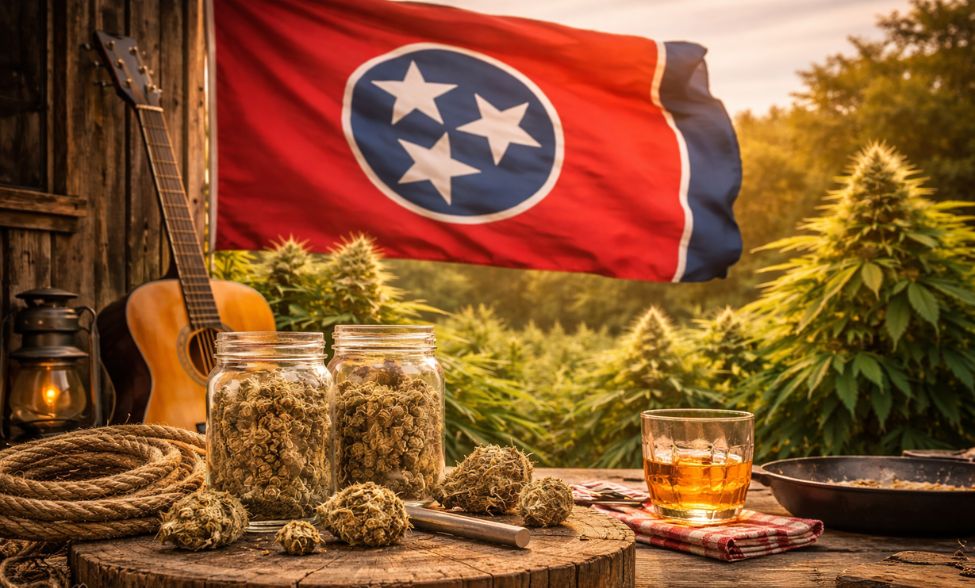
CBD Legal Status in Tennessee.
Yes — CBD derived from hemp is legal in Tennessee as long as it contains less than 0.3% Delta-9 THC by dry weight. However, Tennessee’s hemp regulations underwent a major overhaul in 2025, and staying current with the updated rules is important for both consumers and businesses.
Tennessee is home to the Great Smoky Mountains, a world-famous music scene, and one of the more welcoming legal environments for hemp-derived CBD in the South. Whether you’re a Tennessee resident curious about your rights, a visitor passing through Nashville, Memphis, Knoxville, or Chattanooga, or a business owner navigating compliance, this guide breaks down everything you need to know about CBD legality in the Volunteer State.
The short answer is that hemp-derived CBD is legal in Tennessee. But as with any evolving regulatory landscape, the details matter. Read on for a clear, up-to-date breakdown of Tennessee’s CBD laws, who they apply to, and what to look for when purchasing CBD products.
Table of contents:
After the federal 2018 Farm Bill (Agriculture Improvement Act), Tennessee legalized cultivation, manufacture, sale, and possession of hemp-derived CBD products. Among the key rules governing CBD in Tennessee today are:
Understanding where the law stands today requires a look at how it got here. Tennessee has been progressively building its hemp and CBD framework over the past decade:
| Year | Key Development |
| 2014 | Tennessee’s first CBD-focused law, SB 2531, was passed, allowing limited CBD oil use for certain seizure-related conditions. |
| 2015 | Tennessee launched its hemp pilot program under the 2014 Farm Bill, allowing licensed growers to cultivate industrial hemp under state supervision. |
| 2016 | Senate Bill 2125 drew a legal distinction between marijuana and hemp, classifying cannabis material with 0.6% or less THC as hemp when grown, manufactured, or studied by approved institutions. |
| 2017 | House Bill 1164 expanded the definition of and access to hemp products with less than 0.3% THC. Tennessee also submitted its hemp plan to the USDA. |
| 2018 | The federal Farm Bill was signed into law, legalizing low-THC, hemp-derived CBD at the federal level. Tennessee followed suit, removing hemp from its Controlled Substances list. |
| 2020 | The USDA approved Tennessee’s hemp production plan under the U.S. Domestic Hemp Production Program. |
| 2021 | Tennessee legalized the sale of cannabinoids produced from hemp (October 4, 2021), and Senate Bill 357 removed hemp-derived cannabinoids — including Delta-8 and CBD — from the state’s list of prohibited drugs. |
| 2023 | The Tennessee General Assembly enacted legislation to formally regulate and tax hemp-derived cannabinoid products (HDCPs), with the Tennessee Department of Agriculture overseeing licensing. |
| 2024–2025 | Tennessee passed House Bill 1376, a sweeping overhaul of hemp regulation, transferring oversight authority to the Tennessee Alcoholic Beverage Commission (TABC), effective January 1, 2026. |
Note: Tennessee’s hemp regulatory environment is actively evolving. Always check the Tennessee Department of Agriculture (tn.gov/agriculture) or the TABC for the most current rules before making purchasing or business decisions.
One of the most common points of confusion deserves to be addressed clearly.
CBD products and marijuana both come from the same plant species – Cannabis sativa. The critical legal distinction is THC content:
The practical takeaway: a hemp-derived CBD oil, gummy, or topical sitting comfortably under the 0.3% Delta-9 THC threshold is legal to purchase, possess, and use in Tennessee. A marijuana-derived product with higher THC content is not legal, and possession can result in criminal penalties.
Yes. Tennesseans can purchase hemp-derived CBD products at a variety of retail locations across the state, including:
When shopping in-store, look for products that include a Certificate of Analysis (COA) from a third-party lab. A COA confirms the product has been independently tested for cannabinoid content and confirms it falls within the legal THC limits — protecting both you and your compliance with Tennessee law.
No. As of January 1, 2026, Tennessee’s House Bill 1376 explicitly prohibits the online sale, shipping, and delivery of hemp-derived cannabinoid products to Tennessee addresses. All purchases must be made in person at a licensed, brick-and-mortar retail location that restricts entry to customers 21 years of age or older.
This is a significant change from prior law, and it affects both in-state retailers and out-of-state online sellers. Regardless of whether a product is Farm Bill-compliant and third-party tested, it cannot legally be shipped to a Tennessee address under the current regulatory framework.
To purchase hemp-derived CBD in Tennessee, consumers must visit a licensed physical retailer. When shopping in person, the same standards of quality apply; look for products with a Certificate of Analysis (COA) from an accredited third-party lab, clear labeling, and transparent hemp sourcing information.
Note: Tennessee’s hemp regulatory landscape continues to evolve. Consumers and businesses should monitor updates from the Tennessee Alcoholic Beverage Commission (TABC) at tn.gov/abc for the most current guidance.
Whether shopping locally in Nashville, Knoxville, Memphis, Chattanooga, or online, here are the most important factors to evaluate before purchasing a CBD product in Tennessee:
Yes — traveling within Tennessee with legally compliant, hemp-derived CBD products is permissible. Here are some practical considerations:
Under Tennessee’s 2025 regulatory overhaul, mandatory age verification applies to all hemp-derived cannabinoid product sales. Licensed retailers are required to card every customer regardless of appearance.
Under HB 1376, Tennessee law now sets 21 as the statewide legal minimum age for purchasing hemp-derived cannabinoid products. This is not a retailer preference; it is a statutory requirement that applies to all licensed HDCP sellers across the state. All retailers are legally obligated to verify the age of every customer, regardless of their apparent age, before completing a sale.
Age requirements may also vary by retailer — some stores may set their own policies. When in doubt, assume a minimum age of 21 applies.
Yes. CBD products made from hemp that contain less than 0.3% Delta-9 THC by dry weight are legal for Tennessee residents to purchase, possess, and use. Growers and sellers require state licensing.
No. Consumers do not need a prescription or medical card to purchase hemp-derived CBD in Tennessee. CBD products within the federal THC limit are available to adults without any medical authorization.
No more than 0.3% Delta-9 THC on a dry weight basis. This applies to both the raw hemp material and finished CBD products. Post-decarboxylation testing is now required under Tennessee’s updated rules to account for total THC, including THCa conversion.
Yes, Tennessee allows smokable CBD products derived from hemp, such as CBD flower and vape products, as long as they contain no more than 0.3% Delta-9 THC. In 2025, however, smokable hemp will be subject to a new law called the Non-Smoker Protection Act, which may prohibit the use of the product in certain indoor public spaces.
Under the current TABC framework, mandatory age verification applies to all CBD and hemp-derived cannabinoid product purchases. Customers of ATLRx must be at least 21 years of age. Some retailers may allow 18+ with a valid ID — check with your specific retailer.
No. Marijuana — defined as Cannabis sativa with more than 0.3% Delta-9 THC — remains fully illegal in Tennessee for both recreational and medical purposes. Tennessee has no active medical marijuana program as of 2025.
Yes, but you must obtain a license. From January 1, 2026, licensing will be administered by the Tennessee Alcoholic Beverage Commission (TABC) rather than the Tennessee Department of Agriculture. A three-tier licensing system applies to wholesalers, suppliers, and retailers.
No. As of January 1, 2026, HB 1376 prohibits the online sale, shipping, and delivery of hemp-derived cannabinoid products to Tennessee addresses. All purchases must be made in person at a licensed, 21+ brick-and-mortar retail location. This applies to both in-state and out-of-state sellers, regardless of whether the product is otherwise Farm Bill compliant.
Legal Disclaimer
The information in this article is provided for educational and informational purposes only and should not be construed as legal advice. Tennessee’s hemp and CBD regulations are actively evolving. This content may not reflect the most recent legal developments. We recommend consulting the Tennessee Department of Agriculture (tn.gov/agriculture), the Tennessee Alcoholic Beverage Commission (tn.gov/abc), or a licensed attorney for the most current regulatory guidance.
The Statements on This Blog Are Not Intended to Diagnose, Treat, Cure, or Prevent Any Disease. The Food and Drug Administration Has Not Evaluated Any Statements Contained Within This Blog. Atlrx Does Not in Any Way Guarantee or Warrant the Accuracy, Completeness, or Usefulness of Any Message.

April 6, 2026
April 6, 2026
April 6, 2026
April 1, 2026
March 30, 2026
$49.99
$6.99
$5.99
$39.99
$39.99
$34.99