

$6.99

ARE YOU 21 YEARS OF AGE OR OLDER?
REMEMBER ME
Seriously, by using this site you are confirming that you are of legal age (21+) to view and purchase these products. If you are you are not over 21. you are not authorized by us to use or view any of the pages of this site. Please review our terms and conditions at checkout for further stipulations.
FREE SHIPPING ON ALL ORDERS OVER $49 —— FREE EXPEDITED SHIPPING ON ALL ORDERS OVER $149 —— FREE SHIPPING ON ALL ORDERS OVER $49 —— FREE EXPEDITED SHIPPING ON ALL ORDERS OVER $149 —— FREE SHIPPING ON ALL ORDERS OVER $49 —— FREE EXPEDITED SHIPPING ON ALL ORDERS OVER $149 —— FREE SHIPPING ON ALL ORDERS OVER $49 —— FREE EXPEDITED SHIPPING ON ALL ORDERS OVER $149 ——
FREE SHIPPING ON ALL ORDERS OVER $49 —— FREE EXPEDITED SHIPPING ON ALL ORDERS OVER $149 —— FREE SHIPPING ON ALL ORDERS OVER $49 —— FREE EXPEDITED SHIPPING ON ALL ORDERS OVER $149 —— FREE SHIPPING ON ALL ORDERS OVER $49 —— FREE EXPEDITED SHIPPING ON ALL ORDERS OVER $149 —— FREE SHIPPING ON ALL ORDERS OVER $49 —— FREE EXPEDITED SHIPPING ON ALL ORDERS OVER $149 ——
 >
Blogs
>
THCA >
Is THCA Legal in Ohio? 2026 Law Updates & Guide
>
Blogs
>
THCA >
Is THCA Legal in Ohio? 2026 Law Updates & Guide
THE STATEMENTS ON THIS BLOG ARE NOT INTENDED TO DIAGNOSE, TREAT, CURE, OR PREVENT ANY DISEASE. THE FOOD AND DRUG ADMINISTRATION HAS NOT EVALUATED ANY STATEMENTS CONTAINED WITHIN THE BLOG. ATLRX DOES NOT IN ANY WAY GUARANTEE OR WARRANT THE ACCURACY, COMPLETENESS, OR USEFULNESS OF ANY MESSAGE. THE INFORMATION CONTAINED WITHIN THIS BLOG IS FOR GENERAL INFORMATIONAL PURPOSES ONLY.
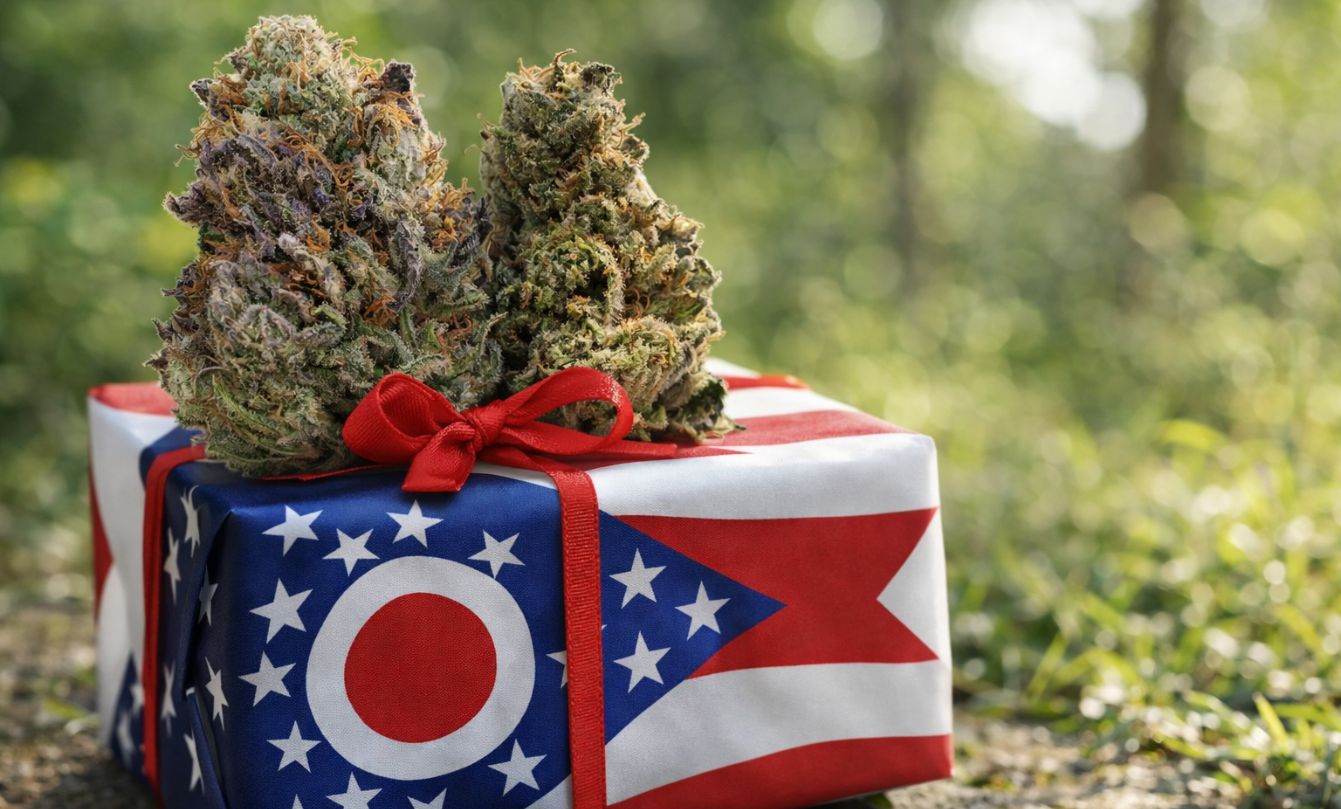
THCA Legal Status in Ohio:
Yes. Most THCA products are legal in Ohio, compliant in 2026, provided they contain 0.3% or less Delta-9 THC by dry weight and stay within Ohio’s 0.4 mg total THC per container threshold. However, as of March 20, 2026, Ohio Senate Bill 56 (SB 56), signed into law on December 19, 2025, specifically bans high-THCA flower and vapes from unregulated retail stores. A federal crackdown on most intoxicating hemp products follows in November 2026.
Non-intoxicating hemp products that stay within Ohio’s total THC thresholds remain generally compliant. Most intoxicating hemp products will be banned by the federal government in November 2026. The legal landscape continues to evolve — scroll down for the full breakdown.
If you have been wondering if THCA is legal in Ohio, you are not alone. Ohio’s hemp and cannabis laws have shifted dramatically over the past several months, making it more important than ever to understand exactly where things stand before you buy, possess, or sell any THCA product in the Buckeye State. This guide breaks down the current legal landscape, the key legislation you need to know about in 2026, and what Ohio residents should watch for going forward.
Table of contents:
THCA, or tetrahydrocannabinolic acid, occurs naturally in hemp and cannabis plants. THCA is non-intoxicating in its raw, unheated form. By decarboxylation, it turns into Delta-9 THC, the well-known psychoactive compound. This conversion is what happens when you smoke, vape, or bake a product containing THCA.
As a result of this distinction, THCA occupies a unique position within the hemp industry. When a product is tested in its raw state, and the Delta-9 THC level stays below 0.3% by dry weight, many producers have argued that it qualifies as legal hemp under the 2018 Farm Bill. However, both the federal and state governments are going to take a close look at that interpretation in 2026.
To understand Ohio’s current rules, you need to start at the federal level. The Agriculture Improvement Act of 2018, commonly known as the Farm Bill, defined hemp as cannabis with less than 0.3% Delta-9 THC on a dry weight basis. Crucially, THCA was not explicitly counted as THC under this definition at the point of pre-harvest testing.
This created what lawmakers and regulators began calling the “hemp loophole” — high-THCA flower and products that tested below 0.3% Delta-9 THC before use but converted to a potent THC product upon heating. Retailers across Ohio and the nation began selling THCA products at gas stations, smoke shops, and CBD stores, largely without the regulatory oversight applied to dispensary-grade cannabis.
There is now a closure to that loophole. Changes to federal legislation enacted in November 2025 revised the definition of marijuana so that it now encompasses all products containing THC, including converted THCA. These federal changes are scheduled to take full effect in November 2026, limiting legal hemp products to 0.4 milligrams of total THC per container, regardless of cannabinoid type. Interstate shipment of hemp products containing THC will be heavily restricted once these rules take effect.
This article was updated in March 2026, so the answer is nuanced and time-sensitive. Here is the critical timeline every Ohio consumer and retailer needs to understand:
| Date / Event | What It Means for THCA in Ohio |
| December 19, 2025 | Governor DeWine signs Senate Bill 56 (SB 56) into law, banning the sale of intoxicating hemp products outside of licensed dispensaries. |
| March 20, 2026 | SB 56 takes full effect. Intoxicating hemp products — including high-THCA items — can no longer be legally sold in Ohio’s smoke shops, gas stations, or CBD stores. |
| November 2026 | Federal law restricting hemp products to 0.4 mg total THC per container takes full effect, aligning federal and Ohio state standards. |
| November 2026 (Federal) | Interstate shipping of THC-containing hemp products becomes heavily restricted nationwide. |
Ohio Senate Bill 56 is the state-level legislation that fundamentally changed the rules for THCA and other intoxicating hemp products in Ohio. What you need to know:
What SB 56 Does
What SB 56 Does NOT Do
Key Takeaway: Under SB 56, effective March 20, 2026, intoxicating hemp products — including many popular THCA flower and vape products are no longer permitted to be sold in unregulated retail settings in Ohio. They aren’t just moving into dispensaries. A recent decision by the Ohio Division of Cannabis Control prohibits these products from being sold outside of Ohio’s licensed cannabis system.
Ohio has historically defined hemp in line with federal law, classifying cannabis as hemp when its Delta-9 THC concentration is 0.3% or less by dry weight. Products meeting this threshold were treated as legal hemp and did not require a medical card or dispensary purchase.
SB 56 effectively overrides this by focusing on whether a hemp product is “intoxicating.” The law brings intoxicating hemp products that can produce psychoactive effects, including THCA items when heated — under the same regulatory umbrella as marijuana. This means the practical distinction between “hemp” and “marijuana” for retail purposes has largely been erased for any product a consumer might use to get high.
For low-THC CBD products, non-intoxicating tinctures, and other hemp-derived items that genuinely do not exceed the total THC thresholds, the situation is different. These products can still be produced and sold within compliant regulatory frameworks.
What About THCA Products Available Online?
Many consumers ask whether they can order THCA products online and ship them to Ohio. The answer to this question has changed significantly.
Before SB 56 took effect, some retailers shipped THCA hemp flower to Ohio on the basis that it tested below the 0.3% Delta-9 THC threshold in its raw form. With the implementation of SB 56 and the forthcoming federal restrictions in November 2026, this practice is becoming increasingly risky and potentially unlawful depending on the product’s total THC profile and the interpretation of Ohio law.
Consumers should also be aware that federal changes enacted in late 2025 restrict the interstate shipment of THC-containing hemp products once those rules fully apply in November 2026. Before placing any online order for THCA products, Ohio residents are strongly encouraged to review the current Ohio Division of Cannabis Control guidance and consult with a legal professional.
Certificates of Analysis (COAs): Why They Still Matter
Whether you are purchasing a hemp-derived product today or navigating what is permissible under the new rules, Certificates of Analysis remain a critical tool. A COA is a third-party lab report that documents the cannabinoid profile of a product, including its Delta-9 THC concentration, THCA percentage, and total THC level.
For any product to be legally positioned as hemp in Ohio, documentation must show:
When shopping for any hemp product at ATLRx, we make COAs readily available for every product. Transparency in testing is not optional. It is the foundation of consumer trust and legal compliance.
Ohio voters approved adult-use cannabis legalization through Issue 2 in November 2023, and dispensary sales to adults 21 and older began in August 2024. This regulated market, overseen by the Ohio Division of Cannabis Control, is separate from the hemp market and operates under strict state licensing requirements.
Under SB 56, products containing intoxicating cannabinoids derived from hemp — including high-THCA flower can only be sold within this licensed dispensary framework. The critical distinction is that dispensaries in Ohio are currently only permitted to carry marijuana sourced from Ohio-licensed cultivators and processors. They are not currently authorized to sell hemp-derived THCA products.
This means that for practical purposes, Ohio residents looking for THCA products that convert to Delta-9 THC upon use must obtain them through licensed adult-use or medical dispensaries in the form of cannabis products, not hemp-derived THCA from unregulated retail channels.
SB 56 has not gone unchallenged. In November 2026, Ohioans for Cannabis Choice plans to put a referendum on the ballot that would repeal the most restrictive parts of the law. The effort involves collecting roughly 248,000 valid signatures from Ohio voters.
In February 2026, Ohio Attorney General Dave Yost certified the referendum’s title and summary language after initially rejecting an earlier petition. Signature collection is underway, though the effort faces a challenging timeline. If the referendum qualifies for the ballot and voters approve it, parts of SB 56 could be paused or repealed. Additionally, four Ohio breweries filed a lawsuit in early March 2026 challenging aspects of the law’s implementation.
As a result, the legal landscape may continue to shift throughout 2026. Staying informed through official Ohio government sources and reliable cannabis law resources is essential.
| Scenario | Legal Status in Ohio (2026) |
| Raw, non-intoxicating hemp with <0.3% Delta-9 THC and within total THC thresholds | Generally compliant as a hemp product |
| High-THCA flower sold in an unregulated retail shop (smoke shop, gas station) | Not permitted under SB 56 (effective March 20, 2026) |
| THCA products are sold through a state-licensed cannabis dispensary | Subject to dispensary licensing rules, hemp-derived THCA is not currently authorized in dispensaries |
| Online orders of THCA products shipped to Ohio | Increasingly restricted; federal rules tighten further in November 2026 |
| CBD products within total THC thresholds (non-intoxicating) | Generally permissible if compliant with THC limits |
| Adult-use cannabis (marijuana) from a licensed dispensary | Legal for adults 21+ |
Given the pace of change in Ohio’s hemp and cannabis laws, here are the most important steps for Ohio residents:
At ATLRx, we have been committed to providing lab-tested, compliant hemp products with full transparency since our founding. Every product on our site comes with a current third-party Certificate of Analysis, and our team actively monitors federal and state regulatory developments to ensure our catalog remains compliant.
In order to ensure that our customers are informed, we invest in producing detailed educational content like this guide. When laws change, we update our information and our product offerings to reflect what is actually permitted, not just what was allowed in the past.
If you have questions about the products we carry or how current Ohio hemp laws apply to a specific product, our team is available to help. We are not attorneys and cannot provide legal advice, but we can point you toward credible resources and ensure you are shopping from a transparently operating business.
So, is THCA legal in Ohio in 2026? The honest answer is: it depends on the specific product, its total THC profile, and the channel through which it is sold. The passage of SB 56, signed into law in December 2025 and effective March 20, 2026, has fundamentally restricted where and how intoxicating hemp products, including many THCA items, can be sold in Ohio.
The coming months will continue to bring legal developments through the courts, the ballot, and at the federal level. Ohioans who want to stay on the right side of the law should rely on licensed dispensaries for cannabis products and verify that any hemp-derived product they purchase carries a current COA and meets Ohio’s redefined total THC thresholds.
Yes, depending on the product type and where it is sold. As of March 20, 2026, Ohio Senate Bill 56 bans the sale of intoxicating hemp products — including high-THCA flower and vapes — from unregulated retail locations such as smoke shops, gas stations, and CBD stores. Non-intoxicating hemp products that stay within Ohio’s total THC thresholds remain generally compliant. Adult-use cannabis, including THC products, is available through licensed Ohio dispensaries for adults 21 and older.
Ohio Senate Bill 56 (SB 56), signed by Governor DeWine on December 19, 2025, and effective March 20, 2026, redefined hemp under Ohio law to exclude intoxicating cannabinoid products. This effectively bans the sale of high-THCA items — those that convert to Delta-9 THC when heated — from any retail channel that is not a state-licensed marijuana dispensary. New federal standards limit legal hemp products to 0.4 milligrams of THC per container.
Yes, but only in licensed marijuana dispensaries. Not from unregulated retail stores. SB 56 prohibits smoke shops, gas stations, and unlicensed CBD stores from selling intoxicating hemp products, including high-THCA flower, as of March 20, 2026. Additionally, the Ohio Division of Cannabis Control has clarified that hemp-derived THCA products cannot simply move into licensed dispensaries either — dispensaries are only permitted to carry marijuana sourced from Ohio-licensed cultivators and processors. If you have questions about what is currently available and compliant, check ATLRx’s product catalog and COA documentation.
No, but the distinction has narrowed significantly. Delta-9 THC and THCA are different compounds in their raw form. THCA, however, converts into Delta-9 THC when heated through a process called decarboxylation. Ohio’s new law focuses on whether a product is intoxicating — meaning products that produce psychoactive effects when used, including THCA items, are now regulated the same way as marijuana. For legal compliance purposes, total THC content (including converted THCA) is the key measurement Ohio law uses.
Yes, this is a critical point. Under Ohio’s updated regulatory framework aligned with SB 56 and federal law, total THC calculations include THCA that has been or can be converted to Delta-9 THC. Legal hemp is now restricted to 0.4 milligrams of total THC per container, regardless of cannabinoid type. This means a product high in THCA may exceed the legal threshold once total THC is factored in, even if its raw Delta-9 THC level appears low. Always review a product’s Certificate of Analysis for the total THC figure, not just the Delta-9 THC reading.
A Certificate of Analysis (COA) is a third-party lab report that documents a hemp product’s full cannabinoid profile, including its Delta-9 THC percentage, THCA percentage, and total THC level. In Ohio, a COA is the primary document used to verify that a product meets the legal definition of hemp. For any hemp product to be considered compliant, it must have a current COA from a state-approved, accredited independent lab showing it falls within Ohio’s total THC thresholds. At ATLRx, every product comes with a publicly accessible COA so customers can verify compliance before purchasing.
This has become increasingly risky and is subject to ongoing legal change. Before SB 56, some retailers shipped high-THCA hemp flower to Ohio based on pre-use Delta-9 THC testing. With SB 56 now in effect and federal restrictions on hemp products tightening further in November 2026 — including restrictions on interstate shipment of THC-containing hemp products — ordering intoxicating THCA products online and shipping them to Ohio carries significant legal risk. Ohio residents are strongly encouraged to consult the current Ohio Division of Cannabis Control guidance and speak with a licensed Ohio attorney before placing any such order.
Senate Bill 56 aligns Ohio with the new federal standard, which limits hemp products to 0.4 milligrams of THC per container. This is a significant change from the previous framework, which allowed products to qualify as hemp based solely on a Delta-9 THC concentration of 0.3% or less by dry weight without accounting for total THC. Under the new standard, products with high THCA levels will exceed the 0.4 mg total THC threshold even if their raw Delta-9 THC reading is below 0.3%, effectively removing them from the legal hemp category.
It is possible, but not guaranteed. A group called Ohioans for Cannabis Choice is collecting signatures for a referendum that, if it qualifies and passes, could repeal the most restrictive parts of SB 56 and potentially restore some access to intoxicating hemp products. In February 2026, Ohio Attorney General Dave Yost certified the referendum petition language. For the measure to appear on the November 2026 ballot, the campaign must gather approximately 248,000 valid signatures. Until any referendum passes and takes legal effect, SB 56 remains the law. ATLRx will update this page as developments occur.
For non-intoxicating hemp products that fall within Ohio’s total THC thresholds — such as compliant CBD tinctures, capsules, and topicals — ATLRx provides fully lab-tested, COA-verified options. Ohio residents 21 and older can purchase adult-use cannabis products from state-licensed dispensaries regulated by the Ohio Division of Cannabis Control. ATLRx’s team is available to help you understand what is currently permitted and point you toward compliant options. We are not attorneys, and this is not legal advice — for guidance specific to your situation, consult a licensed Ohio attorney.
Both THCA and Delta-8 THC are now treated as intoxicating hemp products under Ohio’s SB 56 and are therefore banned from unregulated retail sale as of March 20, 2026. The key difference is in their chemistry: THCA is a naturally occurring precursor to Delta-9 THC found in raw hemp plants, while Delta-8 THC is typically synthesized or manufactured from hemp-derived CBD. SB 56 prohibits synthetic or manufactured cannabinoids, which directly target Delta-8 THC. Both fall under the same retail ban in Ohio, regardless of how they are produced.
Selling intoxicating hemp products, including high-THCA items, from an unlicensed retail location after March 20, 2026, is a violation of Ohio Senate Bill 56. Enforcement is handled through the Ohio Division of Cannabis Control and relevant state agencies. Retailers who continue selling these products face potential fines, product seizure, and other legal consequences. Business owners in the hemp retail space are strongly advised to consult with a cannabis-focused Ohio attorney to assess their specific compliance obligations before and after the SB 56 effective date.
Important: The information contained in this article is for informational purposes only and does not constitute legal advice. Laws can change. Always consult a licensed Ohio attorney for guidance specific to your situation.

March 25, 2026
March 24, 2026
March 24, 2026
March 24, 2026
$6.99
$5.99
$39.99
$39.99
$34.99
$39.99
$49.99