Indica vs. Sativa – What’s The Difference?
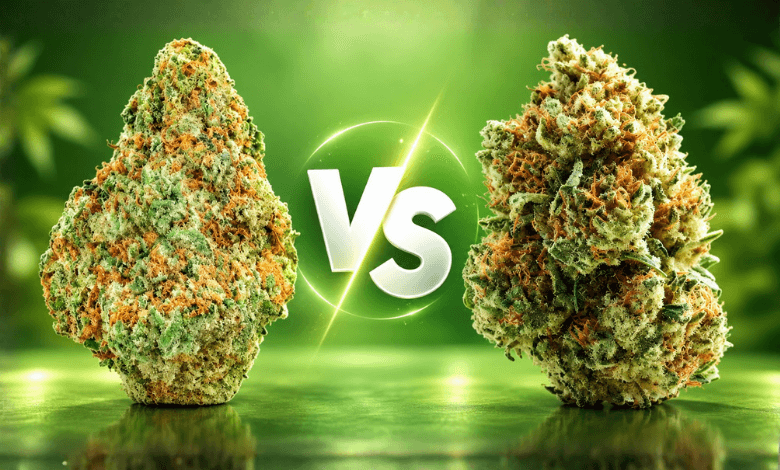
If you’ve ever stood at a shelf and asked yourself, “Indica vs. Sativa – What’s the Difference?”, you’re in the right place, and we’re here to make it simple.
Think of indica and sativa as two major cannabis plant groups that differ mainly in origin, appearance, and growth. Indica grows short and bushy, with wide leaves.
Sativa grows tall and slim, with narrow leaves. Today, most strains are hybrids, so the lab report tells you more than the label does.

Key Takeaways
- 01Indica plants are short, bushy, and quick to flower. Sativa plants are tall, thin, and slow to finish.
- 02The two types were first developed in very different climates, which shaped how they look and grow.
- 03Nearly every strain sold today is a hybrid of both.
- 04Research shows the labels don’t reliably predict potency or terpene content.
- 05A Certificate of Analysis (COA) is the best way to know what’s in a product.
Indica vs. Sativa at a Glance
| Feature | Indica | Sativa |
|---|---|---|
| Traditional growing region | Hindu Kush mountains | Warm, humid regions near the equator |
| Plant height | Short, about 3 to 6 feet | Tall, often 6 feet or more, outdoors |
| Leaves | Broad, dark green, “chunky” | Narrow, lighter green, finger-like |
| Flowering time | About 6 to 8 weeks | About 10 to 16 weeks |
| Structure | Dense and bushy | Open and airy |
| Common aroma notes | Earthy, musky, skunky | Fruity, citrus, sweet, spicy |
| How shops often use the label | Products marketed for evening | Products marketed for daytime |
| Example strains | Northern Lights, GMO, Bubba Kush | Sour Diesel, Jack Herer, Super Lemon Haze |
Where Do Indica and Sativa Come From?
The two names go back to the 1700s. Carl Linnaeus named Cannabis sativa in 1753, and Jean-Baptiste Lamarck named Cannabis indica in 1785. Lamarck’s “indica” plants from India look more like what growers call sativa today. The modern meaning of the labels came much later. Cannabis itself first came from Asia and spread around the world with people. The differences you see today were shaped by the climates it landed in.
Indica: Built for the Mountains
Indica-type plants come from harsh, dry, mountainous regions like the Hindu Kush, a range that stretches across Afghanistan and Pakistan. Cold nights and short summers shaped them. They grew compact so they could handle the wind. They also finished flowering fast, before the weather turned.
Sativa: Built for the Tropics
Sativa-type plants took hold in warm, humid regions near the equator. Think Thailand, parts of Africa, and later Colombia and Jamaica, where cannabis arrived with traders and settlers. Long, sunny seasons gave them time to stretch tall. Their open shape lets air move through the plant, which helps protect it from mold in wet weather.
Ruderalis: The Third Cousin
There’s a third type you’ll rarely hear about. Ruderalis comes from colder places like Russia and Central Asia. It’s small, low in THC, and flowers based on age instead of daylight. Breeders mostly use it to create “autoflowering” seeds.
How the Two Plants Differ
Appearance
You can usually spot the difference by eye. Indica plants tend to be compact and stocky, often topping out around 3 to 6 feet. Their leaves are wide with thick “fingers.” Sativa plants are tall and lanky. In the wild, they can grow well over 10 feet. Their leaves are long and slim.
Growth and Flowering
Indica is the faster grower. Most indica plants flower in about 6 to 8 weeks. That short cycle and compact size make them popular for indoor grows.
Sativa takes its time. Flowering can run 10 to 16 weeks. The plants need more room, more light, and more patience. That’s one reason pure sativas are less common in commercial growing.
Trichomes and Structure
Trichomes are the tiny, sticky crystals on cannabis flowers. They hold most of the plant’s cannabinoids and terpenes. Indica plants often grow dense trichomes. One common explanation is that this coating helped protect the flowers in dry mountain air. Dense trichomes are also why indica-leaning plants have long been favored for making hash. Sativa flowers, by contrast, are usually looser and airier.
Aroma and Terpenes
Terpenes are the natural compounds that give each strain its scent. They’re the same kind of compounds you find in citrus peels, pine needles, and lavender.
Indica-leaning strains are often described as earthy, musky, or skunky. Sativa-leaning strains tend to be fruity, sweet, citrusy, or spicy. Of course, there are plenty of exceptions.
You may see a claim online that myrcene decides the label. The idea is that a strain with more than 0.5% myrcene is an indica, and anything below is a sativa. It’s a popular rule of thumb, but it isn’t an official scientific standard. We think it’s more useful to look at the full terpene list on a lab report.
What Is a Hybrid?
A hybrid is a strain bred from two or more parent plants. Most of what you’ll find today, including hemp flower, is a hybrid.
You’ll usually see hybrids labeled in one of three ways:
- Indica-dominant: leans more toward indica traits.
- Sativa-dominant: leans more toward sativa traits.
- Balanced: a fairly even mix of both.
Some labels get more specific with ratios, like “60/40 sativa/indica” or “70% indica.” Popular hybrids include Blue Dream, OG Kush, and Watermelon Runtz.
Why Almost Everything Is a Hybrid
Plants that are purely indica or purely sativa struggle outside their home climates. So growers crossbreed them. They might want the aroma of a sativa but the short flowering time of an indica. Or they might need an indica that grows a little more open to handle humidity.
After decades of this, nearly every modern strain carries genes from both sides. The “indica” or “sativa” label now mostly reflects how a product is marketed, not its pure genetics. If you shop Delta 8, our guide to Delta 8 indica vs. sativa vs. hybrid strains breaks it down by product.
Where Hemp Fits In
Indica and sativa describe the type of plant, not its legal status. Under current federal law, cannabis counts as hemp when it has no more than 0.3% delta-9 THC on a dry-weight basis. The 2018 Farm Bill wrote that definition into federal law. For growers, the USDA hemp program requires crops to be tested for total THC, which also counts THCA. So a hemp plant can be indica-leaning, sativa-leaning, or a hybrid. Keep in mind this definition is about to change, as we explain below.
Landrace and Heirloom Strains
A landrace strain is one that developed over many generations in one region, shaped by the local climate and local farmers, with little outside crossbreeding. These are the closest thing to a “pure” indica or sativa.
Well-known landraces come from places like:
- The Hindu Kush, a mountain range across Afghanistan and Pakistan (indica)
- South Africa (sativa)
- Southeastern Africa (sativa)
- Central America (sativa)
Many modern strains trace their roots back to landraces like these. For example, Northern Lights is widely reported to descend from Afghan indica genetics.
An heirloom is a landrace grown outside its home region. The starting genetics are the same, but the new climate changes how the plant grows and what it produces. So a landrace from Afghanistan grown in Georgia won’t be exactly like one grown in its home mountains.
What Does the Research Say?
Science suggests the labels aren’t as reliable as many people think.
In 2015, researchers published a genetic study in PLOS ONE that compared strain names to their DNA. They found that a strain’s indica or sativa label often didn’t match its actual genetic makeup.
A larger 2022 study, also in PLOS ONE, reviewed lab data from nearly 90,000 commercial cannabis samples across six states. The researchers found that indica, sativa, and hybrid labels did not reliably line up with a product’s cannabinoid or terpene profile.
That also means you can’t assume a sativa has more THC than an indica, or the other way around. Potency depends on the specific plant and batch.
What does this mean for you? The label is a starting point. The lab report is the real answer.
Indica vs. Sativa Edibles
Edibles add another layer. When you inhale, compounds reach your system through your lungs. When you eat them, they go through your digestive system first. That changes how they’re processed and how long they take to kick in.
There’s little research on whether an “indica” or “sativa” profile carries over into an edible. So some brands use an extract from a specific strain. Others add terpenes or other cannabinoids to shape the experience.
That’s why reading the ingredient list and lab report matters even more with gummies. Know what you’re getting before you buy. For a closer look, see our post on sativa vs. indica edibles.
How to Choose Between Indica, Sativa, and Hybrid
Here’s the simple process we suggest to our own customers:
- Know how shops use the labels. Stores often tag “indica” products for evening and “sativa” products for daytime. It’s a marketing habit, not a guarantee.
- Look past the label. Treat “indica” or “sativa” as a hint, not a promise.
- Read the COA. A Certificate of Analysis shows the exact cannabinoid levels, like Delta 9 THC, THCA, and CBD. Many also list terpenes.
- Check the terpenes. If you enjoy a certain aroma, look for products with a similar terpene profile.
- Start low and go slow. Begin with a small serving and wait before having more, especially with edibles.
At ATLRx, we publish third-party lab results for our products. When you’re ready, compare COAs side by side before you choose.
Final Thoughts: Indica vs. Sativa
Indica and sativa started as two plants from two very different parts of the world. Indica is short, bushy, and quick to flower. Sativa is tall, thin, and slow to finish. Today, almost everything is a hybrid.
The best way to know what you’re getting is simple. Read the lab report. Our team is always happy to help you read one. Stop by one of our Georgia stores or reach out online. We’ll help you find what fits you.
Frequently Asked Questions
What Is the Main Difference Between Indica and Sativa?
+
The main differences are origin, appearance, and growth. Indica grows short and bushy, with wide leaves, and finishes flowering sooner. Sativa grows tall and slim, with narrow leaves, and takes longer to flower. Most modern strains are hybrids of both.
Is Indica or Sativa Stronger?
+
Neither type is automatically stronger. Potency depends on the cannabinoid levels in a specific batch, not the plant type. Check the Certificate of Analysis to see the exact THC or THCA percentages.
What Is a Hybrid Strain?
+
A hybrid is a strain bred from two or more parent plants. It may lean toward indica, lean toward sativa, or sit in the middle. Nearly every strain sold today is technically a hybrid.
How Are Landrace and Heirloom Strains Different?
+
A landrace strain developed over many generations in one region, shaped by local climate and farmers. An heirloom is a landrace grown somewhere else. The starting genetics match, but the new environment changes the final plant.
Can the Same Strain Feel Different to Different People?
+
Yes. Your tolerance, body chemistry, serving size, and setting can all shape your experience. Two people can try the same product and describe it very differently.
Which Is Better for Beginners?
+
Many beginners start with a balanced hybrid and a small serving. Personal preference plays a big role, so start low, go slow, and read the lab report first.
Disclaimer: This article is for general educational purposes only and is not medical or legal advice. Hemp laws change often, so check your state’s current rules before you buy. ATLRx products are for adults 21 and older.
Why Trust This Guide
- ATLRx has sold third-party lab-tested hemp products out of Georgia since 2019.
- Every real batch we sell is tested by an accredited outside lab, with the Certificate of Analysis published before you buy.
- We operate 3 real physical stores in Georgia — this isn't a drop-shipped storefront.
- Legal information is rechecked and updated as rules change, not published once and forgotten.
Don't Trust the Label. Check the Lab.
ATLRx publishes third-party Certificates of Analysis for real batches so you can verify cannabinoid content before you buy — not just take the package's word for it.
View Lab Results →Have Questions?
Visit an ATLRx store in Georgia and talk to our team.
Real Customers, Real Reviews
What Customers Are Saying

Jeff Johnson
Jeff Johnson is a respected expert in the field of CBD and its medicinal applications. With a background in pharmacology and a deep understanding of cannabis science, he has conducted extensive research on the therapeutic properties of CBD. Jeff Johnson is known for his groundbreaking publications, which bridge the gap between scientific knowledge and practical understanding of CBD's potential benefits.
View all articles →Keep Learning
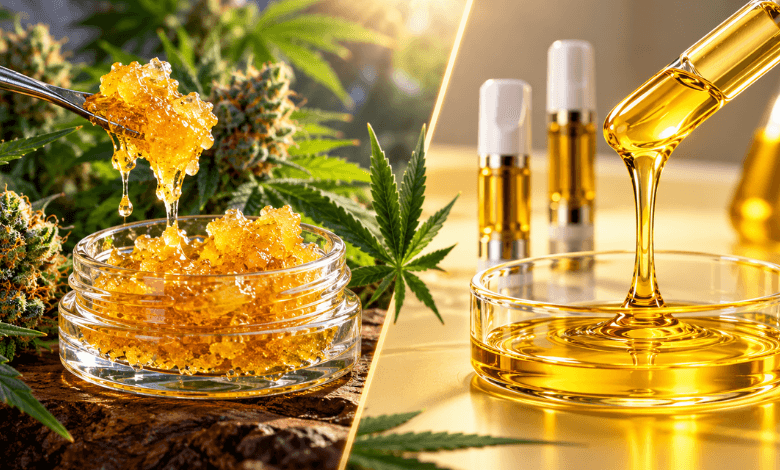
Live Resin vs Distillate: Which One Is Right for You?
Live resin vs distillate comes down to one trade-off: flavor or potency. Live resin is made from fresh, flash-frozen hemp, so it keeps more natural terpenes and has a richer, strain-true taste. Distillate is made from dried hemp and refined into a nearly pure, flavorless cannabinoid oil. In general, distillate is more potent and costs […]
Oct 30, 2026 · 9 min read
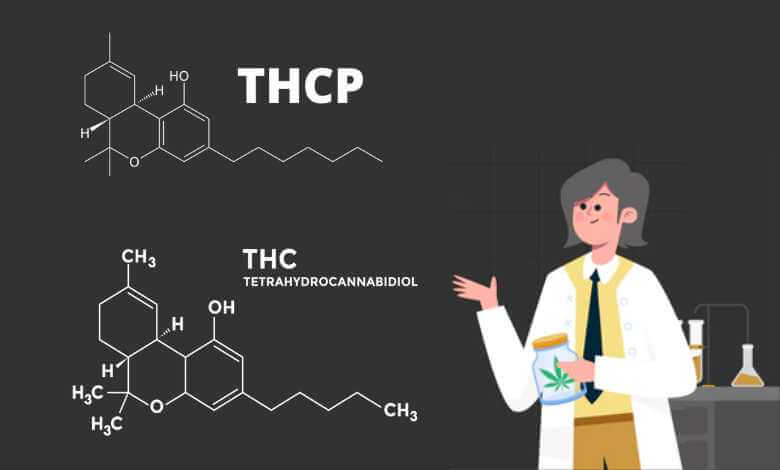
THCP vs THC: What’s The Difference
THCP vs THC: What’s The Difference? It’s a common question, so we’ll keep the answer simple. THCP is basically a supercharged version of traditional THC. The big difference comes down to chemistry: THCP has a seven-carbon tail, compared to THC’s five. That extra length lets THCP latch onto your brain’s CB1 receptors about 33 times […]
Oct 23, 2026 · 8 min read
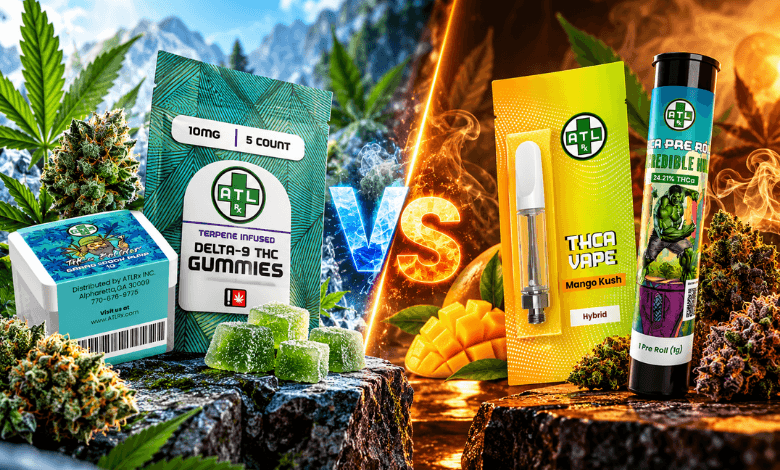
THCA vs THC: What Is The Difference?
If you’ve ever looked at THCA flower and asked, “THCA vs THC: What Is The Difference?” you’re not alone. We’re here to clear it up. THCA (tetrahydrocannabinolic acid) is the raw, non-intoxicating acid form of THC that fresh cannabis and hemp plants make. Delta 9 THC is the active compound that causes a high. When […]
Oct 22, 2026 · 9 min read

Where To Buy Delta 9 Gummies Near Me?
You can buy Delta 9 gummies near you at five types of retailers: a licensed cannabis dispensary, a hemp or CBD store, a vape or smoke shop, a convenience store, or online, directly from a hemp brand. In many states, these sit on ordinary retail shelves and can be mailed to a home address. The […]
Oct 21, 2026 · 10 min read
Stay Informed
New product releases, hemp law updates, and useful cannabinoid guides.